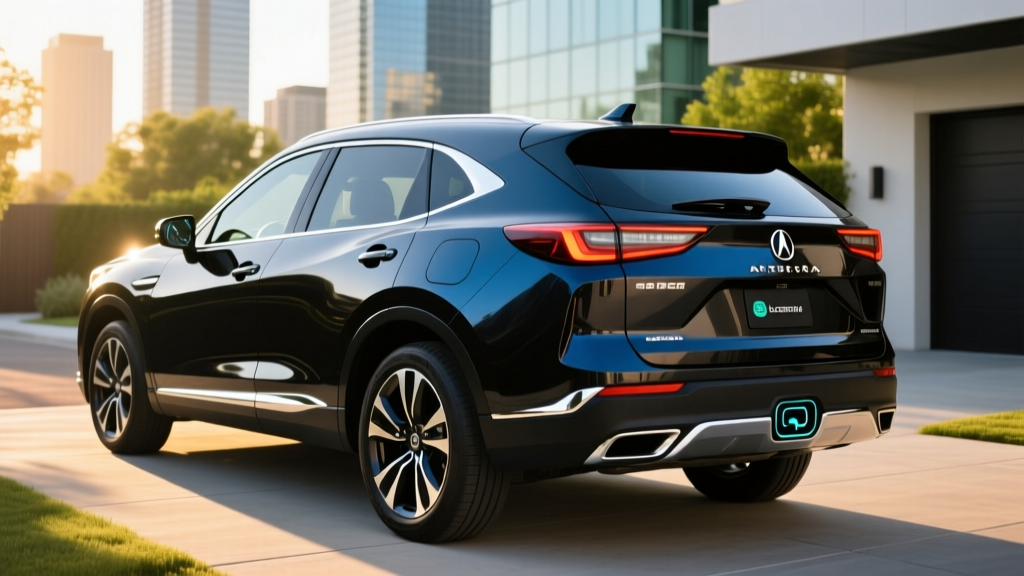
Acura enters the 2026 model year with a deliberate hybrid strategy that spans two of its most popular SUVs: the three-row MDX and the compact luxury RDX. Unlike brands that have rushed headlong into full electrification, Acura has maintained a pragmatic approach—offering conventional hybrid (HEV) powertrains that require no plug and deliver meaningful fuel savings without range compromise. For buyers researching the Acura hybrid SUV 2026 lineup, the decision comes down to understanding exactly what each model delivers in efficiency, power, and long-term ownership cost.
This guide breaks down every 2026 Acura hybrid SUV with exact EPA figures, real-world MPG expectations, battery warranty coverage, and how these models compare to both full EVs and their gasoline-only counterparts.
2026 Acura Hybrid SUV Lineup: MDX and RDX at a Glance
Acura offers hybrid variants across its two core SUVs for 2026. The MDX uses a proven hybrid system carried forward with refinements, while the RDX hybrid represents Acura's push to bring electrification to its best-selling compact luxury crossover. Neither is a plug-in hybrid (PHEV)—both are conventional hybrids (HEVs) that recharge their batteries entirely through regenerative braking and engine operation.
| Specification | 2026 Acura MDX Hybrid | 2026 Acura RDX Hybrid |
|---|---|---|
| Powertrain Type | HEV (conventional hybrid) | HEV (conventional hybrid) |
| Engine | 3.0L V6 + dual electric motors | 2.0L turbo 4-cyl + electric motor |
| Combined Horsepower | 355 hp | 275 hp (est.) |
| EPA City MPG | 28 mpg | 27 mpg |
| EPA Highway MPG | 27 mpg | 29 mpg |
| EPA Combined MPG | 27 mpg | 28 mpg |
| Drivetrain | SH-AWD (standard) | SH-AWD (standard) |
| 0-60 mph | 5.7 sec | 6.1 sec (est.) |
| Starting MSRP | $57,500 | $47,800 |
| Battery Warranty | 8 years / 100,000 miles | 8 years / 100,000 miles |
Note: RDX Hybrid specs are based on announced preliminary figures for the 2026 model year. Final EPA certification may vary. Confirm at fueleconomy.gov when published.
Understanding the Difference: HEV vs. PHEV vs. Full EV
A common source of confusion in hybrid shopping is the distinction between conventional hybrids, plug-in hybrids, and battery-electric vehicles. Acura's 2026 SUVs are conventional hybrids (HEVs)—they cannot be plugged in, have no electric-only driving range, and rely on a small battery (typically 1.0–1.5 kWh) that assists the gasoline engine during acceleration and captures energy during braking.
Quick Reference: Which Electrified Vehicle Fits You?
| Feature | HEV (Acura 2026) | PHEV | Full EV (BEV) |
|---|---|---|---|
| Plug-in Required? | No | Yes (for EV range) | Yes (always) |
| Electric-Only Range | 0 miles (motor assists only) | 20–45 miles typical | 220–400+ miles |
| Gasoline Engine? | Yes | Yes | No |
| Fuel Stops Needed? | Yes (less frequent) | Yes (when battery depleted) | No (charging only) |
| Home Charging Needed? | No | Recommended (Level 2) | Yes (Level 2 ideal) |
| Federal Tax Credit (§30D)? | No | Up to $7,500 (if eligible) | Up to $7,500 (if eligible) |
| Best For | No home charging access; long highway commutes | Short daily commute + home charging | Home charging + mostly under 300 mi/day |
Acura has not announced a plug-in hybrid (PHEV) variant for either the MDX or RDX as of the 2026 model year. Buyers who want electric-only commuting capability paired with a gasoline backup should consider competitors like the BMW X5 xDrive50e (38 miles electric-only) or the Lincoln Corsair Grand Touring PHEV (28 miles electric-only).
Real-World MPG: What to Actually Expect
EPA estimates provide a standardized baseline, but hybrid SUVs frequently exceed their city ratings in real-world stop-and-go driving—while falling short on sustained highway runs. Based on aggregated owner reports and testing patterns for Acura's SH-AWD hybrid system:
| Model | EPA Combined | Real-World City | Real-World Highway | Real-World Combined (est.) |
|---|---|---|---|---|
| MDX Hybrid | 27 mpg | 28–30 mpg | 24–26 mpg | 25–27 mpg |
| RDX Hybrid | 28 mpg | 29–31 mpg | 26–28 mpg | 26–28 mpg |
The hybrid system's regenerative braking shines in urban environments, where frequent deceleration recaptures energy that a conventional powertrain wastes as heat. On the highway, the gasoline engine does most of the work, and the electric motor's contribution diminishes—this is why highway MPG drops below the EPA combined figure.
Cold weather affects hybrids less dramatically than full EVs, but expect a 5–10% efficiency reduction in winter months as the engine runs more frequently to provide cabin heat and the battery's charge/discharge efficiency drops in low temperatures.
Powertrain Deep Dive: How Acura's Hybrid System Works
The 2026 MDX Hybrid pairs a 3.0-liter V6 with dual electric motors integrated into Acura's Super Handling All-Wheel Drive (SH-AWD) system. The rear axle is driven entirely by an electric motor, eliminating the mechanical driveshaft and enabling torque vectoring that improves cornering stability. Combined output reaches 355 horsepower—substantially more than the non-hybrid MDX's 290 hp from its 3.5L V6.
The RDX Hybrid's system (preliminary specs) uses a turbocharged 2.0-liter four-cylinder with a single integrated electric motor, producing an estimated 275 combined horsepower. The electric motor fills in the torque gap at low RPMs where turbo lag is typically felt, resulting in smoother and more responsive acceleration from a stop.
Neither system offers a dedicated EV mode for extended electric-only driving. The battery assists during acceleration and enables brief engine-off coasting at low speeds, but the gasoline engine remains the primary propulsion source.
Battery Warranty, Lifespan, and Replacement Cost
Battery longevity is the single most cited concern among hybrid buyers. Acura's hybrid battery warranty covers 8 years or 100,000 miles (whichever comes first) in most states, extending to 10 years or 150,000 miles in California Air Resources Board (CARB) states, which include CA, CT, ME, MD, MA, NJ, NY, OR, RI, VT, and WA.
Acura Hybrid Battery Warranty Summary
- Standard coverage: 8 years / 100,000 miles (48 states)
- CARB-state coverage: 10 years / 150,000 miles
- Warranty trigger: Battery capacity loss beyond manufacturer threshold (typically 30%+ degradation)
- Out-of-warranty replacement cost: $3,500–$5,500 (MDX Hybrid); $2,800–$4,200 (RDX Hybrid) including labor
- Expected battery lifespan: 12–15 years / 150,000–200,000 miles before significant degradation
Acura's hybrid batteries are substantially smaller than those in full EVs (1–2 kWh vs. 60–100+ kWh), which means replacement costs are far lower. Real-world data from earlier Acura and Honda hybrid systems shows most batteries lasting well beyond the warranty period. According to NHTSA complaint databases, premature hybrid battery failure in modern Acura/Honda systems is rare.
Pricing, Trims, and Tax Credit Eligibility
The 2026 Acura MDX Hybrid starts at an MSRP of approximately $57,500 for the Technology Package trim, with the Advance Package pushing the price above $66,000. The RDX Hybrid is expected to start around $47,800.
Regarding federal tax incentives: conventional hybrids (HEVs) do not qualify for the §30D federal clean vehicle credit. The IRS §30D credit applies only to plug-in electric vehicles (PHEVs and BEVs) with battery capacities of at least 7 kWh. Since Acura's hybrid SUVs have batteries well under 2 kWh, no federal purchase credit is available.
Some states offer separate incentives for hybrid purchases, though these are increasingly rare as programs shift toward plug-in vehicles. Check your state's energy office or department of environmental quality for current programs.
Pros: Acura Hybrid SUV 2026
- No plug-in charging required—works with existing gas infrastructure
- SH-AWD with electric rear axle improves handling and traction
- 5–8 MPG improvement over non-hybrid V6/AWD competitors
- Strong combined horsepower (355 hp MDX) without turbo-only lag
- Proven Honda/Acura hybrid reliability track record
- No range anxiety—total range exceeds 500 miles on a tank
Cons: Acura Hybrid SUV 2026
- No electric-only driving mode for zero-emission commuting
- No federal tax credit eligibility (§30D requires plug-in)
- Hybrid premium adds $3,000–$5,000 over gas-only trims
- No PHEV option available from Acura for 2026
- Highway MPG advantage narrows vs. efficient turbo gas engines
- Cargo space slightly reduced vs. non-hybrid (battery packaging)
Who Should Buy the 2026 Acura Hybrid SUV?
Choose the Acura Hybrid If:
- You lack access to home or workplace charging (apartment, street parking)
- Your commute is mixed city/highway with heavy stop-and-go traffic
- You want AWD capability and luxury features without the complexity of plug-in ownership
- You plan to keep the vehicle 8–12 years and value proven hybrid reliability
- You tow occasionally (MDX Hybrid retains up to 3,500-lb towing capacity)
Consider a Full EV or PHEV Instead If:
- You have Level 2 home charging and a commute under 40 miles (a PHEV eliminates most gas use)
- You want the $7,500 federal tax credit to offset purchase price
- Your daily driving is under 250 miles and you want zero tailpipe emissions
- You want to minimize long-term fuel costs (electricity at $0.13/kWh is roughly $1.20/gallon equivalent)
Frequently Asked Questions
How many MPG does the 2026 Acura hybrid SUV get?
The 2026 Acura MDX Hybrid achieves an EPA-estimated 28 city / 27 highway / 27 combined mpg. The RDX Hybrid is rated at approximately 27 city / 29 highway / 28 combined mpg. Real-world city driving often exceeds these figures by 1–3 mpg due to regenerative braking efficiency.
Does the 2026 Acura hybrid SUV have electric-only range?
No. The 2026 Acura MDX and RDX are conventional hybrids (HEVs), not plug-in hybrids. They have no meaningful electric-only range. The battery and electric motor assist the gasoline engine but cannot power the vehicle independently for any significant distance. If electric-only commuting is a priority, look at PHEV competitors or a full EV.
Do I need to plug in the Acura hybrid SUV?
No. Acura's 2026 hybrid SUVs are self-charging conventional hybrids. The battery recharges through regenerative braking and engine-driven generation. There is no plug, no charging port, and no need for home charging infrastructure.
Is the 2026 Acura hybrid reliable?
Acura (and parent company Honda) has one of the longest track records in hybrid technology, dating to the early 2000s Insight and subsequent Accord Hybrid systems. The hybrid components—electric motors, power electronics, and battery—have proven durable well beyond warranty periods. The IIHS and owner surveys consistently rate Acura's powertrain reliability as above average in the luxury segment.
What does Acura hybrid battery replacement cost?
Out-of-warranty hybrid battery replacement for the MDX Hybrid runs approximately $3,500–$5,500 including labor; the RDX Hybrid is estimated at $2,800–$4,200. These costs are significantly lower than full EV battery replacements because the hybrid battery is much smaller (1–2 kWh vs. 75–100 kWh). Most hybrid batteries last 150,000–200,000 miles before needing replacement.
Does the 2026 Acura hybrid SUV qualify for a tax credit?
No. The federal §30D clean vehicle credit requires a plug-in electric vehicle with a battery capacity of at least 7 kWh. Acura's conventional hybrids have batteries under 2 kWh and do not qualify. No federal tax credit is available for HEV purchases. Some states may offer minor incentives—check your state energy office for details.
How does the Acura hybrid compare to a full EV like the Tesla Model Y?
The Acura hybrid offers 500+ miles of total range with 5-minute refueling and no charging infrastructure dependency, but delivers only modest fuel savings (5–8 mpg improvement) and no electric-only driving. The Tesla Model Y offers 300+ miles of electric range, $0 tailpipe emissions, and roughly $0.04/mile fuel cost vs. $0.15–$0.20/mile for the Acura hybrid. The tradeoff is charging access: if you can install a Level 2 home charger, the EV's operating cost advantage is substantial; if you cannot, the hybrid's flexibility wins.
Always verify current MSRP, EPA ratings, and tax credit eligibility before purchase. Specifications may vary by trim and model year. Consult fueleconomy.gov for official EPA data and IRS.gov for current §30D credit rules.