If you need three rows of seating but want to avoid the fuel bill of a traditional V6 SUV, Toyota offers two strong hybrid options for 2026: the midsize Highlander Hybrid and the larger Grand Highlander Hybrid. Both are conventional self-charging hybrids (HEVs) — no plugging in required — and both deliver the kind of fuel economy that makes a 5,000-pound family hauler surprisingly cheap to run. This guide breaks down the exact numbers, real-world expectations, and ownership economics for every 7 seater hybrid Toyota currently on sale.
HEV vs PHEV: What Toyota Offers for 7 Seats
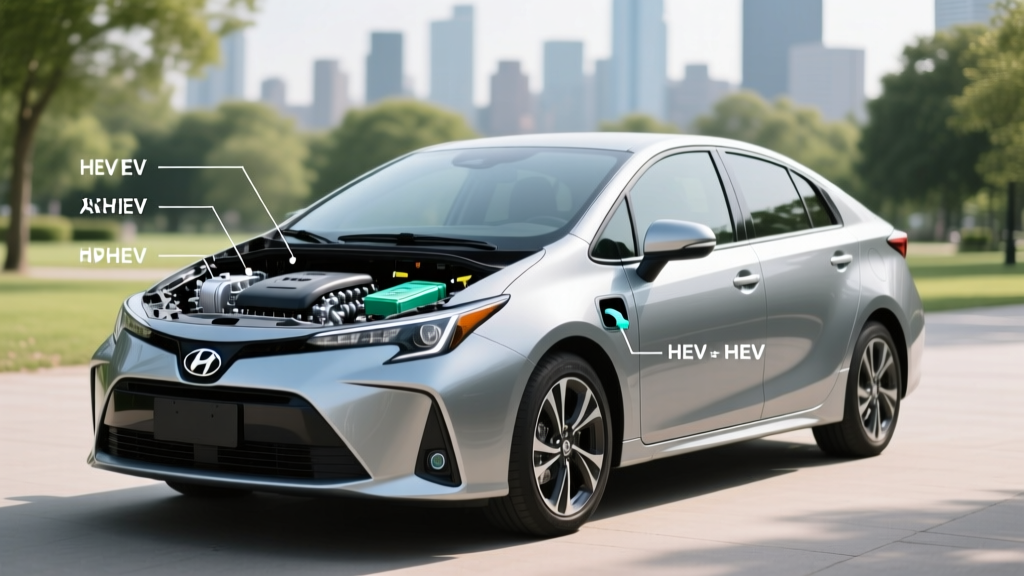
Highlander Hybrid & Grand Highlander Hybrid (HEV): These are conventional hybrids. A small battery (1.87 kWh in the Highlander, 1.81 kWh in the Grand Highlander) recharges through regenerative braking and the gas engine. You never plug in. The electric motor assists the 2.5L four-cylinder engine to cut fuel consumption, but the vehicle cannot drive on electric power alone for more than a mile or two at low speed.
Toyota RAV4 Prime (PHEV): Toyota's only current plug-in hybrid SUV seats five, not seven. If you specifically need three rows and want a plug-in, you'll need to look outside Toyota (the Kia Sorento PHEV and Mazda CX-90 PHEV are alternatives). As of 2026, Toyota does not offer a 7-seat PHEV in the US market.
2026 Highlander Hybrid: Specs and Fuel Economy
The Highlander Hybrid pairs a 2.5-liter inline-four engine with three electric motors (two front, one rear) for standard electronic all-wheel drive. Combined output is 243 horsepower. The powertrain uses Toyota's proven series-parallel hybrid architecture — the same e-CVT system that has powered millions of Prius and Camry Hybrids.
| Spec | Value |
|---|---|
| Powertrain | 2.5L I4 + 3 electric motors (e-CVT) |
| Combined Horsepower | 243 hp |
| Drivetrain | AWD (electronic rear motor) |
| Hybrid Battery | 1.87 kWh NiMH |
| Seating | 7 (standard second-row captain's chairs) |
| Cargo (behind 3rd row) | 16.1 cu ft |
| Towing Capacity | 3,500 lbs |
| 0-60 mph | ~7.8 seconds |
| Base MSRP (LE) | $42,820 |
| Top Trim MSRP (Platinum) | $54,070 |
EPA Fuel Economy
| Trim/Drivetrain | City | Highway | Combined |
|---|---|---|---|
| All trims (AWD) | 35 | 35 | 35 |
Real-World MPG vs. EPA
The Highlander Hybrid's 35 MPG combined EPA rating is one of the more honest stickers in the segment. In mixed suburban and city driving, many owners report 36-38 MPG, because hybrids thrive in stop-and-go traffic where regenerative braking recaptures energy. On sustained highway trips at 75+ mph, expect 30-33 MPG — aerodynamic drag and the lack of regenerative opportunities reduce efficiency. In cold weather (below 30°F), the engine runs more often to provide cabin heat, which can drop observed MPG to 28-31 on short trips.
2026 Grand Highlander Hybrid: Bigger Cabin, Similar Efficiency
Launched for the 2024 model year, the Grand Highlander addresses the Highlander's main weakness: a cramped third row. The Grand Highlander offers genuine adult-sized third-row seating and significantly more cargo space, while only sacrificing 1 MPG combined. It uses Toyota's Hybrid MAX powertrain on upper trims, which swaps the e-CVT for a 6-speed automatic and adds a turbocharged 2.4L engine for substantially more power.
| Spec | Hybrid (Standard) | Hybrid MAX |
|---|---|---|
| Powertrain | 2.5L I4 + 2 motors (e-CVT) | 2.4L Turbo I4 + motor (6-speed auto) |
| Combined Horsepower | 245 hp | 362 hp |
| Drivetrain | AWD (electronic) | AWD (mechanical + electronic) |
| Hybrid Battery | 1.81 kWh NiMH | 1.81 kWh NiMH |
| Seating | 7 or 8 | 7 |
| Cargo (behind 3rd row) | 20.6 cu ft | 20.6 cu ft |
| Towing Capacity | 3,500 lbs | 5,000 lbs |
| 0-60 mph | ~7.6 seconds | ~5.6 seconds |
| Base MSRP | $47,540 (XLE) | $58,805 (Limited) |
EPA Fuel Economy
| Powertrain | City | Highway | Combined |
|---|---|---|---|
| Standard Hybrid (AWD) | 36 | 32 | 34 |
| Hybrid MAX (AWD) | 26 | 27 | 27 |
The standard Hybrid achieves 34 MPG combined — remarkable for a vehicle with over 100 cubic feet of maximum cargo volume. The Hybrid MAX trades roughly 7 MPG for 117 additional horsepower and a 5,000-lb tow rating, making it the choice for buyers who need acceleration and towing but still want hybrid efficiency at low speeds.
Highlander vs. Grand Highlander: Which 7-Seater Fits?
Highlander Hybrid — Choose If
- You want the lowest starting price ($42,820) and best city MPG (35/35)
- Your third-row passengers are children or occasional riders
- You prioritize a slightly smaller exterior footprint for parking and garages
- 16.1 cu ft of cargo behind the third row is adequate for groceries and strollers
Grand Highlander Hybrid — Choose If
- Adults regularly ride in the third row (33.5 inches of legroom vs. 27.7 in the Highlander)
- You need 20.6 cu ft of cargo with all seats up — 28% more than the Highlander
- You want the Hybrid MAX option for 362 hp and 5,000-lb towing
- Budget allows for the ~$4,700 higher starting price
Battery Warranty, Reliability, and Replacement Cost
Toyota Hybrid Battery Coverage
All 2026 Toyota hybrids come with a 10-year / 150,000-mile hybrid battery warranty (whichever comes first), transferable to subsequent owners. This covers defects and capacity loss that causes a malfunction. Toyota's hybrid battery warranty has been 10 years since the 2020 model year — earlier models carried 8 years/100,000 miles.
The conventional hybrid battery in both the Highlander and Grand Highlander is a small ~1.8 kWh nickel-metal hydride (NiMH) pack. Unlike the large lithium-ion packs in full EVs, these batteries are inexpensive to replace and rarely fail catastrophically.
How Long Do Toyota Hybrid Batteries Last?
Toyota's hybrid system is one of the most proven in the industry. The Prius, which uses the same fundamental architecture, routinely sees original batteries last 150,000–200,000+ miles. Individual cells can be replaced rather than the entire pack, and refurbished packs are widely available. The NiMH chemistry in the Highlander and Grand Highlander is less energy-dense than lithium-ion but is extremely tolerant of the shallow charge-discharge cycles that hybrid systems use — the battery rarely drops below 40% or above 80% state of charge, which minimizes degradation.
Hybrid Battery Replacement Cost
If the hybrid battery does need replacement outside of warranty:
- New OEM pack: $3,000–$4,500 (installed)
- Refurbished/remanufactured pack: $1,500–$2,500 (installed)
- Individual cell replacement: $500–$1,200 at a hybrid specialist
Compare this to a full EV battery replacement, which can cost $10,000–$20,000+. The small hybrid battery is one of the lowest-risk components on the vehicle.
Tax Credits and Incentives for Toyota Hybrids
Here's where conventional hybrids differ sharply from plug-in hybrids and full EVs:
- Federal §30D Clean Vehicle Credit ($7,500): NOT available. The Highlander Hybrid and Grand Highlander Hybrid are conventional HEVs with no plug-in capability. The IRS §30D credit requires a battery capacity of at least 7 kWh and plug-in recharging capability. Neither Toyota hybrid qualifies.
- Federal Used Clean Vehicle Credit (§25E, up to $4,000): NOT available for the same reason — the vehicle must be a plug-in EV or PHEV.
- State incentives: A handful of states offer modest rebates for conventional hybrids, but most state programs have shifted to PHEV and BEV incentives. Check your state's energy office or DMV for current programs.
- Insurance discounts: Some insurers offer small discounts (3-5%) for hybrid vehicles due to their lower average annual mileage and safety profiles.
The bottom line: you buy a Toyota hybrid for fuel savings, not tax credits. The math still works — at 35 MPG combined versus 22 MPG for a comparable gas-only SUV, a driver covering 15,000 miles annually at $3.50/gallon saves roughly $1,260 per year on fuel, which recoups the hybrid premium in 2-3 years.
Hybrid vs. PHEV vs. EV: Which Fits Your Family?
Choosing between a conventional hybrid, plug-in hybrid, and full electric SUV depends on three questions: Can you charge at home? How far do you drive daily? And how often do you take long road trips?
| Factor | HEV (Highlander Hybrid) | PHEV (e.g., Sorento PHEV) | BEV (e.g., Kia EV9) |
|---|---|---|---|
| Home charging needed? | No | Yes (Level 2 recommended) | Yes (Level 2 essential) |
| Daily electric range | ~1 mile (low speed only) | 30-33 miles | 230-300 miles |
| Annual fuel cost (15K mi) | ~$1,500 (gas) | ~$800 (gas + electric) | ~$600 (electric) |
| Road trip convenience | Excellent (gas stations) | Good (gas backup) | Requires DC fast-charge planning |
| Federal tax credit | $0 | Up to $7,500 | Up to $7,500 |
| Upfront price premium | Low (~$1,500 over gas) | High (~$8,000+ over gas) | Highest ($15,000+ over gas) |
| Maintenance cost | Low (no plug wear, regen saves brakes) | Moderate (two systems) | Lowest (no oil, minimal brakes) |
The Decision Framework
Choose the Toyota Highlander or Grand Highlander Hybrid if: You cannot install a home charger, you take frequent road trips to areas with sparse charging infrastructure, you want the lowest upfront cost among electrified 7-seaters, and you value Toyota's long-term reliability record. This is the pragmatic, no-compromise choice for families who want fuel savings without changing their habits.
Choose a 7-seat PHEV (Kia Sorento PHEV, Mazda CX-90 PHEV) if: You can charge at home, your daily commute is under 30 miles (so you mostly drive on electricity), you want the $7,500 federal credit, and you still want a gas engine for road trips. The trade-off is higher upfront cost and the complexity of maintaining both an electric and gas powertrain.
Choose a full EV (Kia EV9, Tesla Model X) if: You have reliable home Level 2 charging, your daily driving is under 250 miles, you want the lowest operating costs and zero tailpipe emissions, and you're comfortable planning DC fast-charge stops on road trips. The trade-off is the highest purchase price and dependence on charging infrastructure.
Toyota Hybrid Reliability Record
Toyota's hybrid system is among the most reliable powertrains ever produced. According to long-term data from Consumer Reports and J.D. Power, Toyota hybrids consistently rank at or near the top of their segments for dependability. The e-CVT transmission has no belts, no torque converter, and no traditional friction clutch — it's a planetary gearset that is mechanically simple and extremely durable.
Both the Highlander and Grand Highlander come with:
- Basic warranty: 3 years / 36,000 miles
- Powertrain warranty: 5 years / 60,000 miles
- Hybrid battery warranty: 10 years / 150,000 miles
- Hybrid system components: 8 years / 100,000 miles (inverter, motor, control module)
For additional safety and crash-test data, check the NHTSA and IIHS ratings for the specific model year. Both the Highlander and Grand Highlander have earned top marks in their respective classes.
2026 Pricing and Trim Breakdown
| Trim | MSRP | Key Features |
|---|---|---|
| LE | $42,820 | Toyota Safety Sense 3.0, 8" touchscreen, 7-passenger |
| XLE | $46,270 | SofTex seats, heated front seats, wireless CarPlay |
| Limited | $50,670 | Leather, panoramic roof, 12.3" screen, JBL audio |
| Platinum | $54,070 | Head-up display, 360° camera, heated/ventilated 2nd row |
| Trim | MSRP | Key Features |
|---|---|---|
| XLE (Standard Hybrid) | $47,540 | Toyota Safety Sense 3.0, 12.3" screen, 7 or 8-passenger |
| Limited (Standard Hybrid) | $53,170 | Leather, panoramic roof, heated 2nd row |
| Limited (Hybrid MAX) | $58,805 | 362 hp, 5,000-lb tow, 6-speed auto |
| Platinum (Hybrid MAX) | $63,180 | Head-up display, 360° camera, captain's chairs |
Neither vehicle qualifies for a federal tax credit, so the MSRP is your effective purchase price before dealer adjustments and state/local fees. For official fuel economy data, refer to fueleconomy.gov.
Frequently Asked Questions
How many MPG does the Toyota Highlander Hybrid get?
The 2026 Highlander Hybrid achieves an EPA-estimated 35 MPG city, 35 MPG highway, and 35 MPG combined across all trims with AWD. In real-world city and suburban driving, owners commonly see 36-38 MPG. Highway-only trips at 75+ mph typically return 30-33 MPG.
How many MPG does the Grand Highlander Hybrid get?
The standard Grand Highlander Hybrid achieves 36 city / 32 highway / 34 combined MPG. The Hybrid MAX variant drops to 26 city / 27 highway / 27 combined due to its turbocharged engine and performance-oriented tuning.
Can I plug in the Toyota Highlander Hybrid to charge?
No. The Highlander Hybrid and Grand Highlander Hybrid are conventional hybrids (HEVs). The battery charges automatically through regenerative braking and the gasoline engine. There is no plug and no charging port. If you want a Toyota you can plug in, the RAV4 Prime is a PHEV — but it only seats five.
Is the Toyota hybrid battery reliable, and what does replacement cost?
Toyota's hybrid batteries are among the most reliable in the industry, commonly lasting 150,000-200,000+ miles. The battery is covered by a 10-year/150,000-mile warranty. Out-of-warranty replacement costs $3,000-$4,500 for a new OEM pack or $1,500-$2,500 for a refurbished unit. Individual cell replacement can cost as little as $500-$1,200.
Does the Toyota Highlander Hybrid qualify for any tax credit?
No. Federal tax credits under IRS §30D (up to $7,500) require a plug-in vehicle with at least 7 kWh of battery capacity. The Highlander Hybrid and Grand Highlander Hybrid are conventional HEVs with ~1.8 kWh batteries and no plug-in capability. They do not qualify for federal or most state EV incentives.
How does the Highlander Hybrid compare to a gas-only Highlander?
The gas-only 2026 Highlander with the 2.4L turbo engine gets 22 city / 29 highway / 25 combined MPG and produces 265 hp. The Hybrid gets 35 combined MPG (40% better) with 243 hp — a negligible power difference for a substantial fuel savings. The hybrid also provides smoother low-speed operation thanks to electric motor assist. The hybrid carries roughly a $1,500-$2,000 price premium that is typically recouped through fuel savings in 2-3 years at 15,000 miles/year.
Is the Grand Highlander worth the extra cost over the Highlander?
If you regularly use the third row, yes. The Grand Highlander's third row offers 33.5 inches of legroom versus 27.7 in the Highlander — a difference of nearly 6 inches that transforms the space from child-only to adult-capable. Cargo behind the third row increases from 16.1 to 20.6 cu ft. The $4,720 price premium buys meaningfully more interior volume with almost no fuel economy penalty (34 vs. 35 MPG combined).
Hybrid vs. PHEV vs. EV — which should I choose for a 7-seat SUV?
Choose a Toyota HEV if you can't charge at home and want the lowest upfront cost. Choose a PHEV (like the Kia Sorento PHEV) if you can charge at home and want 30+ miles of electric commuting with gas backup. Choose a full EV (like the Kia EV9) if you want the lowest operating costs and have reliable home charging. For detailed PHEV and EV comparisons, see our side-by-side comparison tool on fueleconomy.gov.