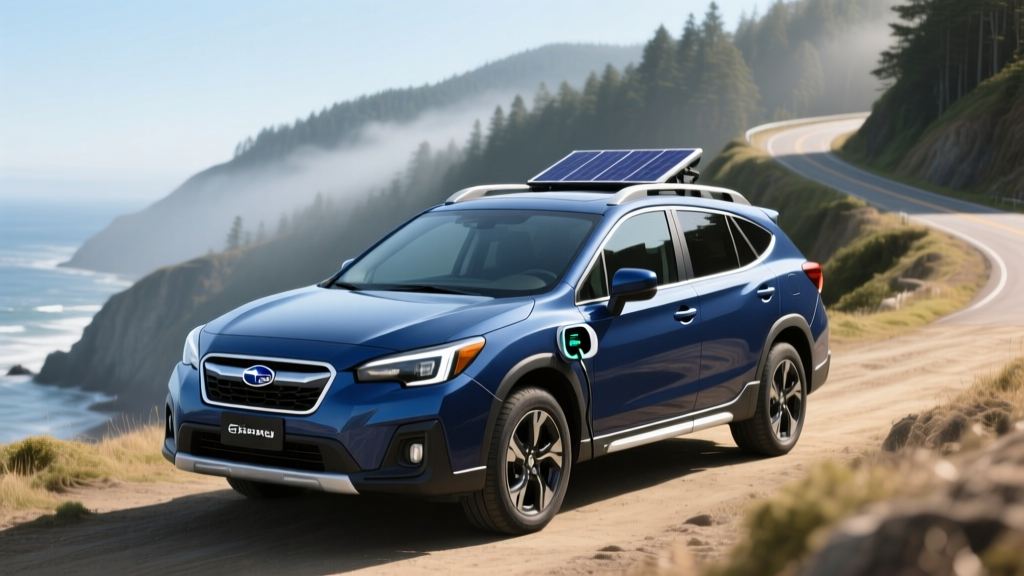
Subaru discontinued its Crosstrek Plug-In Hybrid after the 2023 model year, leaving a gap in the lineup for buyers who want electrified all-wheel drive without going fully electric. With the compact crossover segment rapidly electrifying, industry watchers and Subaru dealerships have been anticipating a return. As of early 2026, Subaru has not officially confirmed a 2027 Subaru Crosstrek Hybrid, but the brand's partnership with Toyota and its commitment to offering electrified options across its lineup by 2030 make a reintroduction highly plausible.
This guide compiles what we know from Subaru's corporate roadmap, the outgoing Crosstrek PHEV's architecture, and the current-generation Crosstrek platform to project what a 2027 model would likely deliver. Where figures are preliminary or estimated, we've labeled them clearly.
HEV vs PHEV: Which Crosstrek Hybrid Is Coming?
Subaru's previous Crosstrek electrified offering was a plug-in hybrid (PHEV), built on Toyota's hybrid synergy drive architecture. It could be plugged in to charge a larger battery and drive roughly 17 miles on electricity alone before the gasoline engine engaged. A conventional hybrid (HEV), by contrast, uses a smaller battery charged solely through regenerative braking and the engine — no plug required.
| Feature | Conventional Hybrid (HEV) | Plug-In Hybrid (PHEV) |
|---|---|---|
| Plugs in to charge? | No | Yes (Level 1 or Level 2) |
| Electric-only range | None (electric assist only) | Typically 17–35 miles |
| Battery size | ~1–2 kWh | ~8–18 kWh (estimated) |
| Federal tax credit | Not eligible | Potentially eligible (§30D, varies) |
| Ideal for | Drivers without home charging | Drivers with home charging + short commutes |
Given Subaru's prior PHEV strategy and the industry's shift toward larger batteries, the most likely scenario for a 2027 Crosstrek Hybrid is a PHEV variant with an upgraded battery and improved electric-only range. However, Subaru could also introduce a conventional HEV option to serve buyers in apartments or areas without charging infrastructure. We'll update this article when Subaru makes an official announcement.
Expected Powertrain and Performance
The outgoing 2023 Crosstrek PHEV paired a 2.0-liter flat-four (Boxer) engine with two electric motor-generators and an 8.8 kWh lithium-ion battery pack, producing a combined 148 horsepower. For a 2027 model built on the current-generation Crosstrek platform (introduced for 2024), we'd expect Subaru to adopt Toyota's newer fifth-generation hybrid system.
Projected powertrain specifications for a 2027 Subaru Crosstrek PHEV:
| Specification | Estimated (2027 PHEV) | Outgoing (2023 PHEV) |
|---|---|---|
| Engine | 2.0L Boxer 4-cyl + electric motors | 2.0L Boxer 4-cyl + electric motors |
| Combined horsepower | ~160–180 hp (est.) | 148 hp |
| Battery capacity (usable) | ~12–15 kWh (est.) | 8.8 kWh |
| Drivetrain | AWD (standard) | AWD (standard) |
| 0–60 mph | ~8.5–9.0 sec (est.) | ~9.2 sec |
| DC fast charging | Unlikely (most PHEVs are AC-only) | No (Level 2 AC only) |
| Level 2 charge time (0–100%) | ~2.5–3.5 hours (est.) | ~2.5 hours at 3.3 kW |
A critical note on charging: nearly all PHEVs on the market today, including the outgoing Crosstrek PHEV, charge via AC only (Level 1 at 120V or Level 2 at 240V). DC fast charging is rare on PHEVs because the smaller battery doesn't justify the added cost and weight. Expect the 2027 Crosstrek PHEV to follow this pattern, topping up fully overnight on a standard 120V outlet or in a few hours on a Level 2 home charger.
Fuel Economy: Projected EPA MPG and Electric Range
The 2023 Crosstrek PHEV was rated by the EPA at 90 MPGe combined when operating in electric mode and 35 MPG combined when running as a conventional hybrid after the battery was depleted. For a 2027 model with a larger battery and more efficient hybrid system, we project modest improvements.
| Metric | 2027 Est. | 2023 Actual (EPA) |
|---|---|---|
| Electric-only range | ~25–35 miles (est.) | 17 miles |
| MPGe (electric mode) | ~95–105 MPGe (est.) | 90 MPGe |
| MPG combined (hybrid mode) | ~36–40 MPG (est.) | 35 MPG |
| MPG city (hybrid mode) | ~38–42 MPG (est.) | N/A (combined reported) |
| MPG highway (hybrid mode) | ~34–37 MPG (est.) | N/A (combined reported) |
| Total combined range | ~430–480 miles (est.) | ~480 miles |
Pricing, Trims, and Tax Credit Eligibility
The 2023 Subaru Crosstrek PHEV started at approximately $36,845 (including destination), before any incentives. With inflation, platform upgrades, and a larger battery, we'd estimate a 2027 Crosstrek PHEV base MSRP in the $38,000–$42,000 range, with higher trims potentially reaching $45,000.
Federal Tax Credit (§30D) Eligibility
This is where PHEV buyers need to pay close attention. Under current IRS §30D rules, plug-in hybrids may qualify for up to $7,500 in federal tax credits, but eligibility hinges on several requirements:
- MSRP cap: SUVs/crossovers must have an MSRP at or below $80,000 (the Crosstrek PHEV would clear this easily)
- Buyer income cap: Modified AGI must not exceed $150,000 (single), $225,000 (head of household), or $300,000 (joint)
- Battery sourcing: Critical minerals and battery components must meet phased-in domestic/content thresholds that tighten annually — this is the requirement most PHEVs struggle with
- Point-of-sale transfer: As of 2024, eligible buyers can transfer the credit to the dealer for an upfront price reduction rather than waiting to claim it on their tax return
- Minimum battery capacity: At least 7 kWh — a 2027 Crosstrek PHEV would meet this
The outgoing Crosstrek PHEV did not qualify for the full federal credit in its final model years due to battery sourcing rules (its cells were manufactured in Japan). Whether a 2027 model meets the critical-mineral and battery-component thresholds depends entirely on Subaru's supply chain decisions. Always verify current eligibility on the IRS website or with a tax professional before purchasing.
Conventional hybrids (HEVs) are not eligible for the §30D federal clean vehicle credit. Some states offer their own incentives for both HEVs and PHEVs — check your state's energy office or DMV for details.
Battery Longevity, Warranty, and Replacement Cost
Battery durability is consistently the top concern among hybrid shoppers. Here's what the data shows:
Real-world longevity data from Toyota and Subaru's shared hybrid platform is encouraging. The Prius, which uses a similar architecture, routinely sees original hybrid batteries lasting 150,000–200,000+ miles before needing replacement. The Crosstrek PHEV's larger battery actually has an advantage: because it has more capacity, each individual cell undergoes less stress per mile driven.
If a replacement is needed out of warranty, expect a hybrid battery pack replacement to cost between $3,000 and $6,000 (parts and labor) depending on whether you go OEM or refurbished. This is significantly less than a full BEV battery replacement, which can exceed $15,000.
Who Should Choose the Crosstrek Hybrid vs. a Full EV or Gas Model?
The Crosstrek lineup will likely span three powertrains: gasoline, hybrid (PHEV), and potentially a full EV (the Solterra fills this role elsewhere in Subaru's lineup). Here's a practical decision framework:
Choose the 2027 Crosstrek Hybrid (PHEV) if:
- You can install a Level 2 charger at home and your daily commute is under 30 miles round-trip (you'll drive mostly electric)
- You want AWD for snow/mud but also take road trips where charging infrastructure is sparse
- You want to reduce fuel consumption without range anxiety
Choose the gas Crosstrek if:
- You don't have access to home or workplace charging
- Your budget is tight and the PHEV price premium ($5,000–$8,000) outweighs fuel savings
- You drive mostly highway miles where hybrid advantages shrink
Choose a full EV (e.g., Subaru Solterra) if:
- You have reliable home charging and want zero tailpipe emissions
- Your daily driving is under 200 miles and you're comfortable planning DC fast-charge stops on road trips
- You want maximum federal tax credit eligibility and lower per-mile "fuel" costs
Reliability and What Owners Report
Subaru's hybrid system, inherited from Toyota's Hybrid Synergy Drive, is one of the most proven electrified powertrains on the road. The planetary gearset design eliminates the traditional transmission — there's no torque converter, no clutch packs, and no belt-driven accessories to fail. The outgoing Crosstrek PHEV had no widespread battery or hybrid-system recalls.
According to IIHS and NHTSA databases, the current-generation Crosstrek (2024+) has earned strong safety ratings, and the hybrid variant would share the same body structure and EyeSight driver-assistance suite (which is an SAE Level 2 system — it requires full driver attention and is not self-driving).
Common reliability considerations for any Subaru include the CVT (continuously variable transmission) in non-hybrid models — but the PHEV uses an e-CVT planetary gearset, which is mechanically simpler and historically more durable. Head gasket concerns that plagued older Subarus are not an issue on the current FB20 engine.
What We're Still Waiting to Confirm
As of this writing, Subaru has not released official specifications for a 2027 Crosstrek Hybrid. The following details remain unconfirmed and will be updated when announced:
- Official EPA range and MPG ratings
- Exact battery capacity and chemistry
- Trim levels and MSRP by configuration
- Federal tax credit eligibility (dependent on battery sourcing)
- Whether Subaru will offer both HEV and PHEV variants or only one
- On-sale date (likely late 2026 or early 2027 if announced)
We recommend monitoring fueleconomy.gov for official EPA ratings once the vehicle is certified, and Subaru's press site for the formal reveal.
Frequently Asked Questions
How many MPG does the 2027 Subaru Crosstrek Hybrid get?
Based on the outgoing model and projected improvements, we estimate approximately 36–40 MPG combined in hybrid mode (after the battery is depleted), with city MPG likely exceeding highway due to regenerative braking. Official EPA numbers are not yet available. The 2023 Crosstrek PHEV was rated at 35 MPG combined.
How far can the 2027 Crosstrek PHEV go on electric only?
We estimate 25–35 miles of electric-only range, up from the 17 miles offered by the 2023 model. This would cover most daily commutes without using gasoline. Actual range will vary with temperature, terrain, and driving style — expect 20–30% less in sub-freezing weather.
Does the 2027 Crosstrek Hybrid qualify for a tax credit?
A PHEV variant may qualify for up to $7,500 under the federal §30D credit, but eligibility depends on battery component and critical-mineral sourcing rules that tighten each year. The outgoing Crosstrek PHEV did not qualify for the full credit. A conventional HEV variant would not be eligible for the federal credit. Always verify on IRS.gov before purchasing.
Is the Subaru Crosstrek Hybrid reliable? What does battery replacement cost?
Yes — Subaru's hybrid system is derived from Toyota's proven architecture with a strong track record. Hybrid batteries are warrantied for 8 years/100,000 miles (10/150,000 in CARB states). Out-of-warranty replacement typically costs $3,000–$6,000, and many hybrid batteries last 150,000+ miles before needing service.
Hybrid vs PHEV vs EV — which is right for me?
If you have home charging and a short commute, a PHEV gives you electric daily driving with gas flexibility for road trips. A conventional hybrid (HEV) works if you can't plug in. A full EV (like the Solterra) offers the lowest running costs and zero tailpipe emissions but requires charging infrastructure access and trip planning for longer drives.
Does the Crosstrek Hybrid have standard AWD?
Yes. Every Crosstrek, including the hybrid, comes with Subaru's Symmetrical All-Wheel Drive as standard equipment. The PHEV variant uses a rear-mounted electric motor to provide rear-axle drive in EV mode, maintaining AWD capability regardless of charge state.