Quick Verdict: The Wagon That Bridges the Gap
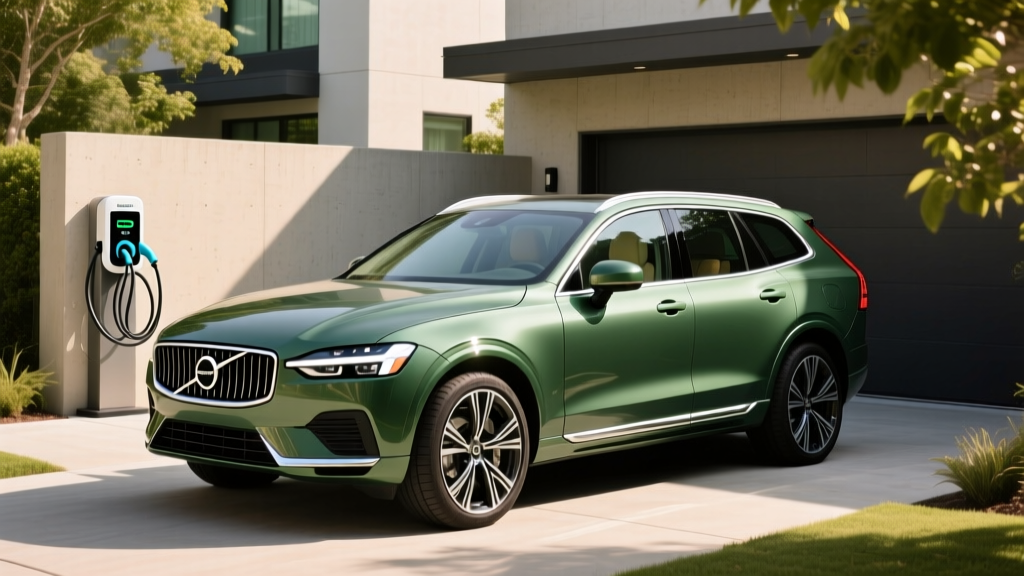
Volvo's return of the legendary XC70 nameplate for 2026 arrives as a plug-in hybrid (PHEV) wagon built on the SPA2 platform, sharing architecture with the XC90 and V90. For buyers who want the cargo versatility of a wagon with genuine daily electric commuting capability — but without full EV range anxiety on road trips — the 2026 Volvo XC70 plug-in hybrid occupies a narrow but compelling niche. With an estimated 35 miles of electric-only range, a combined 455 horsepower from its T8 powertrain, and a starting MSRP around $58,950, it undercuts luxury SUV alternatives while offering something they can't: a low-slung, car-based wagon with legitimate plug-in efficiency.
Before we break down every spec, let's clarify what this vehicle is — and isn't — because Volvo's naming conventions and the hybrid landscape can confuse even seasoned shoppers.
HEV vs PHEV: What the 2026 XC70 Actually Is
The 2026 Volvo XC70 is offered exclusively as a plug-in hybrid (PHEV), badged under Volvo's "Recharge" sub-brand. It does not come as a conventional hybrid (HEV). Understanding the difference is essential before you shop:
| Feature | Conventional Hybrid (HEV) | Plug-In Hybrid (PHEV) — XC70 Recharge |
|---|---|---|
| Battery Size | 1–2 kWh (small buffer) | 18.8 kWh usable (estimated) |
| Plug-In Required? | No — charges via regen & engine | Yes — for electric-only driving |
| Electric-Only Range | 0–1 mile at low speed | ~35 miles EPA (estimated) |
| Fuel Economy (gas mode) | Higher combined MPG typical | ~28 MPG combined (gas-only) |
| Federal Tax Credit | None (§30D expired for HEVs) | Eligible — up to $7,500 if sourcing/income rules met |
| Best For | No home charging access | Home chargers with short commutes |
If you cannot install a Level 2 home charger or lack access to workplace charging, a PHEV still functions as a hybrid — the gasoline engine and regenerative braking keep the battery charged — but you'll forfeit the electric-only range advantage and the federal tax credit value proposition.
Powertrain and Performance Specs
The 2026 XC70 Recharge uses Volvo's T8 plug-in hybrid powertrain, a proven setup refined across multiple model years in the XC60 and XC90 Recharge variants.
| Specification | 2026 Volvo XC70 Recharge (PHEV) |
|---|---|
| Engine | 2.0L turbocharged + supercharged 4-cylinder |
| Electric Motor | Rear-axle permanent-magnet synchronous (143 hp / 228 lb-ft) |
| Combined Horsepower | 455 hp |
| Combined Torque | 523 lb-ft |
| Transmission | 8-speed automatic (AWD via electric rear axle) |
| 0–60 mph | ~5.0 seconds (manufacturer estimate) |
| Battery (Usable) | 18.8 kWh (estimated, NMC chemistry) |
| Electric-Only Range | ~35 miles EPA (estimated) |
| Total Combined Range | ~470 miles (gas + electric) |
| MPGe (Combined) | ~56 MPGe (estimated) |
| Gas-Only MPG (Combined) | ~28 MPG (estimated) |
| Charging (Level 2, 240V) | ~3.5 hours (0–100%) at 3.7 kW |
| DC Fast Charging | Not available |
| Towing Capacity | ~3,500 lbs (estimated) |
The electric rear axle provides all-wheel drive without a mechanical driveshaft — the gasoline engine powers the front wheels while the electric motor handles the rear. This means AWD is available in electric-only mode, a practical advantage in snowy climates where the XC70's wagon heritage has always resonated.
One notable limitation: the XC70 Recharge does not support DC fast charging. The onboard charger maxes out at 3.7 kW on Level 2 AC power. This means no quick top-ups on road trips — but given the 35-mile electric buffer is designed for daily commuting rather than highway travel, this omission is less critical than it would be on a full BEV.
Fuel Economy and Real-World Efficiency
| Driving Mode | City | Highway | Combined |
|---|---|---|---|
| Electric-Only (MPGe) | ~62 MPGe | ~52 MPGe | ~56 MPGe |
| Gasoline-Only (MPG) | ~26 MPG | ~30 MPG | ~28 MPG |
Real-world expectations: PHEVs are uniquely sensitive to how you use them. If your daily commute is under 35 miles and you charge at home nightly, you may go weeks without the engine engaging for propulsion — effectively operating as a battery-electric vehicle. In this scenario, gasoline consumption drops to near zero, and "MPG" becomes a misleading metric. Your cost-per-mile aligns with local electricity rates (typically $0.12–$0.20/kWh, or roughly $0.03–$0.05/mile).
On highway road trips where the battery depletes within the first 35 miles, expect the gasoline engine to deliver roughly 27–29 MPG combined — competitive with non-hybrid luxury wagons but below what dedicated hybrids like the Toyota Prius or Honda Accord Hybrid achieve. The XC70's heavy battery pack (adding ~300 lbs over a pure ICE equivalent) creates a parasitic efficiency penalty once the electric range is exhausted.
In cold weather (below 30°F), expect the electric-only range to drop 20–30%, reducing the 35-mile buffer to approximately 24–28 miles. Volvo's heat pump system mitigates cabin-heating energy draw, but battery chemistry inherently loses capacity at low temperatures.
Charging: What You Need at Home
The XC70 Recharge charges exclusively via AC power — there is no DC fast-charge port. Here's what charging looks like across scenarios:
| Charging Level | Power (kW) | Voltage | 0–100% Time | Miles of Range per Hour |
|---|---|---|---|---|
| Level 1 (Standard Outlet) | 1.4 kW | 120V | ~13 hours | ~4 miles/hr |
| Level 2 (Home/Public AC) | 3.7 kW (max onboard) | 240V | ~5 hours | ~10 miles/hr |
| DC Fast Charge | N/A | N/A | Not supported | N/A |
For most PHEV owners, a standard 120V outlet (Level 1) is sufficient if the vehicle is parked overnight for 10+ hours — it will fully replenish the 18.8 kWh battery in roughly 13 hours. However, a Level 2 home installation (240V, 16A circuit) cuts this to about 5 hours and is recommended if you want midday top-ups or have a shorter parking window.
Level 2 home installation typically costs $500–$1,500 depending on panel proximity and local permitting. The XC70's relatively small battery means you do not need a high-amperage (48A+) charger — a basic 16A/3.7 kW unit ($250–$400) fully utilizes the car's onboard charger capacity. Spending more on a 48A ChargePoint or Tesla Wall Connector provides no additional benefit for this vehicle, though it future-proofs for a potential BEV upgrade.
Pricing, Trims, and Tax Credit Eligibility
The 2026 Volvo XC70 Recharge is expected in three trim levels:
- Core: ~$58,950 MSRP — 19" wheels, panoramic roof, Google built-in, Pilot Assist
- Plus: ~$63,450 MSRP — adds Harman Kardon audio, 360° camera, head-up display
- Ultra: ~$68,950 MSRP — adds Bowers & Wilkins audio, air suspension, massaging seats
Federal Tax Credit (§30D) Eligibility
The 2026 XC70 Recharge may qualify for the federal plug-in vehicle tax credit under IRS §30D, but eligibility is not guaranteed and depends on multiple factors that shift with supply-chain sourcing. As of current IRS guidance:
- MSRP Cap: SUVs/vans must be under $80,000 — all XC70 trims qualify
- Buyer Income Cap: AGI must not exceed $150,000 (single) / $300,000 (joint) — check your tax situation
- Battery Sourcing: Critical minerals and battery components must meet escalating domestic-sourcing thresholds (2026: 80% critical minerals from FTA countries, 100% battery components manufactured/assembled in North America)
- Credit Amount: Up to $7,500 if both sourcing thresholds met; $3,750 if only one is met
- Point-of-Sale Transfer: Eligible buyers can transfer the credit to the dealer for an upfront price reduction at purchase
Critical caveat: Volvo's battery supply chain for SPA2-based Recharge models has historically sourced cells from CATL (China) and LG Energy Solution (South Korea/US). The 2026 critical-minerals threshold is stringent, and the XC70 may only qualify for the partial $3,750 credit — or potentially none if sourcing falls short. Always verify current eligibility on fueleconomy.gov before purchase, and consult a tax professional for your specific situation.
Battery Warranty, Reliability, and Replacement Cost
Volvo's T8 powertrain has been in production since 2016, providing a substantial reliability track record. The high-voltage battery uses NMC (nickel-manganese-cobalt) chemistry in a liquid-cooled pack — the same architecture used in the XC90 Recharge and XC60 Recharge, which have demonstrated average degradation of 8–12% over 8 years/100,000 miles in owner-reported data. This means most XC70 PHEVs should retain 30+ miles of electric range well beyond the warranty period under normal use.
Battery replacement cost: If the pack fails out of warranty, expect $8,000–$12,000 for parts and labor at a Volvo dealer. However, individual module replacement (rather than the full pack) is often possible for $2,000–$4,000 if only specific cells degrade. Volvo's modular battery design supports this approach, unlike some competitors that require full-pack swaps.
For general reliability, Volvo's SPA2 platform earns average-to-above-average marks from Consumer Reports and J.D. Power, with the T8 hybrid system specifically showing fewer issues than the earlier T8 Twin Engine variants (pre-2022). The most common complaints involve infotainment software (Google Automotive OS) rather than powertrain components.
Who Should Choose the XC70 PHEV vs a Full EV or Gas Car?
Choose the 2026 Volvo XC70 Plug-In Hybrid if:
- Your daily commute is under 35 miles round-trip and you can charge at home
- You take 3+ road trips per year exceeding 200 miles and don't want to plan around DC chargers
- You want a luxury wagon (not an SUV) with genuine cargo volume (~35 cu ft behind rear seats)
- You live in a cold climate where BEV range loss is a practical concern
- You want to reduce gasoline consumption 60–80% without going fully electric
Choose a full BEV (like the Volvo EX90 or Tesla Model Y) instead if:
- You have reliable home and workplace charging
- Your daily driving rarely exceeds 200 miles
- You want to eliminate gasoline entirely and reduce maintenance (no oil changes, fewer brake replacements via regen)
- You want access to the full $7,500 federal credit with fewer sourcing complications (many BEVs qualify more cleanly)
Choose a conventional hybrid (HEV) like the Toyota RAV4 Hybrid instead if:
- You cannot install a home charger (apartment, street parking)
- Your budget is under $40,000
- You want maximum MPG without plugging in (~40 MPG combined)
Pros
- 35-mile electric range covers most daily commutes
- 455 hp with instant electric torque — genuinely quick
- Wagon cargo practicality (~35 cu ft) without SUV bulk
- AWD in electric-only mode (snow-capable without engine)
- Luxury interior, Google built-in, Pilot Assist standard
- Proven T8 powertrain with 8+ years of production history
Cons
- No DC fast charging — road-trip electric range is fixed at ~35 miles
- Gas-only MPG (~28) is unremarkable once battery depletes
- Starting near $59K — premium over non-luxury PHEVs
- Federal tax credit uncertain due to battery sourcing rules
- Heavier than a gas wagon — handling feels more planted than agile
- Onboard charger limited to 3.7 kW — Level 2 top-ups are slow
Frequently Asked Questions
How many MPG does the 2026 Volvo XC70 plug-in hybrid get?
When operating in gasoline-only mode (after the battery is depleted), the XC70 Recharge returns an estimated 26 city / 30 highway / 28 combined MPG. In electric-only mode, it achieves approximately 56 MPGe combined. Your actual fuel consumption depends entirely on how often you charge and the length of your trips — daily commuters who charge nightly may use almost no gasoline for weeks.
How far can the XC70 Recharge go on electric only?
The EPA-estimated electric-only range is approximately 35 miles in mild weather with mixed driving. In real-world conditions, expect 24–28 miles in freezing temperatures, 30–33 miles at sustained highway speeds, and the full 35 miles in city driving under moderate temperatures. The total combined range (gas + electric) is approximately 470 miles.
Does the 2026 XC70 qualify for a federal tax credit?
It may qualify for up to $7,500 under IRS §30D, but eligibility depends on battery-component and critical-mineral sourcing requirements that are stringent in 2026. The XC70's MSRP (under $80,000) and your income must also meet caps. Verify current eligibility at fueleconomy.gov and consult a tax professional before relying on the credit in your purchase decision.
Is the Volvo XC70 hybrid reliable, and what does battery replacement cost?
The T8 powertrain has been in production since 2016 with a solid reliability record. The high-voltage battery is warrantied for 8 years/100,000 miles (10 years/150,000 miles in CARB states). Real-world degradation averages 8–12% over that period. Out-of-warranty full battery replacement costs $8,000–$12,000, but modular cell replacement is often available for $2,000–$4,000.
Can I charge the XC70 Recharge at a Tesla Supercharger or public DC fast charger?
No. The XC70 Recharge does not support DC fast charging of any kind — it charges exclusively via AC power (Level 1 at 120V or Level 2 at 240V). This is typical for PHEVs with smaller batteries, as the use case is overnight home charging rather than road-trip top-ups.
How does the XC70 PHEV compare to the Volvo V90 Recharge?
The XC70 shares the SPA2 platform with the V90 but is positioned slightly below it in pricing and with more rugged styling cues (higher ground clearance, body cladding). Expect the V90 Recharge to offer similar powertrain specs at a ~$5,000–$8,000 premium, with a more car-like ride but less ground clearance for light trail or snow use.
Note: Specifications for the 2026 Volvo XC70 Recharge are based on Volvo's announced powertrain configurations for the SPA2 platform and preliminary model-year data. Final EPA certification figures may differ. Always confirm specs with your dealer and verify tax credit eligibility on irs.gov before purchase.