Quick Verdict: The RAV4 PHEV Still Owns the Plug-In Compact SUV Segment
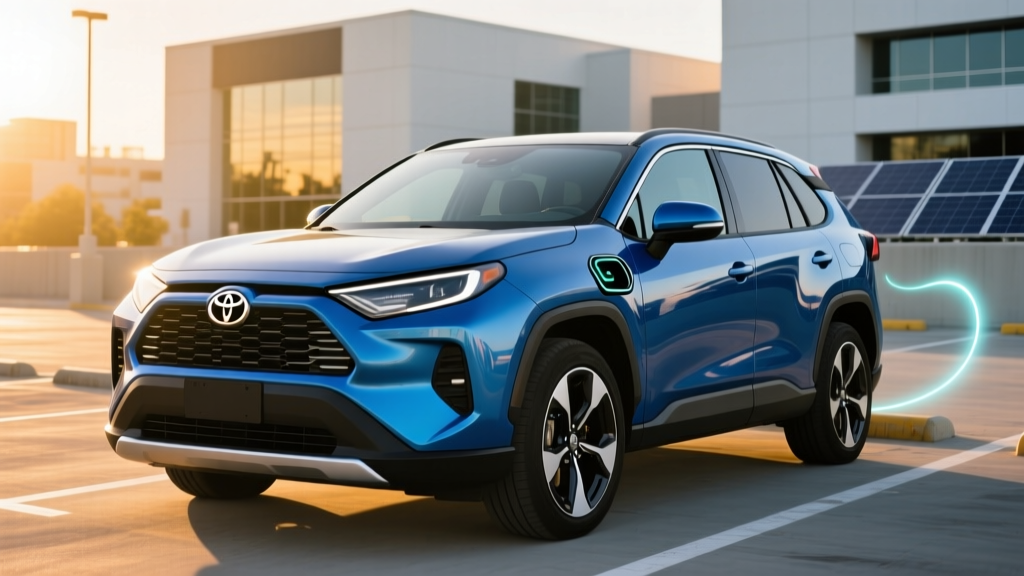
The 2026 Toyota RAV4 PHEV (marketed as the RAV4 Prime in previous model years, now consolidated under the PHEV badge) remains the benchmark plug-in hybrid compact SUV. With 42 miles of EPA-rated electric-only range, 302 combined horsepower, and standard all-wheel drive, it solves the core dilemma many buyers face: how to commute on cheap electricity without sacrificing road-trip flexibility. The 2026 model year carries over the proven powertrain with minor infotainment and safety-suite updates, and it continues to qualify for partial federal tax credits under current IRS §30D rules—though sourcing requirements have tightened.
If you can charge at home and your daily commute stays under 40 miles, the RAV4 PHEV effectively operates as a battery-electric vehicle Monday through Friday, then transforms into a 520-mile-range hybrid for weekend trips. That dual personality is exactly why it remains one of the most practical electrified vehicles on the market.
HEV vs PHEV: Which RAV4 Is Right for You?
Toyota offers the 2026 RAV4 in three powertrain flavors, and understanding the distinction is critical before you visit a dealer:
| Attribute | RAV4 Hybrid (HEV) | RAV4 PHEV | Key Difference |
|---|---|---|---|
| Plug-in required? | No — self-charging | Yes — plug to unlock EV range | HEV never needs a plug; PHEV benefits enormously from one |
| Electric-only range | ~1 mi at low speed | 42 miles EPA | PHEV can handle full commutes on battery alone |
| Battery capacity | 1.6 kWh (NiMH) | 18.1 kWh (lithium-ion) | PHEV battery is ~11x larger |
| Combined horsepower | 219 hp | 302 hp | PHEV adds a more powerful rear motor |
| EPA combined fuel economy | 41 MPG | 94 MPGe (EV) / 38 MPG (gas) | MPGe measures EV mode; MPG applies once battery depletes |
| Starting MSRP (2026) | ~$33,500 | ~$45,500 | ~$12,000 premium for plug-in capability |
| Federal tax credit | Not eligible | Up to $3,750 (§30D) | HEV does not qualify for §30D; PHEV may qualify partially |
The bottom line: Choose the conventional HEV if you cannot charge at home or want a lower purchase price. Choose the PHEV if you have Level 2 home charging access, drive under 42 miles round-trip on most days, and want the performance and electric-commuting benefits. The PHEV's $12,000 price premium takes roughly 5–7 years to recoup through fuel savings alone at 12,000 miles/year, but the tax credit and performance gap narrow that timeline.
Powertrain, Performance & Efficiency Specs
The 2026 RAV4 PHEV pairs a 2.5-liter Atkinson-cycle four-cylinder engine with a front-mounted permanent-magnet motor and a rear-mounted independent electric motor for standard electronic AWD. Combined output is 302 horsepower, making it the quickest RAV4 variant short of a hypothetical GR model.
| Specification | 2026 Toyota RAV4 PHEV |
|---|---|
| Engine | 2.5L inline-4 Atkinson cycle |
| Combined system horsepower | 302 hp |
| Front motor output | 134 kW (180 hp) |
| Rear motor output | 40 kW (54 hp) |
| Battery capacity (gross / usable) | 18.1 kWh / ~14.5 kWh usable |
| Battery chemistry | Lithium-ion (NMC) |
| 0–60 mph | 5.7 seconds |
| Drivetrain | Electronic AWD (eAWD) |
| EPA electric-only range | 42 miles |
| EPA combined range (EV + gas) | ~520 miles |
| EPA MPGe (EV mode) | 94 MPGe combined |
| EPA MPG (hybrid mode, battery depleted) | 38 combined (40 city / 36 highway) |
| Fuel tank capacity | 14.5 gallons |
| Towing capacity | 1,500 lbs |
| Cargo volume (behind rear seats) | 33.5 cu ft |
Charging: Level 2 Only, No DC Fast Charging
This is the RAV4 PHEV's most common criticism, and the 2026 model does not address it: there is no DC fast charging capability. The vehicle charges exclusively via AC power:
| Charging Level | Power (kW) | Time to Full (0–100%) | Connector |
|---|---|---|---|
| Level 1 (120V household outlet) | ~1.4 kW | ~12 hours | J1772 |
| Level 2 (240V, 16A) | 3.3 kW | ~5.5 hours | J1772 |
| Level 2 (240V, 32A) | 6.6 kW | ~2.5 hours | J1772 |
| DC Fast Charging | N/A — not supported | N/A | N/A |
For PHEV owners, the lack of DC fast charging is less consequential than it appears. The 18.1 kWh battery is small enough that a standard Level 2 home charger fully replenishes it overnight — or even during a workday if your workplace offers Level 2 charging. The 6.6 kW onboard charger (available on XSE and higher trims; SE base trim retains the 3.3 kW charger) is the one to prioritize, cutting charge time to roughly 2.5 hours. Public DC fast chargers are designed for 60–100 kWh BEV batteries; plugging a PHEV into a 150 kW stall would be wasteful even if it were supported.
Home charging setup cost: A basic 240V Level 2 installation (e.g., ChargePoint Home Flex or Emporia Level 2) typically runs $500–$1,200 for equipment plus $400–$1,500 for electrician labor, depending on panel proximity and local permit fees. If your panel needs a 200A upgrade, add $1,500–$3,000. Most PHEV owners can charge adequately on a standard 120V outlet if they drive under 30 miles daily, since Level 1 adds roughly 4–5 miles of range per hour of charging.
Pricing, Trims & Federal Tax Credit Eligibility
The 2026 RAV4 PHEV is offered in three trims, with pricing reflecting the plug-in premium over the standard hybrid:
| Trim | MSRP (2026 est.) | Onboard Charger | Key Features |
|---|---|---|---|
| SE | $45,500 | 3.3 kW | SofTex seats, 8" touchscreen, TSS 3.0 |
| XSE | $48,800 | 6.6 kW | Panoramic roof option, 10.5" display, heated seats |
| XSE Premium | $52,500 | 6.6 kW | JBL audio, ventilated seats, digital rearview mirror |
Federal Tax Credit (§30D) — Current Rules
Under current IRS §30D rules, the RAV4 PHEV may qualify for a partial credit of up to $3,750, contingent on meeting critical-mineral and battery-component sourcing requirements. The full $7,500 credit requires meeting both sourcing thresholds, and as of 2026, Japan-assembled Toyotas face tighter battery-component restrictions that may limit eligibility to the $3,750 half-credit (critical minerals only) or zero, depending on the specific VIN's supply chain.
- MSRP cap: Must be under $80,000 for SUVs — RAV4 PHEV qualifies (all trims well under cap)
- Buyer income cap: AGI must not exceed $150,000 (single) / $300,000 (joint) / $225,000 (head of household)
- Battery capacity: Must be ≥7 kWh — RAV4 PHEV qualifies at 18.1 kWh
- Critical minerals sourcing: Must meet escalating percentage thresholds — verify per VIN at time of purchase
- Battery component manufacturing: Must meet North American assembly thresholds — this is where many Toyota PHEVs face restrictions
- Point-of-sale transfer: Credit can be applied at the dealer as a down-payment reduction (effective 2024 onward)
Always verify your specific vehicle's eligibility using the IRS VIN lookup tool at fueleconomy.gov before purchase, and consult a tax professional. Rules are subject to change.
Battery Warranty, Reliability & Long-Term Costs
- Hybrid battery: 10 years / 150,000 miles (whichever comes first) — covers capacity below 70% of original
- Hybrid system components: 8 years / 100,000 miles (inverter, motors, control modules)
- Basic vehicle warranty: 3 years / 36,000 miles
- Powertrain warranty: 5 years / 60,000 miles
Toyota's hybrid reliability track record is among the strongest in the industry. The Prius and RAV4 Hybrid platforms have demonstrated battery longevity well beyond warranty periods, with many first-generation Prius packs exceeding 200,000 miles before significant degradation. The RAV4 PHEV's larger lithium-ion pack operates with a conservative charge buffer (roughly 20% top and bottom), which reduces stress on cells and extends cycle life.
Battery replacement cost (out of warranty): If the hybrid battery requires replacement after the 10-year/150,000-mile warranty expires, expect $4,000–$6,500 for a new OEM pack plus labor at a Toyota dealer. Third-party refurbished packs are emerging at $2,500–$4,000. Given Toyota's historical degradation data, most owners will sell or trade the vehicle before facing this cost.
The 2.5L Atkinson-cycle engine is naturally aspirated and under-stressed, contributing to exceptional long-term reliability. Toyota's eAWD system uses no mechanical linkage between axles — the rear motor operates independently, eliminating driveshaft and differential maintenance. Routine maintenance is limited to oil changes (every 10,000 miles), cabin air filters, brake fluid, and tire rotations. Brake pad life is extended significantly by regenerative braking; many owners report original pads at 80,000+ miles.
Who Should Buy the RAV4 PHEV vs. a Full EV or Gas Car?
- You can install or already have Level 2 home charging
- Your daily commute is under 42 miles round-trip
- You take road trips of 200+ miles several times per year and don't want to plan around charging stops
- You want AWD and strong acceleration (302 hp, 5.7s 0–60) without the EV price premium
- You live in an area with limited public DC fast-charging infrastructure
- You want Toyota's proven hybrid reliability and 10-year battery warranty
- Your daily driving exceeds 42 miles consistently (the PHEV will burn gas regularly)
- You have reliable home and workplace charging plus access to DC fast chargers for road trips
- You want to eliminate gasoline entirely and minimize moving parts
- You qualify for the full $7,500 federal credit on a BEV (broader BEV eligibility under §30D)
- You drive 15,000+ miles annually — the per-mile electricity savings compound faster
- You cannot charge at home (apartment, street parking, no garage)
- Your budget is under $35,000 and the PHEV premium is prohibitive
- You drive mostly highway miles (the HEV's 41 MPG combined is competitive when the PHEV operates in hybrid mode at 38 MPG)
- You want simplicity — no charging cables, no electrical work, no second energy source to manage
Pros & Cons
- 42 miles EPA electric range covers most commutes
- 302 hp / 5.7s 0–60 — quickest RAV4 available
- Standard eAWD with no mechanical linkage
- 520+ miles total range eliminates trip-planning anxiety
- 10-year / 150,000-mile hybrid battery warranty
- Proven Toyota reliability and strong resale value
- Qualifies for partial §30D tax credit (verify per VIN)
- No DC fast charging capability
- $12,000 premium over RAV4 Hybrid takes years to recoup
- Cargo space reduced by ~3 cu ft vs. HEV (battery under floor)
- Base SE trim limited to 3.3 kW onboard charger
- Federal tax credit may be reduced to $3,750 or $0 depending on sourcing
- EV range drops significantly in cold weather and highway driving
- Towing limited to 1,500 lbs (same as HEV)
Frequently Asked Questions
How many MPG does the 2026 RAV4 PHEV get?
Once the battery is depleted, the RAV4 PHEV returns an EPA-rated 38 MPG combined (40 city / 36 highway). In electric mode, it achieves 94 MPGe combined. Real-world city driving often yields 40–43 MPG thanks to regenerative braking, while sustained highway driving at 75+ mph may drop to 34–36 MPG. (fueleconomy.gov)
How far can the 2026 RAV4 PHEV go on electric only?
The EPA rates it at 42 miles of electric-only range. Real-world results vary: expect 35–38 miles on the highway, 40–44 miles in mild-weather city driving, and 28–32 miles in sub-freezing temperatures. Total combined range (electric + 14.5-gallon fuel tank) exceeds 520 miles.
Does the 2026 RAV4 PHEV qualify for a federal tax credit?
It may qualify for a partial credit of up to $3,750 under IRS §30D, depending on battery-component and critical-mineral sourcing for the specific VIN. The full $7,500 requires meeting both thresholds, which has been challenging for Japan-manufactured Toyota battery packs under 2026 sourcing rules. Always check the fueleconomy.gov VIN lookup and consult a tax professional before relying on the credit.
Is the RAV4 PHEV reliable, and what does battery replacement cost?
Toyota's hybrid systems have a decades-long reliability record. The hybrid battery is covered for 10 years / 150,000 miles. Out-of-warranty replacement runs $4,000–$6,500 for an OEM pack. Most owners will trade the vehicle before reaching this point, and Toyota's historical data shows hybrid batteries frequently lasting 200,000+ miles with conservative charge-buffer management.
Do I need to plug in the RAV4 PHEV?
No — the vehicle will operate as a conventional hybrid if you never plug it in, returning 38 MPG combined. However, you would forfeit the 42 miles of electric range and the cost-per-mile advantage of electricity. To maximize value, plan to charge daily on a Level 2 home charger (2.5 hours at 6.6 kW) or at least use a 120V outlet overnight (~12 hours for a full charge).
Can the RAV4 PHEV DC fast charge on road trips?
No. The 2026 RAV4 PHEV does not support DC fast charging. It charges exclusively via AC power (J1772 connector) at up to 6.6 kW on Level 2. For road trips beyond 42 miles, the gasoline engine engages automatically — this is the trade-off for the PHEV's simplicity and lower cost versus a full BEV.
RAV4 PHEV vs. full EV: which saves more money over 5 years?
It depends on your mileage and charging access. For a driver covering 12,000 miles/year with home charging and a 30-mile daily commute, the PHEV uses roughly $600–$800/year in electricity and $400–$600/year in gasoline. A comparable BEV (e.g., Tesla Model Y) would use $500–$700/year in electricity only. The BEV saves on fuel but may carry higher insurance premiums ($200–$400/year more) and potentially steeper depreciation. The PHEV's advantage is zero road-trip charging hassle and a lower purchase price than most AWD BEVs. Run your own numbers using the DOE's side-by-side comparison tool.