Why Toyota's Hybrid SUVs Dominate the Electrified Market in 2026
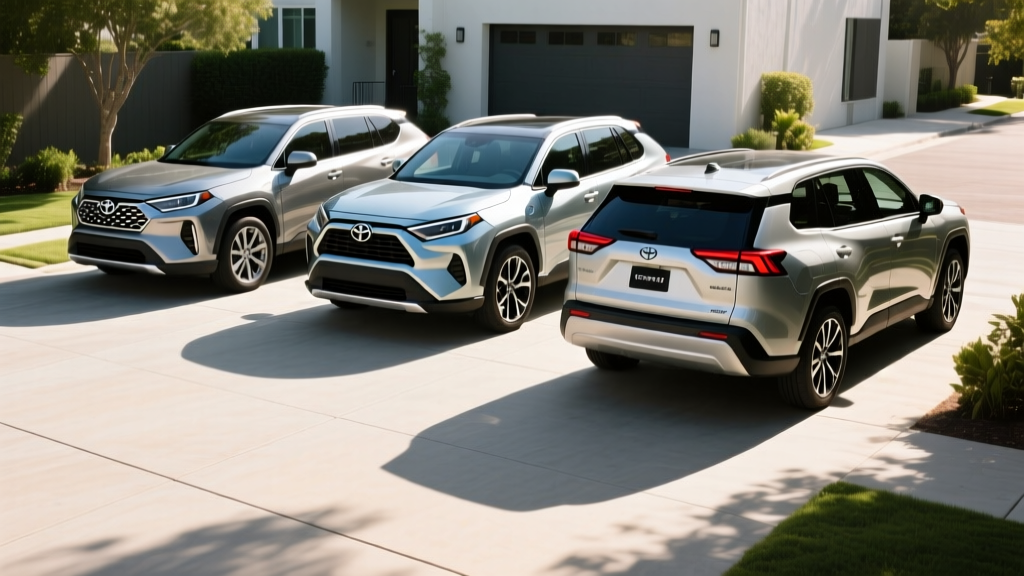
Toyota bet heavily on hybrids when competitors pivoted to full EVs, and that strategy paid off. The 2026 Toyota hybrid SUV lineup spans four distinct models — the compact RAV4 Hybrid, the plug-in RAV4 Prime, the midsize Highlander Hybrid, and the two-row Venza — each targeting a different buyer profile. None require you to install a home charger or plan road trips around DC fast-charging stations. Instead, they deliver measurable fuel savings over gas counterparts with zero behavioral change.
This guide breaks down every 2026 Toyota hybrid SUV with exact EPA fuel economy, powertrain output, pricing, battery warranty details, and federal tax credit eligibility. Whether you're comparing a RAV4 Hybrid against a RAV4 Prime PHEV or weighing Toyota's three-row Highlander Hybrid against a full EV, the numbers below tell the real story.
HEV vs PHEV: Understanding Toyota's Two Hybrid Approaches
Conventional Hybrid (HEV)
Models like the RAV4 Hybrid, Highlander Hybrid, and Venza use Toyota's series-parallel hybrid system. A gasoline engine and one or more electric motors share propulsion duties. A small battery (typically 1.0–1.6 kWh) captures energy from regenerative braking and engine excess — you never plug it in. The result is dramatically improved MPG, especially in city driving, with no range anxiety and no charging infrastructure needed.
Plug-In Hybrid (PHEV)
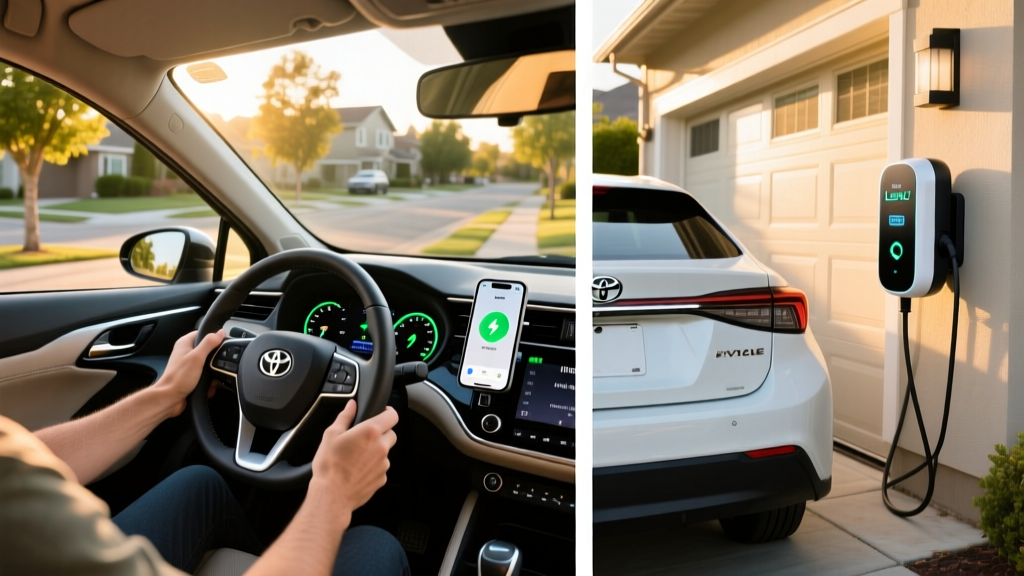
The RAV4 Prime is Toyota's sole plug-in hybrid SUV. It carries a larger battery (18.1 kWh usable) that you charge via a standard outlet or Level 2 home charger. This enables 42 miles of pure electric driving before the gasoline engine engages. Once the battery depletes, it operates as a conventional hybrid with 38 MPG combined. PHEVs bridge the gap: electric commuting during the week, gas-powered road trips on weekends.
2026 Toyota RAV4 Hybrid: The Volume Leader
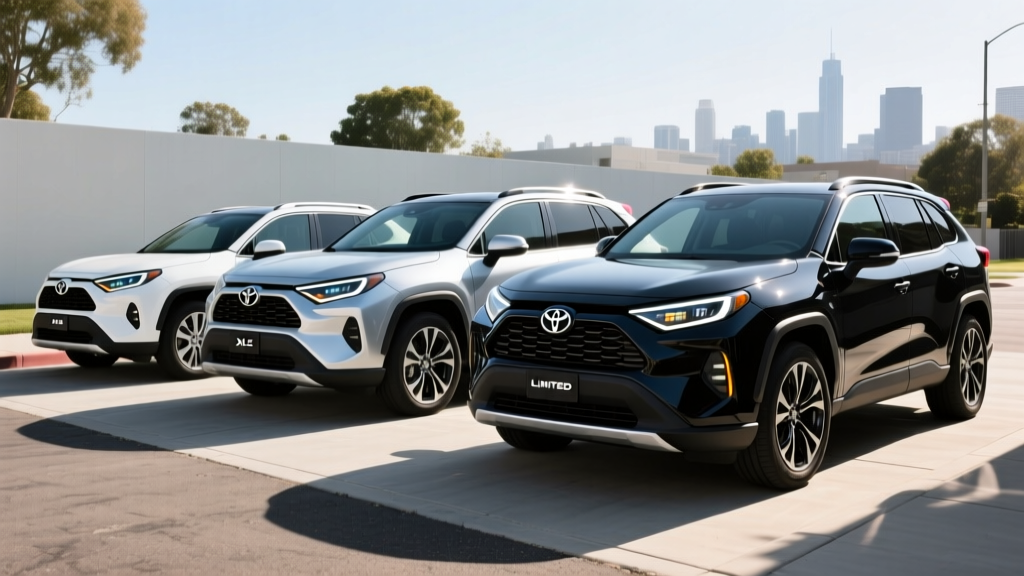
The RAV4 Hybrid remains Toyota's best-selling electrified vehicle for good reason. It pairs a 2.5-liter four-cylinder engine with front and rear electric motors for a combined 219 horsepower and standard all-wheel drive (AWD). The e-AWD system uses a dedicated rear motor rather than a mechanical driveshaft, improving traction response and packaging efficiency.
| Attribute | Value |
|---|---|
| Powertrain | 2.5L I4 + front/rear electric motors |
| Combined Horsepower | 219 hp |
| Drivetrain | Electronic AWD (e-AWD) |
| Battery | 1.6 kWh lithium-ion (sealed, no plug) |
| EPA City MPG | 41 |
| EPA Highway MPG | 38 |
| EPA Combined MPG | 40 |
| 0–60 mph | 7.4 seconds |
| Cargo Volume | 37.5 cu ft (rear seats up) |
| Starting MSRP | $33,425 (LE trim) |
| Battery Warranty | 10 years / 150,000 miles |
Real-world MPG often exceeds EPA estimates in city driving. The hybrid system recovers significant energy during stop-and-go traffic, and many owners report 42–44 MPG on urban commutes. Highway driving at sustained 70+ mph speeds typically yields 35–37 MPG — slightly below the EPA highway figure — because the engine carries more of the load at constant velocity. Cold weather (below 30°F) can reduce fuel economy by 5–10% due to extended engine warm-up and increased cabin heating demand.
2026 Toyota RAV4 Prime: The Plug-In Hybrid Option
The RAV4 Prime is the performance and efficiency flagship of the RAV4 family. With 302 combined horsepower, it's the quickest RAV4 Toyota sells (0–60 in 5.7 seconds) and delivers 42 miles of EPA-rated electric-only range. When the battery is depleted, it reverts to hybrid operation at 38 MPG combined — only 2 MPG less than the standard RAV4 Hybrid.
| Attribute | Value |
|---|---|
| Powertrain | 2.5L I4 + front/rear electric motors |
| Combined Horsepower | 302 hp |
| Drivetrain | Electronic AWD (e-AWD) |
| Battery (Usable) | 18.1 kWh lithium-ion |
| Electric-Only Range | 42 miles (EPA) |
| Total Combined Range | ~600 miles (gas + electric) |
| EPA Combined MPGe | 94 MPGe (electric + gas) |
| Charge-Depleted MPG | 38 combined (36 city / 40 hwy) |
| Level 1 Charge Time (120V) | ~12 hours (full) |
| Level 2 Charge Time (240V) | ~2.5 hours (full, 6.6 kW onboard charger) |
| DC Fast Charging | Not available |
| 0–60 mph | 5.7 seconds |
| Starting MSRP | $44,725 (SE trim) |
| Battery Warranty | 10 years / 150,000 miles |
PHEV charging reality check: The RAV4 Prime does not support DC fast charging — a limitation shared by nearly all PHEVs. The 6.6 kW onboard charger means a full Level 2 charge takes about 2.5 hours. For daily commuting, plugging in overnight on a standard 120V outlet recovers roughly 12–15 miles of electric range per 8-hour session. A Level 2 home charger (240V) fully replenishes the battery while you sleep.
The 42-mile electric range covers most daily commutes. According to fueleconomy.gov, the average American drives roughly 37 miles per day — meaning many RAV4 Prime owners could run almost entirely on electricity during the work week and only use gasoline for longer weekend trips.
2026 Toyota Highlander Hybrid: Three-Row Efficiency
Families needing three rows of seating have limited electrified options. The Highlander Hybrid fills that gap with 36 MPG combined — a remarkable figure for a vehicle seating up to eight. The powertrain pairs a 2.5-liter four-cylinder with front and rear electric motors for 243 combined horsepower.
| Drivetrain | City MPG | Highway MPG | Combined MPG |
|---|---|---|---|
| FWD (LE, Limited) | 36 | 35 | 36 |
| AWD (all trims) | 35 | 34 | 35 |
The Highlander Hybrid starts at $42,125 for the LE FWD trim and climbs to approximately $53,000 for the Platinum AWD. Real-world fuel economy aligns closely with EPA estimates, though loaded highway driving with seven passengers and cargo can dip into the low 30s. City driving consistently matches or slightly exceeds EPA figures thanks to the hybrid system's regenerative braking advantage in traffic.
Compared to the gas-only Highlander (24 MPG combined), the hybrid saves roughly 3.5 gallons per 100 miles. At $3.50/gallon and 15,000 annual miles, that translates to about $1,840 in annual fuel savings — enough to offset the hybrid premium within two to three years for most buyers.
2026 Toyota Venza: The Two-Row Hybrid Crossover
The Venza occupies a niche between the RAV4 and Highlander — a two-row midsize crossover with standard AWD and a premium interior. It shares the RAV4 Hybrid's 2.5-liter powertrain but tunes it for 219 hp and slightly higher fuel economy due to its aerodynamic profile.
| City MPG | Highway MPG | Combined MPG |
|---|---|---|
| 40 | 37 | 39 |
Starting at $36,295, the Venza is positioned as an upscale alternative to the RAV4 Hybrid. It trades a small amount of cargo space (28.8 cu ft behind the rear seats vs. the RAV4's 37.5 cu ft) for a quieter cabin, standard panoramic glass roof, and more refined ride quality. Like all Toyota HEVs, it requires no plug-in charging.
Battery Warranty, Reliability, and Replacement Costs
Toyota's hybrid battery warranty is among the strongest in the industry: 10 years or 150,000 miles, whichever comes first, on all 2026 hybrid and PHEV models. This covers the hybrid battery pack against capacity loss below a defined threshold and outright failure. Toyota has built millions of hybrids since the 1997 Prius, and long-term field data shows most hybrid batteries last well beyond the warranty period.
What does hybrid battery replacement cost? If your battery fails outside warranty, replacement costs vary by model:
- RAV4 Hybrid / Venza (HEV): $3,000–$4,500 for a new OEM battery pack
- RAV4 Prime (PHEV): $6,000–$9,000 due to the larger 18.1 kWh pack
- Highlander Hybrid: $3,500–$5,000
Refurbished and third-party replacement batteries are available for 30–50% less. Independent hybrid specialists in most metro areas can perform the swap. According to NHTSA reliability databases and long-term owner surveys, complete hybrid battery failure before 150,000 miles is rare — most degradation is gradual capacity loss (10–15% over 10 years) that slightly reduces electric assist but doesn't disable the vehicle.
Toyota's hybrid system is inherently robust. Unlike full EVs, the battery operates within a narrow state-of-charge window (roughly 40–80% SoC), which minimizes stress on the cells. The PHEV's larger battery experiences deeper cycles but still benefits from active thermal management and conservative buffer zones that protect long-term health.
Pricing, Tax Credits, and Total Ownership Cost
Federal tax credit eligibility is a critical purchase factor. Under current IRS §30D rules, only the RAV4 Prime PHEV qualifies for the federal clean vehicle credit — up to $7,500, subject to these requirements:
- MSRP cap: SUVs must be priced at or below $80,000 (RAV4 Prime qualifies at all trims)
- Buyer income cap: Modified AGI ≤ $150,000 (single), $225,000 (head of household), $300,000 (joint)
- Battery sourcing: Critical minerals and battery components must meet phased-in domestic/FtA sourcing thresholds — verify current-year compliance on the IRS eligible vehicle list before purchasing
- Point-of-sale transfer: You can transfer the credit to the dealer at purchase, reducing your out-of-pocket cost immediately rather than waiting for tax filing
Conventional hybrids (RAV4 Hybrid, Highlander Hybrid, Venza) do not qualify for the federal §30D credit because they lack sufficient battery capacity and plug-in capability. Some states offer separate hybrid incentives — check your state's energy office or the Alternative Fuels Data Center for local programs.
| Model | Starting MSRP | Federal Tax Credit | Est. Price After Credit |
|---|---|---|---|
| RAV4 Hybrid (LE) | $33,425 | Not eligible | $33,425 |
| RAV4 Prime (SE) | $44,725 | Up to $7,500* | ~$37,225* |
| Venza (LE) | $36,295 | Not eligible | $36,295 |
| Highlander Hybrid (LE FWD) | $42,125 | Not eligible | $42,125 |
*Credit eligibility depends on income, battery sourcing compliance, and MSRP cap. Verify on IRS.gov before purchase. Consult a tax professional for personal eligibility.
Hybrid vs PHEV vs Full EV: Which Toyota Fits Your Life?
Choose a Toyota HEV (RAV4 Hybrid, Venza, Highlander Hybrid) if:
- You cannot install a home charger (apartment, street parking, condo without EV infrastructure)
- You want maximum simplicity — no plugs, no charging apps, no route planning
- You drive a mix of city and highway and want consistent 35–41 MPG
- Your budget is under $45,000 and you don't qualify for PHEV tax credits
- You frequently take long road trips and don't want to stop at chargers
Choose the RAV4 Prime PHEV if:
- You have access to Level 1 or Level 2 charging at home or work
- Your daily commute is under 42 miles round-trip (most electric, minimal gas)
- You want 302 hp performance alongside efficiency
- You qualify for the $7,500 federal credit, bringing the effective price close to a loaded RAV4 Hybrid
- You want to reduce gasoline consumption without full EV range planning
Choose a full BEV instead if:
- You have reliable home Level 2 charging and access to DC fast charging for road trips
- Your daily driving exceeds the RAV4 Prime's 42-mile electric range but you want zero gas
- You want to eliminate oil changes, spark plugs, and emissions tests entirely
- Models like the Tesla Model Y, Hyundai Ioniq 5, or Toyota bZ4X fit your needs
The 42-mile test: If your average daily driving is under 42 miles and you can charge at home, the RAV4 Prime effectively becomes an EV for daily use while retaining unlimited gas range for road trips. If you regularly exceed 42 miles daily and lack charging access, the RAV4 Hybrid's 40 MPG combined is the more practical choice. If you drive over 60 miles daily and can charge at home, a full BEV may offer greater long-term savings.
Frequently Asked Questions
How many MPG does the 2026 RAV4 Hybrid get in real-world driving?
The EPA rates it at 41 city / 38 highway / 40 combined. In real-world testing, city drivers frequently see 42–44 MPG due to regenerative braking. Highway driving at 75 mph typically yields 35–37 MPG. Cold weather (below freezing) can reduce fuel economy by 5–10%, bringing combined figures to roughly 36–38 MPG in winter conditions.
How far can the RAV4 Prime drive on electric power alone?
The EPA rates the RAV4 Prime at 42 miles of electric-only range. In mild weather (60–80°F) at city speeds, some owners report 44–48 miles. Highway driving at 70 mph or cold-weather operation (below 30°F) can reduce electric range to 32–36 miles. Once the battery depletes, the vehicle seamlessly switches to hybrid mode at 38 MPG combined.
Do Toyota hybrid batteries need to be replaced, and what does it cost?
Toyota's hybrid batteries are designed to last the life of the vehicle. The warranty covers 10 years / 150,000 miles. Field data from millions of Toyota hybrids shows most batteries retain 85–90% capacity at 10 years. If replacement is needed outside warranty, expect $3,000–$4,500 for HEV models and $6,000–$9,000 for the RAV4 Prime PHEV. Refurbished options reduce this cost by 30–50%.
Does the 2026 RAV4 Hybrid qualify for any federal tax credit?
No. The conventional RAV4 Hybrid (HEV) does not qualify for the federal §30D clean vehicle credit because it is not a plug-in vehicle. Only the RAV4 Prime PHEV is potentially eligible for up to $7,500, subject to buyer income limits, MSRP caps, and battery sourcing requirements. Always verify eligibility on IRS.gov before purchasing.
Is the RAV4 Prime worth the premium over the RAV4 Hybrid?
The RAV4 Prime starts approximately $11,300 higher than the RAV4 Hybrid. If you qualify for the full $7,500 federal credit, the effective premium drops to roughly $3,800. You gain 302 hp (vs. 219), 42 miles of electric range, and lower daily fuel costs if you charge at home. For commuters under 42 miles daily with home charging access, the Prime pays back the premium within 3–4 years through fuel savings alone. Without home charging or tax credit eligibility, the standard RAV4 Hybrid is the better value.
Can I tow with a Toyota hybrid SUV?
The RAV4 Hybrid is rated to tow up to 1,750 pounds. The RAV4 Prime increases this to 2,500 pounds thanks to its higher power output. The Highlander Hybrid can tow up to 3,500 pounds with AWD. These ratings are suitable for small trailers, bike racks, and light campers but not for heavy boat or horse trailers.
Do Toyota hybrids require special maintenance?
No. Toyota hybrids use the same maintenance schedule as their gas counterparts — oil changes, filter replacements, tire rotations. The hybrid system adds no routine maintenance items. Regenerative braking actually reduces brake pad wear, often extending pad life to 80,000–100,000 miles. The hybrid battery, inverter, and electric motors are sealed and require no service.