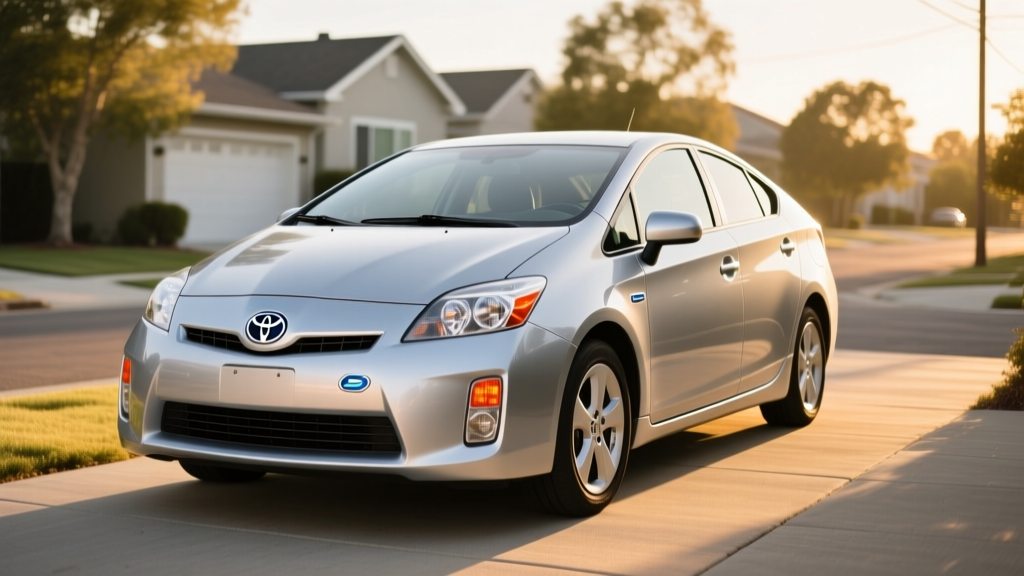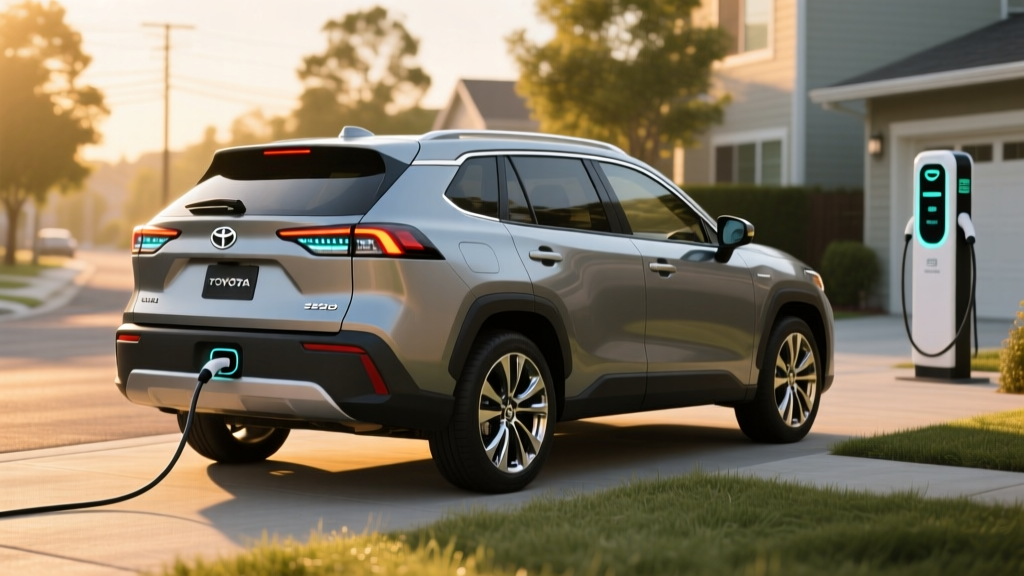
If you want the practicality of a compact crossover without the range anxiety or charging logistics of a full battery-electric vehicle, the 2026 Toyota Corolla Cross Hybrid makes a compelling case. It pairs Toyota's fifth-generation hybrid system with standard electronic all-wheel drive, returning an EPA-estimated 42 MPG combined while offering 196 horsepower and a usable cargo area. This is a conventional hybrid (HEV) — it never needs to be plugged in — and it occupies a sweet spot for buyers who want electrified efficiency with zero lifestyle change.
Below, we break down every number that matters: fuel economy (EPA and real-world), powertrain specs, pricing by trim, battery warranty and replacement outlook, and how the Corolla Cross Hybrid stacks up against both plug-in hybrids and full EVs in 2026.
2026 Toyota Corolla Cross Hybrid: Key Specifications at a Glance
| Specification | 2026 Corolla Cross Hybrid |
|---|---|
| Powertrain Type | Conventional Hybrid (HEV) — no plug |
| Engine | 2.0L 4-cylinder + 3 electric motors |
| Combined Horsepower | 196 hp (net system) |
| Drivetrain | Electronic AWD (eAWD) standard |
| EPA MPG (City / Hwy / Combined) | 46 / 40 / 42 |
| Hybrid Battery | ~1.0 kWh lithium-ion (sealed, self-charging) |
| 0–60 mph | ~7.5 seconds (est.) |
| Cargo Volume (behind rear seats) | ~25.5 cu ft |
| Towing Capacity | Not rated for towing |
| Fuel Tank | 10.6 gallons |
| Total Driving Range | ~445 miles |
| Hybrid Battery Warranty | 10 years / 150,000 miles |
| Starting MSRP (S trim) | ~$30,495 |
Fuel Economy: EPA Ratings vs. Real-World MPG
The EPA rates the 2026 Corolla Cross Hybrid at 46 MPG city, 40 MPG highway, and 42 MPG combined. These figures apply across all trims (S, SE, XSE) because the powertrain is identical. According to fueleconomy.gov, this places the Corolla Cross Hybrid among the most efficient compact AWD crossovers available.
| Driving Scenario | EPA Estimate | Real-World Expectation |
|---|---|---|
| City / Stop-and-Go | 46 MPG | 44–50 MPG (regenerative braking excels here) |
| Highway (70–75 mph) | 40 MPG | 36–40 MPG (aero drag and sustained speed reduce hybrid advantage) |
| Combined Mixed Driving | 42 MPG | 38–45 MPG |
| Cold Weather (below 30°F) | — | 35–40 MPG (engine runs more for cabin heat and warm-up) |
Real-World MPG Insight: Toyota hybrids consistently overperform their EPA city ratings in moderate climates because regenerative braking recovers energy at every stop. Owners in warm, urban-heavy driving environments frequently report 46–50 MPG. Highway-heavy commuters will see numbers closer to 37–40 MPG. In sub-freezing winter conditions, expect a 10–15% reduction as the gas engine runs more frequently to heat the cabin and maintain battery temperature.
HEV vs. PHEV vs. EV: Which Powertrain Fits Your Life?
The Corolla Cross is available only as a conventional hybrid (HEV) in the US market. There is no plug-in hybrid (PHEV) variant, and Toyota does not currently offer a fully electric Corolla Cross in North America. Understanding the distinction is critical before you shop:
| Factor | HEV (Corolla Cross Hybrid) | PHEV (e.g., RAV4 Prime) | Full EV (e.g., bZ4X) |
|---|---|---|---|
| Plug-in Charging Required? | No — self-charging via regen and engine | Yes — for electric-only range | Yes — sole energy source |
| Electric-Only Range | ~1 mile at low speed | 35–42 miles typical | 220–300+ miles |
| Total Range | ~445 miles | 500–600+ miles | 220–300+ miles |
| Home Charging Needed? | No | Recommended (Level 2) | Essential (Level 2) |
| Federal Tax Credit (§30D) | Not eligible | Up to $7,500 (if eligible) | Up to $7,500 (if eligible) |
| Starting MSRP Range | ~$30,495 | ~$44,000+ | ~$37,000+ |
| Best For | Apt/condo dwellers, no home charger | Home chargers with short commutes | Home chargers wanting zero tailpipe emissions |
Choose the Corolla Cross Hybrid (HEV) if: You don't have access to home or workplace charging, you want lower fuel costs without any behavioral change, or your budget is under $35,000.
Choose a PHEV if: You can install a Level 2 charger at home, your daily commute is under 40 miles, and you want electric-only driving most days with gas backup for road trips.
Choose a full EV if: You have reliable home charging, want minimal maintenance, and your typical trips fall within 200–250 miles (or you're comfortable with DC fast charging on road trips).
Powertrain Deep Dive: How Toyota's Hybrid System Works
The 2026 Corolla Cross Hybrid uses Toyota's fifth-generation hybrid synergy drive, pairing a 2.0-liter Atkinson-cycle four-cylinder engine with three motor-generators. The front axle is driven by a combined engine and motor output, while a dedicated rear-axle motor provides electronic AWD — there is no mechanical driveshaft connecting the front and rear wheels.
Net system output is 196 horsepower, which is a meaningful step up from the 169 hp in the gas-only Corolla Cross. The electric motors deliver instant torque from a stop, giving the hybrid noticeably better acceleration in city driving. Toyota estimates 0–60 mph in approximately 7.5 seconds — not sporty, but perfectly adequate for merging and passing.
The hybrid battery pack is a compact lithium-ion unit (~1.0 kWh usable capacity) mounted under the rear seat. It is significantly smaller than a PHEV or EV battery because it doesn't need to store energy for extended electric-only driving. Instead, it buffers energy recovered from regenerative braking and provides short bursts of electric assist. The battery never needs to be plugged in — the gasoline engine and regenerative braking keep it charged automatically.
Pricing by Trim and Tax Credit Eligibility
The 2026 Corolla Cross Hybrid is offered in three trims. Pricing is approximate and reflects base MSRP including destination charge:
| Trim | MSRP (approx.) | Key Features |
|---|---|---|
| S Hybrid | $30,495 | Toyota Safety Sense 3.0, 8" touchscreen, wireless CarPlay/Android Auto, LED headlights |
| SE Hybrid | $32,000 | Sport-tuned suspension, 18" alloy wheels, roof rails, SofTex-trimmed seats |
| XSE Hybrid | $34,450 | Premium audio, power liftgate, heated front seats, dual-zone climate, ambient lighting |
Federal Tax Credit Status: The Corolla Cross Hybrid is a conventional HEV and does not qualify for the federal §30D new clean vehicle tax credit (up to $7,500). That credit applies only to plug-in vehicles (PHEVs and BEVs) that meet battery sourcing, MSRP caps, and buyer income limits per current IRS guidelines. However, some states and utilities offer rebates for conventional hybrids — check your local program database. HEVs also avoid the higher insurance premiums and registration fees that some states impose on plug-in vehicles.
Reliability, Battery Lifespan, and Replacement Cost
Toyota's hybrid systems have an exceptional reliability track record spanning over 25 years since the original Prius. The Corolla Cross Hybrid uses a proven architecture shared across Toyota's hybrid lineup, and the fifth-generation system is more refined and durable than its predecessors.
Hybrid Battery Warranty: Toyota covers the hybrid battery for 10 years or 150,000 miles (whichever comes first) on 2026 models — an increase from the previous 8-year/100,000-mile standard. This warranty covers capacity loss and defects. If the battery fails within the warranty period, Toyota replaces it at no cost.
Expected Lifespan: Based on long-term data from Toyota's hybrid fleet (Prius, RAV4 Hybrid, Camry Hybrid), most hybrid battery packs last 150,000–200,000+ miles before significant degradation. Because the Corolla Cross Hybrid's battery is small (~1.0 kWh) and operates within a narrow state-of-charge window (roughly 40–80%), stress on the cells is minimal compared to a full EV battery.
Out-of-Warranty Replacement Cost: If the hybrid battery does need replacement after the warranty expires, expect to pay approximately $2,000–$3,500 for a new OEM battery pack including labor. Refurbished and third-party options are available for $1,200–$2,000. For context, this is far less than EV battery replacements, which typically run $5,000–$15,000+.
Beyond the battery, the Corolla Cross Hybrid benefits from reduced wear on conventional components. Regenerative braking extends brake pad life significantly — many Toyota hybrid owners report original brake pads lasting 80,000–100,000 miles. There is no traditional starter motor or alternator to replace, as the motor-generators handle those functions.
Pros and Cons: An Honest Assessment
Pros
- 42 MPG combined with standard AWD — among the most efficient in the compact crossover segment
- No charging required — ideal for apartment dwellers and those without home charging access
- 196 hp provides confident acceleration, a notable upgrade over the gas-only model
- 10-year/150,000-mile hybrid battery warranty provides long-term peace of mind
- Toyota Safety Sense 3.0 standard (adaptive cruise, lane tracing, automatic emergency braking, blind-spot monitoring)
- Proven reliability and strong resale value
- Lower starting price than PHEV or EV alternatives
Cons
- No federal tax credit eligibility (HEV, not a plug-in vehicle)
- Highway MPG drops to ~36–38 real-world at sustained 75+ mph speeds
- Cargo space (~25.5 cu ft) trails some competitors like the Honda CR-V Hybrid
- No plug-in hybrid variant available — you can't drive on electric-only for your commute
- Rear seat legroom is tight for taller passengers
- Not rated for towing
- Cabin noise under hard acceleration (CVT drone)
How It Compares: Corolla Cross Hybrid vs. Rivals
| Model | EPA Combined MPG | HP | AWD Standard? | Starting MSRP |
|---|---|---|---|---|
| 2026 Toyota Corolla Cross Hybrid | 42 | 196 | Yes | ~$30,495 |
| 2026 Honda HR-V (gas only) | 28 | 158 | Optional | ~$26,400 |
| 2026 Subaru Crosstrek Hybrid | ~35 (est.) | ~194 | Yes | ~$31,000 |
| 2026 Kia Niro Hybrid | 53 | 139 | No (FWD only) | ~$28,500 |
| 2026 Toyota RAV4 Hybrid | 39 | 219 | Yes | ~$34,000 |
The Corolla Cross Hybrid occupies a unique niche: it's one of the only compact crossovers offering standard AWD with over 40 MPG combined. The Kia Niro Hybrid achieves higher MPG but is FWD-only and lower on power. The RAV4 Hybrid is more spacious and powerful but costs $3,500+ more and returns slightly lower fuel economy. For buyers who prioritize efficiency, compact dimensions, and a sub-$31,000 starting price with AWD, the Corolla Cross Hybrid has few direct rivals.
Frequently Asked Questions
How many MPG does the 2026 Toyota Corolla Cross Hybrid get?
The EPA rates it at 46 MPG city, 40 MPG highway, and 42 MPG combined. In real-world driving, city-heavy commuters in moderate climates often see 44–50 MPG, while highway-dominant driving at 70–75 mph typically yields 36–40 MPG. Cold weather reduces efficiency by roughly 10–15%.
Does the Corolla Cross Hybrid need to be plugged in?
No. This is a conventional hybrid (HEV), not a plug-in hybrid (PHEV). The battery charges itself through regenerative braking and the gasoline engine. You simply fill the 10.6-gallon fuel tank and drive — no charging cable, no outlet, no behavior change required.
How far can the Corolla Cross Hybrid drive on electric only?
Only about 1 mile at very low speeds (under 25 mph) in ideal conditions. The hybrid battery is too small (~1.0 kWh) to sustain meaningful electric-only driving. The electric motors primarily assist the gas engine for acceleration and efficiency rather than powering the vehicle independently. If you want 30–40 miles of electric-only range, you need a PHEV like the Toyota RAV4 Prime.
Is the Corolla Cross Hybrid reliable? What does a battery replacement cost?
Toyota's hybrid systems have an outstanding reliability record spanning 25+ years and millions of vehicles. The hybrid battery is warranted for 10 years/150,000 miles, and most packs last well beyond that. If replacement is eventually needed out of warranty, expect $2,000–$3,500 for an OEM pack — far less than EV battery replacement. The hybrid system also reduces wear on brakes and eliminates the starter motor and alternator.
Does the 2026 Corolla Cross Hybrid qualify for any tax credit?
No. The federal §30D clean vehicle tax credit (up to $7,500) applies only to plug-in electric vehicles (PHEVs and BEVs) that meet battery component and critical mineral sourcing requirements. Since the Corolla Cross Hybrid is a self-charging HEV with no plug, it does not qualify. Some state, local, or utility programs may offer smaller incentives for hybrids — check your state's energy office or IRS guidelines for details.
Is the Corolla Cross Hybrid better than a full EV?
It depends entirely on your charging situation. If you have reliable home Level 2 charging and drive under 250 miles daily, a full EV offers lower operating costs, zero tailpipe emissions, and less maintenance. But if you live in an apartment, lack charging access, frequently drive 300+ miles, or live in a region with sparse public charging infrastructure, the Corolla Cross Hybrid gives you excellent efficiency (42 MPG) with none of the charging logistics. It's the pragmatic choice when plugging in isn't an option.
What is the total driving range on a full tank?
With a 10.6-gallon fuel tank and 42 MPG combined, the Corolla Cross Hybrid delivers approximately 445 miles of total range. In real-world city-heavy driving where MPG can exceed 46, some drivers report ranges approaching 480 miles between fill-ups.