Quick Verdict: The 2015 Accord Hybrid in 2026
The 2015 Honda Accord Hybrid remains one of the most efficient midsize sedans ever sold in the United States. With an EPA-estimated 50 MPG city, 45 highway, and 47 combined, it outperforms nearly every non-plug-in gasoline car in its class — and it does so without ever needing to be plugged in. As a conventional hybrid electric vehicle (HEV), it generates its own electricity through regenerative braking and its gasoline engine, meaning zero lifestyle change compared to a standard Accord.
For used-car shoppers in 2026 evaluating whether a decade-old hybrid is a smart buy, the 2015 Accord Hybrid offers compelling economics: low fuel costs, Honda's proven two-motor hybrid system, and a battery warranty that may still have residual coverage depending on mileage. However, buyers must carefully evaluate the high-voltage battery's state of health, understand replacement costs, and know that this model qualifies for no federal tax credits on the used market under current IRS §30D rules.
Fuel Economy: EPA Ratings and Real-World MPG
| Metric | Value |
|---|---|
| City MPG | 50 |
| Highway MPG | 45 |
| Combined MPG | 47 |
| Fuel Tank Capacity | 12.8 gal |
| Total Range (est.) | ~600 miles |
Source: EPA Fuel Economy.
How Many MPG Does the 2015 Accord Hybrid Actually Get?
The EPA rates the 2015 Accord Hybrid at 50 city / 45 highway / 47 combined. In real-world ownership, these figures hold up remarkably well — and in some conditions, owners exceed them. Honda's two-motor i-MMD (Intelligent Multi-Mode Drive) system is particularly effective in stop-and-go traffic, where the gasoline engine acts primarily as a generator while the electric motor drives the wheels. This means city driving, which destroys fuel economy in conventional cars, is where the Accord Hybrid shines brightest.
Owner-reported data on Fuelly and similar tracking platforms shows a real-world average between 42 and 48 MPG combined, with some drivers consistently achieving 50+ MPG on commutes with moderate traffic. Highway-only driving at 75+ MPH tends to drop to 40–43 MPG because the system's efficiency advantage narrows at sustained high speeds where aerodynamic drag dominates.
In cold weather (below 35°F), expect a 5–10% reduction in fuel economy. The engine must run more frequently to maintain cabin heat and bring the catalytic converter to operating temperature. This is a characteristic of all hybrids, not a defect.
Powertrain: Honda's Two-Motor i-MMD System
The 2015 Accord Hybrid uses Honda's second-generation two-motor hybrid system, which operates differently from the planetary-gear power-split devices found in Toyota hybrids. Here's how the hardware breaks down:
| Component | Specification |
|---|---|
| Gasoline Engine | 2.0L Atkinson-cycle I4, 143 hp / 122 lb-ft |
| Drive Motor | AC permanent-magnet, 166 hp / 226 lb-ft |
| Generator Motor | AC permanent-magnet (engine start + electricity generation) |
| Combined System Output | 196 hp |
| Transmission | E-CVT (no traditional gears; direct clutch at highway speed) |
| 0–60 MPH | ~7.2 seconds |
| Drivetrain | Front-wheel drive |
The system operates in three modes:
- EV Drive: Battery powers the drive motor alone (short distances, low speeds). The engine remains off.
- Hybrid Drive: The engine spins the generator motor to produce electricity, which feeds the drive motor. Excess energy charges the battery. No mechanical connection between engine and wheels.
- Engine Drive: At steady highway speeds (roughly 45–80 MPH), a lock-up clutch mechanically connects the engine to the front wheels for maximum efficiency. The electric motor provides supplemental torque when needed.
This architecture gives the Accord Hybrid the smooth, torque-rich feel of an electric car around town while maintaining excellent highway efficiency. The transition between modes is nearly imperceptible — one of Honda's engineering achievements with this generation.
Hybrid Battery: Size, Warranty, and Replacement Cost
What Battery Does the 2015 Accord Hybrid Use?
The 2015 Accord Hybrid uses a 1.3 kWh (gross) lithium-ion battery pack mounted behind the rear seat. This is a small battery by design — it is not intended to store significant energy for electric-only driving but rather to buffer energy between the regenerative braking system, the generator motor, and the drive motor. The usable capacity is roughly 0.9–1.0 kWh.
Because the battery is small and the system manages charge/discharge cycles carefully (never fully depleting or fully charging the pack), degradation tends to be gradual. However, at 11 years old, some capacity loss is expected.
Is the Hybrid Battery Reliable and What Does Replacement Cost?
Honda's two-motor hybrid system has proven reliable in long-term ownership. The lithium-ion pack in the 2015 Accord Hybrid is more durable than the older nickel-metal hydride (NiMH) batteries used in early-2000s Honda hybrids. Common failure points are rare before 150,000 miles, but individual cell imbalance can occur in high-mileage examples.
Battery replacement costs in 2026:
- New OEM battery (Honda dealer): $2,000–$3,500 including parts and labor
- Refurbished/remanufactured battery: $1,200–$2,000 installed
- Individual cell module replacement (specialist shop): $500–$1,000 if only a few cells are degraded
Before purchasing a used 2015 Accord Hybrid, request a battery state-of-health (SoH) readout from a Honda dealer or a shop with Honda diagnostic software. A pack retaining above 80% of original capacity is considered healthy. Also check for any stored hybrid system diagnostic trouble codes (DTCs) using an OBD-II scanner capable of reading Honda-specific hybrid codes.
2015 Accord Plug-In Hybrid: The PHEV Variant
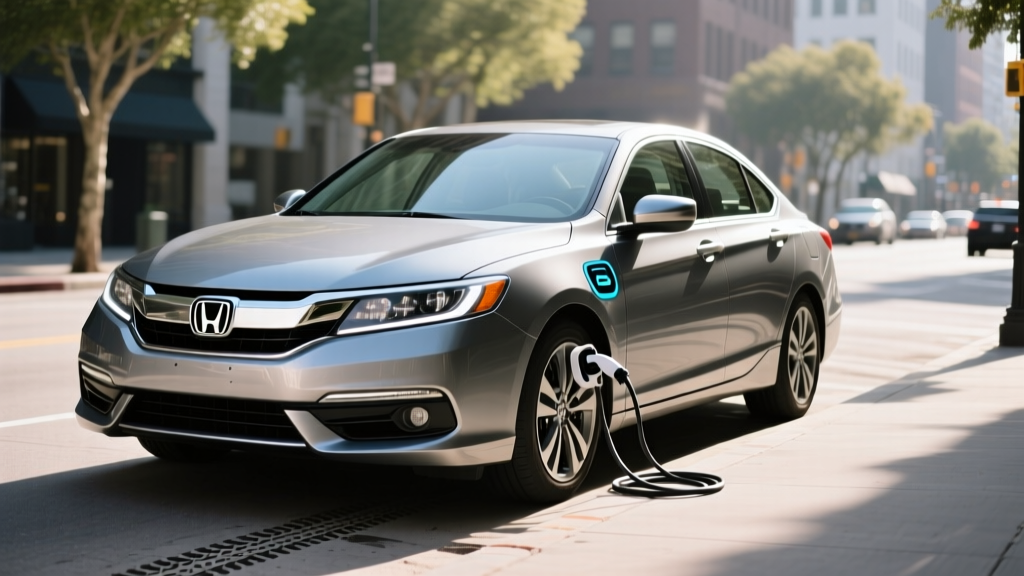
Honda sold a plug-in hybrid version of the Accord for the 2014 and 2015 model years, primarily in California, New York, and a handful of other states. This is a distinct vehicle with different capabilities:
| Attribute | HEV (Conventional) | PHEV (Plug-In) |
|---|---|---|
| Battery Capacity | 1.3 kWh | 6.7 kWh |
| Electric-Only Range | N/A (brief low-speed only) | 13 miles (EPA) |
| Total Combined Range | ~600 miles | ~570 miles |
| Charge Port | None | J1772 (Level 1/2 AC only) |
| DC Fast Charging | No | No |
| Level 2 Charge Time (0–100%) | N/A | ~1.5 hours |
| Combined System HP | 196 hp | 196 hp |
| EPA MPG (hybrid mode) | 47 combined | 46 combined (gas) |
| MPGe (electric mode) | N/A | 115 MPGe |
| Original MSRP (base) | ~$29,305 | ~$39,305 |
| Trunk Space | 13.4 cu ft | 8.9 cu ft (battery intrusion) |
The PHEV variant's 13 miles of electric-only range is modest by 2026 standards (the Toyota RAV4 Prime delivers 42 miles; the Hyundai Tucson PHEV offers 33). Combined with a significantly smaller trunk due to the larger battery pack, the PHEV version is harder to recommend on the used market unless the buyer's daily commute is under 13 miles and they have reliable access to a Level 1 or Level 2 charger. Honda discontinued the Accord Plug-In after the 2015 model year.
Pricing and Tax Credit Eligibility in 2026
Used Market Pricing
As of early 2026, the 2015 Honda Accord Hybrid trades on the used market in the following ranges:
- 80,000–100,000 miles, clean title: $11,000–$14,000
- 100,000–140,000 miles, clean title: $8,500–$11,500
- 140,000+ miles or rebuilt title: $6,000–$8,500
Prices vary by region, trim level (the Accord Hybrid was offered in standard and EX-L trims), and documented maintenance history. Examples with a recent hybrid battery health report command a premium.
Does the 2015 Accord Hybrid Qualify for Any Tax Credit?
No. Under current IRS rules, the used-EV credit (§25E) provides up to $4,000 for pre-owned electric vehicles and plug-in hybrids purchased from a dealer, but it requires the vehicle to have a battery capacity of at least 7 kWh and a gross vehicle weight rating under 14,000 lbs. The conventional Accord Hybrid's 1.3 kWh battery does not meet this threshold.
The 2015 Accord Plug-In Hybrid (6.7 kWh) also falls short of the 7 kWh minimum for §25E eligibility. Additionally, both models are well past the original §30D new-vehicle credit window. There is no federal tax credit available for purchasing a used 2015 Accord Hybrid or Accord Plug-In Hybrid in 2026. For detailed eligibility rules, consult the IRS used clean vehicle credit page.
Some states and local utilities offer rebates for used hybrid purchases. Check your state's energy office or utility provider for current programs, as these vary widely by jurisdiction.
Who Should Buy This Hybrid vs a Full EV or Gas Car?
Choose the 2015 Accord Hybrid If:
- You want 45–50 MPG without changing any habits — no plugs, no charging apps, no route planning
- Your budget is under $15,000 and you need a reliable midsize sedan
- You drive 15,000+ miles per year and fuel cost is a primary concern
- You live in an apartment or lack access to home or workplace charging
- You want a proven, low-risk hybrid with widely available parts and service
Look at a Full EV Instead If:
- You have reliable Level 2 home charging and want zero tailpipe emissions
- Your daily commute is under 60 miles round-trip (most modern EVs handle this easily)
- You want to access HOV lanes, state EV rebates, or the federal §30D tax credit (new EVs only)
- You want to eliminate oil changes, transmission fluid, and exhaust system maintenance entirely
- You plan to own the car 5+ years and want lower per-mile energy costs (electricity vs gasoline)
A Gas-Only Car May Make Sense If:
- You drive fewer than 8,000 miles per year (the fuel savings won't offset the hybrid premium)
- You find a well-maintained conventional Accord for $3,000–$4,000 less than the Hybrid
- You plan to keep the car for only 1–2 years and want to minimize upfront cost
Hybrid vs PHEV vs EV — Which Fits Your Situation?
The decision framework comes down to three variables: charging access, daily mileage, and budget.
- HEV (this Accord Hybrid): No plug needed. Best for buyers without charging access who want maximum MPG with zero behavioral change. Trade-off: still burns gasoline, no EV tax credits, higher fuel cost per mile than an EV on cheap electricity.
- PHEV (e.g., Toyota RAV4 Prime, Hyundai Tucson PHEV): Plug in to get 25–42 miles electric-only for daily commuting; gas engine covers longer trips. Best for households with home charging who want electric commuting without range anxiety. Trade-off: higher purchase price, two systems to maintain.
- BEV (e.g., Tesla Model 3, Hyundai Ioniq 6): All-electric, no gasoline. Best for buyers with home charging who want lowest operating costs and zero tailpipe emissions. Trade-off: requires charging planning for road trips, higher upfront cost, dependent on charging infrastructure.
Reliability, Safety, and Long-Term Ownership
The 2015 Accord Hybrid earned strong safety credentials: it received a 5-Star Overall Safety Rating from NHTSA and was named an IIHS Top Safety Pick+ when equipped with optional forward collision warning. The hybrid-specific components (power electronics, drive motor, generator motor) have proven durable in long-term fleet data, with few widespread failure patterns reported.
Standard maintenance items remain the same as a conventional Accord: oil changes (the 2.0L Atkinson-cycle engine uses 0W-20 synthetic), brake fluid, coolant, cabin air filter, and transmission fluid. One advantage of the hybrid: regenerative braking significantly reduces wear on the friction brake pads and rotors. Many owners report original brake pads lasting 80,000–100,000 miles.
Known issues to check before purchase:
- Hybrid battery cooling fan: Located behind the rear seat. Ensure it is not clogged with debris, which can cause battery overheating and accelerated degradation.
- 12V auxiliary battery: Like all hybrids, the Accord Hybrid has a standard 12V battery that powers electronics. If it dies, the car will not start even if the high-voltage battery is full. Replace every 4–5 years proactively.
- AC compressor: The hybrid uses an electric AC compressor (not belt-driven). If it fails, replacement is more expensive than a conventional compressor ($800–$1,400 vs $400–$700).
Pros and Cons at a Glance
Pros
- 47 MPG combined EPA; real-world often 42–50 MPG
- No plug, no charging infrastructure needed
- Smooth, EV-like torque delivery around town
- ~600-mile total range between fill-ups
- Strong safety ratings (NHTSA 5-star, IIHS TSP+)
- Regenerative braking extends brake pad life significantly
- Honda reliability and widespread dealer network
Cons
- Hybrid battery replacement ($2,000–$3,500) is a real cost at this age
- No federal or most state tax credits available
- Smaller trunk than gas Accord (13.4 vs 15.8 cu ft) due to battery placement
- Highway MPG advantage narrows at 75+ MPH
- Infotainment system dated by 2026 standards (no Apple CarPlay/Android Auto)
- No DC fast charging (not applicable to HEV, but limits the PHEV variant)
- Cold-weather MPG drops 5–10%
Frequently Asked Questions
How many MPG does the 2015 Honda Accord Hybrid get?
The EPA rates it at 50 city / 45 highway / 47 combined. Real-world owners typically report 42–48 MPG combined, with city-heavy driving sometimes exceeding the 50 MPG city rating. Highway-only driving at high speeds drops to 40–43 MPG.
Does the 2015 Accord Hybrid need to be plugged in?
No. The conventional Accord Hybrid (HEV) has no charge port. It charges its 1.3 kWh battery through regenerative braking and the gasoline engine. The separate Accord Plug-In Hybrid (PHEV) variant does have a charge port and can be plugged in, but it is a different, rarer model.
How far can the 2015 Accord Plug-In Hybrid go on electric only?
The PHEV variant is EPA-rated for 13 miles of electric-only range. In real-world conditions with moderate temperatures and gentle acceleration, some owners report 14–16 miles. In cold weather or at highway speeds, expect 9–11 miles.
Is the 2015 Accord Hybrid reliable, and what is the battery replacement cost?
Yes — Honda's two-motor i-MMD system has a strong reliability record. The hybrid battery typically lasts 150,000+ miles before significant degradation. If replacement is needed, expect $2,000–$3,500 for a new OEM battery or $1,200–$2,000 for a refurbished unit installed at an independent hybrid specialist.
Does the 2015 Honda Accord Hybrid qualify for any tax credit?
No federal tax credit is available for purchasing a used 2015 Accord Hybrid in 2026. The conventional HEV's 1.3 kWh battery does not meet the 7 kWh minimum for the IRS §25E used clean vehicle credit. The PHEV variant's 6.7 kWh battery also falls short. Some state or utility rebates may apply — check your local programs.
What should I check before buying a used 2015 Accord Hybrid?
Request a hybrid battery state-of-health readout from a Honda dealer, check for stored hybrid system diagnostic codes via OBD-II, inspect the battery cooling fan behind the rear seat for debris, verify maintenance records (especially transmission fluid changes), and confirm the 12V auxiliary battery is less than 4 years old. A pre-purchase inspection at a Honda dealer familiar with the hybrid system is strongly recommended.