Quick Verdict: The 2026 Subaru Outback Hybrid at a Glance
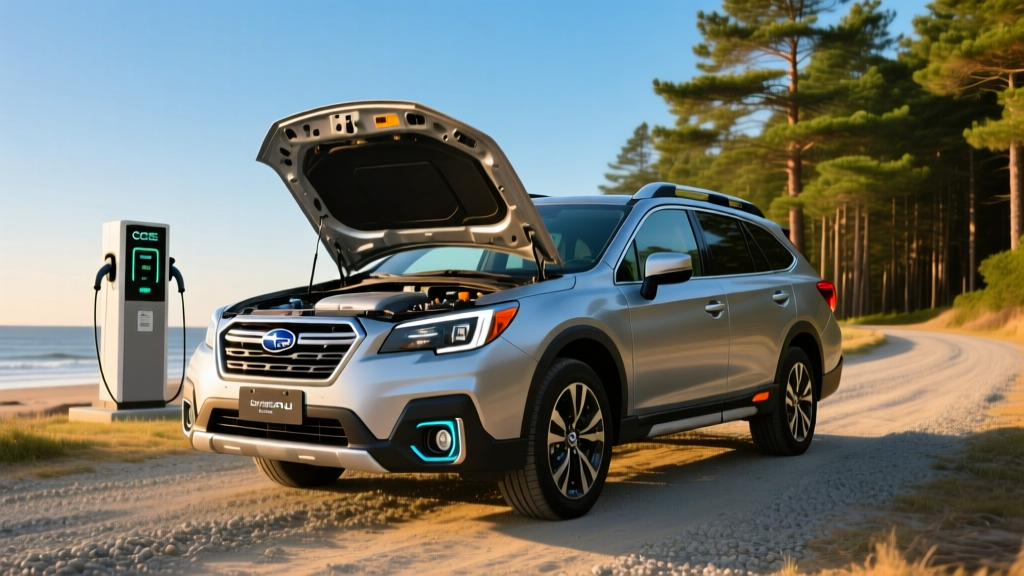
The 2026 Subaru Outback Hybrid returns as a conventional hybrid (HEV) — not a plug-in — pairing a 2.5-liter flat-four boxer engine with an electric motor integrated into Subaru's Lineartronic CVT. It delivers a meaningful efficiency bump over the standard gas Outback without requiring any change to your fueling habits. No plug, no charging cord, no range anxiety. For buyers who need standard all-wheel drive, genuine ground clearance, and better fuel economy without committing to a full battery-electric vehicle, the Outback Hybrid occupies a practical middle ground.
Subaru positions this as a trim-level powertrain upgrade rather than a standalone model, meaning you get hybrid efficiency bundled with the Outback's well-known utility: 8.7 inches of ground clearance, 75.7 cubic feet of cargo space with rear seats folded, and the EyeSight driver-assistance suite as standard equipment. The question for most shoppers is whether the fuel savings justify the premium over the conventional gas Outback — and how it stacks up against PHEV and full-EV alternatives.
| Spec | 2026 Outback Hybrid |
|---|---|
| Powertrain | 2.5L flat-4 + electric motor (HEV) |
| Combined Horsepower | 187 hp |
| Transmission | Lineartronic CVT |
| Drivetrain | Symmetrical AWD (standard) |
| EPA MPG (City / Hwy / Combined) | 36 / 33 / 35 |
| Battery Type | Lithium-ion (sealed, self-charging) |
| Ground Clearance | 8.7 inches |
| Cargo Volume (rear seats folded) | 75.7 cu ft |
| Towing Capacity | 3,500 lbs |
| Starting MSRP | $36,995 |
| Hybrid Battery Warranty | 8 years / 100,000 miles |
HEV vs PHEV vs EV: Where the Outback Hybrid Fits
Before evaluating the Outback Hybrid's numbers, it's essential to understand what it is — and what it isn't. Subaru's hybrid system is a conventional hybrid (HEV), meaning the battery recharges through regenerative braking and the gasoline engine. You never plug it in. The electric motor assists the engine during acceleration and enables brief low-speed electric-only operation, but the vehicle always relies on gasoline as its primary energy source.
| Attribute | HEV (Outback Hybrid) | PHEV (e.g., Toyota RAV4 Prime) | BEV (e.g., Subaru Solterra) |
|---|---|---|---|
| Plug-in charging | No | Yes | Yes |
| Electric-only range | ~1 mile (low-speed assist) | 35–42 miles | 222–228 miles (EPA) |
| Uses gasoline | Yes (always) | Yes (after battery depletes) | No |
| Federal tax credit (§30D) | Not eligible | Up to $7,500 (if sourcing rules met) | Up to $7,500 (if sourcing rules met) |
| Home charging needed | No | Recommended (Level 2) | Essential (Level 2) |
| Typical starting price | ~$37,000 | ~$44,000–$47,000 | ~$45,000–$50,000 |
The Outback Hybrid makes the most sense for drivers who want improved fuel economy but lack access to home or workplace charging. If you can install a Level 2 charger and your daily commute falls under 40 miles, a PHEV like the Toyota RAV4 Prime offers far greater electric operation. If you're ready to eliminate gasoline entirely and have reliable charging access, a full BEV delivers the lowest per-mile energy cost — but at a higher upfront price and with cold-weather range trade-offs.
Fuel Economy: EPA Ratings and Real-World MPG
The 2026 Subaru Outback Hybrid carries EPA ratings of 36 mpg city, 33 mpg highway, and 35 mpg combined. That's a notable improvement over the standard 2.5L gas Outback, which rates at 26/32/28 mpg (city/highway/combined) according to fueleconomy.gov. The hybrid's advantage is most pronounced in stop-and-go city driving, where regenerative braking recovers energy that would otherwise be lost as heat.
| Driving Condition | EPA Rating | Real-World Expectation |
|---|---|---|
| City | 36 mpg | 35–38 mpg (hybrids often exceed EPA in city) |
| Highway | 33 mpg | 30–33 mpg (aerodynamic drag, sustained speeds) |
| Combined | 35 mpg | 33–36 mpg |
| Cold weather (below 32°F) | — | 30–33 mpg (engine runs more for cabin heat) |
Conventional hybrids like the Outback Hybrid frequently beat their EPA city estimates in real-world driving because regenerative braking is most effective in urban traffic. Highway driving tells a different story: at sustained 70–80 mph speeds, the electric motor contributes less, and the boxer engine carries most of the load. Expect highway numbers to land closer to 30–33 mpg, particularly with the Outback's wagon profile and roof-rack accessories adding aerodynamic drag.
In cold weather, hybrid efficiency drops — not because the battery degrades, but because the gasoline engine must run more frequently to provide cabin heat and maintain operating temperature. Owners in northern climates should budget for a 3–5 mpg reduction during winter months. This is a modest penalty compared to the 20–30% range loss that full BEVs experience in freezing temperatures.
Powertrain Details: How Subaru's Hybrid System Works
The 2026 Outback Hybrid uses a parallel hybrid architecture. The 2.5-liter naturally aspirated flat-four engine produces 182 horsepower on its own, while an electric motor integrated into the transmission housing adds supplemental torque during acceleration. Combined system output is rated at 187 horsepower. The electric motor draws from a compact lithium-ion battery pack mounted beneath the rear cargo area, preserving the Outback's full interior volume.
Subaru's hybrid system is modest by industry standards — it's designed for efficiency gains, not performance enhancement. The electric motor can propel the Outback at very low speeds (parking lots, traffic creep) for brief distances, but this is assistive, not a meaningful electric-only driving mode. Think of it as a more sophisticated start-stop system that smooths acceleration and recovers braking energy.
The Lineartronic CVT (continuously variable transmission) is calibrated for the hybrid system, using the electric motor to fill in torque during the CVT's characteristic rubber-band acceleration feel. The result is smoother low-speed behavior than the gas-only Outback, though 0–60 mph times remain in the 9-second range — adequate for merging and passing, but not sporty.
Standard Symmetrical All-Wheel Drive means all four wheels receive power regardless of hybrid system state. Unlike some hybrid AWD systems that use a rear electric motor, the Outback Hybrid uses a mechanical driveshaft to the rear axle, which is more robust for off-road and low-traction scenarios — a key reason Outback buyers choose Subaru in the first place.
Pricing, Trims, and Tax Credit Eligibility
The 2026 Subaru Outback Hybrid starts at an MSRP of approximately $36,995, including destination charges. Subaru typically offers the hybrid powertrain in mid-to-upper trim levels (Premium and Limited), bundling it with features like leather-trimmed seats, power liftgate, and the larger 11.6-inch Starlink infotainment touchscreen. Fully loaded Limited Hybrid models approach $42,000–$43,000.
The hybrid carries roughly a $2,500–$3,000 premium over the equivalent gas-only Outback trim. At 35 mpg combined versus 28 mpg combined (gas), and assuming $3.40/gallon regular unleaded with 15,000 miles driven annually, the hybrid saves approximately $440 per year in fuel costs. That puts the payback period at roughly 6–7 years — longer than some competitors, but the Outback Hybrid buyer is often motivated by reduced emissions and smoother operation alongside fuel savings.
Federal Tax Credit: Not Eligible
The 2026 Subaru Outback Hybrid does not qualify for the federal §30D Clean Vehicle Credit. Under current IRS rules, conventional hybrids (HEVs) are excluded — only plug-in hybrids (PHEVs) and battery-electric vehicles (BEVs) with sufficient battery capacity and compliant battery-mineral sourcing are eligible. The Outback Hybrid also does not qualify for most state-level EV rebates, which similarly require plug-in capability. Some states offer modest incentives for any hybrid purchase; check your state's energy office for current programs.
Battery Longevity, Warranty, and Replacement Cost
Hybrid battery reliability is the top concern for first-time hybrid buyers, and Subaru addresses it with an 8-year / 100,000-mile hybrid battery warranty (10 years / 150,000 miles in California and states that follow CARB emissions standards). This warranty covers capacity loss below a defined threshold and defects — not normal gradual degradation.
Subaru's lithium-ion hybrid battery pack is compact (roughly 1–1.5 kWh) because it doesn't need to store energy for extended electric driving. It cycles frequently but within a narrow state-of-charge window managed by the vehicle's battery management system, which significantly extends cell life. Based on industry data from Toyota and Honda hybrids using similar architectures, hybrid battery packs routinely last 150,000–200,000+ miles before requiring replacement.
If replacement is needed outside warranty, expect a cost of $2,000–$3,500 for a Subaru hybrid battery pack (parts and labor). This is far less than a full BEV battery replacement ($8,000–$20,000+) because the pack is small and accessible. Independent hybrid specialists often offer refurbished packs at lower cost. In practice, most Outback Hybrids will reach end-of-life or trade-in before the hybrid battery needs service.
Pros
- 35 mpg combined with standard AWD — no plug required
- Full 8.7" ground clearance and 3,500-lb towing retained
- Smoother low-speed driving than gas-only Outback
- No charging infrastructure needed — works for apartment dwellers
- 8-year / 100,000-mile hybrid battery warranty
- EyeSight safety suite standard across all trims
Cons
- No federal tax credit eligibility (§30D excludes HEVs)
- 6–7 year fuel-savings payback vs gas Outback
- Modest 187 hp — not a performance upgrade
- No meaningful electric-only driving capability
- Higher upfront cost than gas-only equivalent
- Highway mpg advantage is smaller than city advantage
Who Should Choose the Outback Hybrid vs a PHEV or Full EV?
Choose the 2026 Outback Hybrid if:
- You cannot install a home charger (apartment, street parking, condo restrictions)
- You drive a mix of city and highway with frequent cargo/passenger needs
- You want better fuel economy without any behavioral change
- You need genuine off-road capability (8.7" clearance, mechanical AWD)
- You want to avoid the higher purchase price of a PHEV or BEV
Choose a PHEV (e.g., RAV4 Prime, Outlander PHEV) if:
- You can charge at home and your commute is under 40 miles
- You want electric-only daily driving with gas flexibility for road trips
- You want to claim the §30D federal tax credit (up to $7,500, subject to sourcing and income rules)
Choose a Full BEV (e.g., Subaru Solterra, Hyundai Ioniq 5) if:
- You have reliable home Level 2 charging and want the lowest per-mile cost
- Your daily driving is under 200 miles and you can plan road-trip charging
- You want to eliminate gasoline entirely and access HOV-lane and state incentives
Reliability and Ownership Track Record
Subaru's hybrid system has proven durable across the Crosstrek Hybrid and previous Outback Hybrid generations. The boxer engine is a known quantity with decades of service history, and the hybrid components add relatively few failure points compared to the gas-only powertrain. The CVT, historically a concern for some Subaru owners, has improved significantly in recent model years, and the hybrid version benefits from the electric motor reducing transmission stress during initial acceleration.
The 2026 Outback Hybrid carries a standard 3-year / 36,000-mile bumper-to-bumper warranty and 5-year / 60,000-mile powertrain warranty, with the hybrid battery covered separately at 8 years / 100,000 miles. Subaru's warranty documentation details the specific coverage terms. Insurance costs are comparable to the gas Outback — hybrid surcharges have largely disappeared from the insurance market as hybrid powertrains have become mainstream.
Frequently Asked Questions
How many MPG does the 2026 Subaru Outback Hybrid get?
The EPA rates it at 36 mpg city, 33 mpg highway, and 35 mpg combined. Real-world city driving often yields 35–38 mpg thanks to regenerative braking, while sustained highway driving may return 30–33 mpg. Cold weather reduces efficiency by roughly 3–5 mpg due to increased engine runtime for cabin heating.
Can the Outback Hybrid drive on electric power alone?
Only at very low speeds (parking lots, slow traffic creep) for roughly one mile or less. The hybrid battery is too small to support meaningful electric-only driving. This is a conventional hybrid — the gasoline engine is always the primary power source.
Does the 2026 Outback Hybrid qualify for a federal tax credit?
No. The IRS §30D Clean Vehicle Credit applies only to plug-in hybrids (PHEVs) and battery-electric vehicles (BEVs) that meet battery-sourcing and MSRP requirements. Conventional hybrids like the Outback Hybrid are not eligible. Check your state energy office for any local hybrid incentives.
How long will the Outback Hybrid battery last?
Based on industry data from similar hybrid systems, expect 150,000–200,000+ miles of service life. Subaru warrants the hybrid battery for 8 years / 100,000 miles (10 years / 150,000 miles in CARB states). Out-of-warranty replacement costs approximately $2,000–$3,500.
Is the Outback Hybrid better than the gas Outback for towing?
Towing capacity remains 3,500 lbs — the same as the gas Outback. The hybrid's electric motor provides additional low-end torque that can make initial trailer acceleration feel smoother, but sustained highway towing fuel economy will be similar to or slightly below the gas model due to the added weight of the hybrid system.
Does the Outback Hybrid need to be plugged in?
No. The Outback Hybrid is a conventional HEV. Its battery recharges through regenerative braking and the gasoline engine. There is no charging port, no plug, and no electric-only range to manage. You fuel it like any other gasoline vehicle.
How does the Outback Hybrid compare to the Subaru Solterra?
The Solterra is Subaru's all-electric SUV with 222–228 miles of EPA range and eligibility for the §30D federal tax credit. It costs significantly more ($45,000+), requires home charging infrastructure, and has less cargo space and ground clearance than the Outback. The Outback Hybrid is the practical choice for buyers who aren't ready for full electrification; the Solterra suits those with charging access who want zero tailpipe emissions.