Quick Verdict: The Forester Hybrid Touring in 2026
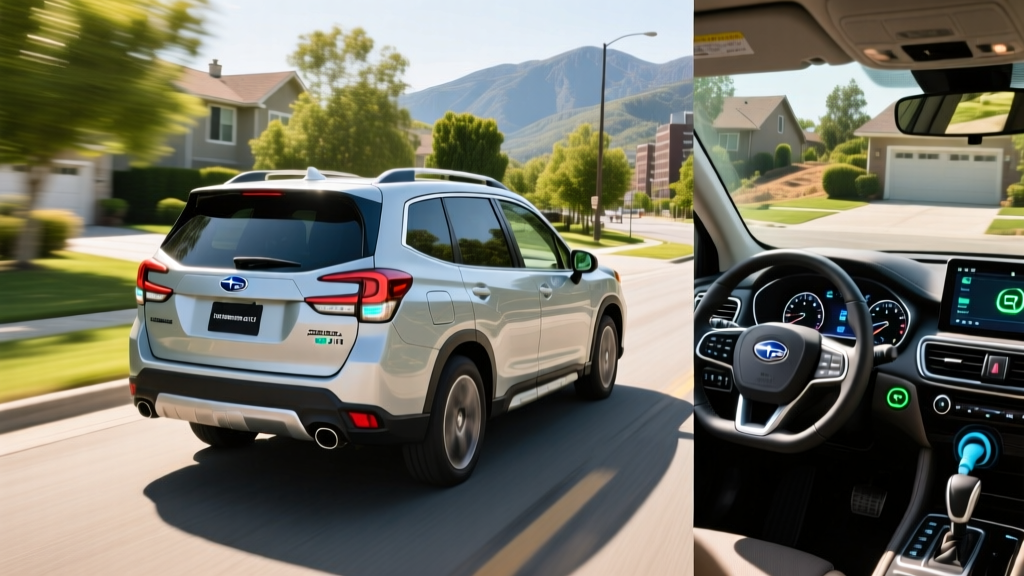
If you've been searching for a 2026 Subaru Forester Hybrid Touring for sale, you're looking at Subaru's most feature-rich compact SUV paired with a fuel-sipping hybrid powertrain. The Touring trim sits at the top of the Forester Hybrid lineup, bundling Subaru's EyeSight driver-assist suite, Nappa leather, an 11.6-inch infotainment display, and the brand's proven symmetrical all-wheel drive — all while returning an EPA-estimated 35 MPG combined.
This is a conventional hybrid (HEV), not a plug-in. You never plug it in. The hybrid system recovers energy through regenerative braking and optimizes the gasoline engine's operating range to cut fuel consumption by roughly 20-25% compared to the non-hybrid Forester. For buyers who want AWD capability and better fuel economy without changing their refueling habits, the Forester Hybrid Touring occupies a compelling middle ground.
Hybrid (HEV): Uses a small battery and electric motor to assist the gas engine. Charges itself through regenerative braking. No plug needed. Example: Forester Hybrid.
Plug-in Hybrid (PHEV): Uses a larger battery that can be plugged in to charge. Offers 20-40 miles of electric-only driving before the gas engine kicks in. Example: Toyota RAV4 Prime, Subaru's discontinued Crosstrek PHEV.
The 2026 Forester Hybrid is an HEV only — Subaru does not currently offer a Forester PHEV variant.
Powertrain Specs: Engine, Motor, and Combined Output
The 2026 Forester Hybrid pairs Subaru's 2.5-liter horizontally opposed (Boxer) four-cylinder engine with an electric motor integrated into the transmission housing. Here's what that looks like in numbers:
| Spec | Value |
|---|---|
| Gas Engine | 2.5L Boxer 4-cylinder |
| Engine Output | 180 hp / 178 lb-ft torque |
| Electric Motor | Integrated AC motor (approx. 13 hp assist) |
| Combined System Output | ~194 hp |
| Transmission | Lineartronic CVT |
| Drivetrain | Symmetrical AWD (standard) |
| Hybrid Battery | ~1.1 kWh lithium-ion (self-charging) |
| 0-60 mph (est.) | ~7.5 seconds |
| Towing Capacity | 1,500 lbs |
The electric motor's role is assistive, not primary. It smooths out the CVT's low-speed behavior, provides torque fill during acceleration, and enables brief electric-only motoring at very low speeds (parking lots, stop-and-go traffic). Don't expect EV-like silence or electric-only highway driving — this system is designed to reduce fuel consumption, not eliminate it.
Fuel Economy: EPA Ratings vs. Real-World MPG
Subaru rates the 2026 Forester Hybrid at 35 MPG combined on the EPA cycle. Here's the full breakdown per fueleconomy.gov:
| Driving Cycle | MPG |
|---|---|
| City | 36 |
| Highway | 33 |
| Combined | 35 |
Hybrids typically exceed their EPA city rating in stop-and-go driving because regenerative braking recovers more energy at low speeds. Expect 36-39 MPG in urban commuting. Highway driving at 75+ mph will drop to roughly 30-32 MPG due to aerodynamic drag, which the hybrid system can't offset. In cold weather (below 30°F), anticipate a 5-10% MPG reduction as the engine runs more frequently to provide cabin heat and warm the catalytic converter.
Compared to the non-hybrid 2026 Forester (EPA 28 MPG combined), the hybrid saves roughly 7 MPG — about 1.2 gallons per 100 miles. At $3.50/gallon and 12,000 miles annually, that's approximately $500 per year in fuel savings.
Pricing: Forester Hybrid Touring MSRP and Tax Credits
The 2026 Subaru Forester Hybrid Touring carries a starting MSRP of approximately $41,995 (including destination). The Touring is the sole trim for the Forester Hybrid in 2026, meaning you get the full equipment list — there are no lower hybrid trims to drop into.
| Item | Cost |
|---|---|
| Base MSRP (Touring, incl. destination) | $41,995 |
| Popular options (wireless charger, cargo tray) | +$400-$600 |
| Federal tax credit (§30D) | $0 — not eligible |
| Estimated out-the-door (before state incentives) | ~$43,000-$45,000 |
The federal §30D Clean Vehicle Credit applies only to plug-in electric vehicles (BEVs and PHEVs) with minimum battery capacities and specific critical-mineral and battery-component sourcing requirements per IRS guidelines. The Forester Hybrid is a conventional HEV with a small self-charging battery — it does not qualify for the federal EV tax credit. Some states may offer minor hybrid incentives, but these vary widely by jurisdiction. Check your state's energy office or DMV for current programs.
Hybrid Battery Warranty and Longevity
Hybrid battery lifespan is one of the most common concerns for first-time hybrid buyers. Here's what Subaru provides:
• Hybrid battery: 8 years / 100,000 miles (10 years / 150,000 miles in CARB states including CA, NY, MA, WA, OR, and others)
• Hybrid system components (inverter, motor): 8 years / 100,000 miles
• Powertrain warranty: 5 years / 60,000 miles
• Bumper-to-bumper: 3 years / 36,000 miles
Subaru's hybrid battery is relatively small (~1.1 kWh) and operates within a conservative state-of-charge window — it never fully charges or fully discharges. This shallow cycling dramatically extends battery life. Toyota's hybrid systems (which share a similar architecture philosophy) routinely exceed 200,000 miles on the original battery. Subaru's hybrid track record is shorter but follows the same engineering principles.
If replacement is ever needed out of warranty, expect a hybrid battery replacement cost in the $2,000-$3,500 range (parts and labor) based on current hybrid battery pricing across the industry. This is far less than a full EV battery replacement, which can run $10,000-$20,000+.
Forester Hybrid vs. Full EV vs. Gas: Which Fits You?
The Forester Hybrid Touring sits between three distinct ownership models. Here's how to decide:
| Factor | Forester Hybrid (HEV) | PHEV (e.g., RAV4 Prime) | Full EV (e.g., Ioniq 5) |
|---|---|---|---|
| Plug-in required? | No | Yes (for EV range) | Yes (always) |
| Electric-only range | ~1 mi (low speed) | 25-42 mi | 250-320 mi |
| Fuel cost (annual est.) | ~$1,200 | ~$600-$900 | ~$450-$700 |
| Federal tax credit | None | Up to $7,500* | Up to $7,500* |
| Home charging needed? | No | Recommended | Essential |
| AWD available? | Standard | Most models | Some models |
*§30D credit eligibility depends on MSRP caps, buyer income limits, and battery sourcing requirements. Verify on IRS.gov before purchasing.
- You can't install a home charger (apartment, street parking, no garage)
- You want AWD and solid ground clearance (8.7 inches) for snow/light trails
- You don't want to change your refueling behavior at all
- You drive 12,000-15,000 miles/year and want lower fuel costs without range planning
Choose a PHEV if:
- You have home Level 2 charging and a commute under 40 miles
- You want electric-only daily driving but gas flexibility for road trips
- You want to capture the $7,500 federal credit (subject to eligibility)
Choose a full EV if:
- You have reliable home charging and your daily driving is under 250 miles
- You want the lowest per-mile fuel cost and minimal maintenance
- You're comfortable planning DC fast-charging stops on road trips
Touring Trim: What You Get at the Top
The Touring trim justifies its $41,995 sticker with premium content that lower Forester trims don't offer:
- Interior: Nappa leather upholstery, heated and ventilated front seats, heated rear seats, heated steering wheel, 11.6-inch vertical touchscreen with wireless Apple CarPlay/Android Auto
- Driver Assist: EyeSight 4.0 (adaptive cruise, lane centering, pre-collision braking), blind-spot detection with rear cross-traffic alert, reverse automatic braking, DriverFocus distraction monitoring
- Exterior: 19-inch alloy wheels, LED steering-responsive headlights, power liftgate, panoramic moonroof
- Utility: 8.7 inches of ground clearance, X-MODE with Hill Descent Control, 1,500-lb towing, roof rails with integrated crossbars
EyeSight 4.0 is a SAE Level 2 driver-assist system. It can manage steering, acceleration, and braking on highways, but the driver must remain fully engaged — hands on or near the wheel, eyes on the road. This is not autonomous driving.
Reliability and Ownership Track Record
Subaru's hybrid system is less proven than Toyota's but benefits from a simpler architecture. The 2.5-liter Boxer engine is a carryover design with years of production history. The hybrid components add modest complexity — primarily the electric motor, inverter, and small battery pack.
Key reliability considerations:
- CVT transmission: Subaru's Lineartronic CVT has improved significantly since earlier-generation complaints. The hybrid's electric motor actually reduces CVT strain by providing low-speed torque assist.
- Head gasket concerns: Largely resolved in the FB25D engine generation (2019+). The hybrid variant uses the same updated block.
- Electrical system: Subaru's infotainment and EyeSight systems have had occasional software complaints, but no systemic hybrid-specific failures have emerged as of early 2026.
The Forester earned a TOP SAFETY PICK+ rating from the IIHS (when equipped with specific headlights), and a 5-Star overall rating from NHTSA.
Frequently Asked Questions
How many MPG does the 2026 Forester Hybrid get?
The EPA rates it at 36 city / 33 highway / 35 combined. In real-world urban driving, owners commonly report 36-39 MPG thanks to regenerative braking. Highway cruising at 75+ mph drops to approximately 30-32 MPG.
Does the Forester Hybrid need to be plugged in?
No. This is a conventional hybrid (HEV). The battery charges through regenerative braking and engine power. You refuel exclusively at gas stations, just like a standard Forester.
Is there a Forester PHEV available?
Not for 2026. Subaru previously offered a Crosstrek PHEV (discontinued after 2023) but has not introduced a Forester plug-in variant. If you need a compact SUV PHEV, the Toyota RAV4 Prime and Mitsubishi Outlander PHEV are the closest alternatives.
Does the 2026 Forester Hybrid qualify for any tax credit?
It does not qualify for the federal §30D Clean Vehicle Credit, which applies only to plug-in vehicles (BEVs and PHEVs) meeting battery sourcing and MSRP/income requirements. Some states offer minor hybrid purchase incentives — check your state energy office for details.
How long will the hybrid battery last and what does replacement cost?
Subaru warrants the hybrid battery for 8 years/100,000 miles (10 years/150,000 miles in CARB states). Based on hybrid industry data, these batteries typically last 150,000-200,000+ miles. Out-of-warranty replacement runs approximately $2,000-$3,500.
How does the Forester Hybrid compare to the non-hybrid Forester?
The hybrid returns 35 MPG combined vs. 28 MPG combined for the gas model — a 25% improvement. The hybrid costs roughly $4,000-$5,000 more (comparing Touring trims). At 12,000 miles/year and $3.50/gallon, fuel savings of ~$500/year mean the premium pays back in approximately 8-10 years. The hybrid also offers slightly smoother low-speed acceleration from electric motor assist.
Can the Forester Hybrid tow?
Yes, but modestly. Towing capacity is rated at 1,500 lbs — adequate for a small utility trailer or a pair of dirt bikes, but not for a boat or camper. This matches the non-hybrid Forester's rating.