Quick Verdict: Two Flavors of RAV4 Electrification
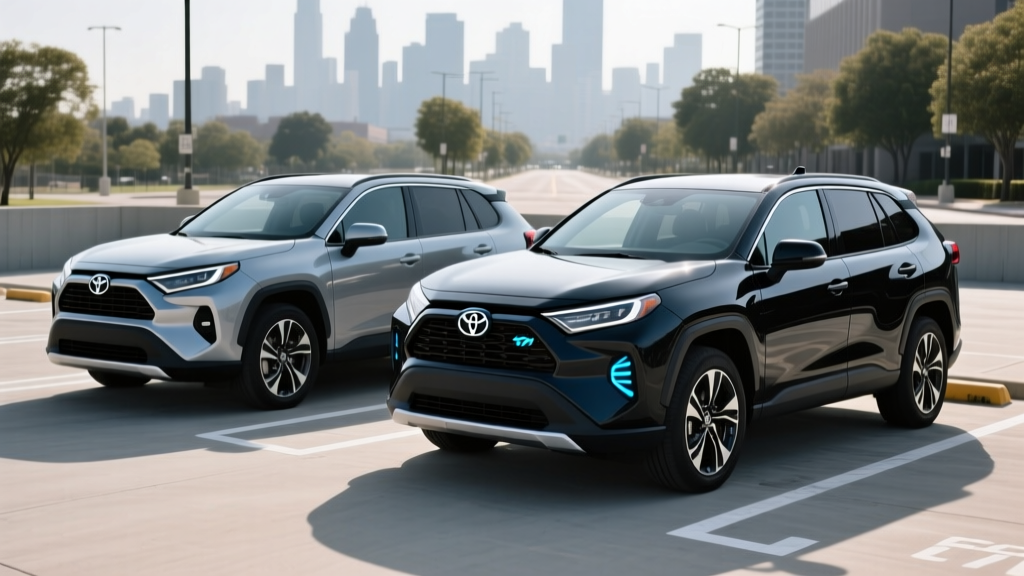
The Toyota RAV4 remains the best-selling non-truck in America, and its electrified variants dominate the compact SUV hybrid segment. For 2025–2026, Toyota offers two distinct paths: the RAV4 Hybrid (a conventional self-charging HEV) and the RAV4 Prime (a plug-in hybrid PHEV with meaningful electric-only range). Both pair a 2.5-liter four-cylinder with electric motors, but their batteries, charging needs, pricing, and tax-credit eligibility diverge sharply. This guide breaks down exact specs so you can match the right powertrain to your driving pattern.
HEV vs PHEV — What's the Difference?
RAV4 Hybrid (HEV): Never plugs in. A small 1.6 kWh battery recaptures energy from braking and the engine. You fuel it like a normal car; it simply uses less gas. No charging equipment needed.
RAV4 Prime (PHEV): Plugs in. A larger 18.1 kWh lithium-ion battery delivers up to 42 miles of electric-only driving before the gas engine engages. Requires access to a 120V or 240V outlet to realize its efficiency advantage.
EPA Fuel Economy: Real Numbers, City to Highway
Hybrid efficiency varies dramatically between city and highway driving because regenerative braking recovers energy in stop-and-go traffic that a conventional car wastes as heat. Here is how the two RAV4 variants compare, per fueleconomy.gov:
| Metric | RAV4 Hybrid (HEV) | RAV4 Prime (PHEV) |
|---|---|---|
| City MPG | 41 MPG | 40 MPG (gas) / 94 MPGe (electric) |
| Highway MPG | 38 MPG | 36 MPG (gas) / 84 MPGe (electric) |
| Combined MPG | 39 MPG | 38 MPG (gas) / 94 MPGe (electric) |
| Electric-Only Range | N/A | 42 miles |
| Total Range | ~570 miles | ~600 miles |
Real-world MPG note: Toyota hybrids consistently meet or exceed EPA city estimates in actual driving because regen braking is maximized in urban conditions. Highway MPG tends to run 2–4 MPG below the sticker at sustained 75+ mph speeds, particularly in cold weather or with a loaded roof rack. Owners reporting on Fuelly and Edmunds commonly log 37–41 MPG combined in the HEV and 36–39 MPG on gas-only highway trips in the Prime.
Powertrain & Performance Specs
Both models use Toyota's fourth-generation hybrid synergy drive, but the Prime's larger battery and more powerful front motor deliver a meaningful performance bump.
| Specification | RAV4 Hybrid | RAV4 Prime |
|---|---|---|
| Engine | 2.5L I4 + 2 electric motors (AWD) | 2.5L I4 + 2 electric motors (AWD) |
| Combined Horsepower | 219 hp | 302 hp |
| 0–60 mph | 7.4 sec | 5.7 sec |
| Battery Capacity | 1.6 kWh (NiMH) | 18.1 kWh (Li-ion) |
| Drivetrain | Electronic AWD (eAWD) | Electronic AWD (eAWD) |
| Towing Capacity | 1,750 lbs | 2,500 lbs |
| Cargo Volume | 37.5 cu ft (rear seats up) | 33.5 cu ft (rear seats up) |
The Prime's 302 hp makes it the quickest RAV4 Toyota sells — quicker than the gas-only Turbo variant that was discontinued. That said, the 4 cu ft cargo sacrifice comes from the larger battery pack sitting beneath the rear seat and cargo floor.
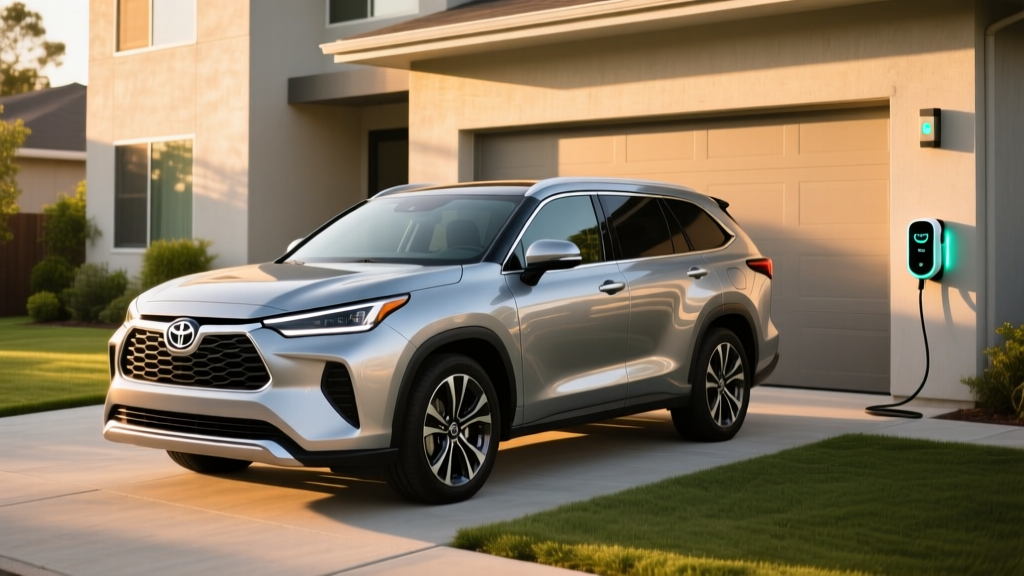
Charging the RAV4 Prime (PHEV Only)
The RAV4 Hybrid requires no plug and no behavior change. The Prime, however, only delivers its efficiency and cost advantage if you charge regularly.
| Charging Method | Power | 0–100% Time |
|---|---|---|
| Level 1 (120V household outlet) | ~1.4 kW | ~12 hours |
| Level 2 (240V, 16A home charger) | ~3.3 kW | ~4.5 hours |
| DC Fast Charging | Not supported | N/A |
No DC fast charging. The RAV4 Prime uses a J1772 connector for Level 1 and Level 2 AC charging only. Its onboard charger is limited to 3.3 kW, meaning even a 48A Level 2 station will only deliver 3.3 kW to the vehicle. This is fine for overnight home charging (a full replenishment while you sleep covers most commutes), but it means public fast-charging stops are not an option. If your daily driving exceeds 42 miles and you lack home charging, the Prime's advantage over the cheaper HEV narrows considerably.
Pricing, Trims & Federal Tax Credit Eligibility
Pricing reflects 2025–2026 MSRP before destination. The Prime commands a substantial premium that only pays back if you charge regularly and qualify for incentives.
| Model / Trim | MSRP (incl. dest.) | §30D Federal Credit |
|---|---|---|
| RAV4 Hybrid LE | $33,425 | $0 (HEV not eligible) |
| RAV4 Hybrid XLE | $35,100 | $0 |
| RAV4 Hybrid Limited | $40,250 | $0 |
| RAV4 Prime SE | $44,990 | Check current eligibility* |
| RAV4 Prime XSE | $48,490 | Check current eligibility* |
*§30D Federal Tax Credit — Current Rules: Under IRS IRS §30D guidelines, new PHEVs may qualify for up to $7,500 if they meet battery-component and critical-mineral sourcing requirements, MSRP caps ($80,000 for SUVs), and buyer income limits ($150K single / $300K joint). The RAV4 Prime's eligibility has fluctuated as Toyota adjusts supply-chain sourcing. The conventional RAV4 Hybrid does not qualify for §30D. The point-of-sale transfer option allows qualifying buyers to apply the credit as a down-payment reduction at the dealer. Always verify current eligibility on the IRS website or with a tax professional before purchase.
Battery Longevity, Warranty & Replacement Cost
Toyota Hybrid Battery Warranty
Coverage: 10 years / 150,000 miles (whichever comes first) on the hybrid battery and all hybrid-system components, transferable to subsequent owners.
Capacity retention: Toyota does not publish a guaranteed minimum SoH percentage, but warranty replacement is triggered when the battery cannot hold sufficient charge to operate the hybrid system properly.
How long do Toyota hybrid batteries last in practice? Toyota's hybrid battery track record is among the best in the industry. Prius and RAV4 Hybrid owners routinely report 150,000–200,000+ miles on the original battery pack. The HEV's small NiMH pack undergoes shallow charge cycles (typically 40–80% SoC), which is gentler on cell chemistry than deep cycling. The Prime's larger Li-ion pack follows a similar shallow-cycling strategy with a software buffer that protects against degradation.
Replacement cost if out of warranty:
- RAV4 Hybrid (HEV) NiMH pack: ~$3,000–$4,500 installed
- RAV4 Prime (PHEV) Li-ion pack: ~$8,000–$12,000 installed
- Refurbished/remanufactured options: 30–50% less than new OEM
For context, a hybrid battery replacement at 180,000 miles costs roughly the same as a transmission replacement on a conventional vehicle — a repair most gas-car owners face at similar mileage. Toyota's 10-year/150,000-mile warranty covers the vast majority of ownership periods.
Who Should Buy Which? The Decision Framework
Choose the RAV4 Hybrid (HEV) If:
- You lack access to home or workplace charging (apartment, street parking)
- Your budget is under $40,000 and you want AWD standard
- You drive mostly city miles where the 41 MPG city rating shines
- You want zero behavior change — fuel it and forget it
- You plan to keep the vehicle 10+ years and value Toyota's long-term reliability record
Choose the RAV4 Prime (PHEV) If:
- You have home Level 2 charging and a commute under 40 miles round-trip
- You want to drive mostly on electricity weekdays and take gas-powered road trips on weekends
- You value the 302 hp performance upgrade and 2,500-lb towing capacity
- You qualify for the §30D federal credit, narrowing the price gap with the HEV
- Your state offers additional PHEV rebates (check energy.gov for state-level incentives)
Consider a Full BEV Instead If:
- You have reliable home charging and drive under 250 miles daily
- You want zero tailpipe emissions and minimal maintenance (no oil, no engine)
- You qualify for the full $7,500 federal credit on a vehicle like the Hyundai Ioniq 5, Tesla Model Y, or Chevrolet Equinox EV
RAV4 Hybrid Pros
- 39 MPG combined — no plug required
- $33K starting MSRP, widely available
- Proven 10-year hybrid battery warranty
- Strong resale value
- Standard eAWD across all trims
RAV4 Hybrid Cons
- No federal tax credit
- 219 hp — adequate but not quick
- CVT drone under hard acceleration
- Infotainment feels dated vs rivals
- 1,750-lb towing limit
RAV4 Prime Pros
- 42 miles EV-only covers most commutes
- 302 hp — quickest RAV4 available
- Potential $7,500 federal credit
- 600+ mile total range
- 2,500-lb towing capacity
RAV4 Prime Cons
- $45K+ starting price
- Only 3.3 kW onboard charger — slow Level 2
- No DC fast charging
- 4 cu ft less cargo than HEV
- Limited dealer allocation; markups common
Frequently Asked Questions
How many MPG does the 2026 RAV4 Hybrid get?
The RAV4 Hybrid achieves an EPA-estimated 41 city / 38 highway / 39 combined MPG. Real-world owners typically see 37–41 MPG combined, with city driving often exceeding the EPA estimate thanks to regenerative braking.
How far can the RAV4 Prime go on electric only?
The RAV4 Prime delivers an EPA-estimated 42 miles of electric-only range on a full charge. At highway speeds (70+ mph) or in cold weather, expect 32–38 miles before the gas engine engages. The total combined range (electric + gas) exceeds 600 miles.
Hybrid vs PHEV vs full EV — which is right for me?
Choose an HEV (RAV4 Hybrid) if you cannot charge at home. Choose a PHEV (RAV4 Prime) if you can charge at home and want electric commuting with gas-powered road-trip flexibility. Choose a full BEV (like the Ioniq 5 or Model Y) if you have home charging, drive under 250 miles daily, and want minimal maintenance with maximum efficiency.
Is the RAV4 Hybrid reliable, and what does a battery replacement cost?
Toyota's hybrid system has a two-decade reliability track record, and the RAV4 Hybrid consistently earns above-average reliability scores from Consumer Reports and J.D. Power. The hybrid battery is warranted for 10 years / 150,000 miles. Out-of-warranty replacement runs $3,000–$4,500 for the HEV and $8,000–$12,000 for the Prime's larger lithium-ion pack.
Does the RAV4 Hybrid or Prime qualify for a tax credit?
The conventional RAV4 Hybrid does not qualify for the federal §30D clean vehicle credit — only plug-in vehicles are eligible. The RAV4 Prime may qualify for up to $7,500, depending on current battery-sourcing requirements, your income (under $150K single / $300K joint), and the SUV MSRP cap ($80K). Eligibility changes as supply chains shift; verify at irs.gov or with your tax professional before purchasing. The credit can be transferred to the dealer at point of sale as a down-payment reduction.
Do I need to plug in the RAV4 Hybrid?
No. The RAV4 Hybrid is a self-charging conventional hybrid. Its small battery is charged entirely by the gasoline engine and regenerative braking. You simply fill it with gasoline like any other vehicle. Only the RAV4 Prime requires (and benefits from) plug-in charging.