The Toyota RAV4 Hybrid has spent years as the best-selling hybrid SUV in America, and the 2026 model year continues that dominance with proven efficiency, standard all-wheel drive, and a powertrain that requires zero behavioral change from the driver. No plugs, no range anxiety, no charging apps — just fill up with gas and drive. But with the RAV4 Prime (the plug-in hybrid variant) sitting right next to it in the showroom, buyers face a real decision: stick with the conventional hybrid or pay more for plug-in capability?
This guide breaks down the 2026 Toyota RAV4 Hybrid MPG numbers, real-world fuel economy expectations, powertrain details, and how it stacks up against the RAV4 Prime PHEV — so you can make the right call for your commute, budget, and garage setup.
2026 Toyota RAV4 Hybrid MPG: EPA Ratings and Real-World Numbers
The 2026 RAV4 Hybrid carries forward Toyota's fourth-generation hybrid system, pairing a 2.5-liter four-cylinder engine with front and rear electric motors for standard electronic all-wheel drive (AWD). The result is one of the most efficient compact SUVs on the market, especially in city driving where regenerative braking and electric-motor assist shine.
| Trim | City MPG | Highway MPG | Combined MPG | Drivetrain |
|---|---|---|---|---|
| LE / XLE | 41 | 38 | 40 | AWD (e-AWD) |
| XLE Premium / SE | 41 | 38 | 40 | AWD (e-AWD) |
| Woodland Edition | 38 | 35 | 37 | AWD (e-AWD) |
Source: EPA Fuel Economy (fueleconomy.gov). Verify specific trim ratings before purchase.
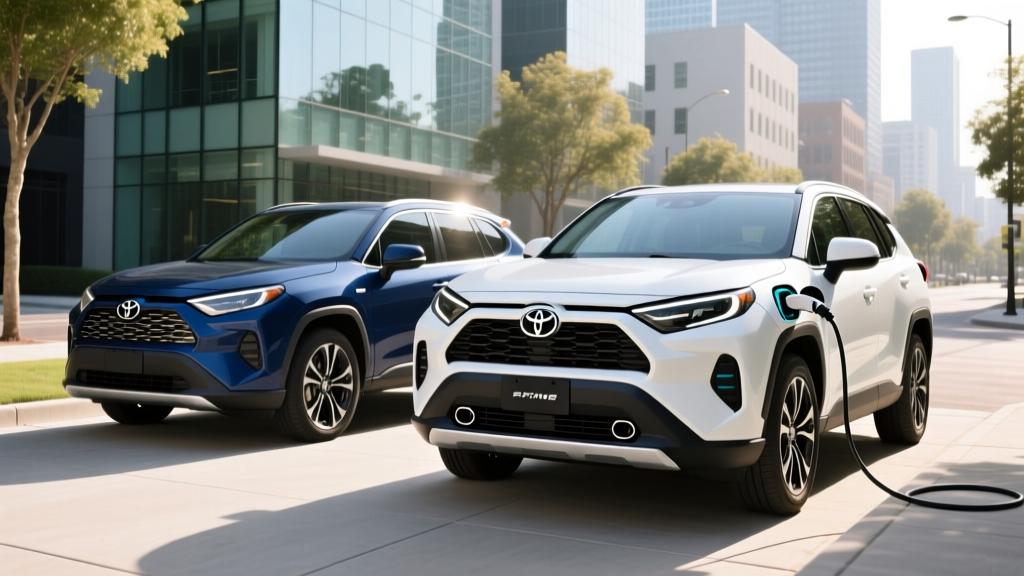
HEV vs PHEV: RAV4 Hybrid vs RAV4 Prime Explained
Toyota sells two electrified RAV4 variants. Understanding the difference is critical before you walk into a dealership.
RAV4 Hybrid (HEV)
- Type: Conventional hybrid — no plug needed
- How it charges: Gas engine + regenerative braking only
- Electric-only driving: Brief, low-speed assist only (not sustained EV mode)
- Best for: Drivers without home charging access, apartment dwellers, those who want zero routine change from a gas car
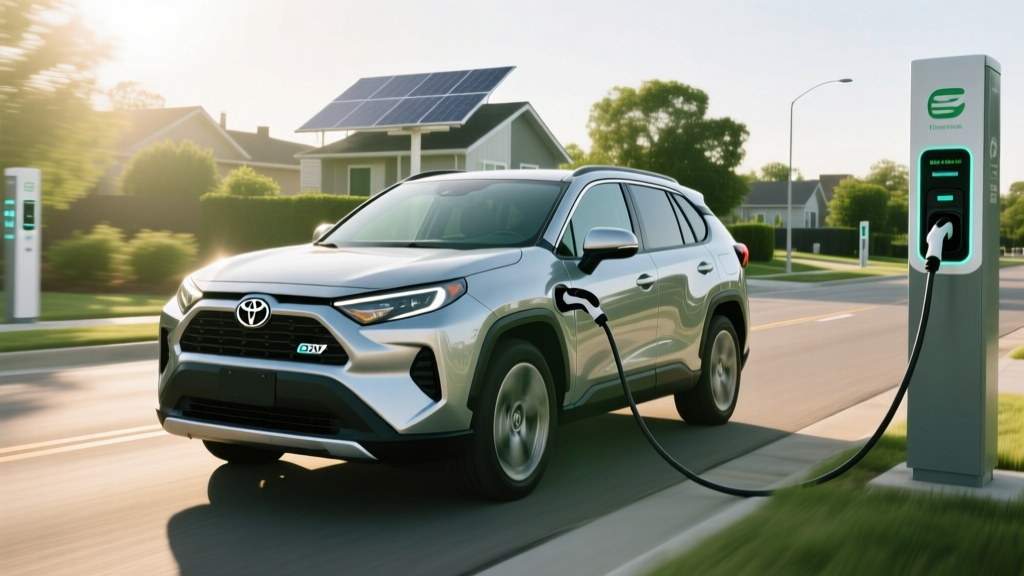
RAV4 Prime (PHEV)
- Type: Plug-in hybrid — charges from a wall outlet or charger
- How it charges: Plug in at home/work + gas engine + regen
- Electric-only range: EPA-estimated 42 miles
- Best for: Drivers with home Level 2 charging, short commutes under 42 miles, those wanting EV daily driving with gas backup
| Specification | RAV4 Hybrid (HEV) | RAV4 Prime (PHEV) |
|---|---|---|
| Powertrain Type | Conventional Hybrid | Plug-in Hybrid |
| Combined Horsepower | 219 hp | 302 hp |
| Engine | 2.5L 4-cyl + 2 electric motors | 2.5L 4-cyl + 2 electric motors (higher output) |
| EPA Combined MPG / MPGe | 40 MPG | 94 MPGe (EV mode) / 38 MPG (gas) |
| Electric-Only Range | N/A (brief assist only) | 42 miles |
| Battery Capacity | ~1.6 kWh (NiMH) | 18.1 kWh (lithium-ion) |
| Plug-In Charging | No | Yes — Level 1 (120V) or Level 2 (240V) |
| Level 2 Charge Time (0-100%) | N/A | ~2.5 hours (6.6 kW onboard charger) |
| DC Fast Charging | N/A | No |
| 0-60 mph | 7.4 sec | 5.7 sec |
| Starting MSRP (2026 est.) | ~$33,500 | ~$44,500 |
The RAV4 Prime's 42 miles of electric-only range covers the average American commute round-trip. If you plug in nightly at home, you could go months between gas fill-ups. But when the battery depletes, it operates as a conventional hybrid at 38 MPG combined — still excellent. The trade-off is an $11,000+ price premium and the need for home charging infrastructure to capture the value.
Powertrain Deep Dive: What Powers the RAV4 Hybrid
The 2026 RAV4 Hybrid uses Toyota's well-proven hybrid synergy drive system. Here's the breakdown:
- Gas engine: 2.5-liter Dynamic Force 4-cylinder, 176 hp and 163 lb-ft of torque on its own
- Front electric motor: 118 hp, integrated into the transaxle
- Rear electric motor: 54 hp, powers the rear axle for electronic AWD
- Combined system output: 219 hp
- Transmission: eCVT (electronically controlled continuously variable transmission — no traditional gears or rubber belts)
- Battery: Nickel-metal hydride (NiMH), approximately 1.6 kWh — recharged continuously by the engine and regenerative braking
The eCVT is worth noting: unlike belt-driven CVTs in some competitors, Toyota's planetary-gear eCVT has no friction components that wear. This is a major reason Toyota hybrids have earned a reputation for exceptional longevity. The rear motor engages automatically when the system detects slippage, acceleration demand, or cornering — providing AWD traction without a mechanical driveshaft connecting the axles.
Pricing, Trims, and Tax Credit Eligibility
The 2026 RAV4 Hybrid lineup spans several trims, with pricing that positions it competitively against both gas-only compact SUVs and rival hybrids like the Honda CR-V Hybrid and Hyundai Tucson Hybrid.
| Trim | Est. Starting MSRP | Key Features |
|---|---|---|
| LE | ~$33,500 | Toyota Safety Sense 3.0, 8" touchscreen, wireless CarPlay/Android Auto |
| XLE | ~$35,000 | Blind-spot monitor, dual-zone climate, Smart Key |
| XLE Premium | ~$37,000 | SofTex seats, power liftgate, 19" wheels |
| SE | ~$37,500 | Sport-tuned suspension, paddle shifters, unique styling |
| Woodland Edition | ~$38,500 | TRD-tuned suspension, all-terrain tires, roof rails |
| Limited | ~$40,500 | 12.3" display, JBL audio, panoramic roof, ventilated seats |
Note: MSRP figures are estimates based on model-year carryover trends. Confirm final pricing with Toyota's official configurator before purchasing.
Some states offer additional rebates or HOV lane access for hybrids or PHEVs — check your state's energy or DMV website for current programs, as these vary widely by jurisdiction.
Battery Longevity, Warranty, and Replacement Costs
Hybrid battery anxiety is the number-one concern for first-time hybrid buyers. Here's what the data shows for Toyota's system:
Toyota's NiMH hybrid batteries in the HEV are remarkably durable because they operate in a narrow state-of-charge window (roughly 40-80%), never fully charging or fully depleting. This shallow-cycling strategy dramatically extends cell life. Real-world data from millions of Toyota hybrids on the road shows many original hybrid batteries lasting 200,000+ miles with minimal degradation.
If replacement is eventually needed out of warranty:
- RAV4 Hybrid (HEV): ~$3,000-$4,500 for a new OEM hybrid battery pack. Refurbished options run $1,500-$2,500.
- RAV4 Prime (PHEV): ~$8,000-$12,000 for the larger 18.1 kWh lithium-ion pack — significantly more expensive due to capacity and chemistry.
For context, the HEV's smaller NiMH battery is one of the least expensive hybrid batteries to replace in the industry. And with the 10-year/150,000-mile warranty, most owners will never pay for a replacement.
Reliability Track Record: What Owners and Data Show
The RAV4 Hybrid benefits from Toyota's longest-running hybrid expertise (dating back to the 1997 Prius). The eCVT transmission has no belts, clutches, or torque converters to fail. The brake pads often last 80,000-100,000 miles because regenerative braking handles most deceleration, reducing friction-brake wear.
The IIHS (Insurance Institute for Highway Safety) has historically rated the RAV4 as a Top Safety Pick. Toyota Safety Sense 3.0 comes standard on every trim, including pre-collision with pedestrian detection, lane departure alert with steering assist, full-speed-range dynamic radar cruise control, and lane tracing assist.
One honest caveat: the RAV4 Hybrid's 2.5-liter engine can sound coarse under hard acceleration — the eCVT holds the engine at high RPM during passing maneuvers. It's a characteristic of all Toyota hybrids and doesn't affect reliability, but it's noticeable if you're coming from a turbocharged gas SUV.
Who Should Buy the RAV4 Hybrid — and Who Shouldn't
Choose the RAV4 Hybrid (HEV) If:
- You live in an apartment or lack access to home charging
- You want maximum simplicity — no plugs, no apps, no charging planning
- Your budget is under $40,000
- You drive a mix of city and highway and want 40 MPG combined without effort
- You plan to keep the vehicle 8-10+ years and value Toyota's reliability reputation
Choose the RAV4 Prime (PHEV) If:
- You have a garage or driveway for Level 2 home charging
- Your daily commute is under 42 miles round-trip (you'll rarely use gas)
- You want 302 hp and 5.7-second 0-60 performance
- You want to drive on electricity daily but need gas flexibility for road trips
- You may qualify for the $7,500 federal tax credit, offsetting the price premium
Ownership Costs: RAV4 Hybrid vs Gas-Only RAV4
At roughly $2,000-$3,000 more than the equivalent gas-only RAV4 AWD, the hybrid premium pays back through fuel savings. Here's the math:
| Model | Combined MPG | Annual Fuel Cost | 5-Year Fuel Cost |
|---|---|---|---|
| RAV4 Gas AWD | 28 MPG | $1,875 | $9,375 |
| RAV4 Hybrid AWD | 40 MPG | $1,313 | $6,563 |
| 5-Year Savings (Hybrid vs Gas) | ~$2,812 | ||
The hybrid premium is typically recouped in 4-5 years through fuel savings alone, not counting reduced brake wear from regenerative braking. If gas prices rise above $4.00/gallon, the payback shortens further. And Toyota hybrids historically hold strong resale value — often commanding a premium over their gas counterparts in the used market.
Frequently Asked Questions
How many MPG does the 2026 RAV4 Hybrid actually get in real driving?
The EPA rates most trims at 41 city / 38 highway / 40 combined. In real-world driving, city commuters often see 42-45 MPG thanks to electric-motor assist and regenerative braking. Highway cruising at 75+ mph drops to 33-36 MPG. Expect 38-41 MPG in mixed driving, with a 5-10% reduction in freezing temperatures.
Does the RAV4 Hybrid need to be plugged in?
No. The conventional RAV4 Hybrid (HEV) charges its small battery entirely through the gas engine and regenerative braking. You never plug it in. Only the RAV4 Prime (PHEV variant) requires plug-in charging to access its 42 miles of electric-only range.
How far can the RAV4 Prime go on electric only?
The RAV4 Prime delivers an EPA-estimated 42 miles of electric-only driving. In mild weather at city speeds, some owners report 45-48 miles. Highway driving and cold weather reduce this to 32-38 miles. After the battery depletes, it switches to hybrid mode at 38 MPG combined.
Is the RAV4 Hybrid battery expensive to replace?
The HEV's NiMH hybrid battery costs approximately $3,000-$4,500 to replace if needed out of warranty. However, Toyota covers it for 10 years/150,000 miles, and real-world data shows these batteries frequently last 200,000+ miles. The RAV4 Prime's larger lithium-ion pack is costlier at $8,000-$12,000.
Does the 2026 RAV4 Hybrid qualify for a federal tax credit?
The conventional RAV4 Hybrid (HEV) does not qualify for the §30D federal Clean Vehicle Credit, which is reserved for plug-in vehicles. The RAV4 Prime (PHEV) may qualify for up to $7,500 depending on battery sourcing compliance, your income, and MSRP limits. Check current IRS rules and consult a tax professional.
How does the RAV4 Hybrid compare to the Honda CR-V Hybrid?
The Honda CR-V Hybrid rates at 40 city / 35 highway / 37 combined (AWD), giving the RAV4 Hybrid a slight highway and combined-MPG advantage. The RAV4 also offers more trim variety and the Woodland Edition for light off-road use. The CR-V Hybrid counters with a slightly more refined ride and a larger cargo area. Both are excellent choices — test-drive both and compare pricing in your market.