Quick Verdict: A Pioneer That Still Delivers
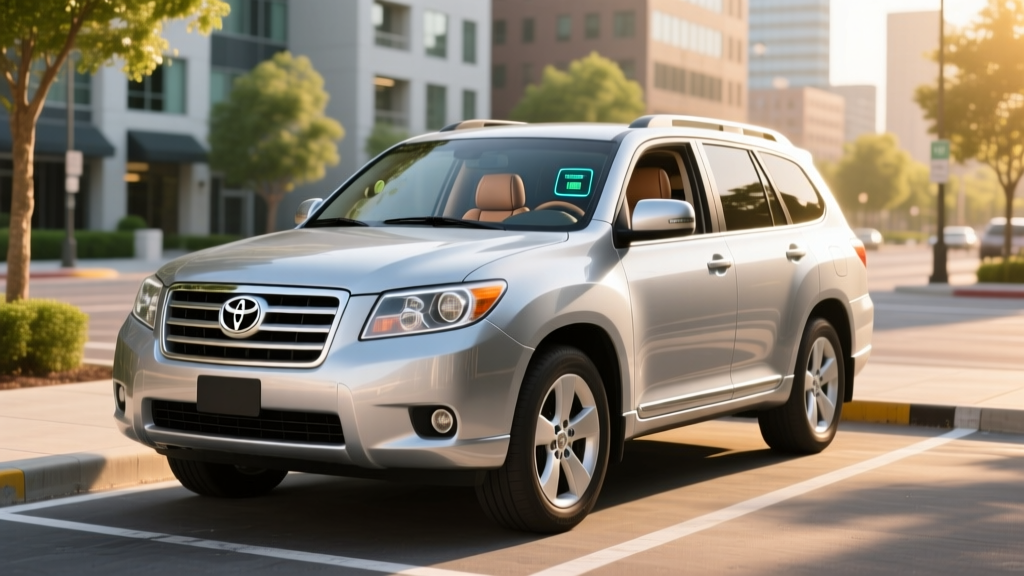
The 2009 Toyota Highlander Hybrid was one of the first three-row SUVs to pair a V6 engine with an electric motor system, offering meaningful fuel savings over its gas-only sibling without sacrificing passenger space. As a used purchase in 2026, it remains a practical family hauler for buyers who want hybrid efficiency without plug-in complexity — but battery age and replacement cost are the critical variables you need to understand before signing any paperwork.
| Spec | 2009 Highlander Hybrid |
|---|---|
| Powertrain | 3.3L V6 + 2 electric motors (Hybrid Synergy Drive) |
| Combined Horsepower | 270 hp (net) |
| EPA MPG (City / Hwy / Combined) | 27 / 25 / 26 |
| Drivetrain | AWD (eCVT, rear electric motor) |
| Seating | 7 passengers |
| Hybrid Battery | ~1.9 kWh NiMH (sealed, non-plug-in) |
| Towing Capacity | 3,500 lbs |
| Cargo Volume (behind 3rd row) | 10.3 cu ft |
HEV vs PHEV: What the 2009 Highlander Hybrid Actually Is
The 2009 Highlander Hybrid is a conventional hybrid electric vehicle (HEV). It cannot be plugged in. It has no electric-only range to speak of — the small nickel-metal hydride (NiMH) battery charges exclusively through regenerative braking and the gasoline engine. You fuel it at a gas station like any other car, and the hybrid system works behind the scenes to reduce fuel consumption.
This is fundamentally different from a plug-in hybrid (PHEV) like the current Toyota RAV4 Prime or the newer Highlander Hybrid's eventual successors. PHEVs carry larger batteries (typically 15–20 kWh), offer 30–45 miles of electric-only driving, and require access to an outlet or Level 2 charger to realize their full efficiency advantage.
Why this matters for buyers: The 2009 Highlander Hybrid requires zero change to your fueling habits. There is no charging cable, no home charger installation, no range anxiety about depleting an electric-only buffer. You simply drive, and the system recaptures energy automatically.
Fuel Economy: EPA Numbers and Real-World MPG
The EPA rates the 2009 Highlander Hybrid at 27 mpg city, 25 mpg highway, and 26 mpg combined. For context, the gas-only 2009 Highlander with the 3.5L V6 and AWD returns 18 city / 24 highway / 20 combined — making the hybrid roughly 30% more efficient in mixed driving.
| Configuration | City | Highway | Combined |
|---|---|---|---|
| 2009 Highlander Hybrid (AWD) | 27 mpg | 25 mpg | 26 mpg |
| 2009 Highlander Gas V6 (AWD) | 18 mpg | 24 mpg | 20 mpg |
| Real-World Hybrid (owner reports) | 24–28 mpg | 23–26 mpg | 24–27 mpg |
Real-world note: Owner data from fueleconomy.gov user reports and forums like Fuelly show most 2009 Highlander Hybrid owners averaging 24–27 mpg combined in everyday driving. City-heavy commuters sometimes exceed the EPA city rating thanks to frequent regenerative braking, while sustained highway driving at 75+ mph or heavy cargo loads can dip into the low 20s. Vehicles with degraded hybrid batteries tend to lose 1–3 mpg from the combined figure.
At 15,000 miles per year and $3.40/gallon (national average), the hybrid saves roughly $480 annually compared to the gas V6 Highlander — or about $2,400 over five years. That savings should be weighed against the hybrid's higher used-car purchase price and potential battery replacement cost.
Powertrain Deep Dive: The Hybrid Synergy Drive
Toyota's Hybrid Synergy Drive in the 2009 Highlander pairs a 3.3-liter 3MZ-FE V6 engine (208 hp on its own) with a front-mounted electric motor and a rear-mounted electric motor for all-wheel drive. The system's net output is 270 horsepower, routed through an electronically controlled continuously variable transmission (eCVT).
The front electric motor handles both propulsion assist and regenerative braking. The rear electric motor (rated at roughly 50 kW) provides AWD traction when the front wheels slip — there is no mechanical driveshaft connecting the front and rear axles. This "e-AWD" system is seamless in rain and light snow but is not designed for serious off-road use.
The eCVT is a power-split device, not a belt-driven CVT. It uses planetary gearsets to blend engine and motor output, which means there are no belts to wear out and no rubber-band acceleration feel. Long-term reliability of this transmission is excellent — it is one of the most durable components in the vehicle.
Hybrid Battery: Lifespan, Degradation, and Replacement Cost
Battery type: Nickel-metal hydride (NiMH), approximately 1.9 kWh, 288V sealed pack
Original warranty: 8 years / 100,000 miles (10 years / 150,000 miles in CARB states including California, New York, Massachusetts, and others that adopted California emissions standards)
Current status (2026): All 2009 models are well beyond factory warranty coverage. Battery health is the single most important inspection item for used buyers.
NiMH batteries in Toyota hybrids of this era typically last 150,000–200,000 miles before significant degradation, though age is as much a factor as mileage. A 2009 model is now 17 years old, and NiMH chemistry degrades with calendar age even in low-mileage vehicles. Expect 10–20% capacity loss on an original battery at this age, which translates to slightly reduced fuel economy and more frequent engine cycling.
Replacement cost breakdown:
| Option | Cost Range | Notes |
|---|---|---|
| New OEM Toyota battery | $2,800–$3,600 | Dealer-installed, full new pack |
| Refurbished/remanufactured pack | $1,200–$2,000 | Replaced cells, 1–3 year warranty typical |
| Individual cell/module replacement | $400–$900 | Only if 1–2 modules are bad; requires skilled tech |
| Used/salvage battery | $500–$1,000 | Risky — unknown remaining life |
Buyer tip: Before purchasing any 2009 Highlander Hybrid, have the hybrid battery's state of health checked with a Toyota-compatible scan tool (Techstream or equivalent). Look at the internal resistance values and voltage delta between modules. A healthy pack shows less than 0.3V difference between the highest and lowest modules at rest. If the seller cannot provide this data, budget $2,000–$3,500 for a replacement as a contingency.
Is the 2009 Highlander Hybrid Reliable?
The second-generation Highlander (2008–2013) has a strong reliability reputation, and the hybrid variant shares most of its mechanical components with Toyota's proven Hybrid Synergy Drive platform. The 3.3L 3MZ-FE V6 is a timing-belt engine (not a chain), so timing belt replacement every 90,000–100,000 miles is critical — neglecting this can result in catastrophic engine failure.
Common issues reported on high-mileage examples include:
- Inverter coolant pump failure: The hybrid system's inverter has its own electric coolant pump. Failure triggers a warning light and can lead to inverter damage ($1,500–$2,500 replacement for the inverter if the pump failure is not caught early). The pump itself is a ~$200–$350 part.
- Brake actuator wear: The regenerative braking system uses an electro-hydraulic brake actuator that can develop issues above 120,000 miles. Replacement runs $1,200–$1,800.
- Power steering rack leaks: The electric power steering rack on this generation can develop fluid leaks. Budget $800–$1,400 for replacement.
- Hybrid battery degradation: As discussed above, age-related NiMH degradation is the most likely major expense.
Despite these items, the 2009 Highlander Hybrid routinely reaches 200,000+ miles with proper maintenance. Check NHTSA for any open recalls on a specific VIN before purchasing.
Pricing, Tax Credits, and Ownership Economics
As a 2009 model, the Highlander Hybrid does not qualify for any federal EV or PHEV tax credit. The IRS §30D Clean Vehicle Credit applies only to new plug-in vehicles meeting battery sourcing, MSRP, and buyer income requirements. Conventional hybrids (HEVs) have never qualified for this credit, and used vehicle credits under §25E require a plug-in vehicle priced under $25,000 at a licensed dealer.
Pros
- 26 mpg combined in a 7-passenger AWD SUV — still competitive for its class
- No plug-in required; zero change to fueling habits
- Proven, durable powertrain with widely available parts
- Smooth eCVT with no belt or pulley to fail
- Strong cargo flexibility with fold-flat second and third rows
- 3,500-lb towing capacity
Cons
- Hybrid battery likely near end of life; replacement is $1,200–$3,600
- Timing belt service is mandatory and expensive ($800–$1,200)
- Dated interior tech — no modern infotainment, no backup camera on base trims
- Fuel savings vs gas Highlander take years to offset higher purchase price
- No eligibility for any federal or state hybrid tax incentives
- High-mileage examples may need brake actuator or inverter pump service
Used pricing (2026 market): Expect to pay $5,500–$9,500 for a 2009 Highlander Hybrid depending on mileage, condition, and battery health. Examples with a recently replaced hybrid battery command a $1,500–$2,500 premium. Low-mileage (under 100k) examples in excellent condition can push toward $10,000.
Who Should Buy the 2009 Highlander Hybrid — And Who Shouldn't
Choose the 2009 Highlander Hybrid if:
- You need a 7-passenger AWD SUV on a budget under $10,000
- You drive 12,000–18,000 miles/year and want lower fuel costs without plugging in
- You lack access to home or workplace charging (apartment, street parking)
- You're comfortable budgeting $2,000–$3,500 for a potential battery replacement
- You value Toyota's long-term parts availability and independent mechanic support
Look elsewhere if:
- You want modern safety tech (automatic emergency braking, lane-keeping) — this generation predates those features
- You want electric-only driving range — consider a used PHEV like the Toyota RAV4 Prime or Mitsubishi Outlander PHEV
- You want zero tailpipe emissions — a used BEV like the Chevy Bolt or Nissan Leaf may suit you better
- You plan to keep the vehicle under 3 years — the battery replacement risk may not pay off in fuel savings
2009 Highlander Hybrid vs. Modern Alternatives
For context, here's how the 2009 Highlander Hybrid stacks up against newer hybrid and PHEV SUVs you might cross-shop:
| Vehicle | Type | EPA Combined | Electric-Only Range | Used Price (2026 est.) |
|---|---|---|---|---|
| 2009 Highlander Hybrid | HEV | 26 mpg | N/A | $5,500–$9,500 |
| 2020+ Highlander Hybrid | HEV | 35 mpg | N/A | $28,000–$42,000 |
| 2022+ RAV4 Prime | PHEV | 38 mpg / 94 MPGe | 42 miles | $32,000–$40,000 |
| 2023+ Grand Highlander Hybrid | HEV | 34–36 mpg | N/A | $38,000–$50,000 |
The 2009 model's 26 mpg combined is respectable for its era but trails modern Toyota hybrid SUVs by 8–10 mpg. The newer 2.5L four-cylinder hybrid system in the 2020+ Highlander achieves 35 mpg combined with a more refined powertrain. If your budget allows, a newer hybrid delivers substantially better efficiency and modern safety features.
Frequently Asked Questions
How many MPG does the 2009 Highlander Hybrid get?
The EPA rates it at 27 city / 25 highway / 26 combined. Real-world owners report 24–27 mpg combined depending on driving style, terrain, and battery health. City drivers often match or exceed the EPA city figure thanks to regenerative braking.
Does the 2009 Highlander Hybrid need to be plugged in?
No. It is a conventional hybrid (HEV), not a plug-in hybrid. The battery charges through regenerative braking and the gasoline engine. You refuel at a gas station like any other vehicle.
How far can it drive on electric power alone?
Effectively zero miles. The 2009 Highlander Hybrid can creep short distances (under 1 mile) at very low speeds on electric power in stop-and-go traffic, but it is not designed for electric-only driving. If electric-only range is a priority, look at a PHEV.
Is the hybrid battery reliable, and what does replacement cost?
Toyota's NiMH hybrid batteries are among the most durable in the industry, typically lasting 150,000–200,000 miles. However, a 2009 model's battery is now 17 years old, and calendar degradation is a real factor. Budget $1,200–$2,000 for a refurbished pack or $2,800–$3,600 for a new OEM replacement. Independent hybrid specialists can often replace individual modules for $400–$900.
Does it qualify for any tax credit?
No. The 2009 Highlander Hybrid is a conventional HEV and does not qualify for the IRS §30D Clean Vehicle Credit or the §25E Used Clean Vehicle Credit. Those credits apply only to plug-in vehicles (BEVs and PHEVs) meeting specific battery sourcing, MSRP, and income requirements. No federal hybrid-specific tax credit exists for conventional HEVs. Some states historically offered hybrid rebates, but most have expired or shifted to plug-in vehicles.
What should I check before buying a used 2009 Highlander Hybrid?
Priority inspections: (1) hybrid battery state of health via scan tool — check module voltage delta and internal resistance, (2) timing belt service history — must be replaced every 90k–100k miles, (3) inverter coolant pump operation, (4) brake actuator condition, and (5) open recalls via NHTSA's recall lookup. A pre-purchase inspection at a Toyota dealer or hybrid specialist is strongly recommended.
How does it compare to a full EV for family use?
A used BEV like the Tesla Model Y or Hyundai Ioniq 5 offers lower operating costs and zero tailpipe emissions, but requires home charging access and may have less cargo flexibility than the Highlander's 7-seat layout. The 2009 Highlander Hybrid is best for buyers who need three rows, AWD, and no charging infrastructure — but it cannot match a modern EV's per-mile energy cost or technology features.