The 2026 PHEV Release Landscape: What Buyers Need to Know
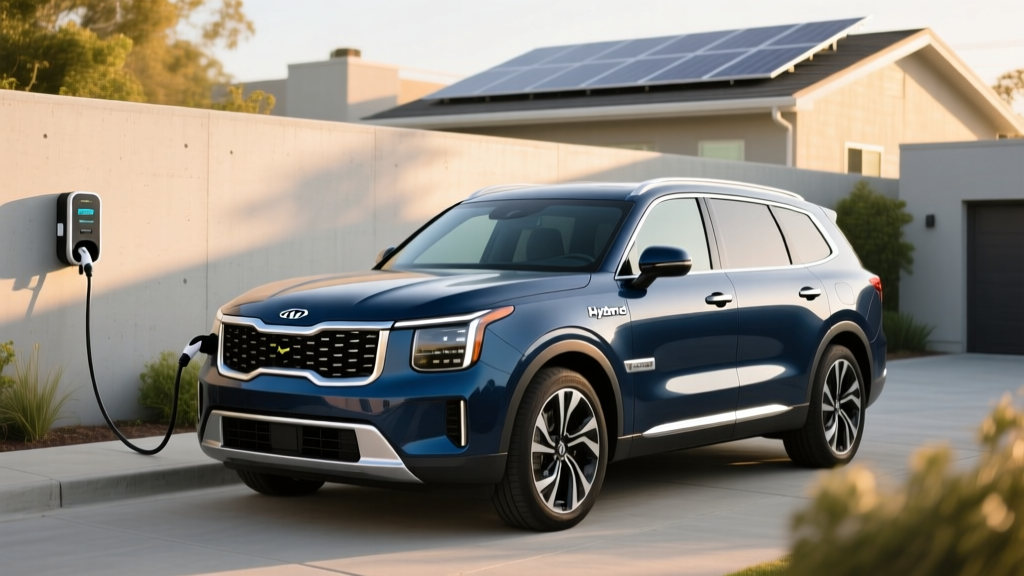
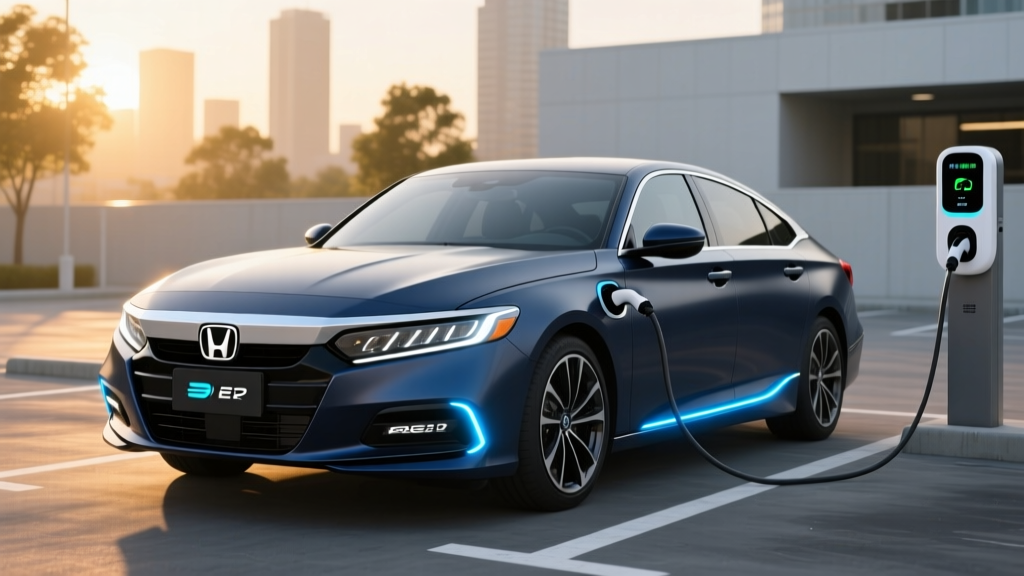
Plug-in hybrid electric vehicles (PHEVs) occupy a distinct middle ground in 2026: enough electric-only range to cover daily commutes without range anxiety, plus a gasoline engine for road trips where charging infrastructure remains sparse. This year's PHEV release cycle brings meaningful battery upgrades, wider DC fast-charging availability, and updated powertrains across several popular nameplates.
But not every PHEV is created equal. Electric-only range spans from 25 miles on budget-oriented models to 50+ miles on the most capable. Some qualify for the full federal tax credit under IRS §30D; others qualify for nothing. This guide breaks down the most significant plug-in hybrids available now so you can match a model to your actual driving pattern.
HEV vs PHEV — The Core Distinction
| Feature | Conventional Hybrid (HEV) | Plug-In Hybrid (PHEV) |
|---|---|---|
| Plug-in charging | No — charges via regen & engine | Yes — external charging required for EV mode |
| Electric-only range | None (motor assists engine) | 25–50+ miles (model dependent) |
| Battery size | 1–2 kWh | 13–25+ kWh |
| Federal tax credit | None | Up to $7,500 (if eligible under §30D) |
| Best for | Drivers who cannot charge at home | Drivers with home/workplace charging |
If you cannot plug in regularly, a PHEV becomes a heavier, more expensive conventional hybrid. Only buy a PHEV if you have reliable access to a Level 1 (120V) or Level 2 (240V) outlet.
Top 2026 PHEV Releases Compared
Below is a side-by-side look at six of the most consequential plug-in hybrids on the market for the 2026 model year. All figures reflect EPA-published data and manufacturer specifications.
| Model | EV Range | Battery (kWh) | Combined HP | Combined MPG | MPGe | 10–80% Charge | Base MSRP |
|---|---|---|---|---|---|---|---|
| Toyota RAV4 Prime | 42 mi | 18.1 | 302 | 38 MPG | 94 MPGe | ~2.5 hr (L2) | $44,500 |
| Hyundai Tucson PHEV | 33 mi | 13.8 | 261 | 35 MPG | 80 MPGe | ~2 hr (L2) | $39,500 |
| Chrysler Pacifica PHEV | 32 mi | 16.0 | 260 | 30 MPG | 82 MPGe | ~2 hr (L2) | $51,000 |
| BMW X5 xDrive50e | 38 mi | 25.7 | 483 | 27 MPG | 56 MPGe | ~3.5 hr (L2) | $73,000 |
| Jeep Wrangler 4xe | 22 mi | 17.3 | 375 | 20 MPG | 49 MPGe | ~2.5 hr (L2) | $52,000 |
| Toyota Prius Prime | 44 mi | 13.6 | 220 | 52 MPG | 127 MPGe | ~4 hr (L1) / ~1.5 hr (L2) | $34,000 |
Sources: fueleconomy.gov (EPA estimates), manufacturer press sites. Real-world EV range will vary with temperature, terrain, and driving style — expect 10–20% less in cold weather or sustained highway speeds above 70 mph.
Fuel Economy Deep Dive: Real-World MPG vs. EPA Stickers
The EPA combined MPG figure tells only part of the story. PHEVs have two efficiency ratings: MPGe (miles-per-gallon-equivalent) when running on battery, and conventional MPG once the battery depletes and the gasoline engine takes over.
| Model | EPA City MPG | EPA Highway MPG | EPA Combined MPG | Real-World Combined (observed) |
|---|---|---|---|---|
| Toyota RAV4 Prime | 40 | 36 | 38 | 36–39 |
| Hyundai Tucson PHEV | 36 | 33 | 35 | 33–36 |
| Chrysler Pacifica PHEV | 30 | 30 | 30 | 28–31 |
| BMW X5 xDrive50e | 27 | 27 | 27 | 25–28 |
| Jeep Wrangler 4xe | 20 | 20 | 20 | 18–21 |
| Toyota Prius Prime | 53 | 51 | 52 | 50–55 |
Hybrids — and PHEVs in charge-depleted mode — often exceed their EPA city rating because regenerative braking recovers more energy in stop-and-go traffic. Highway driving at 75–80 mph, however, pushes real-world MPG below the sticker. The Prius Prime is a notable outlier: its aerodynamic profile and modest weight allow it to match or beat EPA estimates even on the highway.
The Wrangler 4xe's poor fuel economy in gas mode reflects its brick-like aerodynamics and heavy curb weight (~5,200 lbs). If you rarely plug in, this PHEV will cost you more at the pump than a conventional four-cylinder SUV.
Electric-Only Range and Total Driving Range
Electric-only range determines whether a PHEV can replace your daily driving with zero gasoline. The national average one-way commute is roughly 16 miles, meaning even the shortest-range PHEVs here (Wrangler 4xe at 22 miles) can cover a round trip on battery alone.
For longer commutes or errand-heavy days, the Prius Prime (44 miles EPA) and RAV4 Prime (42 miles EPA) stand out. In practice, expect 35–38 miles from the RAV4 Prime and 38–42 miles from the Prius Prime in moderate weather. Cold temperatures (below 32°F) reduce lithium-ion battery performance — plan on 20–30% range loss in winter conditions.
Total combined range (electric + full gas tank) typically exceeds 500 miles on every model listed. The RAV4 Prime achieves roughly 600 miles total; the Prius Prime reaches approximately 640 miles. This eliminates range anxiety entirely for road trips, since you can refuel at any gas station in under five minutes.
Charging Specs: What You Need at Home
None of the PHEVs in this 2026 release roundup offer DC fast charging as standard. This is a deliberate engineering choice: PHEV batteries are small enough (13–26 kWh) that Level 2 charging fully replenishes them in 1.5–3.5 hours, making DCFC infrastructure unnecessary for daily use.
Here's what charging looks like at each level:
| Charging Level | Power (kW) | Typical Miles Added/Hour | Time to Full Charge (PHEV) | Equipment Needed |
|---|---|---|---|---|
| Level 1 (120V outlet) | 1.2–1.4 kW | 3–5 mi/hr | 8–14 hours | Included cord (standard outlet) |
| Level 2 (240V) | 3.3–7.2 kW | 12–25 mi/hr | 1.5–4 hours | Home wallbox or public L2 station |
| DC Fast Charge | 50+ kW | N/A for most PHEVs | N/A | Not available on most PHEVs |
A standard 120V household outlet (Level 1) will replenish a Prius Prime overnight — roughly 10–12 hours from empty. If your daily driving stays under 40 miles, Level 1 alone may suffice. For higher daily mileage or larger-battery PHEVs like the X5 xDrive50e, a Level 2 home charger ($500–$800 for equipment, $500–$2,000 for electrician installation) is strongly recommended.
Key distinction: kW (kilowatts) measures charging power — how fast energy flows. kWh (kilowatt-hours) measures battery capacity — how much energy the battery stores. A 13.8 kWh battery charged at 7.2 kW takes roughly 2 hours to fill.
Battery Longevity, Warranty, and Replacement Costs
PHEV Battery Warranty Coverage (2026 Models)
| Manufacturer | Battery Warranty | Capacity Retention Guarantee |
|---|---|---|
| Toyota | 10 years / 150,000 miles | Not published (historical degradation low) |
| Hyundai | 10 years / 100,000 miles | Not published |
| Stellantis (Chrysler/Jeep) | 8 years / 100,000 miles | Not published |
| BMW | 8 years / 80,000 miles | Minimum 70% capacity |
Federal law (EPA emissions warranty) also mandates hybrid battery coverage for 8 years/80,000 miles minimum. California and states adopting CARB standards extend this to 10 years/150,000 miles.
PHEV batteries experience less degradation than full EV batteries because the onboard computer maintains a larger buffer — you typically use only 60–80% of the total cell capacity. This shallow cycling extends lifespan considerably. Real-world data from earlier-generation PHEVs (2017–2020 models) shows most retaining 85–95% of original capacity after 100,000 miles.
Should a battery require out-of-warranty replacement, expect the following approximate costs:
- Toyota RAV4 Prime / Prius Prime: $3,000–$5,000
- Hyundai Tucson PHEV: $4,000–$6,000
- BMW X5 xDrive50e: $8,000–$12,000 (larger battery, premium labor rates)
- Jeep Wrangler 4xe: $5,000–$7,000
These are ballpark figures; actual costs depend on dealership labor rates and whether individual modules can be replaced rather than the full pack.
Pricing and Federal Tax Credit Eligibility
Under the current IRS §30D rules, qualifying PHEVs may receive up to $7,500 in federal tax credits, now available as a point-of-sale transfer to the dealer (effectively an instant discount). However, eligibility depends on several strict requirements:
- Battery sourcing: Critical minerals and battery components must meet phased-in domestic/free-trade-agreement sourcing thresholds (these tighten annually through 2030).
- MSRP caps: SUVs, vans, and pickups must have an MSRP at or below $80,000; sedans and other vehicles at or below $55,000.
- Buyer income limits: Modified adjusted gross income must not exceed $150,000 (single), $225,000 (head of household), or $300,000 (joint).
- North American final assembly: The vehicle must be assembled in North America per VIN verification.
- FEOC restriction: Battery components cannot be sourced from a Foreign Entity of Concern (primarily targeting Chinese manufacturers).
Source: IRS.gov §30D Clean Vehicle Credits. Rules are subject to change — consult a tax professional before relying on credit eligibility.
Among the models reviewed, the Toyota RAV4 Prime and Prius Prime (assembled in Japan) do not qualify for the §30D credit due to the North American assembly requirement. The Hyundai Tucson PHEV (assembled in South Korea) also falls outside eligibility. The Chrysler Pacifica PHEV and Jeep Wrangler 4xe (North American assembly) may qualify depending on battery-sourcing compliance — verify the specific VIN on fueleconomy.gov before purchasing. The BMW X5 xDrive50e is assembled in South Carolina but its MSRP exceeds the $80,000 SUV cap in most trims.
Powertrain Performance: Engine Meets Electric Motor
PHEV powertrains pair a gasoline engine with one or more electric motors, and the combined output often substantially exceeds what either power source delivers alone.
The RAV4 Prime's 2.5L four-cylinder plus dual electric motors produce a combined 302 hp, launching it to 60 mph in 5.7 seconds — quicker than many sport compacts. The BMW X5 xDrive50e is the performance leader here: its 3.0L inline-six and electric motor combine for 483 hp and a 4.6-second 0–60 time. The Prius Prime, redesigned for its current generation, delivers 220 hp combined — a dramatic improvement over its predecessor — and reaches 60 mph in approximately 6.6 seconds.
The Wrangler 4xe's 375 combined hp and 470 lb-ft of torque are engineered for off-road crawling rather than acceleration, though its 0–60 time of roughly 6.0 seconds is genuinely quick for a solid-axle off-roader.
Who Should Choose a PHEV vs. a Full EV or Gas Car?
Decision Framework: PHEV, Full EV, or Conventional Hybrid?
| Your Situation | Best Choice | Why |
|---|---|---|
| Home charging available, commute under 40 mi, take 2+ road trips/year | PHEV | Zero-gas commuting + unlimited road-trip range |
| Home charging available, commute under 300 mi, rare long trips | Full EV (BEV) | Lower running costs, zero tailpipe emissions, less maintenance |
| No home or workplace charging access | Conventional HEV | No plug needed; 40–55 MPG with no behavior change |
| One-car household, mixed city/highway, uncertain charging future | PHEV | Flexibility to electrify now, adapt later |
| Pure highway commuter, 60+ mi one way, no charging | HEV or efficient gas car | PHEV EV range won't cover your commute; extra weight hurts MPG |
The PHEV sweet spot is a driver who can charge at home (even on a 120V outlet overnight), drives 20–40 miles daily, but doesn't want to plan road trips around charging stations. If your lifestyle fits that description, a PHEV offers the best of both worlds — electric daily driving with gasoline as a seamless backup.
PHEV Advantages
- 25–44 miles of zero-emission daily driving
- No range anxiety — gas engine for long trips
- Lower fuel costs when charged regularly
- Regenerative braking extends brake life
- Strong combined HP from dual power sources
PHEV Trade-Offs
- Higher purchase price than equivalent HEV or gas model
- Requires charging access to realize EV benefits
- Two powertrains to maintain (engine + electric)
- Reduced cargo space in some models (battery placement)
- Tax credit eligibility is limited and complex
Frequently Asked Questions
How many MPG does a PHEV get once the battery runs out?
Once the electric range is depleted, a PHEV operates as a conventional hybrid. The Toyota Prius Prime leads this group at 52 MPG combined. The RAV4 Prime delivers 38 MPG combined. The Jeep Wrangler 4xe, due to its weight and aerodynamics, drops to 20 MPG combined in hybrid mode — one of the least efficient vehicles in this comparison when running on gasoline alone.
How far can a PHEV go on electric only?
Among 2026 models reviewed, electric-only range spans from 22 miles (Wrangler 4xe) to 44 miles (Prius Prime). Real-world range depends on temperature, speed, and terrain. Expect 10–20% less than the EPA estimate in cold weather or at sustained highway speeds above 70 mph. For the RAV4 Prime's 42-mile EPA rating, plan on approximately 34–38 miles in typical mixed driving.
Hybrid vs. PHEV vs. EV — which is right for me?
Choose a conventional hybrid (HEV) if you cannot charge at home or work. Choose a PHEV if you have charging access and want electric commuting plus gas-engine flexibility for road trips. Choose a full EV (BEV) if you have reliable charging, your daily driving is under 250 miles, and you want the lowest long-term operating costs with zero tailpipe emissions.
Are PHEV batteries reliable, and what does replacement cost?
PHEV batteries are highly reliable in practice. Because the system uses a large buffer (never fully charging or depleting the cells), degradation is slower than in full EVs. Toyota's hybrid batteries in particular have demonstrated excellent longevity — many first-generation Prius batteries lasted 150,000+ miles. All manufacturers covered here warranty their PHEV batteries for 8–10 years / 80,000–150,000 miles. Out-of-warranty replacement ranges from roughly $3,000 (Prius Prime) to $12,000 (BMW X5) depending on battery size and labor.
Does a PHEV qualify for any tax credit?
Some do, but eligibility under the IRS §30D federal credit is strict. The vehicle must be assembled in North America, meet battery-sourcing requirements, fall under MSRP caps ($80,000 for SUVs, $55,000 for sedans), and the buyer must fall within income limits. Among this group, the Chrysler Pacifica PHEV and Jeep Wrangler 4xe are the most likely to qualify — but always verify the specific VIN on fueleconomy.gov and consult a tax professional. Japanese- and Korean-assembled PHEVs (Toyota, Hyundai) do not currently qualify for the federal credit.
Do I need to install a home charger for a PHEV?
Not necessarily. Most PHEV batteries are small enough (13–26 kWh) to fully recharge overnight on a standard 120V household outlet (Level 1). If your daily driving exceeds 30–40 miles or you want faster turnaround between trips, a Level 2 (240V) home charger is recommended. Expect $500–$800 for the charger unit and $500–$2,000 for professional installation, depending on your electrical panel's capacity.
What happens if I never plug in my PHEV?
The vehicle will still function — it operates as a conventional hybrid once the battery is depleted. However, you'll carry the extra weight of a large battery and electric motor without benefiting from electric-only driving, resulting in worse fuel economy than a purpose-built HEV. You'll also pay a purchase-price premium you never recoup. If you cannot commit to regular charging, buy a conventional hybrid instead.