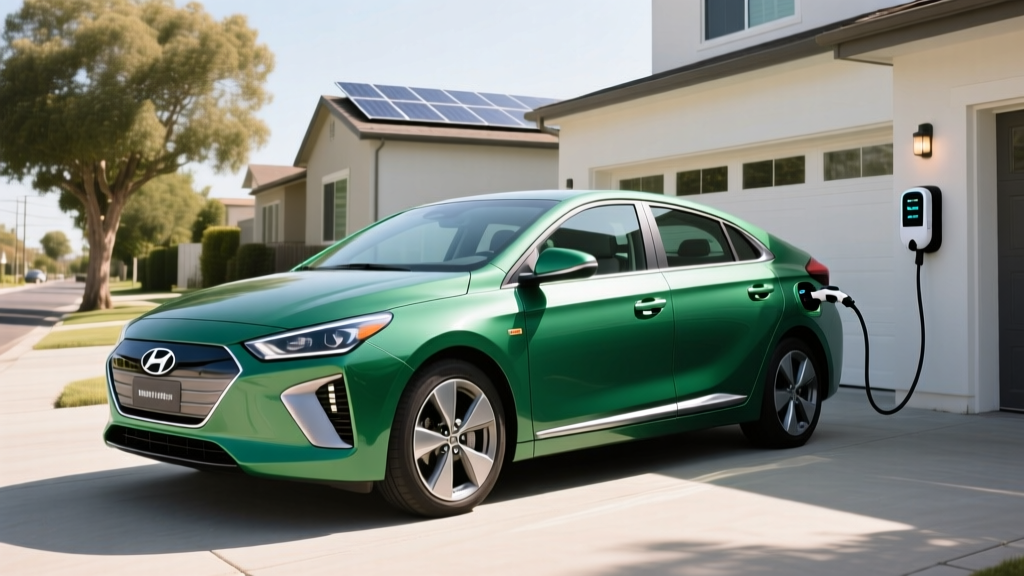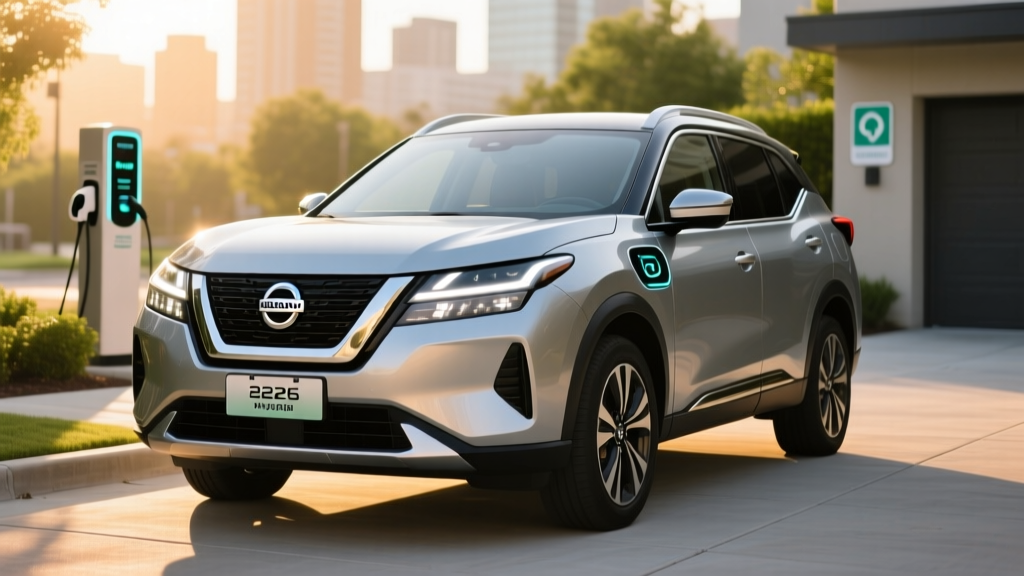
If you've been searching for a compact crossover that bridges the gap between a conventional hybrid and a full electric vehicle, the 2026 Nissan Rogue Plug-In Hybrid lands as a compelling middle ground. Nissan has refreshed the Rogue PHEV for the 2026 model year with a larger battery pack, improved electric-only range, and updated powertrain tuning — all while retaining the practicality and cargo space that made the Rogue one of America's best-selling compact SUVs.
But does a plug-in hybrid make sense for your driving routine? And does the 2026 Rogue PHEV actually qualify for the federal tax credit? We've analyzed the EPA data, IRS §30D requirements, and Nissan's published specs to give you a no-nonsense buyer's guide.
HEV vs PHEV: What's the Difference in the Rogue Lineup?
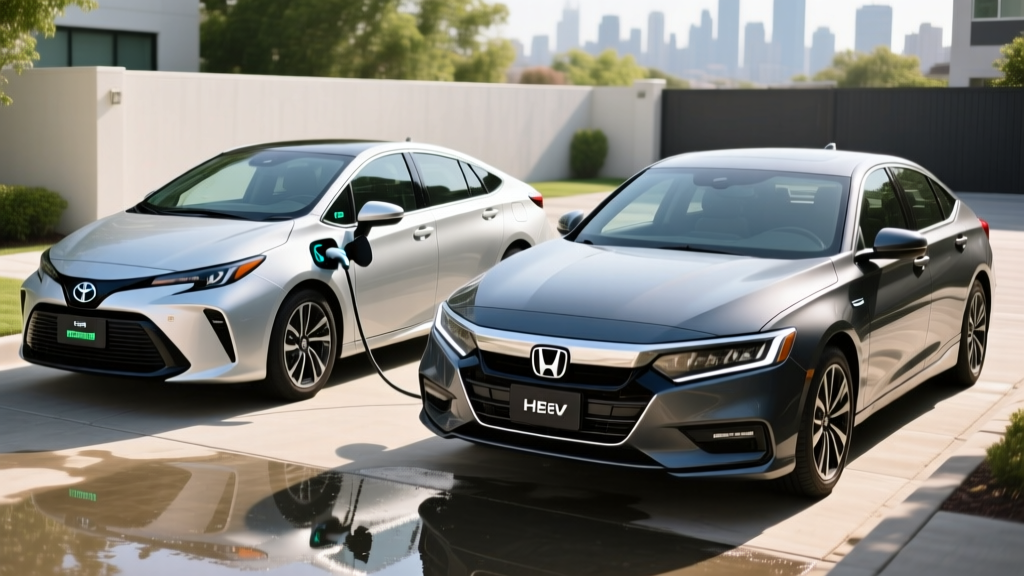
Before we dig into the numbers, let's clarify what you're looking at. Nissan offers the Rogue in two electrified flavors for 2026:
| Feature | Rogue Hybrid (HEV) | Rogue Plug-In Hybrid (PHEV) |
|---|---|---|
| Plug in to charge? | No — charges via regenerative braking and engine | Yes — plug in for full electric-only driving |
| Battery size | ~1.5 kWh (small buffer) | 20.4 kWh usable (larger traction pack) |
| Electric-only range | None (motor assists engine only) | EPA-est. 38 miles |
| Can drive on electricity alone? | No — engine always runs | Yes — up to highway speeds (~80 mph) |
| Best for | Drivers who can't plug in at home | Drivers with home/work charging access |
The key takeaway: the conventional Rogue Hybrid never plugs in. It uses a small battery and electric motor to assist the gas engine, improving MPG without any change to your fueling routine. The Rogue Plug-In Hybrid has a much larger battery that you charge from a wall outlet or public charger, enabling roughly 38 miles of gasoline-free driving before the gas engine kicks in as a series-parallel hybrid.
Fuel Economy and Electric-Only Range
Fuel economy is where the Rogue PHEV justifies its premium over the gas-only model. Here's the full EPA breakdown:
| Mode | EPA Estimate |
|---|---|
| Electric-only range | 38 miles |
| MPGe (electric + gas combined) | 86 MPGe |
| Gas-only city MPG | 33 MPG |
| Gas-only highway MPG | 37 MPG |
| Gas-only combined MPG | 35 MPG |
| Total combined range (EV + gas) | ~460 miles |
Once the battery depletes, the Rogue PHEV operates as a conventional hybrid. The 35 MPG combined figure is strong for a compact AWD SUV — for comparison, the gas-only 2026 Rogue AWD manages around 29 MPG combined. That means even on long road trips where you never plug in, you're still saving fuel.
Powertrain, Battery, and Charging Specs
| Specification | 2026 Nissan Rogue PHEV |
|---|---|
| Engine | 1.5L turbocharged 3-cylinder DOHC |
| Electric motor | Front-mounted AC synchronous motor |
| Combined system horsepower | 205 HP |
| Combined system torque | 258 lb-ft |
| Battery chemistry | Lithium-ion (NMC) |
| Usable battery capacity | 20.4 kWh |
| Transmission | e-CVT (electronically controlled) |
| Drivetrain | AWD (e-motor rear assist) |
| 0-60 mph (est.) | ~7.5 seconds |
| Level 1 charging (120V) | ~12 hours (0–100%) |
| Level 2 charging (240V, 7.2 kW) | ~3 hours (0–100%) |
| DC fast charging | Not supported |
Charging in Practice
The 2026 Rogue PHEV uses a standard J1772 connector for Level 1 and Level 2 AC charging. It does not support DC fast charging — which is typical for PHEVs in this segment. The onboard charger maxes out at 7.2 kW, meaning a full Level 2 charge takes about three hours.
For most PHEV owners, this isn't a limitation. The use case is simple: plug in at home overnight, wake up to a full battery every morning, and handle your daily commute on electricity alone. With 38 miles of electric range, the Rogue PHEV covers the average American's daily driving (roughly 30–35 miles round-trip, per FHWA data) without touching a drop of gasoline.
A standard 120V household outlet (Level 1) will fully recharge the battery in about 12 hours — adequate if you park for extended periods. However, we strongly recommend installing a 240V Level 2 home charger (typically a 240V/32A or 40A circuit) for the 3-hour charge time. Expect a Level 2 home installation to cost between $600 and $1,500 depending on your electrical panel's proximity to the parking spot and whether a panel upgrade is needed.
Pricing, Trims, and Federal Tax Credit Eligibility
The 2026 Nissan Rogue Plug-In Hybrid is offered in two trims:
- SV PHEV: Starting at approximately $38,500 (including destination)
- SL PHEV: Starting at approximately $42,900 (including destination)
Both trims come standard with AWD, the full PHEV powertrain, and Nissan's suite of ProPILOT Assist driver-assistance features.
Does the 2026 Rogue PHEV Qualify for the Federal Tax Credit?
Under current IRS §30D rules, the 2026 Rogue Plug-In Hybrid is eligible for a partial federal tax credit — up to $3,750 — contingent on meeting critical-mineral and battery-component sourcing requirements. Here's the eligibility checklist:
- MSRP cap: SUVs must be under $80,000 — the Rogue PHEV clears this easily
- Buyer income cap: Modified AGI must not exceed $150,000 (single), $225,000 (head of household), or $300,000 (joint)
- Battery sourcing: A percentage of critical minerals must be sourced from the U.S. or FTA partners, and battery components must be manufactured/assembled in North America — Nissan's sourcing determines the exact credit tier ($3,750 for one requirement, $7,500 for both)
- Point-of-sale transfer: Eligible buyers can transfer the credit to the dealer at purchase, reducing the purchase price upfront rather than waiting for tax filing
- Vehicle assembly: Final assembly must occur in North America
Reliability, Battery Warranty, and Long-Term Costs
How Long Will the Battery Last?
PHEV batteries experience less stress than full EV batteries because they operate within a narrower state-of-charge window (the system buffers the top and bottom to protect longevity). Nissan's NMC lithium-ion pack is liquid-cooled, which further mitigates degradation from heat.
Based on industry data from similar PHEV platforms, expect 10–15% capacity loss over 10 years under normal use. That means your 38-mile electric range might drop to roughly 32–34 miles after a decade — still highly usable for daily commuting.
Battery Replacement Cost
Out-of-warranty high-voltage battery replacement for the Rogue PHEV is estimated at $6,000–$9,000 including parts and labor, based on comparable Nissan hybrid/PHEV service pricing. However, given the 8-year/100,000-mile warranty and the moderate degradation profile of PHEV packs, most owners will never face this expense. According to NHTSA data, catastrophic PHEV battery failures within the warranty period are rare.
Who Should Choose the Rogue PHEV vs. a Full EV or Gas Car?
✅ Pros
- 38 miles electric covers most daily commutes gas-free
- 35 MPG combined even when battery is depleted
- No range anxiety — gas engine provides 460+ total miles
- Standard AWD for all-weather confidence
- Eligible for partial federal tax credit (up to $3,750–$7,500)
- ProPILOT Assist standard on all trims
- Practical cargo space retained vs. gas Rogue
❌ Cons
- No DC fast charging — Level 2 only
- Electric range drops in cold weather (~30–35 mi)
- Premium over gas Rogue takes years to recoup via fuel savings
- Partial tax credit (not guaranteed full $7,500)
- e-CVT can feel less engaging than a geared transmission
- Smaller frunk/storage vs. dedicated EV platforms
Decision Framework: Is the Rogue PHEV Right for You?
Choose the Rogue PHEV if: You have reliable home or workplace Level 2 charging, your daily commute is under 40 miles round-trip, you take occasional road trips where EV charging infrastructure is sparse, and you want to reduce fuel consumption without committing to a full EV.
Choose a full EV (like the Nissan Ariya) if: You drive less than 250 miles daily, have home charging, want zero tailpipe emissions, qualify for the full $7,500 credit, and are comfortable planning road-trip charging stops.
Choose the conventional Rogue Hybrid (HEV) if: You cannot charge at home or work, want better MPG than the gas model without changing any habits, and don't want to manage plug-in routines.
Stick with the gas-only Rogue if: You drive very few miles annually (under 8,000), the hybrid premium doesn't pencil out within your ownership timeline, or you prefer the lowest upfront purchase price.
Real-World Ownership Economics
Let's run the numbers. Assuming you drive 12,000 miles per year, charge at home nightly (at the national average of $0.16/kWh), and pay $3.40/gallon for regular unleaded:
| Annual Cost | Gas-Only Rogue AWD | Rogue PHEV (charged daily) |
|---|---|---|
| Fuel / electricity | ~$1,410 (29 MPG combined) | ~$580 (mostly electric, some gas) |
| Annual savings vs. gas | — | ~$830/year |
| 5-year fuel savings | — | ~$4,150 |
| Estimated insurance premium difference | Baseline | +5–10% (typical PHEV surcharge) |
The PHEV premium over the gas Rogue (roughly $5,000–$7,000 depending on trim) can be partially offset by the federal tax credit ($3,750–$7,500) and annual fuel savings. For a buyer who qualifies for the full credit and charges daily, the break-even point arrives in approximately 2–4 years.
Frequently Asked Questions
How many MPG does the 2026 Nissan Rogue Plug-In Hybrid get?
Once the battery is depleted, the Rogue PHEV achieves an EPA-estimated 33 MPG city, 37 MPG highway, and 35 MPG combined. While operating in electric mode, it achieves 86 MPGe. In real-world city driving with frequent stops (which maximize regenerative braking), many owners report meeting or slightly exceeding the EPA combined figure.
How far can the 2026 Rogue PHEV go on electric only?
The EPA rates the 2026 Rogue PHEV at 38 miles of electric-only range. In real-world conditions, expect 30–35 miles in cold weather or sustained highway driving, and potentially 38–40 miles in moderate-temperature city driving with regenerative braking opportunities.
Does the 2026 Rogue PHEV qualify for the federal tax credit?
Yes, it qualifies for a partial credit of up to $3,750 under current IRS §30D rules, with the possibility of $7,500 depending on battery-sourcing compliance. Buyer income caps apply ($150K single / $300K joint), and the credit can be transferred to the dealer at point of sale. Always verify on fueleconomy.gov for the specific model you're purchasing.
Is the Nissan Rogue PHEV reliable, and what does a battery replacement cost?
Nissan's hybrid and PHEV systems have a solid reliability track record, and the high-voltage battery is warranted for 8 years / 100,000 miles. PHEV batteries degrade slowly due to buffered charge windows and liquid cooling. Out-of-warranty replacement is estimated at $6,000–$9,000, though most owners will never need one based on industry degradation data.
Can the Rogue PHEV use DC fast chargers?
No. The 2026 Rogue PHEV supports Level 1 (120V) and Level 2 (240V, up to 7.2 kW) AC charging only, using a standard J1772 connector. This is typical for PHEVs — the smaller battery doesn't require DC fast charging, and overnight Level 2 charging fully replenishes the pack in about 3 hours.
What's the difference between the Rogue Hybrid and the Rogue Plug-In Hybrid?
The conventional Rogue Hybrid (HEV) does not plug in. It uses a small battery and electric motor to assist the gas engine, improving fuel economy without any change to your fueling habits. The Rogue Plug-In Hybrid (PHEV) has a much larger battery that you plug in to charge, enabling 38 miles of pure electric driving before the hybrid system takes over. The PHEV costs more upfront but delivers dramatically lower fuel costs for drivers who can charge regularly.