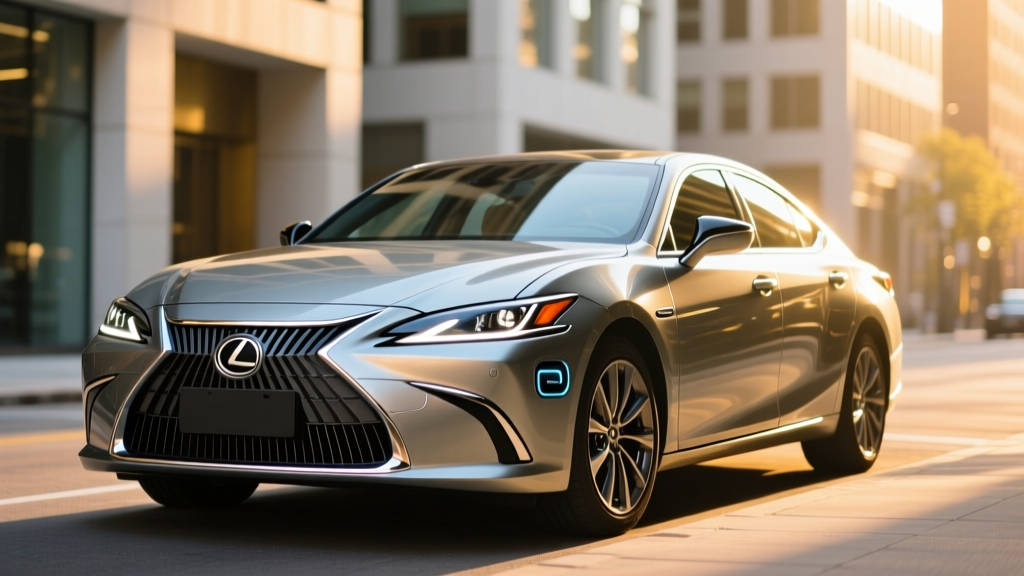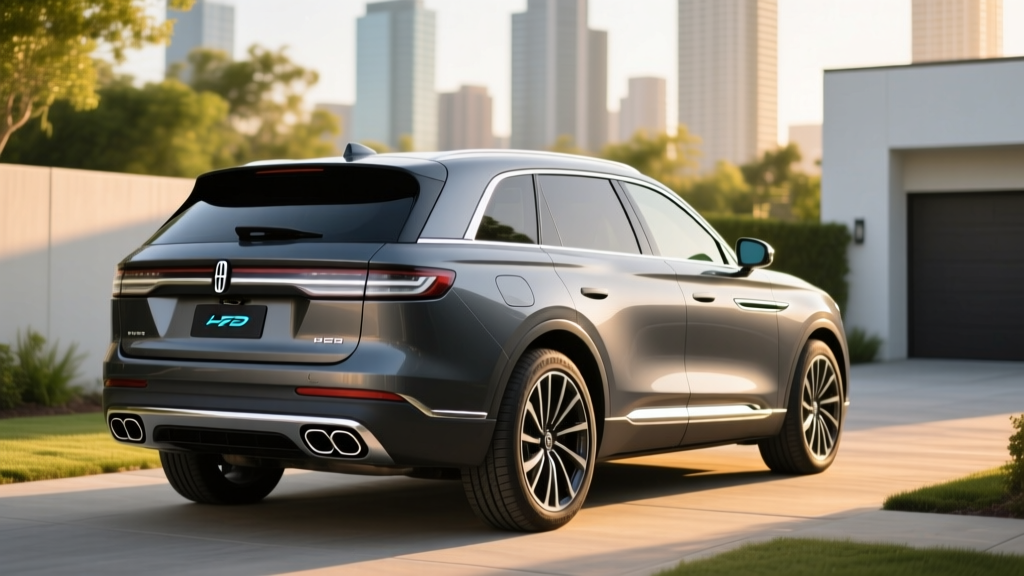
The 2026 Lincoln Aviator plug-in hybrid (officially the Aviator Grand Touring) occupies a narrow but compelling lane in the luxury midsize SUV segment: three-row comfort with 21 miles of electric-only commuting and a combined 400+ horsepower powertrain. Lincoln refreshed the Aviator for 2025, and the 2026 model carries forward that updated architecture with the same 3.0-liter twin-turbo V6 PHEV system. If you're researching whether this luxury plug-in fits your daily driving pattern — or whether a full EV like the Rivian R1S or a conventional hybrid makes more sense — this guide breaks down every spec that matters.
2026 Lincoln Aviator Hybrid Powertrain and Performance
The Aviator Grand Touring pairs a 3.0-liter twin-turbocharged V6 engine with an electric motor integrated into the 10-speed automatic transmission. The combined system output is 494 horsepower and 630 lb-ft of torque, making it the most powerful Aviator in the lineup. The standard gas-only Aviator produces 400 hp from the same 3.0L V6 without electric assist.
| Specification | Value |
|---|---|
| Powertrain | 3.0L Twin-Turbo V6 + Electric Motor (PHEV) |
| Combined Horsepower | 494 hp |
| Combined Torque | 630 lb-ft |
| Transmission | 10-speed automatic |
| Drivetrain | RWD standard, AWD available |
| Battery Capacity (gross / usable) | 13.1 kWh / ~11.5 kWh |
| Battery Chemistry | Lithium-ion (NMC) |
| EPA Electric-Only Range | 21 miles |
| Total Combined Range | ~430 miles |
| EPA MPGe (charge-sustaining + electric) | 56 MPGe combined |
| EPA MPG (gas only, charge-sustaining) | 23 combined (23 city / 24 hwy) |
| Level 2 Charge Time (0–100%) | ~3.5 hours at 240V / 32A |
| DC Fast Charging | Not available |
| 0–60 mph | ~5.5 seconds |
| Towing Capacity | Up to 5,600 lbs (AWD) |
| Battery Warranty | 8 years / 100,000 miles |
Lincoln uses a parallel PHEV architecture, meaning the engine and electric motor can drive the wheels independently or together. In EV mode, the motor handles low-speed commuting silently. When you demand acceleration or deplete the battery, the V6 engages seamlessly. The transition is one of the smoother PHEV handoffs in the luxury segment, though you'll notice the engine note under hard throttle — this is a heavy SUV moving nearly 5,200 pounds.
EPA MPG, MPGe, and Real-World Fuel Economy
Fuel economy for the Aviator Grand Touring depends entirely on how you use it. The EPA rates it at 56 MPGe combined when you factor in electric-only driving. But MPGe is only meaningful if you plug in regularly. Once the battery depletes, the Aviator operates as a conventional hybrid, and the EPA rates it at 23 MPG combined (23 city / 24 highway).
| Configuration | City | Highway | Combined |
|---|---|---|---|
| Grand Touring PHEV (MPGe) | — | — | 56 MPGe |
| Grand Touring PHEV (gas only) | 23 | 24 | 23 |
| Gas-only Aviator (RWD) | 18 | 25 | 21 |
| Gas-only Aviator (AWD) | 17 | 24 | 20 |
Real-world expectations: Owners who charge nightly and commute under 20 miles round-trip report using almost no gasoline on weekdays, with the engine only engaging for longer weekend trips. In that pattern, observed fuel economy can exceed 40 MPG equivalent over a month of mixed driving. However, if you never plug in, expect real-world gas-only figures closer to 20–22 MPG combined — slightly below the EPA sticker, especially in city stop-and-go or with aggressive throttle inputs. Highway cruising at 70+ mph will push consumption toward 22–23 MPG. Source: fueleconomy.gov.
Charging: What You Need at Home
The Aviator Grand Touring uses a standard J1772 connector for Level 2 AC charging. It does not support DC fast charging — a limitation shared with most PHEVs in this class. The onboard charger accepts up to 7.7 kW on a 240-volt Level 2 circuit.
| Charging Level | Voltage / Power | Time to Full Charge | Practical Use |
|---|---|---|---|
| Level 1 (standard outlet) | 120V / ~1.4 kW | ~9–10 hours | Overnight top-up only |
| Level 2 (home wallbox) | 240V / 7.7 kW | ~3.5 hours | Daily charging — recommended |
| DC Fast Charge | N/A | Not supported | — |
For most PHEV owners, a Level 2 home charger is essential. A 3.5-hour full charge means you can plug in when you get home at 6 PM and have a full battery by 9:30 PM — well before bedtime. Level 1 charging from a standard 120V outlet works but is slow enough that you'll only recover about 12–14 miles of range overnight, leaving you short on longer commutes.
Home charging installation cost: Expect to pay $500–$1,500 for a Level 2 wallbox installation if your electrical panel has capacity on a 240V circuit. If your home needs a panel upgrade (common in older homes with 100A service), budget an additional $1,500–$3,000. Always get a quote from a licensed electrician before purchasing equipment.
HEV vs PHEV vs Full EV: Which Fits Your Life?
The Aviator Grand Touring is a plug-in hybrid (PHEV), not a conventional hybrid (HEV). Lincoln does not currently offer a non-plug HEV version of the Aviator. Understanding the distinction is critical before you buy:
| Feature | Conventional Hybrid (HEV) | Plug-in Hybrid (PHEV) | Battery Electric (BEV) |
|---|---|---|---|
| Plug in to charge? | No | Yes (recommended) | Yes (required) |
| Electric-only range | 0–2 miles at low speed | 15–40 miles typical | 200–400+ miles |
| Battery size | 1–2 kWh | 10–20 kWh | 60–130 kWh |
| Home charger needed? | No | Recommended | Yes |
| Gas engine? | Yes | Yes | No |
| Example | Toyota Highlander Hybrid | Lincoln Aviator Grand Touring | Rivian R1S |
Choose the Aviator PHEV if: You have home charging access, your daily commute is under 25 miles round-trip, you want a luxury three-row SUV, and you take road trips too long for current BEV comfort (or live in an area with sparse charging infrastructure).
Choose a full EV if: You want zero tailpipe emissions, lower per-mile fuel cost, minimal maintenance, and your daily driving stays within ~250 miles with access to DC fast charging for road trips.
Choose a conventional hybrid if: You cannot install a home charger (apartment/condo living) but still want better fuel economy than a gas-only SUV.
Pricing, Trims, and Federal Tax Credit Eligibility
The 2026 Lincoln Aviator Grand Touring starts at approximately $70,395 MSRP (including destination). Loaded into Black Label trim, prices climb past $88,000. The Grand Touring trim commands a premium of roughly $12,000–$15,000 over the gas-only Reserve trim.
Federal tax credit (§30D): Under current IRS rules, the Aviator Grand Touring's eligibility for the up-to-$7,500 federal tax credit depends on battery component sourcing and critical mineral requirements that have tightened significantly since 2023. The vehicle must also meet the $80,000 MSRP cap for SUVs and the buyer must fall within income limits ($150,000 single / $300,000 joint filer). Some PHEVs have lost partial or full credit eligibility due to battery sourcing rules. Always verify current eligibility on the IRS Clean Vehicle Credits page before purchase. Point-of-sale transfer is available if the dealer is registered — allowing you to apply the credit as a down payment reduction rather than waiting for tax filing.
- Vehicle MSRP must not exceed $80,000 (SUV cap) — base Grand Touring qualifies; Black Label may not
- Buyer AGI: ≤$150,000 (single) or ≤$300,000 (married filing jointly)
- Battery critical minerals must meet phased-in sourcing thresholds
- Battery components must not be sourced from a "foreign entity of concern"
- Vehicle must be assembled in North America
- Credit amount: up to $7,500, split between critical minerals ($3,750) and battery components ($3,750)
Battery Longevity, Warranty, and Replacement Costs
PHEV batteries experience less stress than full EV batteries because they operate in a narrower state-of-charge window — the vehicle's software maintains a buffer at both the top and bottom of the battery to prevent deep cycling. The Aviator's 13.1 kWh pack is relatively small, which means it cycles more frequently than a 100 kWh BEV pack, but the conservative buffer management and active thermal system mitigate accelerated degradation.
Battery replacement cost: If the battery fails outside warranty, expect a replacement cost in the range of $8,000–$12,000 for the pack itself, plus $1,500–$2,500 in labor. However, PHEV battery failures outside warranty are statistically uncommon based on data from similar Ford/Lincoln PHEV systems (the Escape PHEV and Lincoln Corsair Grand Touring share architecture). Most degradation is gradual — you may lose 2–3 miles of electric range over 8–10 years rather than experiencing a sudden failure.
Reliability: The Aviator's powertrain is based on Ford's widely deployed 3.0L EcoBoost V6, which has been in production since 2017 across multiple models. The PHEV variant adds complexity (electric motor, inverter, high-voltage wiring), but the core engine is well-proven. Check IIHS and owner forums for the latest reliability data as it accumulates for the refreshed platform.
Pros, Cons, and the Bottom Line
- 494 hp with seamless electric-to-gas transition
- 21 miles electric covers most daily commutes
- Quiet, well-appointed three-row cabin
- Lower running costs if you charge nightly
- No range anxiety — gas engine for road trips
- Strong 8-year / 100,000-mile battery warranty
- 21-mile EV range is short vs. competitors (Toyota RAV4 Prime: 42 mi)
- No DC fast charging capability
- 23 MPG gas-only is modest for a hybrid
- $70,000+ starting price; Black Label may exceed $80K tax credit cap
- Heavy curb weight (~5,200 lbs) hurts efficiency
- Tax credit eligibility uncertain under tightening sourcing rules
The 2026 Lincoln Aviator Grand Touring makes the most sense as a luxury commuter PHEV for buyers who can charge at home, drive under 25 miles daily, and want the option of gas-powered road trips without planning around charging stations. It's not the most efficient PHEV in its class — the BMW X5 xDrive50e offers 38 miles of electric range, and the Volvo XC90 Recharge delivers 35 miles — but the Aviator counters with a more powerful powertrain, a plush American-luxury interior, and Lincoln's BlueCruise hands-free driving system for highway stretches.
Frequently Asked Questions
How many MPG does the 2026 Lincoln Aviator Hybrid get?
The EPA rates the Aviator Grand Touring PHEV at 56 MPGe combined when using both electric and gas power. In gas-only (charge-sustaining) mode, it returns 23 MPG combined (23 city / 24 highway). Real-world gas-only figures tend to fall between 20–23 MPG depending on driving style and conditions.
How far can the Aviator Grand Touring go on electric only?
The EPA rates it at 21 miles of electric-only range. In real-world conditions, expect 16–18 miles in cold weather and up to 23–24 miles in mild weather with gentle driving. This covers most daily commutes but falls short of PHEV competitors like the BMW X5 xDrive50e (38 miles).
Do I have to plug in the Aviator Grand Touring?
No — you can drive it without ever plugging in, and it will function as a conventional hybrid with the gas engine and regenerative braking managing the small battery. However, you'll forfeit the electric-only range and the associated fuel savings. Plugging in nightly is strongly recommended to get the value from the PHEV premium.
Does the 2026 Aviator Grand Touring qualify for the federal EV tax credit?
Possibly, but eligibility depends on several factors: the vehicle's MSRP must not exceed $80,000 (which excludes some Black Label configurations), the buyer must meet income caps, and the battery must meet critical mineral and component sourcing requirements under §30D. Verify on the IRS website before purchasing, as these rules are subject to change.
Is the Aviator PHEV reliable, and what does battery replacement cost?
The 3.0L EcoBoost V6 is well-proven across Ford and Lincoln models. The PHEV system adds complexity but is covered by an 8-year / 100,000-mile battery warranty. Out-of-warranty battery replacement is estimated at $8,000–$12,000 plus labor, though premature PHEV battery failures are uncommon based on data from similar Ford/Lincoln systems.
Can the Aviator Grand Touring tow?
Yes. The AWD Grand Touring is rated to tow up to 5,600 pounds with the factory tow package — comparable to the gas-only AWD Aviator. Note that towing will significantly reduce electric-only range and fuel economy.
How does the Aviator PHEV compare to a full electric SUV like the Rivian R1S?
The Rivian R1S offers 352–410 miles of EPA range, no gasoline, lower per-mile energy costs, and stronger acceleration. However, the R1S starts above $75,000, requires reliable home charging and public DC fast charging access for road trips, and has a smaller third row. The Aviator PHEV is the pragmatic choice for buyers who aren't ready to commit to full electric or who frequently drive in areas with limited charging infrastructure.