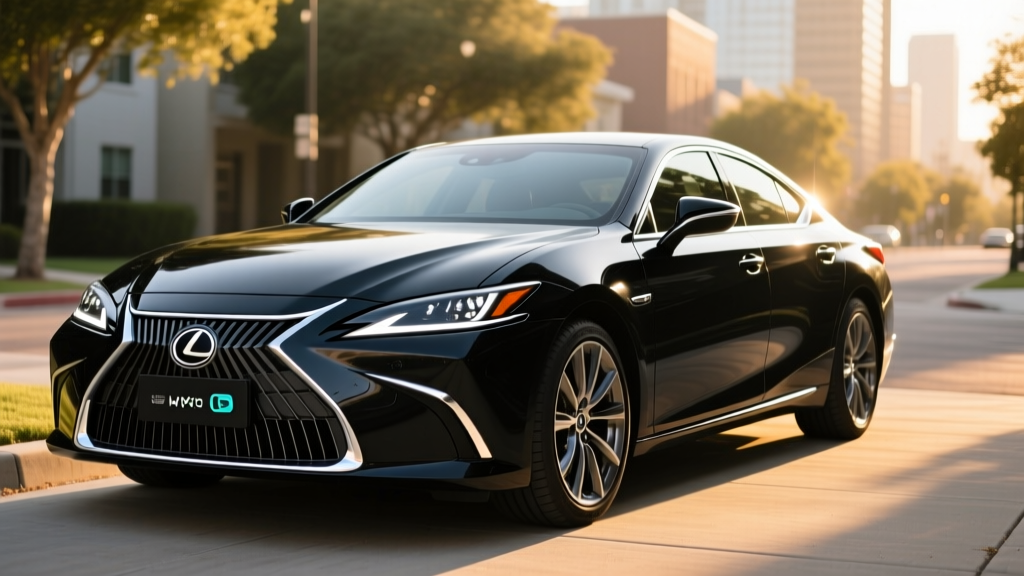
The 2026 Lexus ES 300h occupies a specific niche: a midsize luxury sedan that prioritizes fuel efficiency and ride comfort over performance theatrics. As Lexus continues its seventh-generation ES platform into 2026, the hybrid variant remains the volume seller for good reason — it returns EPA-estimated 44 MPG combined while offering a cabin quiet enough to rival German competitors costing $15,000 more. This guide breaks down the exact powertrain specs, real-world fuel economy expectations, battery longevity data, and ownership economics that matter before you sign a lease or purchase agreement.
HEV vs PHEV: Where the 2026 ES Hybrid Fits
Before diving into specs, a critical distinction for shoppers cross-referencing electrified sedans: the 2026 Lexus ES 300h is a conventional hybrid electric vehicle (HEV). It does not plug in. It cannot be charged from a wall outlet or public charger. Its 1.6 kWh nickel-metal-hydride (NiMH) traction battery charges exclusively through regenerative braking and the onboard 2.5-liter gasoline engine.
There is no plug-in hybrid (PHEV) variant of the ES lineup for 2026. If you need electric-only commuting range — say, 25-40 miles of zero-tailpipe-emission driving before the gas engine engages — you'll need to look at PHEVs like the BMW 330e or the Toyota Prius Prime (though neither competes directly in the luxury midsize segment the way the ES does). Lexus reserves its PHEV powertrains for the NX 450h+ and RX 500h+ SUVs.
| Attribute | HEV (ES 300h) | PHEV (e.g., BMW 330e) | BEV (e.g., Tesla Model 3) |
|---|---|---|---|
| Plugs in? | No | Yes | Yes |
| Electric-only range | ~1 mi at low speed | 20-40 mi typical | 250-350+ mi |
| Home charging needed? | No | Recommended (Level 2) | Required |
| Federal tax credit (§30D) | Not eligible | Up to $7,500 (if eligible) | Up to $7,500 (if eligible) |
| Gas engine? | Yes — primary power | Yes — backup/extender | None |
| Best for | No home charging access | Short commute + road trips | Home charging + low running cost |
The ES 300h's value proposition is simplicity: you never think about charging. You fill up at a gas station roughly every 550-600 miles and let the hybrid system handle the rest. For apartment dwellers, street parkers, or anyone without reliable access to a Level 2 home charger, this is a decisive advantage over PHEVs and BEVs.
2026 ES 300h Powertrain: Engine, Motor, and Combined Output
The 2026 ES 300h uses Lexus's fourth-generation hybrid system paired with the A25A-FXS 2.5-liter inline-four Atkinson-cycle engine. Here are the exact numbers:
| Specification | Value |
|---|---|
| Engine | 2.5L 4-cyl Atkinson-cycle (A25A-FXS) |
| Engine output | 176 hp / 163 lb-ft torque |
| Electric motor | Permanent-magnet synchronous (front axle) |
| Motor output | 131 hp / 163 lb-ft torque |
| Combined system output | 215 hp |
| Transmission | eCVT (planetary gearset, no fixed gears) |
| Drivetrain | Front-wheel drive |
| Traction battery | 1.6 kWh NiMH (sealed, no plug-in) |
| 0-60 mph | ~7.7 seconds (est.) |
| Curb weight | ~3,780 lbs |
The 215 combined horsepower figure is modest for a luxury midsize sedan — the BMW 530i makes 255 hp, the Genesis G80 2.5T makes 300 hp — but the ES 300h isn't chasing sport-sedan buyers. The electric motor fills in torque at low RPM before the engine reaches its power band, giving the car adequate off-the-line responsiveness in city traffic. The eCVT eliminates shift shock entirely; acceleration is a smooth, continuous ramp. Where this powertrain falls short is highway passing at 70+ mph, where you'll feel the 215 hp ceiling and hear the engine drone under hard acceleration.
EPA Fuel Economy and Real-World MPG
According to fueleconomy.gov, the 2026 Lexus ES 300h carries the following EPA estimates:
| Driving Cycle | EPA Estimate |
|---|---|
| City | 43 MPG |
| Highway | 44 MPG |
| Combined | 44 MPG |
Those numbers place the ES 300h at the top of the luxury midsize sedan segment for fuel efficiency. The Mercedes E-Class (mild-hybrid 4-cylinder) returns roughly 28 MPG combined; the BMW 530i approximately 29 MPG combined.
Real-World MPG: What to Actually Expect
Hybrids consistently outperform their EPA city estimates in stop-and-go traffic because regenerative braking recaptures energy that a gas car wastes as heat. In real-world urban driving with frequent stops, owners commonly report 46-50 MPG in warm weather. Highway driving is where hybrids lose their advantage — at sustained 75-80 mph speeds, the engine does nearly all the work with minimal regen assistance. Expect 38-41 MPG on long highway trips.
Cold weather (below 35°F) reduces hybrid efficiency by 5-10% due to increased engine runtime for cabin heating and reduced battery charge/discharge efficiency. In northern-winter commuting, plan on 38-42 MPG combined rather than the 44 EPA figure. This is a modest penalty compared to the 20-30% range loss a full EV experiences in the same conditions.
Hybrid Battery Warranty & Replacement Cost
Lexus covers the ES 300h hybrid battery under its Hybrid Battery Warranty: 10 years / 150,000 miles (whichever comes first), transferable to subsequent owners. This covers any battery that drops below a defined capacity threshold under normal use.
Out-of-warranty replacement cost for the ES 300h NiMH hybrid battery typically runs $3,000–$4,500 including labor at a Lexus dealer. Independent hybrid specialists can source refurbished units for $1,800–$2,500. Toyota/Lexus hybrid batteries have a strong longevity track record — many exceed 200,000 miles before requiring replacement. The 1.6 kWh NiMH pack in the ES 300h is far less stressed than a large BEV battery, cycling only within a narrow state-of-charge window (roughly 40-80% SoC), which dramatically extends cell life.
Driving Impressions: Comfort Over Everything
The 2026 ES 300h prioritizes isolation. Lexus tunes the suspension to absorb expansion joints, potholes, and rough pavement with minimal cabin disturbance. Road noise is among the lowest in the segment, aided by acoustic-laminated glass and extensive sound deadening. The eCVT contributes to the serene character — there are no gear shifts to interrupt conversation or podcast listening.
Handling is competent but unenthusiastic. Steering is light and numb by design; this is a car for people who view driving as transportation, not recreation. If you want a hybrid luxury sedan that rewards on a back road, the BMW 530e PHEV or even the Lexus IS 500 (V8, not hybrid) serve that niche. The ES 300h serves the 45-minute highway commuter who values arriving relaxed over arriving quickly.
The Lexus Safety System+ 3.0 suite is standard across all ES trims, including:
- Pre-Collision System with pedestrian/cyclist detection
- Dynamic Radar Cruise Control (full speed range, stop-and-go)
- Lane Tracing Assist (SAE Level 2 — driver must keep hands on wheel)
- Road Sign Assist
- Automatic High Beams
This is a well-executed Level 2 driver-assist system — competitive with Toyota Safety Sense but not as assertive as GM's Super Cruise or Ford's BlueCruise on mapped highways. You cannot take your eyes off the road.
2026 ES 300h Pricing and Trim Breakdown
Lexus positions the ES 300h across three trims for 2026. Pricing reflects MSRP before destination charges (approximately $1,195):
| Trim | MSRP (est.) | Key Additions |
|---|---|---|
| Base | $44,990 | 17" alloy wheels, 12.3" infotainment, heated front seats, LSS+ 3.0 |
| Luxury | $48,490 | 18" wheels, power trunk, ambient lighting, wood trim, upgraded leather |
| Ultra Luxury | $53,190 | Semi-aniline leather, rear sunshades, heated/ventilated rear seats, Mark Levinson audio |
Fully loaded with packages (Technology Package, Mark Levinson audio, head-up display), an Ultra Luxury ES 300h can approach $58,000 out the door.
Tax Credit Eligibility
The 2026 Lexus ES 300h does not qualify for the federal §30D clean vehicle tax credit. That credit is reserved for plug-in electric vehicles (BEVs and PHEVs) with a battery capacity of at least 7 kWh and specific critical-mineral and battery-component sourcing requirements. The ES 300h's 1.6 kWh NiMH battery and conventional hybrid architecture place it outside §30D eligibility entirely.
Some states offer their own incentives for hybrid purchases — check your state's department of revenue or energy office for current programs, as these vary widely and change frequently. A tax professional can confirm whether any local credits or deductions apply to your situation. See IRS.gov §30D guidance for the full federal rules.
Who Should Buy the 2026 ES 300h — And Who Shouldn't
The ES 300h is a deliberate choice for a specific buyer profile. It's not the right car for everyone, and knowing where it fits (and where it doesn't) saves you from a costly mismatch.
Choose the ES 300h if:
- You lack access to home or workplace charging (apartment, street parking, condo without EV infrastructure)
- Your commute is a mix of city and highway, and you want 550+ mile range between fill-ups
- You prioritize ride comfort and cabin quietness over acceleration and handling
- You want Lexus/Toyota hybrid reliability and a 10-year battery warranty
- You drive 15,000+ miles/year and want to minimize fuel spend without changing refueling habits
- You want a luxury badge without the $60,000+ entry price of German rivals
Look elsewhere if:
- You have reliable Level 2 home charging and a short commute — a PHEV or BEV will cost less per mile
- You want brisk acceleration (the 7.7-second 0-60 time is adequate, not exciting)
- You need all-wheel drive (the ES 300h is FWD only; consider the Lexus ES 250 AWD gas model or a hybrid SUV)
- You want the latest EV tech experience (frunk, one-pedal driving, over-the-air performance upgrades)
- You need a federal tax credit to make the math work — the ES 300h offers none
ES 300h vs Full EV vs Gas: 5-Year Cost Snapshot
At 15,000 miles/year and $3.50/gallon regular fuel, the ES 300h uses approximately 341 gallons annually, costing roughly $1,193/year in fuel. A comparable gas-only luxury sedan averaging 26 MPG combined would burn 577 gallons at $2,019/year — a difference of about $826/year or $4,130 over five years. However, a BEV like the Tesla Model 3 charging at $0.14/kWh (national average) would cost approximately $525/year in electricity — saving $3,340 over five years versus the ES 300h, if you have home charging access.
The ES 300h's advantage is that it requires zero infrastructure investment. No $500-$2,000 Level 2 charger installation, no electrical panel upgrade, no dependence on public charging reliability. For buyers who can't charge at home, it remains the most practical path to 40+ MPG in a luxury sedan.
Reliability Track Record and Long-Term Ownership
Lexus consistently ranks at or near the top of J.D. Power Vehicle Dependability Studies and Consumer Reports reliability surveys. The ES nameplate specifically benefits from sharing its hybrid powertrain with the Toyota Camry Hybrid and RAV4 Hybrid — millions of units in the field with well-documented longevity.
The A25A-FXS engine and fourth-generation hybrid transaxle have been in production since the 2019 model year across multiple Toyota/Lexus models. Common failure points are minimal: the hybrid inverter coolant pump has seen occasional recalls in earlier Toyota applications, and the 12V auxiliary battery (a standard AGM unit, not the traction battery) can fail like any car's within 3-5 years. The high-voltage NiMH traction battery, as noted, is warranted for 10 years/150,000 miles and routinely lasts well beyond that.
Insurance costs for the ES 300h are moderate for the luxury segment — expect $1,400–$1,900/year for a 40-year-old driver with a clean record, varying by state and coverage level. Luxury sedans generally carry higher premiums than mainstream models, but the ES 300h's safety ratings and Lexus's strong loss-experience data keep rates below German competitors.
Frequently Asked Questions
How many MPG does the 2026 Lexus ES 300h hybrid get?
The EPA rates the 2026 ES 300h at 43 city / 44 highway / 44 combined MPG. In real-world city driving with frequent stops, expect 46-50 MPG. Highway-only driving at 75+ mph typically returns 38-41 MPG. Cold weather reduces combined economy by roughly 5-10%.
Can the 2026 ES hybrid drive on electric power only?
Only at very low speeds (under ~25 mph) for short distances (roughly one mile or less). The 1.6 kWh battery is too small to sustain electric-only driving at normal road speeds. This is by design — the hybrid system uses the electric motor to assist the gas engine, not replace it. If you need meaningful electric-only range (25-40 miles), you need a PHEV, not an HEV.
Does the 2026 Lexus ES 300h qualify for a federal tax credit?
No. The federal §30D clean vehicle credit applies only to plug-in vehicles (BEVs and PHEVs) meeting specific battery-capacity, sourcing, MSRP, and buyer-income requirements. The ES 300h is a conventional hybrid with no plug and does not qualify. Check IRS.gov for current §30D rules and consult a tax professional for your specific situation.
How long will the ES 300h hybrid battery last, and what does replacement cost?
Lexus warrants the hybrid battery for 10 years or 150,000 miles. Toyota/Lexus NiMH hybrid batteries commonly last 200,000+ miles before significant degradation. Out-of-warranty replacement runs $3,000–$4,500 at a dealer, or $1,800–$2,500 through an independent hybrid specialist using a refurbished unit.
Is the 2026 ES 300h available with all-wheel drive?
No. The ES 300h is front-wheel drive only for 2026. If AWD is a requirement, consider the gas-only ES 250 (which offers AWD) or step up to a Lexus hybrid SUV like the RX 350h, which offers AWD via a rear electric motor.
How does the ES 300h compare to the Toyota Camry Hybrid?
Both use the same 2.5L hybrid powertrain, but the ES 300h adds a luxury interior, more sound insulation, a longer wheelbase, a more compliant ride, and Lexus Safety System+ 3.0. The Camry Hybrid starts roughly $12,000 lower and offers similar MPG (up to 52 combined on LE trim). You're paying the premium for refinement, materials, badge, and dealer experience — not for additional fuel efficiency.
Does the ES 300h require premium fuel?
Lexus recommends regular 87-octane unleaded for the 2026 ES 300h. Unlike some luxury competitors that require premium, the Atkinson-cycle engine in the hybrid system does not demand high-octane fuel. This keeps your per-fill-up cost lower than gas-only luxury sedans that require 91+ octane.