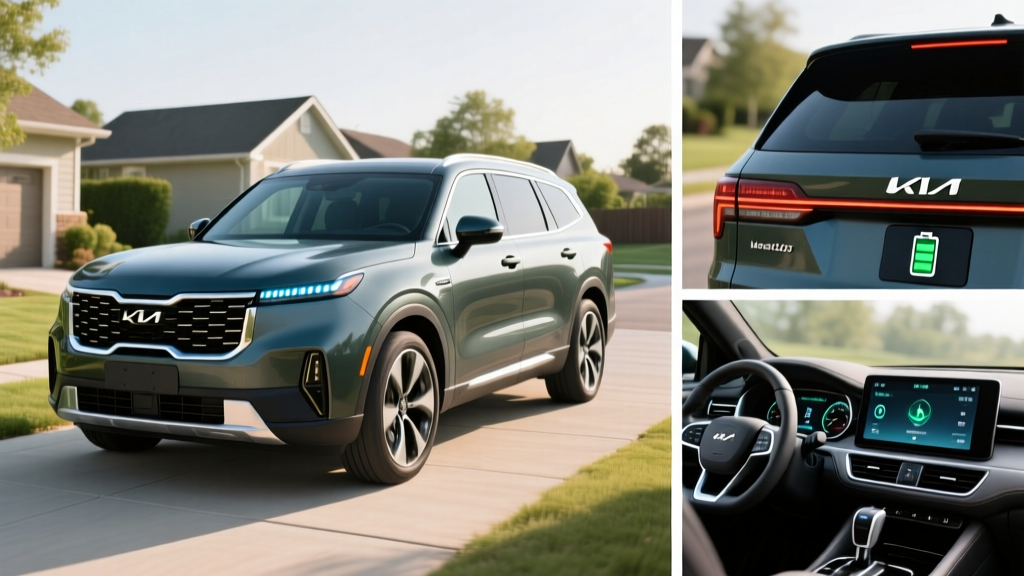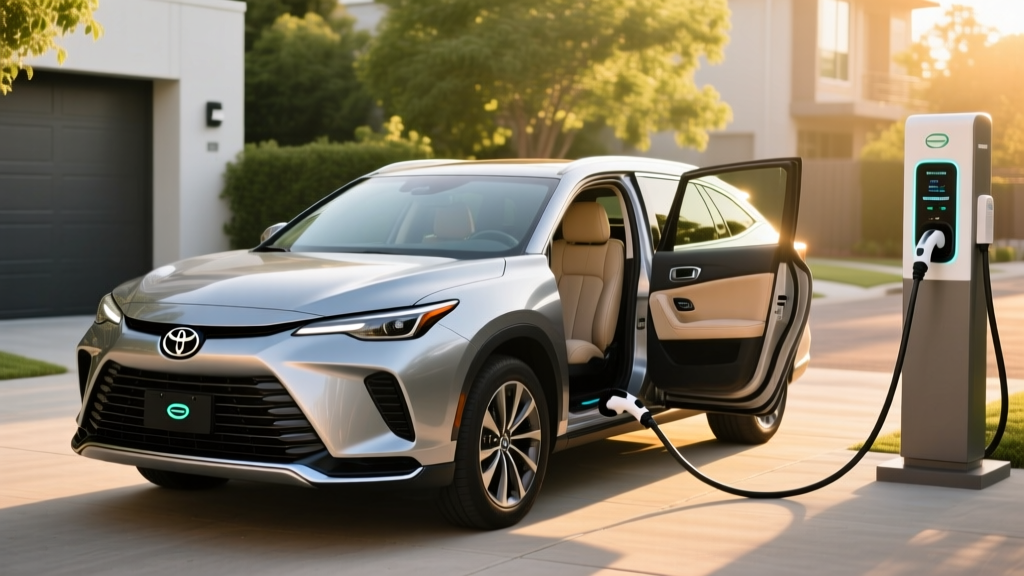
The 2026 Kia Sportage Plug-In Hybrid occupies a specific niche: buyers who want electric-only commuting but aren't ready to commit to a full battery-electric vehicle. With 34 miles of EPA-rated electric range, 261 combined horsepower, and a starting MSRP of $39,590, it undercuts rivals like the Toyota RAV4 Prime on price while delivering competitive efficiency. But whether it makes financial sense depends entirely on your commute, charging access, and tax situation.
This guide covers the Sportage PHEV's real-world efficiency, charging logistics, powertrain behavior, and total ownership economics — with the exact numbers you need to decide if it belongs in your driveway.
HEV vs. PHEV: Which Sportage Are We Talking About?
Kia sells the Sportage in three powertrain flavors for 2026. Confusing them at the dealership is easy — and costly. Here's the breakdown:
| Attribute | Sportage HEV (Hybrid) | Sportage PHEV (Plug-In Hybrid) |
|---|---|---|
| Needs to plug in? | No — self-charging via regen and engine | Yes — plug in to unlock EV range and full power |
| Battery size | ~1.49 kWh (small buffer) | 13.8 kWh usable (NMC lithium-ion) |
| Electric-only range | None (EV assist only at low speed) | 34 miles EPA |
| Combined horsepower | 227 hp | 261 hp |
| EPA combined MPG / MPGe | 38 MPG combined | 84 MPGe (EV+gas) / 35 MPG (gas only) |
| Starting MSRP (2026) | $31,590 | $39,590 |
| Federal tax credit (§30D) | Not eligible | Up to $7,500 (eligibility varies) |
The conventional HEV is the right call if you have no home charging access and simply want better fuel economy without changing habits. The PHEV rewards you for plugging in — if you can charge nightly, most weekday commutes run entirely on electricity, with the 1.6-liter turbocharged engine available for longer trips.
EPA Fuel Economy and Electric Range: The Official Numbers
| Metric | Value |
|---|---|
| MPGe (combined, EV + gas) | 84 MPGe |
| MPG (gas-only, combined) | 35 MPG |
| MPG (gas-only, city) | 36 MPG |
| MPG (gas-only, highway) | 34 MPG |
| Electric-only range (EPA) | 34 miles |
| Total range (EV + gas tank) | ~420 miles |
| Energy consumption (EV mode) | 33 kWh/100 mi |
| Fuel tank capacity | 11.1 gallons |
Source: fueleconomy.gov (EPA estimates). MPGe, or miles-per-gallon-equivalent, converts electricity usage into a gasoline-comparable figure. When the battery depletes and the engine takes over, you're looking at a conventional 35 MPG combined — still strong for an all-wheel-drive compact SUV.
Powertrain Deep Dive: 261 Horsepower, Two Power Sources
The 2026 Sportage PHEV pairs a 1.6-liter turbocharged four-cylinder engine (177 hp, 195 lb-ft) with a 72-kW permanent-magnet electric motor integrated into a six-speed automatic transmission. Combined system output is 261 horsepower and 258 lb-ft of torque.
| Spec | Detail |
|---|---|
| Engine | 1.6L turbocharged I-4 (Smartstream G1.6T) |
| Engine output | 177 hp / 195 lb-ft |
| Electric motor | 72 kW (97 hp) permanent-magnet synchronous |
| Combined system output | 261 hp / 258 lb-ft |
| Transmission | 6-speed automatic (no CVT) |
| Drivetrain | AWD standard (all PHEV trims) |
| 0–60 mph | ~7.4 seconds (est.) |
| Towing capacity | 2,000 lbs |
| Battery (usable) | 13.8 kWh NMC lithium-ion |
Unlike many PHEVs that use a CVT, Kia's six-speed automatic delivers familiar shift feel and avoids the rubber-band acceleration sensation. The electric motor fills torque gaps during upshifts, making acceleration feel linear. AWD is standard on every PHEV trim — the rear axle is driven mechanically via the transmission, not by a separate electric motor (unlike some competitors).
Charging the Sportage PHEV: Times, Connectors, and Costs
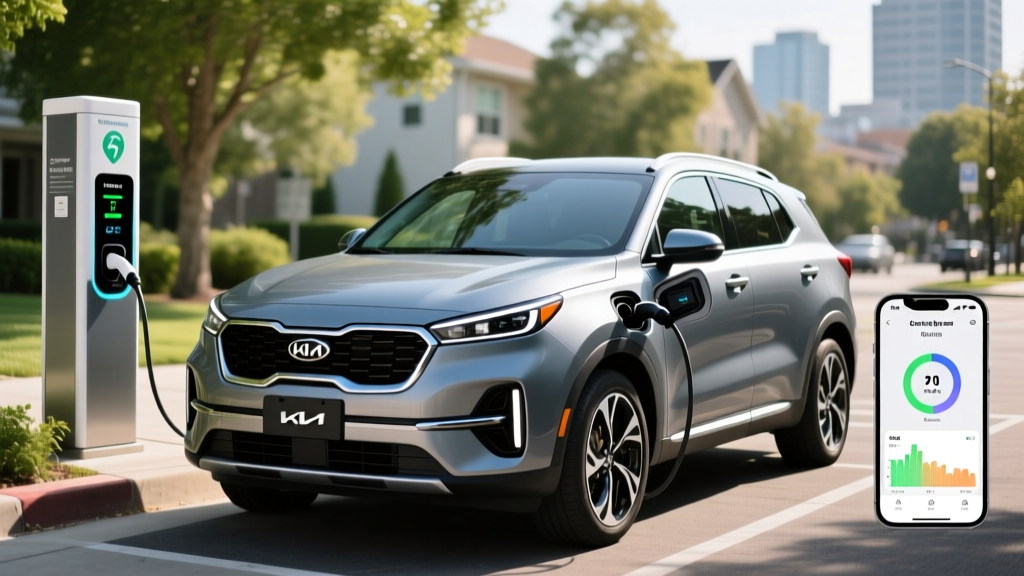
The Sportage PHEV's 13.8 kWh battery charges exclusively via AC — there is no DC fast-charging capability. This is standard for compact PHEVs; the battery is too small to justify the cost and weight of a DCFC system.
| Charging Level | Power | Time (0–100%) | Connector |
|---|---|---|---|
| Level 1 (120V household outlet) | ~1.4 kW | ~10 hours | |
| Level 2 (240V home/public station) | 7.2 kW (max onboard charger) | ~2 hours | |
| DC Fast Charge | Not supported | N/A |
Connector: The Sportage PHEV uses a standard J1772 connector for AC charging. This is universal across non-Tesla plug-in hybrids and EVs in North America. If you have a home Level 2 charger (like a ChargePoint Home Flex or Emporia Vue), you'll use the J1772 plug directly.
Cost to charge at home: At the US average electricity rate of ~$0.17/kWh (per the EIA), fully recharging the 13.8 kWh battery costs roughly $2.35. That's about 7 cents per mile in EV mode — roughly one-quarter the per-mile cost of gasoline at $3.50/gallon.
Practical charging advice: A standard 120V outlet can replenish the battery overnight (10 hours covers a full day's gap), making the Sportage PHEV viable even without a dedicated Level 2 install. However, a 240V Level 2 station lets you top off during shorter stops and ensures a full battery every morning without timing constraints. Expect $500–$1,500 for a Level 2 home installation depending on panel proximity and local permitting.
Pricing, Trims, and Federal Tax Credit Eligibility
The 2026 Sportage PHEV is offered in two trims:
| Trim | MSRP | Key Features |
|---|---|---|
| X-Line | $39,590 | AWD, 12.3" dual displays, heated seats, Highway Driving Assist, power liftgate |
| X-Line Prestige | $44,090 | Adds ventilated front seats, leather, Harman Kardon audio, surround-view monitor, blind-spot view |
- Maximum credit: Up to $7,500 for eligible buyers on eligible PHEVs
- MSRP cap: SUVs/vans/pickups must be under $80,000 MSRP — Sportage PHEV qualifies at $39,590–$44,090
- Buyer income cap: AGI must not exceed $150,000 (single), $225,000 (head of household), or $300,000 (married filing jointly)
- Battery sourcing: Critical minerals and battery components must meet phased-in domestic/free-trade sourcing thresholds — verify current-year compliance at purchase
- Point-of-sale transfer: Eligible buyers can transfer the credit to the dealer for an immediate price reduction at purchase
Important: Credit eligibility changes frequently based on battery sourcing rules and IRS guidance. Always confirm current eligibility via IRS.gov or consult a tax professional before relying on the credit in your purchase decision.
If you qualify for the full $7,500 credit via point-of-sale transfer, the X-Line drops to an effective price of $32,090 — putting it in direct competition with well-equipped gas-only compact SUVs, but with dramatically lower operating costs.
Real-World Ownership: MPG, Costs, and Driving Impressions
PHEVs reward a specific driving pattern: short, chargeable commutes with occasional longer trips. Here's what that looks like in practice:
Commuter scenario (15-mile round trip, nightly charging): You'll run almost entirely on electricity Monday through Friday. Gas consumption drops to near zero for daily driving, with the engine cycling on only for cabin heat in winter or hard acceleration. Over a year of weekday commuting, you might use 5–8 gallons of gas total.
Mixed-use scenario (30-mile commute, occasional road trips): On days you exceed 34 miles, the engine takes over seamlessly at 35 MPG combined. A 300-mile road trip burns roughly 8.6 gallons — comparable to a conventional hybrid. The transition from EV to hybrid mode is nearly imperceptible.
Real-world MPG observation: Like most hybrids, the Sportage PHEV tends to beat its EPA city estimate in stop-and-go traffic, where regenerative braking recaptures energy aggressively. Highway MPG may fall slightly below the 34 MPG EPA figure at sustained 75+ mph speeds, especially with roof cargo or towing.
Driving character: In EV mode, the Sportage PHEV is quiet and torquey off the line — the 72-kW motor delivers instant response from a stop. The 261-hp combined output makes highway merging confident. Ride quality is composed but firm; Kia tuned this generation for European-style body control rather than plush isolation.
Battery Warranty, Reliability, and Replacement Costs
- Hybrid/PHEV battery: 10 years / 100,000 miles (capacity retention warranty — covers drop below ~70% of original capacity)
- Hybrid system components: 10 years / 100,000 miles (inverter, onboard charger, electric motor)
- Powertrain (engine + transmission): 10 years / 100,000 miles
- Bumper-to-bumper: 5 years / 60,000 miles
Kia's warranty is among the strongest in the segment and applies to the original owner for the full term. Second-owner coverage may be reduced to 5 years/60,000 miles on some components — confirm at purchase.
Reliability outlook: The Sportage PHEV's powertrain is derived from the Tucson PHEV platform (shared with Hyundai/Kia corporate), which has accumulated several years of real-world operation. Common PHEV failure points across the industry involve the onboard charger and 12V auxiliary battery rather than the traction battery itself. The NMC battery pack is liquid-cooled, which significantly reduces thermal degradation compared to passively-cooled packs in older PHEVs.
Battery replacement cost: Out-of-warranty replacement for a 13.8 kWh PHEV battery currently ranges from $4,000–$7,000 including labor, based on industry parts pricing. However, PHEV batteries experience less cycling stress than full EV batteries (they operate in a narrower state-of-charge window), and premature failures within the warranty period are uncommon. Most PHEV batteries outlast the vehicle's economic life.
For reliability data as it accumulates, monitor IIHS safety ratings and owner forums — the 2026 model year is still early in its lifecycle.
Sportage PHEV vs. Full EV vs. Gas: Which Fits You?
- Your daily round-trip commute is under 35 miles and you can charge at home nightly
- You take road trips 4+ times per year and don't want to plan around DC fast chargers
- You live in a region with extreme cold that significantly impacts full EV range
- You want EV-like daily costs without committing to a full EV's higher upfront price
- You have reliable home Level 2 charging and your daily driving is under 200 miles
- You want zero tailpipe emissions and minimal maintenance (no oil changes, no engine)
- You can absorb the higher upfront cost for lower long-term operating expenses
- You cannot charge at home or at work (apartment, street parking)
- You want hybrid efficiency with zero behavior change — just fill up with gas
- Your budget is closer to $32,000–$35,000 and you don't qualify for the federal PHEV credit
- You drive fewer than 8,000 miles per year (the fuel savings won't offset the PHEV premium)
- You frequently tow more than 2,000 lbs
Pros and Cons at a Glance
- 34-mile EV range covers most daily commutes entirely on electricity
- 261 hp makes it one of the quickest compact PHEV SUVs
- AWD standard on every trim
- 10-year/100,000-mile battery and powertrain warranty
- Up to $7,500 federal tax credit can bring effective price below $33,000
- No range anxiety — gas engine provides 420+ total miles
- 6-speed automatic avoids CVT drone
- No DC fast charging — long road trips run on gas only
- EV range drops to 22–28 miles in freezing weather
- $39,590 starting price is $8,000 more than the Sportage HEV
- Cargo space slightly reduced vs. gas model (battery under rear seat)
- 2,000-lb towing capacity trails some gas-only competitors
- Federal tax credit eligibility depends on income, sourcing rules, and annual IRS updates
Frequently Asked Questions
How many MPG does the 2026 Kia Sportage Plug-In Hybrid get?
The EPA rates the Sportage PHEV at 84 MPGe combined when running on both electricity and gasoline. Once the battery is depleted and the vehicle operates as a conventional hybrid, it achieves 35 MPG combined (36 city / 34 highway). Real-world gas-only MPG tends to be slightly better in city driving due to regenerative braking.
How far can the Sportage PHEV go on electric only?
The EPA estimates 34 miles of electric-only range. In real-world driving at moderate temperatures, expect 28–32 miles on suburban roads and 24–27 miles at highway speeds. Cold weather (below freezing) reduces usable range to approximately 22–28 miles due to battery chemistry limitations and cabin heating demand.
Does the 2026 Sportage PHEV qualify for a tax credit?
It may qualify for up to $7,500 under the federal §30D clean vehicle credit, depending on your income (caps apply: $150K single / $300K married filing jointly), the vehicle's battery sourcing compliance, and current IRS guidance. The MSRP ($39,590–$44,090) is well under the $80,000 SUV cap. Eligible buyers can transfer the credit to the dealer for a point-of-sale price reduction. Always verify current rules at IRS.gov before purchasing.
Is the Sportage PHEV reliable, and what does battery replacement cost?
Kia's 10-year/100,000-mile warranty on the PHEV battery and hybrid system components is one of the industry's strongest. Out-of-warranty battery replacement currently ranges from $4,000–$7,000, but PHEV batteries experience less cycling stress than full EV batteries and typically outlast the vehicle. The liquid-cooled thermal management system further reduces degradation risk.
Do I need a Level 2 home charger for the Sportage PHEV?
No — a standard 120V outlet can fully recharge the 13.8 kWh battery in about 10 hours, which works for overnight charging. However, a 240V Level 2 station (7.2 kW) cuts that to roughly 2 hours, giving you more flexibility for midday top-ups. Level 2 installation typically costs $500–$1,500 depending on your electrical panel's proximity to the parking spot.
How does the Sportage PHEV compare to the Toyota RAV4 Prime?
The RAV4 Prime offers 42 miles of EV range and 302 hp, but starts at approximately $44,500 — roughly $5,000 more than the Sportage PHEV X-Line. The Sportage trades 8 miles of EV range and 41 hp for a lower entry price, Kia's longer warranty, and a conventional automatic transmission (vs. Toyota's e-CVT). If budget matters more than maximum EV range, the Sportage PHEV is the stronger value proposition.