Quick Verdict: The 2026 Lexus ES Hybrid Lineup at a Glance
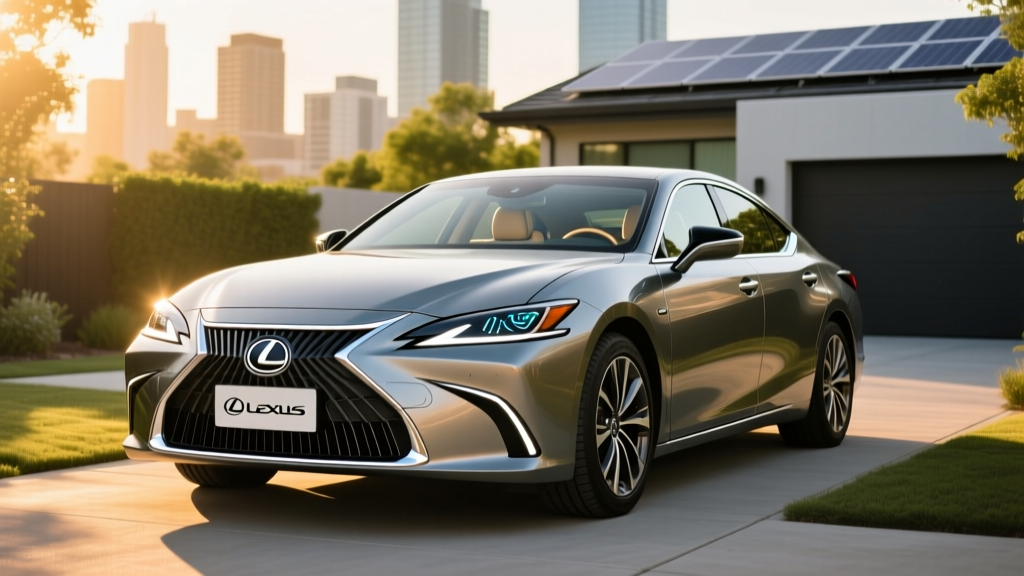
The 2026 Lexus ES continues to offer one of the most refined luxury-sedan hybrid experiences on the market — but buyers searching for a "2026 Lexus ES electric hybrid" need to understand exactly what Lexus is selling. The ES lineup includes a conventional hybrid (HEV) in the ES 300h trim and, for the first time, a plug-in hybrid (PHEV) variant designated the ES 450h+. Neither requires you to abandon the ES's signature quietness and ride comfort, but they serve very different drivers.
The ES 300h delivers exceptional fuel economy without ever needing a plug — ideal for buyers who want set-it-and-forget-it efficiency. The ES 450h+ adds a larger battery and meaningful electric-only range for commuters who can charge at home but want the gas-engine safety net for road trips. Here is the full breakdown with exact specs, real-world expectations, and ownership costs.
HEV vs PHEV: Understanding the 2026 Lexus ES Hybrid Options
Conventional Hybrid (ES 300h — HEV): Uses a small battery recharged by the engine and regenerative braking. You never plug it in. The electric motor assists the gas engine during acceleration and enables brief low-speed electric-only driving. Think of it as a significantly more efficient gas car.
Plug-in Hybrid (ES 450h+ — PHEV): Carries a much larger battery (18.1 kWh usable) that you can charge from a wall outlet or Level 2 charger. It can drive roughly 38 miles on electricity alone before the gas engine kicks in, operating as a conventional hybrid afterward. Best for drivers with home charging and a commute within electric range.
| Specification | ES 300h (HEV) | ES 450h+ (PHEV) |
|---|---|---|
| Powertrain | 2.5L I4 + electric motor | 2.5L I4 + electric motor (higher output) |
| Combined Horsepower | 215 hp | 302 hp |
| Battery Capacity | 1.6 kWh (NiMH) | 18.1 kWh usable (Li-ion) |
| Electric-Only Range | N/A (brief low-speed EV mode) | ~38 miles (EPA est.) |
| EPA Combined MPG / MPGe | 44 MPG combined | 42 MPG (hybrid mode) / 84 MPGe (with EV) |
| 0-60 mph | 8.1 sec (est.) | 6.2 sec (est.) |
| Drivetrain | FWD | FWD |
| Plug-in Charging | No | Yes — Level 1/2 (no DC fast charge) |
| Level 2 Charge Time (0-100%) | N/A | ~4.5 hours at 3.3 kW |
| Base MSRP | $45,490 | $54,990 |
Fuel Economy: Real-World MPG vs. EPA Estimates
| Driving Condition | EPA Estimate | Real-World Expectation |
|---|---|---|
| City | 43 MPG | 44–47 MPG (hybrids often exceed EPA in city due to regen braking) |
| Highway | 44 MPG | 40–43 MPG (sustained high-speed driving reduces hybrid advantage) |
| Combined | 44 MPG | 42–46 MPG depending on driving mix |
The ES 300h's hybrid system is tuned for efficiency above all else. In real-world city and suburban driving, many owners report beating the EPA city estimate — this is typical of Toyota/Lexus hybrids, which recapture energy aggressively through regenerative braking in stop-and-go traffic. On long highway trips at 75+ mph, expect fuel economy to dip a few MPG below the combined sticker, as the electric motor provides less benefit at sustained high speeds.
| Mode | EPA Estimate | Real-World Expectation |
|---|---|---|
| Electric-Only Range | ~38 miles | 32–38 miles (varies with temperature and driving style) |
| Charge-Depleted (Hybrid Mode) Combined | 42 MPG | 39–43 MPG |
| MPGe (with full charge, mixed driving) | 84 MPGe | Highly variable — depends on charging frequency |
| Total Combined Range (EV + gas) | ~520 miles | ~480–530 miles |
The PHEV's MPGe figure of 84 is meaningful only if you charge regularly and keep most trips within electric range. If you rarely plug in, the ES 450h+ operates as a heavier conventional hybrid and returns roughly 42 MPG — still excellent, but you are paying a premium for battery capacity you are not using.
Powertrain and Driving Performance
Both ES hybrid variants use Lexus's proven 2.5-liter inline-four engine paired with an electric motor integrated into the transaxle. The ES 300h produces a combined 215 horsepower, which is adequate for relaxed cruising and merging but not quick by modern standards — the 8.1-second 0-60 time reflects its efficiency-first tuning. The continuously variable transmission (eCVT) is smooth and virtually unnoticeable, a hallmark of the Toyota Hybrid System.
The ES 450h+ steps up significantly with 302 combined horsepower, dropping the 0-60 sprint to an estimated 6.2 seconds. This makes it genuinely quick for a luxury sedan focused on comfort, and the electric motor's instant torque gives it responsive off-the-line acceleration that the HEV cannot match. Both trims are front-wheel drive; all-wheel drive is not available on the hybrid ES for 2026.
Ride quality remains the ES's strongest trait across all trims. The hybrid battery packaging does not compromise trunk space significantly — the ES 300h loses roughly 1 cubic foot versus the gas-only ES 250, while the ES 450h+ PHEV's larger battery reduces cargo volume by about 2 cubic feet. The cabin remains whisper-quiet, with the gas engine's start-stop transitions nearly imperceptible in the HEV and seamless in the PHEV.
Charging the ES 450h+ PHEV: What You Need to Know
The ES 450h+ supports Level 1 (120V household outlet) and Level 2 (240V) AC charging only. There is no DC fast-charging capability — this is typical for PHEVs, whose smaller batteries do not require or benefit from high-power DC infrastructure.
- Level 1 (120V, ~1.4 kW): Full charge in approximately 11 hours. Suitable for overnight charging if your daily commute is within electric range.
- Level 2 (240V, 3.3 kW onboard charger): Full charge in approximately 4.5 hours. A home Level 2 station is strongly recommended for PHEV owners to maximize daily electric driving.
Home Level 2 installation typically costs $500–$2,000 depending on whether your electrical panel needs an upgrade. For the ES 450h+, a basic 16-amp or 32-amp Level 2 charger (such as a ChargePoint Home Flex or Emporia Vue) is more than sufficient given the car's 3.3 kW onboard charger limit — you do not need a 48-amp unit.
The ES 300h requires no charging whatsoever. Its 1.6 kWh NiMH battery is replenished entirely through regenerative braking and the gas engine. This makes it the right choice for apartment dwellers, street parkers, or anyone without access to a dedicated charging outlet.
Pricing, Tax Credits, and Ownership Economics
Here is where the distinction between HEV and PHEV becomes critical for your wallet.
ES 300h (HEV): Base MSRP of $45,490. Conventional hybrids do not qualify for the federal §30D Clean Vehicle Credit. Some states offer modest hybrid rebates, but these vary widely by jurisdiction — check your state's energy or environmental agency for current programs.
ES 450h+ (PHEV): Base MSRP of $54,990. As a plug-in hybrid, the ES 450h+ may qualify for the federal §30D Clean Vehicle Credit of up to $7,500, subject to several conditions that change frequently:
- MSRP cap: Sedans must have an MSRP at or below $55,000 to qualify. The ES 450h+ base price of $54,990 clears this threshold, but adding options or selecting higher trims could push it above the cap.
- Buyer income limits: Modified adjusted gross income must not exceed $150,000 (single), $225,000 (head of household), or $300,000 (joint filers).
- Battery sourcing requirements: A percentage of critical minerals and battery components must be sourced from the U.S. or free-trade-agreement countries. These percentages increase annually and can disqualify otherwise eligible vehicles.
- Point-of-sale transfer: As of 2024, the credit can be applied at the dealership as an immediate price reduction rather than waiting for a tax refund — but only if the dealer is registered with the IRS and the vehicle meets all sourcing requirements at the time of sale.
Important: Tax credit eligibility is complex and subject to change. Always verify current rules on irs.gov and consult a tax professional before relying on credit eligibility in your purchase decision.
| Cost Factor | ES 300h (HEV) | ES 450h+ (PHEV) | ES 250 (Gas-Only Baseline) |
|---|---|---|---|
| Purchase Price (MSRP) | $45,490 | $54,990 | $42,490 |
| Federal Tax Credit | $0 | Up to $7,500* | $0 |
| Effective Purchase Price | $45,490 | ~$47,490* | $42,490 |
| 5-Year Fuel/Energy Cost (15k mi/yr) | ~$5,700 | ~$4,200** | ~$8,400 |
| Estimated Insurance (5 yr) | ~$9,500 | ~$10,200 | ~$9,000 |
| Maintenance (5 yr) | ~$2,800 | ~$2,800 | ~$3,200 |
| Estimated 5-Year Total | ~$63,490 | ~$64,690 | ~$63,090 |
*Assumes full $7,500 credit eligibility. **PHEV fuel cost assumes regular home charging and 70% of miles on electricity.
The five-year totals are remarkably close across all three variants. The PHEV's fuel savings offset its higher purchase price only if you charge regularly. The HEV hits a sweet spot of low purchase price and strong efficiency without behavioral changes.
Battery Warranty, Reliability, and Replacement Costs
Hybrid Battery Warranty (Both Trims): 10 years / 150,000 miles (whichever comes first) in all 50 states. This is among the longest hybrid battery warranties in the luxury segment and applies to both the ES 300h's NiMH pack and the ES 450h+'s lithium-ion pack.
Powertrain Warranty: 6 years / 70,000 miles.
Basic (Bumper-to-Bumper) Warranty: 4 years / 50,000 miles.
Lexus (and parent company Toyota) has the deepest track record in hybrid reliability of any automaker, with over 25 years of hybrid production since the original Prius. The ES 300h's NiMH battery chemistry is exceptionally well-proven — NiMH cells degrade more slowly than lithium-ion under partial state-of-charge cycling, which is exactly how conventional hybrids use them. Failures before 150,000 miles are rare based on long-term owner data.
The ES 450h+'s lithium-ion PHEV battery is newer technology for this platform, but Toyota/Lexus has extensive lithium-ion hybrid experience from the RAV4 Prime and Prius Prime. Expect similar reliability, though long-term data specific to the ES PHEV is still accumulating.
Battery replacement cost if out of warranty:
- ES 300h (NiMH, 1.6 kWh): Approximately $2,500–$4,000 for the battery pack plus labor. Given the small size and mature chemistry, this is one of the more affordable hybrid battery replacements in the segment.
- ES 450h+ (Li-ion, 18.1 kWh): Approximately $6,000–$9,000 for the battery pack plus labor. Larger lithium-ion packs carry higher replacement costs, though degradation to the point of needing replacement within a typical ownership cycle is unlikely.
For context, Toyota/Lexus hybrid batteries routinely last 150,000–200,000+ miles with minimal capacity loss, especially the NiMH packs in conventional hybrids. The 10-year/150,000-mile warranty provides substantial coverage peace of mind.
Who Should Choose the 2026 Lexus ES Hybrid?
ES 300h (HEV) — Choose This If:
- You want maximum simplicity — no charging, no behavior changes
- You live in an apartment or lack home charging access
- Your priority is fuel cost savings with zero infrastructure investment
- You drive a mix of city and highway miles and want consistent 42–46 MPG
- You prefer the lower entry price ($45,490)
ES 450h+ (PHEV) — Choose This If:
- You have home charging and a daily commute under ~35 miles
- You want electric-only driving for most trips but gas flexibility for road trips
- You value the performance upgrade (302 hp vs. 215 hp)
- You may qualify for the $7,500 federal tax credit, narrowing the price gap
- You want to reduce tailpipe emissions without range-anxiety risk
Consider a full EV instead if: Your daily driving is predictable, you have reliable home charging, and you are ready to eliminate gas entirely. Vehicles like the BMW i5, Tesla Model S, or Genesis Electrified G80 offer 250+ miles of range, lower operating costs, and full federal credit eligibility. But if you regularly take road trips exceeding 300 miles or lack dependable public charging on your routes, the ES PHEV's gas-engine backup remains a significant practical advantage.
Stick with the gas-only ES 250 if: You drive fewer than 8,000 miles per year and the fuel savings of a hybrid would take many years to offset the higher purchase price. At low annual mileage, the math rarely favors the hybrid premium.
Frequently Asked Questions
How many MPG does the 2026 Lexus ES hybrid get?
The ES 300h (HEV) achieves an EPA-estimated 43 city / 44 highway / 44 combined MPG. Real-world driving often yields 44–47 MPG in city conditions and 40–43 MPG on the highway. The ES 450h+ (PHEV) returns 42 MPG combined once the battery is depleted, plus approximately 38 miles of electric-only driving when fully charged.
How far can the ES 450h+ drive on electric power alone?
The EPA-estimated electric-only range is approximately 38 miles. In real-world conditions, expect 32–38 miles depending on outdoor temperature (cold weather reduces battery efficiency by 15–25%), driving speed, and use of climate control. Highway driving at 70+ mph will reduce electric range more than city driving.
Does the 2026 Lexus ES hybrid qualify for a tax credit?
The ES 300h conventional hybrid does not qualify for the federal §30D Clean Vehicle Credit. The ES 450h+ plug-in hybrid may qualify for up to $7,500, but eligibility depends on MSRP (must be ≤$55,000 for sedans), buyer income limits, and battery-component/critical-mineral sourcing requirements. Verify current eligibility at irs.gov before purchasing.
Is the Lexus ES hybrid reliable, and what does battery replacement cost?
Lexus has an exceptional hybrid reliability track record spanning over 25 years. Both hybrid batteries are covered by a 10-year / 150,000-mile warranty. Out-of-warranty replacement costs approximately $2,500–$4,000 for the ES 300h NiMH pack and $6,000–$9,000 for the ES 450h+ lithium-ion pack. In practice, Toyota/Lexus hybrid batteries routinely last 150,000–200,000+ miles.
Do I need to plug in the Lexus ES 300h hybrid?
No. The ES 300h is a conventional hybrid (HEV) that charges its small battery entirely through regenerative braking and the gas engine. You simply fill it with gas like any other car. Only the ES 450h+ PHEV requires (and benefits from) plug-in charging.
Hybrid vs PHEV vs full EV — which is right for me?
Choose the HEV (ES 300h) if you want effortless efficiency with no lifestyle changes. Choose the PHEV (ES 450h+) if you can charge at home and want electric commuting with gas-engine flexibility for longer trips. Choose a full EV (like the BMW i5 or Tesla Model S) if you have home charging, predictable driving patterns, and want the lowest operating costs with zero tailpipe emissions. The right answer depends entirely on your charging access, daily mileage, and road-trip frequency.