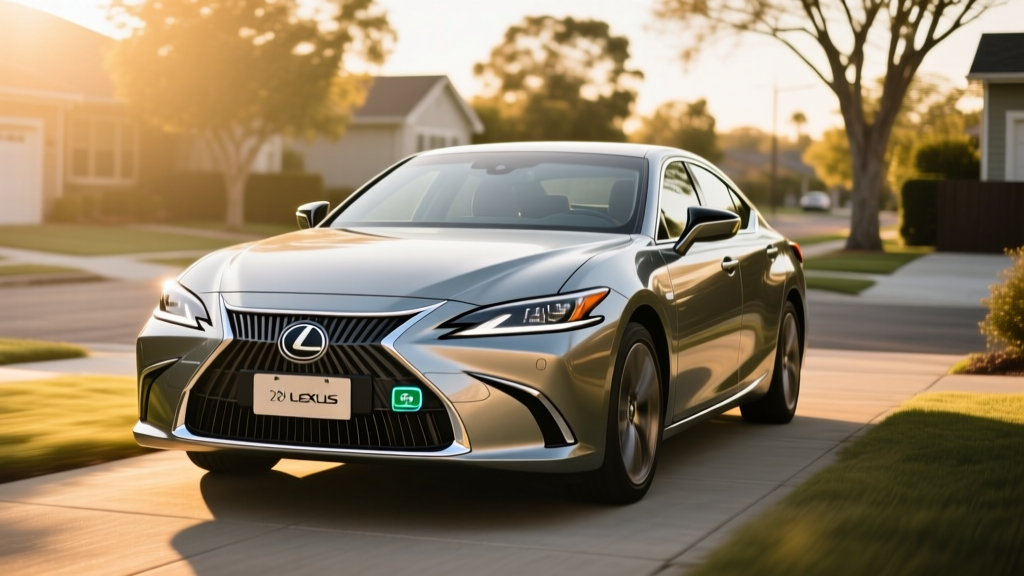
The Lexus ES lineup has long been the benchmark for midsize luxury sedan buyers who prioritize refinement over raw performance. For 2026, the electrified variant — often searched as the 2026 Lexus ES 350 hybrid — continues to draw buyers who want luxury-car comfort with hybrid efficiency. But Lexus's naming convention can confuse shoppers, and understanding exactly what you're getting under the hood, at the pump, and on the warranty sheet is essential before signing a purchase agreement.
This guide breaks down the 2026 Lexus ES hybrid powertrain, real-world fuel economy, reliability expectations, battery replacement economics, and whether this conventional hybrid (HEV) makes more sense for your commute than a plug-in hybrid (PHEV) or full battery-electric vehicle (BEV).
First: Is the 2026 Lexus ES Hybrid Actually Badged "ES 350 Hybrid"?
This is the most common point of confusion for shoppers searching for a "2026 Lexus ES 350 hybrid." Lexus does not sell a model officially badged "ES 350h." The hybrid variant in the ES lineup is the Lexus ES 300h. The ES 350 designation is reserved for the conventional 3.5-liter V6 gasoline model.
Both models share the same chassis, interior, and technology suite, but the powertrain is entirely different. If you want the hybrid, you're looking at the ES 300h. If you want the V6, that's the ES 350. For the purposes of this guide, we'll focus on the ES 300h — the hybrid that most "ES 350 hybrid" searches are actually targeting.
The Lexus ES 300h is a conventional hybrid (HEV). It cannot be plugged in. The battery recharges through regenerative braking and the gasoline engine. A plug-in hybrid (PHEV) has a larger battery you charge from a wall outlet or public charger, offering 20–40 miles of electric-only driving before the gas engine kicks in. The ES 300h has no electric-only range in the PHEV sense — its electric motor assists the gas engine continuously but cannot propel the car alone at highway speeds for meaningful distances.
2026 Lexus ES 300h Powertrain: What's Under the Hood
The 2026 ES 300h pairs a 2.5-liter inline-4 Atkinson-cycle gasoline engine with an electric motor integrated into the transaxle, driving the front wheels through an electronically controlled CVT (eCVT). This is Toyota's proven fourth-generation hybrid synergy drive architecture, shared across the Toyota and Lexus lineup with model-specific tuning.
| Specification | Detail |
|---|---|
| Engine | 2.5L inline-4 Atkinson cycle |
| Engine Output | 176 hp / 163 lb-ft torque |
| Electric Motor Output | 134 hp / 199 lb-ft torque |
| Combined System Horsepower | 215 hp |
| Hybrid Battery | Lithium-ion, ~1.6 kWh (usable) |
| Drivetrain | Front-wheel drive (FWD) |
| Transmission | eCVT (electronically controlled CVT) |
| 0–60 mph (manufacturer est.) | ~8.1 seconds |
| Plug-in Required? | No — self-charging HEV |
At 215 combined horsepower, the ES 300h is not a performance sedan. It's tuned for smooth, quiet acceleration and maximum efficiency. The eCVT eliminates shift shock entirely, and the transition between electric-motor assist and gasoline power is nearly imperceptible from the driver's seat — a hallmark of Lexus hybrid refinement.
Fuel Economy: EPA Ratings and Real-World MPG
Fuel efficiency is where the ES 300h earns its keep. According to fueleconomy.gov, the 2026 Lexus ES 300h carries the following EPA estimates:
| Driving Cycle | MPG |
|---|---|
| City | 43 MPG |
| Highway | 44 MPG |
| Combined | 44 MPG |
Conventional hybrids like the ES 300h often exceed their EPA city rating in real-world stop-and-go driving, where regenerative braking recaptures the most energy. Owners on fuel-tracking platforms like Fuelly report sustained averages of 42–47 MPG combined in mixed driving. On long highway trips at 75+ mph, expect a slight dip to 40–42 MPG as aerodynamic drag increases and regen opportunities decrease. In cold weather (below 30°F), the engine runs more frequently to maintain cabin heat, which can temporarily drop observed MPG to the high 30s until the powertrain reaches operating temperature.
For comparison, the gasoline-only ES 350 with its 3.5L V6 is rated at roughly 22 city / 32 highway / 26 combined MPG. The hybrid nearly doubles city fuel economy while sacrificing only about 1.2 seconds in the 0–60 sprint.
Reliability, Battery Lifespan, and Warranty Coverage
Hybrid battery longevity is the top concern for first-time hybrid buyers — and it's where the ES 300h's Toyota/Lexus engineering pedigree pays dividends.
- Hybrid Battery Warranty: 10 years / 150,000 miles (whichever comes first)
- Hybrid System Components: 8 years / 100,000 miles
- Basic Vehicle Warranty: 4 years / 50,000 miles
- Powertrain Warranty: 6 years / 70,000 miles
Lexus's hybrid batteries in the ES lineup have demonstrated exceptional longevity in fleet and owner data. It is common for Toyota/Lexus hybrid batteries to last 150,000–200,000+ miles before significant degradation. The relatively small 1.6 kWh battery pack is never deeply cycled — the hybrid control system keeps the state of charge between roughly 40% and 80%, which dramatically reduces cell stress compared to a full BEV that cycles from 10% to 90% regularly.
If replacement is eventually needed out of warranty, a new OEM hybrid battery for the ES 300h typically costs between $3,000 and $5,000 including labor at a Lexus dealership. Independent hybrid specialists and refurbished battery options can bring that cost down to the $1,500–$3,000 range. Given that the battery is warrantied for a decade and most owners will sell or trade the vehicle before 150,000 miles, out-of-pocket battery replacement is statistically unlikely for the original owner.
Lexus consistently ranks at or near the top of J.D. Power Vehicle Dependability Studies, and the ES specifically has been a perennial top-scorer in the midsize premium car segment. The hybrid system adds fewer moving parts than a conventional automatic transmission (the eCVT uses a planetary gearset with no clutches or bands to wear), which contributes to long-term reliability.
Pricing, Trims, and Tax Credit Eligibility
The 2026 Lexus ES 300h is offered in several trim levels. Pricing below reflects manufacturer MSRP before destination charges:
| Trim | MSRP (est.) |
|---|---|
| ES 300h Base | ~$44,500 |
| ES 300h Premium | ~$47,500 |
| ES 300h Luxury | ~$52,000 |
| ES 300h F SPORT Design | ~$48,500 |
| ES 300h Ultra Luxury | ~$55,500 |
Note: Final 2026 MSRP figures may vary at time of publication. Verify with your local Lexus dealer or lexus.com.
Federal Tax Credit Status
This is a critical point for cost-conscious buyers: the Lexus ES 300h does not qualify for the federal §30D Clean Vehicle tax credit of up to $7,500. Under current IRS rules, the §30D credit applies only to battery electric vehicles (BEVs) and plug-in hybrid electric vehicles (PHEVs) with a minimum battery capacity of 7 kWh. The ES 300h's ~1.6 kWh battery falls well below this threshold, and as a conventional hybrid, it is ineligible regardless.
Some states offer separate incentives for conventional hybrids, but these are increasingly rare as state programs shift focus to BEVs and PHEVs. Check your state's energy office or department of environmental quality for any current hybrid rebates.
Who Should Buy the ES 300h — and Who Should Look at a PHEV or BEV Instead?
The right vehicle depends on your driving pattern, charging access, and ownership priorities. Here's a practical decision framework:
Choose the ES 300h (HEV) If:
- You lack access to home or workplace charging (apartment, street parking)
- You want zero behavior change — just fill up with gas less often
- Your commute is mixed city/highway with frequent stop-and-go
- You plan to own the car 8–12 years and value proven reliability
- You want luxury-car refinement with sub-$1,200/year fuel costs
Consider a PHEV or BEV If:
- You can install a Level 2 home charger (240V outlet or hardwired)
- Your daily commute is under 30–40 miles (ideal for PHEV electric-only mode)
- You want to qualify for the $7,500 federal §30D tax credit (BEV/PHEV only)
- You want to eliminate or dramatically reduce gasoline purchases
- You're interested in one-pedal driving and instant electric torque
For buyers comparing the ES 300h to Lexus's own PHEV offerings: the Lexus NX 450h+ and RX 500h (depending on 2026 availability) offer plug-in capability with ~37 miles of electric-only range, but they're SUVs, not sedans. Lexus does not currently offer a PHEV sedan in the ES lineup for the U.S. market. If a plug-in luxury sedan is a priority, competitors like the BMW 550e xDrive (PHEV, ~35 miles EV range) or a full BEV like the BMW i5 or Mercedes EQE may be worth cross-shopping.
ES 300h vs. Gasoline ES 350: Total Cost of Ownership Snapshot
The hybrid premium over the gasoline ES 350 is typically around $1,500–$2,000 at the base trim level. Here's how the five-year ownership math works for a driver covering 12,000 miles annually at $3.50/gallon regular unleaded:
| Metric | ES 300h (44 MPG) | ES 350 (26 MPG) |
|---|---|---|
| Annual Fuel Use | 273 gallons | 462 gallons |
| Annual Fuel Cost | $955 | $1,617 |
| 5-Year Fuel Cost | $4,775 | $8,085 |
| 5-Year Fuel Savings (HEV) | $3,310 | |
The hybrid's fuel savings pay back its purchase premium within roughly 2.5–3 years at current fuel prices, and every year after that is net savings. Factor in the hybrid's strong resale value — Lexus hybrids consistently retain value well — and the ES 300h is the economically rational choice for most ES buyers unless you specifically need the V6's extra acceleration.
Pros and Cons at a Glance
Pros
- 44 MPG combined — exceptional for a luxury midsize sedan
- Whisper-quiet cabin and smooth eCVT transitions
- 10-year / 150,000-mile hybrid battery warranty
- Proven Toyota/Lexus hybrid reliability track record
- Strong resale value and low total cost of ownership
- No charging infrastructure needed
Cons
- 215 hp — leisurely acceleration, not a sport sedan
- No federal tax credit eligibility (HEV, not PHEV/BEV)
- FWD only — no AWD option on the hybrid
- Infotainment learning curve (Lexus Interface improving but not class-leading)
- No plug-in option in the ES sedan lineup
- Small battery limits electric-only assist at higher speeds
Frequently Asked Questions
How many MPG does the 2026 Lexus ES 300h hybrid get?
The EPA rates the 2026 ES 300h at 43 city / 44 highway / 44 combined MPG. Real-world owner data shows many drivers achieving 42–47 MPG in mixed driving, with city-heavy commutes sometimes exceeding the EPA city estimate thanks to regenerative braking.
Can I plug in the Lexus ES 300h to charge?
No. The ES 300h is a conventional hybrid (HEV), not a plug-in hybrid (PHEV). The small lithium-ion battery charges itself through regenerative braking and the gasoline engine. You never plug it in — you simply refuel at a gas station as normal.
Is the Lexus ES hybrid reliable? What does a battery replacement cost?
Yes. Lexus/Toyota hybrid systems have an extensive track record of reliability spanning two decades. The hybrid battery is warrantied for 10 years / 150,000 miles. Out-of-warranty replacement costs $3,000–$5,000 at a dealer or $1,500–$3,000 through independent specialists, but most batteries outlast 150,000 miles without issue.
Does the 2026 Lexus ES 300h qualify for a federal tax credit?
No. The federal §30D Clean Vehicle credit requires a plug-in vehicle with a battery capacity of at least 7 kWh. The ES 300h's ~1.6 kWh battery and conventional hybrid design make it ineligible. Only BEVs and qualifying PHEVs are eligible under current IRS rules.
Should I buy the ES 300h hybrid or the ES 350 V6?
If you prioritize fuel economy, low operating costs, and long-term reliability, the ES 300h is the stronger financial choice — saving roughly $3,300 in fuel over five years while offering comparable luxury. Choose the ES 350 V6 only if you want the additional power (302 hp vs. 215 hp) and don't mind the fuel cost premium. For most luxury sedan buyers who commute daily, the hybrid is the recommended pick.