Quick Verdict: A Practical Bridge Between Gas and Electric
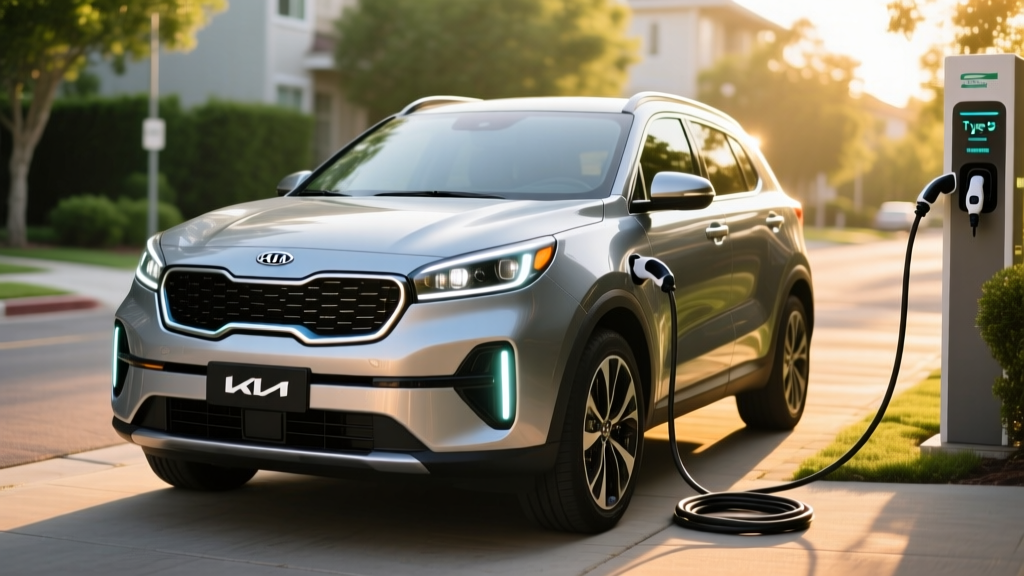
The 2026 Kia Sportage Plug-In Hybrid occupies a specific niche: buyers who want meaningful electric-only commuting without surrendering the flexibility of a gasoline engine for road trips. With an EPA-estimated 34 miles of zero-emission driving, 268 combined horsepower, and a starting MSRP near $39,990, it targets households that can charge at home but aren't ready to commit to a battery-electric vehicle. The real question isn't whether it's a good compact SUV — it's whether the PHEV math works for your daily routine and whether you can capture the federal tax credit before it phases out.
HEV vs PHEV vs EV: Which Powertrain Fits You?
Before diving into Sportage PHEV specifics, it's worth clarifying the three electrified options Kia offers in this segment, because the differences affect your daily habits, fuel costs, and charging requirements.
| Feature | Sportage HEV (Hybrid) | Sportage PHEV (Plug-In) | EV6 (Full Electric) |
|---|---|---|---|
| Plug in to charge? | No — self-charging via regen | Yes — plug in for electric range | Yes — required |
| Electric-only range | ~1 mile at low speed | 34 miles (EPA) | 232–310 miles (EPA) |
| Gasoline engine | 1.6L turbo + motor | 1.6L turbo + motor | None |
| Total system output | 232 hp | 268 hp | 167–320 hp |
| Home charging needed? | No | Recommended (Level 2) | Essential |
| Best for | No charging access, city driving | Home charging + short commute | Home charging + low running cost |
The conventional hybrid (HEV) never needs to be plugged in. It uses regenerative braking and the engine to charge a small battery, delivering improved MPG over a gas-only model. The plug-in hybrid (PHEV) has a larger battery you charge by plugging in, giving you a meaningful electric-only range before the engine kicks in. A full EV eliminates gasoline entirely but requires reliable charging access.
Fuel Economy and Electric Range: The Numbers That Matter
| Metric | EPA Estimate | Real-World Expectation |
|---|---|---|
| Combined MPGe (electric + gas) | 84 MPGe | 75–85 MPGe with regular charging |
| Electric-only range | 34 miles | 28–34 mi (weather/terrain dependent) |
| Gas-only combined MPG | 38 MPG | 34–40 MPG (city-biased driving helps) |
| Gas-only city MPG | 38 MPG | 36–42 MPG (regen braking excels in stop-and-go) |
| Gas-only highway MPG | 38 MPG | 33–37 MPG (aerodynamic drag at 70+ mph) |
| Total combined range | 430 miles | 380–440 mi depending on conditions |
For context, the average American commute is roughly 16 miles each way, according to FHWA data. If you can charge at home overnight, the Sportage PHEV covers most daily driving on electricity alone — you'd visit a gas station perhaps once a month for longer trips.
Powertrain and Performance Specs
| Specification | 2026 Sportage PHEV |
|---|---|
| Engine | 1.6L turbocharged 4-cylinder |
| Engine output | 178 hp / 195 lb-ft torque |
| Electric motor | Permanent magnet synchronous, 97 hp |
| Combined system output | 268 hp / 258 lb-ft torque |
| Transmission | 6-speed automatic |
| Drivetrain | AWD (standard) |
| Battery capacity (gross) | 13.8 kWh |
| Battery chemistry | NMC (nickel manganese cobalt) |
| 0–60 mph | 7.4 seconds |
| Towing capacity | 2,000 lbs |
| Cargo volume (rear seats up) | 34.5 cu ft |
| Cargo volume (rear seats folded) | 65.2 cu ft |
The Sportage PHEV's 268-horsepower combined output makes it the most powerful variant in the Sportage lineup short of the performance-oriented models. The 6-speed automatic is a deliberate choice over a CVT — it delivers more natural shift feel and avoids the rubber-band sensation some hybrid CVTs produce. All-wheel drive is standard across all PHEV trims, with the rear axle receiving torque through a conventional mechanical connection rather than a dedicated rear electric motor.
Battery, Charging, and What to Expect at the Plug
| Charging Method | Power | 0–100% Time | Notes |
|---|---|---|---|
| Level 1 (120V household outlet) | ~1.4 kW | ~10 hours | Emergency/overnight only |
| Level 2 (240V home charger) | 7.2 kW | ~2 hours | Recommended for daily use |
| DC Fast Charging | Not available | N/A | No DC fast-charge capability |
The 13.8 kWh battery pack is sized for daily commuting, not road-trip fast charging. Kia equips the Sportage PHEV with a 7.2 kW onboard charger, which means a full Level 2 charge takes roughly two hours — practical for topping up during the workday if your office has charging, or for a quick replenishment before an evening errand.
Critical limitation: The Sportage PHEV does not support DC fast charging. This is typical for plug-in hybrids in this class — the battery is too small to benefit from high-power DC charging infrastructure, and the added weight and cost of DC hardware wouldn't justify the minimal time savings. If you need rapid public charging, a full BEV like the Kia EV6 (which charges at up to 240 kW on compatible DC stations) is the appropriate choice.
For home Level 2 installation, budget between $500 and $1,500 for a quality 32-amp or 40-amp wall connector, plus $500–$2,000 for electrician labor depending on your panel capacity and conduit run. If your home's electrical panel needs an upgrade from 100A to 200A service, add $1,500–$3,000. A licensed electrician should evaluate your setup before purchase. The federal Residential Clean Energy Credit (IRC §25D) covers 30% of home charger equipment and installation costs through 2032, up to $1,000 annually.
Pricing, Trims, and Federal Tax Credit Eligibility
| Trim | MSRP (2026) | Key Features |
|---|---|---|
| X-Line | $39,990 | AWD, 12.3" dual displays, heated front seats, wireless CarPlay/Android Auto |
| X-Line Prestige | $44,090 | Adds panoramic sunroof, Harman Kardon audio, ventilated seats, Highway Driving Assist 2 |
The 2026 Kia Sportage PHEV's pricing places it squarely in competition with the Toyota RAV4 Prime and Ford Escape PHEV, though the RAV4 Prime commands a significant premium and remains supply-constrained.
As of 2026, the Kia Sportage PHEV does not qualify for the full $7,500 federal Clean Vehicle Credit under IRC §30D. To qualify, a PHEV must have a battery capacity of at least 7 kWh (the Sportage meets this at 13.8 kWh), but the vehicle must also satisfy critical-mineral sourcing and battery-component manufacturing requirements that increasingly favor North American supply chains. Additionally, §30D imposes buyer income caps ($150,000 single / $300,000 joint) and an MSRP cap of $80,000 for SUVs.
However, check the fueleconomy.gov tax credit database for the most current eligibility, as Kia's supply-chain sourcing can shift model-year compliance. Some buyers may qualify for state-level PHEV incentives — Colorado, California, and several northeastern states offer rebates ranging from $1,000 to $4,000 for plug-in hybrids. Consult a tax professional for your specific situation.
Battery Longevity, Warranty, and Reliability
- High-voltage battery: 10 years / 100,000 miles (whichever comes first)
- Capacity retention threshold: Warranty covers defects and capacity loss below approximately 70% of original capacity
- Hybrid system components: 10 years / 100,000 miles (motor, inverter, onboard charger)
- Bumper-to-bumper: 5 years / 60,000 miles
- Powertrain (engine + transmission): 10 years / 100,000 miles
Kia's 10-year/100,000-mile battery warranty is among the strongest in the industry and directly addresses the top concern for hybrid and PHEV buyers: what happens when the battery ages? The NMC chemistry in the Sportage PHEV is proven in millions of Hyundai-Kia vehicles globally. Based on fleet data from similar 13–14 kWh packs in the Hyundai Tucson PHEV and Kia Sorento PHEV, degradation typically reaches 10–15% after 8–10 years of normal use — meaning your 34-mile electric range might become 29–31 miles over a decade of ownership. This is manageable for most owners.
Battery replacement cost: If the battery falls outside warranty coverage (unlikely given the generous terms), a replacement 13.8 kWh pack for the Sportage PHEV currently runs between $5,000 and $8,000 including labor at a Kia dealership. However, out-of-pocket replacement is rare — most failures occur within the warranty window, and gradual degradation rarely drops below the 70% threshold within the first 10 years.
For reliability ratings, consult IIHS crash-test results and J.D. Power dependability data for the Kia brand. The Sportage nameplate has been in production since 1993, and the current-generation platform shares components with the Tucson and Sorento, giving Kia deep manufacturing experience with this powertrain.
Who Should Buy the Sportage PHEV — and Who Shouldn't
- Your daily round-trip commute is under 35 miles and you can charge at home
- You want to drive electric most days but need gas-engine flexibility for road trips
- You live in a region with extreme cold where EV range loss is a concern
- You need AWD and compact-SUV cargo space for a growing family
- You're not ready to rely on public charging infrastructure
- You have reliable home Level 2 charging and your daily driving exceeds 34 miles
- You want the lowest per-mile fuel cost (electricity vs gasoline)
- You want to eliminate oil changes, spark plugs, and transmission fluid entirely
- You want DC fast-charging capability for road trips
- You cannot charge at home (apartment, street parking, no garage)
- Your budget is tighter — the HEV starts roughly $5,000–$7,000 less
- You want simpler ownership with no plug-in routine
- 34 miles electric covers most commutes gas-free
- 268 hp makes it the quickest Sportage variant
- AWD standard — valuable in snow/rain climates
- 10-year/100k-mile battery and powertrain warranty
- 38 MPG combined after battery depletion is strong for an AWD SUV
- Practical cargo space (34.5 cu ft behind rear seats)
- No DC fast charging — Level 2 only
- Does not qualify for the $7,500 federal §30D credit (verify annually)
- Higher starting price than Sportage HEV by ~$6,000
- Electric range drops to ~25–28 mi in freezing weather
- 6-speed automatic is smooth but less efficient than a CVT at steady-state cruise
- Charging cord is relatively short (~15 ft) — may need an outlet near your parking spot
Frequently Asked Questions
How many MPG does the 2026 Kia Sportage Plug-In Hybrid get?
The EPA rates the 2026 Sportage PHEV at 84 MPGe when operating in combined electric-and-gas mode. Once the battery is depleted and the vehicle runs on gasoline alone, it achieves 38 MPG combined (38 city / 38 highway). In real-world testing, city-heavy driving often yields 40+ MPG on gas thanks to regenerative braking, while sustained highway driving at 75+ mph returns 33–37 MPG.
How far can the 2026 Kia Sportage PHEV go on electric only?
The EPA estimates 34 miles of electric-only range. Real-world results vary: expect 28–34 miles in mild weather on flat terrain at moderate speeds, and 25–28 miles in freezing temperatures or at highway speeds above 70 mph. The total combined range (electric + gas) is approximately 430 miles.
Does the 2026 Sportage PHEV qualify for the federal tax credit?
As of early 2026, the Sportage PHEV does not appear to qualify for the full $7,500 Clean Vehicle Credit under IRC §30D due to battery-component and critical-mineral sourcing requirements. However, eligibility can change as Kia adjusts its supply chain. Check fueleconomy.gov before purchasing, and consult a tax professional. State-level incentives may still apply.
Is the Sportage PHEV reliable, and what does battery replacement cost?
Kia backs the high-voltage battery and hybrid system components with a 10-year/100,000-mile warranty, which covers defects and significant capacity loss. Out-of-warranty battery replacement runs $5,000–$8,000, but this scenario is rare given the warranty duration and typical NMC degradation patterns (10–15% over a decade). The Sportage platform is well-proven across Hyundai-Kia's global fleet.
Do I need to plug in the Sportage PHEV every night?
For maximum benefit, yes — plugging in nightly ensures you start each day with a full 34-mile electric charge. However, the vehicle operates perfectly as a conventional hybrid if you forget to plug in or lack charging access on a given day. You'll simply get 38 MPG instead of the higher effective MPGe. A Level 2 home charger is recommended for convenience, but a standard 120V outlet can replenish the battery in about 10 hours.
Can the Sportage PHEV tow?
Yes. The 2026 Sportage PHEV is rated to tow up to 2,000 pounds when properly equipped — sufficient for a small utility trailer, a pair of jet skis, or a lightweight pop-up camper. This matches the conventional hybrid's tow rating but falls short of some competitors like the RAV4 Prime (3,500 lbs).
How does the Sportage PHEV compare to the Toyota RAV4 Prime?
The RAV4 Prime offers a longer electric range (42 miles EPA), a larger battery (18.1 kWh), and a higher tow rating (3,500 lbs), but it commands a significantly higher MSRP (starting around $44,500) and remains difficult to find at dealer invoice pricing. The Sportage PHEV is more accessible, more affordable, and offers comparable interior space and technology, making it the pragmatic choice for buyers who can't wait months for a RAV4 Prime allocation.