Quick Verdict: Is the 2007 Camry Hybrid Still Worth Buying?
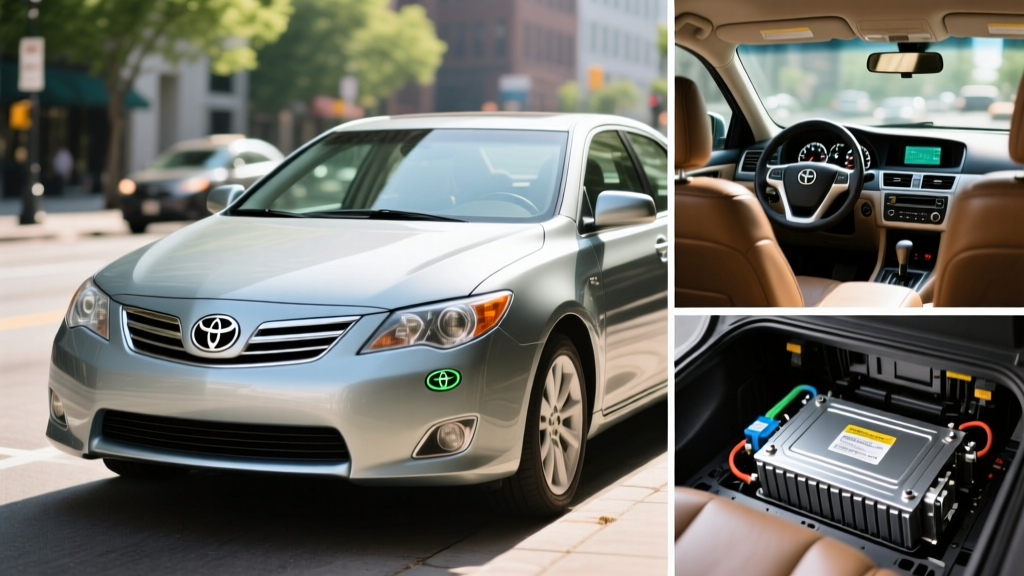
The 2007 Toyota Camry Hybrid represents Toyota's second hybrid model after the Prius and one of the earliest mainstream hybrid sedans on the US market. Nearly two decades later, it remains a case study in hybrid durability — but also a reminder that early-generation electrified powertrains carry real ownership risks in 2026. If you're considering a used 2007 Camry Hybrid, you need to understand what you're actually buying: a conventional hybrid (HEV) that never plugs in, delivers around 34 MPG combined, and may face a battery replacement bill that exceeds the car's current market value.
2007 Camry Hybrid Fuel Economy: EPA Numbers vs. Real-World MPG
The original EPA ratings for the 2007 Toyota Camry Hybrid were revised after the EPA changed its testing methodology in 2008. The updated figures, which better reflect real-world driving, are what you'll find on fueleconomy.gov:
| Metric | Value |
|---|---|
| City MPG | 33 MPG |
| Highway MPG | 34 MPG |
| Combined MPG | 34 MPG |
| Annual Fuel Cost (est.) | ~$1,550 (at $3.50/gal, 15,000 mi/yr) |
| Fuel Type | Regular Unleaded (87 octane) |
Real-World MPG: What Owners Actually Report
Conventional hybrids like the 2007 Camry Hybrid tend to deliver fuel economy close to or slightly above EPA estimates in city driving, where regenerative braking and electric-motor assist do the most work. However, highway-only driving reduces the hybrid advantage. Expect the following in 2026:
- City driving: 32–36 MPG — the hybrid system shines here with frequent stops
- Highway driving: 30–33 MPG — less regenerative opportunity, engine runs more often
- Cold weather penalty: Expect a 5–10% drop in winter months as the engine runs longer to warm the cabin and maintain battery temperature
- Aged-battery impact: A degraded hybrid battery (common at this vehicle's age) can reduce MPG by 2–5 MPG if the system relies more on the gas engine
For context, the gas-only 2007 Camry 4-cylinder was rated at 24 MPG combined. The hybrid delivered roughly a 40% improvement — significant in 2007, though modern hybrids like the 2026 Camry Hybrid achieve 52 MPG combined.
Powertrain Specs: Engine, Motor, and Combined Output
The 2007 Camry Hybrid uses Toyota's Hybrid Synergy Drive (HSD), a series-parallel full-hybrid system that was advanced for its era. Here's the exact hardware:
| Component | Specification |
|---|---|
| Gasoline Engine | 2.4L 2AZ-FXE inline-4 (Atkinson cycle) |
| Engine Power | 147 HP @ 6,000 RPM |
| Engine Torque | 138 lb-ft @ 4,400 RPM |
| Electric Motor (MG2) | Permanent magnet synchronous |
| Motor Power | 40 HP (30 kW) |
| Combined Net Output | 192 HP |
| Transmission | eCVT (electronically controlled continuously variable) |
| Drivetrain | Front-wheel drive |
| 0–60 MPH | ~8.4 seconds |
| Hybrid Battery | NiMH (Nickel-Metal Hydride), ~1.6 kWh gross |
| Battery Voltage | 244.8V nominal |
The 2AZ-FXE engine uses the Atkinson cycle — a modified combustion cycle that sacrifices low-end torque for higher thermal efficiency. The electric motor fills in that low-end torque gap, which is why the car feels peppy around town despite modest peak numbers. The eCVT is not a belt-and-pulley CVT; it's a planetary gearset with no fixed gear ratios, which contributes to Toyota hybrid reliability since there are no traditional transmission components to wear out.
HEV vs. PHEV vs. EV: Which Fits Your Needs?
Conventional Hybrid (HEV)
Example: 2007 Camry Hybrid
Plug in? No
Electric-only range: < 1 mile at low speed
Best for: Drivers without home charging who want better MPG without behavior change
Plug-in Hybrid (PHEV)
Example: 2026 Toyota RAV4 Prime
Plug in? Yes (Level 1 or Level 2)
Electric-only range: 25–45 miles
Best for: Drivers with home/work charging who want short EV commutes plus gas flexibility
Battery Electric (BEV)
Example: 2026 Tesla Model 3
Plug in? Yes (Level 2 + DC fast charge)
Range: 250–360 miles
Best for: Drivers with reliable charging access who want zero tailpipe emissions and lowest per-mile cost
Hybrid Battery Lifespan, Warranty, and Replacement Cost
This is the single most important section for anyone shopping for a 2007 Camry Hybrid in 2026. The original hybrid battery warranty has long expired, and battery condition is the dominant financial variable.
How Long Does the Battery Actually Last?
Toyota's NiMH hybrid batteries in this generation typically last between 120,000 and 180,000 miles, though some fail earlier and others exceed 200,000 miles. Key degradation factors include:
- Heat exposure: Vehicles in hot climates (Arizona, Texas, Florida) see faster NiMH degradation
- Usage patterns: Frequent short trips with many charge/discharge cycles accelerate wear vs. steady highway driving
- Age alone: Even low-mileage examples suffer calendar aging — a 2007 model with 80,000 miles may still have a degraded battery simply due to 19 years of chemical aging
- Storage: Vehicles sitting unused for extended periods can develop cell imbalance
Battery Replacement Cost in 2026
| Option | Estimated Cost | Warranty |
|---|---|---|
| New OEM Toyota battery (dealer) | $3,000–$4,000 | 1 year / 12,000 miles |
| Remanufactured battery (specialist shop) | $1,500–$2,500 | 1–3 years |
| Used/salvage battery | $500–$1,200 | 30–90 days (if any) |
| Individual module replacement | $300–$800 | Varies by shop |
The hard truth: a new OEM battery at $3,000–$4,000 often exceeds the total market value of a 2007 Camry Hybrid, which typically sells for $3,500–$6,500 in private-party transactions depending on mileage and condition. This makes a pre-purchase battery health check non-negotiable. A qualified hybrid technician can read the battery's State of Health (SoH) and perform a load test to identify weak modules before you buy.
Tax Credits and Incentives: What Applies in 2026?
The 2007 Camry Hybrid does not qualify for any current federal tax credit. Here's why:
- Federal §30D New Clean Vehicle Credit: Applies only to new vehicle purchases. A 2007 model purchased used in 2026 does not qualify.
- Used Clean Vehicle Credit (§25E): This credit (up to $4,000 or 30% of sale price) applies to used EVs and used PHEVs with at least 4 kWh of battery capacity sold for under $25,000 through a licensed dealer. The 2007 Camry Hybrid is a conventional HEV with a ~1.6 kWh NiMH battery — it fails both the PHEV/EV requirement and the minimum battery capacity threshold.
- Original hybrid credit (expired): When new, the 2007 Camry Hybrid qualified for a federal income tax deduction (not a credit) of up to $2,600 under the Energy Policy Act of 2005. This phased out for Toyota in 2007 after the manufacturer hit 60,000 hybrid units sold, and the provision no longer exists.
- State incentives: Most state hybrid incentives expired years ago. A few states offer reduced registration fees or HOV lane access for hybrids, but these programs have largely shifted to EVs and PHEVs. Check your state's current DMV and energy office resources.
For details on current federal credits, refer to the IRS Clean Vehicle Credits page.
Ownership Economics: Is It Cheaper Than a Gas Camry?
At current used-car prices, the 2007 Camry Hybrid's value proposition depends almost entirely on whether the hybrid battery is healthy. Here's a 3-year ownership comparison against the gas-only 2007 Camry 4-cylinder:
| Cost Factor | 2007 Camry Hybrid | 2007 Camry 2.4L Gas |
|---|---|---|
| Purchase Price (avg.) | $5,000 | $4,500 |
| Fuel (15,000 mi/yr @ $3.50/gal) | $4,632 (34 MPG) | $6,563 (24 MPG) |
| Battery Replacement Risk | $0–$3,500 | $0 |
| Insurance (avg.) | ~$3,600 | ~$3,300 |
| Maintenance (est.) | ~$1,800 | ~$2,000 |
| 3-Year Total (no battery failure) | ~$15,032 | ~$16,363 |
| 3-Year Total (with battery replacement) | ~$18,532 | ~$16,363 |
The hybrid saves roughly $1,300 over three years in fuel if the battery holds up. A single battery replacement erases that savings and puts the hybrid approximately $2,100 behind the gas model. This is why battery condition is the make-or-break factor for this purchase.
Reliability and Common Issues
The 2007 Camry Hybrid benefits from Toyota's reputation for reliability, and the HSD powertrain is mechanically robust. The eCVT, in particular, is one of the most durable transmissions Toyota has ever produced because the planetary gearset has no clutches, bands, or belts to wear out. However, at 19 years old, you should budget for age-related issues:
Known Problem Areas
- Hybrid battery degradation/failure: The dominant concern, as detailed above
- Hybrid inverter coolant pump: Can fail and cause inverter overheating; replacement runs $500–$900
- Brake actuator assembly: The regenerative braking system uses an electro-hydraulic actuator that can develop leaks or electronic faults; replacement can exceed $1,500
- 12V auxiliary battery: Like any car, the standard 12V battery needs periodic replacement (~$150–$250). Note: the 12V battery is separate from the high-voltage hybrid battery
- Standard age-related items: Suspension bushings, engine mounts, A/C compressor, and timing chain tensioner may need attention at this vehicle's age
The 2AZ-FXE engine uses a timing chain rather than a belt, which generally lasts the life of the engine. Toyota's hybrid-specific components (inverter, motor-generators, eCVT) have proven remarkably durable, with many examples exceeding 200,000 miles when the battery is maintained or replaced.
Who Should Buy the 2007 Camry Hybrid — and Who Shouldn't
Buy It If:
- You need an ultra-cheap commuter with better-than-average MPG
- You primarily drive in city traffic where the hybrid system maximizes fuel savings
- A pre-purchase inspection confirms the hybrid battery is in good health
- You have access to an independent hybrid specialist for affordable maintenance
- You're comfortable with the possibility of a $1,500–$3,000 battery repair down the road
Skip It If:
- The hybrid battery hasn't been tested or has already been flagged as degraded
- You drive primarily highway miles where the hybrid advantage shrinks
- You want any electric-only driving capability (you need a PHEV or BEV)
- You're looking for a tax credit — this car qualifies for none
- A battery replacement would total the car financially relative to its market value
Modern Alternatives to Consider
If the battery-replacement risk gives you pause, consider these alternatives in a similar price range or slightly higher:
- 2018–2022 Toyota Camry Hybrid (used): 52 MPG combined, newer NiMH or Li-ion battery, remaining factory warranty on some examples. Expect $14,000–$22,000.
- 2017–2022 Toyota Prius (used): 52–56 MPG combined, proven hybrid system, widely available. Expect $12,000–$20,000.
- 2020–2024 Toyota Prius Prime (used PHEV): 25–44 miles electric-only range, qualifies for the federal used EV credit (§25E) up to $4,000 if purchased through a dealer under $25,000.
Frequently Asked Questions
How many MPG does the 2007 Toyota Camry Hybrid get?
The EPA rates it at 33 city / 34 highway / 34 combined MPG. In real-world driving, expect 32–36 MPG in the city and 30–33 on the highway. A degraded battery will reduce these numbers by 2–5 MPG.
Does the 2007 Camry Hybrid need to be plugged in?
No. It is a conventional hybrid (HEV), not a plug-in hybrid (PHEV). The battery charges itself through regenerative braking and the gasoline engine. There is no plug and no electric-only driving mode of any meaningful distance.
How far can it drive on electric power alone?
Less than one mile, and only at very low speeds (under 25 MPH) with a fully charged battery. The electric motor primarily assists the gas engine rather than powering the car independently. If you want meaningful electric-only range, you need a PHEV like the Toyota Prius Prime (25–44 miles) or a full BEV.
What does it cost to replace the hybrid battery?
A new OEM battery from a Toyota dealer runs $3,000–$4,000. Remanufactured batteries from hybrid specialists cost $1,500–$2,500. Used salvage batteries are $500–$1,200 but carry significant risk. Individual module replacement (if only one or two cells are bad) can cost $300–$800.
Is the 2007 Camry Hybrid reliable?
The powertrain (engine, eCVT, motor-generators) is among the most reliable Toyota has ever built. The primary reliability concern is the NiMH hybrid battery, which is likely at or beyond its useful life in 2026 without replacement. Other age-related issues (inverter coolant pump, brake actuator) can be costly but are less common. Refer to NHTSA vehicle records for recall and complaint history.
Does the 2007 Camry Hybrid qualify for any tax credit?
No. It does not qualify for the federal §30D new vehicle credit, the §25E used clean vehicle credit (because it's a conventional HEV, not a PHEV or BEV, and its battery is under 4 kWh), or any current state hybrid incentive in most jurisdictions. The original federal hybrid deduction expired over a decade ago.
Should I buy a 2007 Camry Hybrid or a newer used hybrid?
If your budget allows, a 2018+ Camry Hybrid or 2017+ Prius offers dramatically better fuel economy (52+ MPG), a battery with remaining useful life or warranty, modern safety features (automatic emergency braking, lane keeping), and in the case of a used Prius Prime, potential federal tax credits. The 2007 model makes sense only at the very bottom of the budget spectrum ($3,000–$5,000) and only with a confirmed healthy battery.