Quick Verdict: The Sportage Hybrid Heritage Blue at a Glance
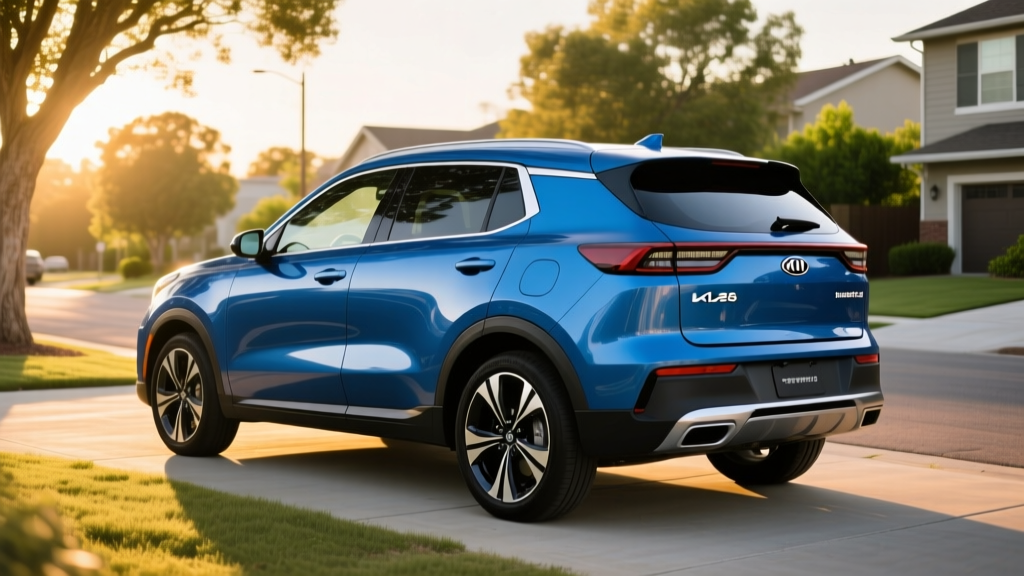
The 2026 Kia Sportage Hybrid Heritage Blue occupies a specific niche in Kia's compact SUV lineup: it's the fuel-efficient, all-wheel-drive, no-plug-required version aimed at buyers who want hybrid savings without changing their fueling habits. The Heritage Blue designation signals Kia's mid-tier hybrid trim with a curated feature set, sitting between the base LX Hybrid and the fully loaded SX Prestige Hybrid. With an EPA-estimated 38 MPG combined and standard AWD, it undercuts most competitors on price while delivering competitive efficiency.
But the Sportage family also offers a plug-in hybrid (PHEV) variant, and the choice between HEV and PHEV is the single most consequential decision you'll make here. This guide breaks down exact specs, real-world expectations, ownership costs, and which version fits your driving pattern.
| Spec | HEV (Heritage Blue) | PHEV (X-Line for reference) |
|---|---|---|
| Powertrain | 1.6L turbo 4-cyl + electric motor | 1.6L turbo 4-cyl + larger electric motor |
| Combined Horsepower | 232 hp | 268 hp |
| Drivetrain | AWD (standard) | AWD (standard) |
| EPA Combined MPG | 38 MPG | 35 MPG (hybrid mode) / 84 MPGe (electric) |
| EPA City / Highway | 38 city / 38 highway | 33 city / 37 highway (hybrid mode) |
| Battery Capacity | ~1.49 kWh (self-charging) | 13.8 kWh (plug-in) |
| Electric-Only Range | N/A — not a plug-in | ~34 miles |
| 0-60 mph | ~7.4 seconds | ~6.7 seconds |
| Cargo Volume (rear seats up) | 39.5 cu ft | 34.5 cu ft |
| Base MSRP | ~$33,090 | ~$40,090 |
| Federal Tax Credit (§30D) | Not eligible | Up to $7,500 (eligibility varies) |
| Battery Warranty | 10 yr / 100,000 mi | 10 yr / 100,000 mi |
HEV vs PHEV: What the Sportage Hybrid Heritage Blue Actually Is
The 2026 Kia Sportage Hybrid Heritage Blue is a conventional hybrid electric vehicle (HEV). It does not have a charging port. You cannot plug it in. It recovers energy through regenerative braking and the gasoline engine to charge its small traction battery, which then assists the engine during acceleration and enables brief electric-only operation at very low speeds. You fuel it exactly like any gasoline car — at a gas station.
The Sportage PHEV, by contrast, has a much larger 13.8 kWh battery, a charging port (J1772/CCS connector for Level 2 AC charging), and roughly 34 miles of electric-only range before the gasoline engine engages. The PHEV is designed for drivers who can charge at home overnight and want to run most daily commutes on electricity while retaining gasoline range for longer trips.
Which Sportage Hybrid Fits You?
| Factor | HEV (Heritage Blue) | PHEV |
|---|---|---|
| Plug-in charging needed? | No — gas station only | Yes — home Level 2 strongly recommended |
| Best for | Apartments, no garage, long commutes | Homeowners with garage/driveway, short commutes |
| Daily electric driving | Negligible (low-speed assist only) | Up to ~34 miles electric-only |
| Federal tax credit | None | Potentially up to $7,500 (§30D) |
| Upfront cost premium | Lower (~$33K base) | Higher (~$40K base) |
| Cargo space penalty | None | ~5 cu ft less (larger battery) |
Fuel Economy: EPA Numbers and Real-World MPG
The EPA rates the 2026 Kia Sportage Hybrid AWD at 38 MPG combined (38 city / 38 highway), per fueleconomy.gov. This is competitive within the compact hybrid SUV segment — the Toyota RAV4 Hybrid AWD achieves 39 MPG combined, while the Honda CR-V Hybrid AWD lands at 40 MPG combined.
| Model | City | Highway | Combined |
|---|---|---|---|
| 2026 Kia Sportage Hybrid AWD | 38 | 38 | 38 |
| Toyota RAV4 Hybrid AWD | 41 | 38 | 39 |
| Honda CR-V Hybrid AWD | 40 | 39 | 40 |
| Hyundai Tucson Hybrid AWD | 37 | 36 | 37 |
Real-World MPG: What to Actually Expect
Hybrids often exceed their EPA city ratings in stop-and-go traffic because regenerative braking recovers more energy in urban driving. In real-world mixed driving, owners typically report 36-40 MPG in the Sportage Hybrid. Highway-dominant commutes at 75+ mph tend to pull efficiency down to 33-35 MPG, as the electric motor provides less benefit at sustained high speeds and aerodynamic drag increases. Cold weather (below freezing) typically costs 2-4 MPG as the engine runs more frequently to provide cabin heat and maintain battery temperature.
If your commute is predominantly city driving with frequent stops, expect to see numbers at or slightly above the 38 MPG EPA combined figure. Highway-heavy drivers should budget for 34-36 MPG.
Powertrain and Driving Dynamics
The Sportage Hybrid pairs Kia's 1.6-liter turbocharged four-cylinder engine with a 47.7 kW (64 hp) electric motor integrated into the six-speed automatic transmission. Combined system output is 232 horsepower and 258 lb-ft of torque. The AWD system uses a traditional mechanical connection to the rear axle, unlike some competitors that use a rear electric motor for all-wheel drive.
The result is confident acceleration — 0-60 mph in approximately 7.4 seconds — which is brisk for a compact hybrid SUV. The turbo engine provides strong mid-range torque, and the electric motor fills in the low-end gap that turbo lag typically creates. The six-speed automatic avoids the rubber-band feel of the CVTs used in the RAV4 Hybrid and CR-V Hybrid, though CVTs tend to extract slightly better city MPG.
For comparison, the Sportage PHEV uses a larger 72 kW (97 hp) electric motor for 268 combined horsepower and a quicker 6.7-second 0-60 time, at the cost of additional weight and reduced cargo space.
Pricing, Tax Credits, and Total Cost
The 2026 Kia Sportage Hybrid Heritage Blue carries a base MSRP of approximately $33,090 including destination. This positions it as one of the more affordable AWD hybrid SUVs in the segment. The Heritage Blue trim typically includes features like a 12.3-inch infotainment display, heated front seats, smart power liftgate, and Kia's full suite of ADAS features (Highway Driving Assist, lane-keeping, adaptive cruise).
Federal Tax Credit Eligibility
The Sportage Hybrid (HEV) does not qualify for the federal §30D clean vehicle tax credit. That credit is reserved for plug-in electric vehicles (BEVs and PHEVs) meeting specific battery-sourcing, critical-mineral, MSRP, and buyer-income requirements per IRS guidelines.
If you're considering the Sportage PHEV instead, it may qualify for up to $7,500 in federal tax credit, but eligibility depends on several factors:
- MSRP cap: SUVs must have an MSRP at or below $80,000 (the Sportage PHEV qualifies)
- Buyer income cap: Modified AGI must not exceed $150,000 (single), $225,000 (head of household), or $300,000 (joint)
- Battery sourcing: Critical minerals and battery components must meet phased-in percentages from US or FTA-partner countries — verify current-year compliance with your dealer
- Point-of-sale transfer: As of 2024+, you can transfer the credit to the dealer for an immediate price reduction rather than claiming it on your tax return
Always confirm eligibility with a tax professional and check the latest IRS guidance before purchasing, as sourcing requirements tighten annually.
Five-Year Fuel Cost Estimate
At 15,000 miles per year and $3.40/gallon regular unleaded, the Sportage Hybrid at 38 MPG would consume roughly 395 gallons annually, costing about $1,342 per year in fuel. Over five years, that's approximately $6,710. A comparable non-hybrid compact AWD SUV averaging 28 MPG combined would cost roughly $1,821 per year, or $9,107 over five years — a savings of about $2,400 with the hybrid. The hybrid's higher upfront cost is typically recovered within 2-3 years through fuel savings alone.
Battery Warranty, Reliability, and Replacement Costs
Kia Hybrid Battery Warranty
Coverage: 10 years / 100,000 miles (whichever comes first)
What's covered: Hybrid battery pack, hybrid control unit, related electric motor components
Capacity threshold: Kia typically warrants against defects and abnormal capacity loss; consult your warranty booklet for specific degradation thresholds
Transferability: Powertrain warranty transfers to second owners but may reduce to 5 yr / 60,000 mi depending on state
Kia's hybrid battery warranty is among the best in the industry. The 10-year/100,000-mile coverage applies to both the HEV and PHEV variants. For context, Toyota covers its hybrid batteries for 10 years / 150,000 miles, while Honda provides 8 years / 100,000 miles.
How Long Do Hybrid Batteries Actually Last?
Modern hybrid batteries (nickel-metal hydride or lithium-ion, depending on the generation) routinely last 150,000-200,000+ miles before significant degradation. The Sportage Hybrid's ~1.49 kWh battery is small and operates within a narrow state-of-charge window (typically 40-80%), which dramatically reduces stress and extends cycle life. Unlike a full EV battery, the hybrid battery never deep-cycles, so degradation is minimal over the vehicle's lifespan.
Should replacement be necessary out of warranty, a Sportage Hybrid battery pack typically costs $2,000-$4,000 including labor, based on current parts pricing for Kia's hybrid system. This is considerably less than EV battery replacement ($8,000-$20,000+) because the pack is far smaller.
Reliability Track Record
Kia's turbo-hybrid powertrain (shared with the Hyundai Tucson Hybrid) has been in production since the 2022 model year. Early reliability data from owner surveys and warranty claim rates suggest no systemic issues with the hybrid system itself. The conventional six-speed automatic is a known quantity compared to the CVTs some competitors use. Check NHTSA for any active recalls before purchasing.
Sportage Hybrid vs PHEV vs Full EV: Which Should You Choose?
Choose the Sportage Hybrid (HEV) Heritage Blue if:
- You live in an apartment or lack access to home/work charging
- You drive more than 50 miles daily and don't want to plan charging stops
- Your budget tops out around $35,000
- You want maximum cargo space (39.5 cu ft vs 34.5 in the PHEV)
- You want straightforward ownership — just fill up at any gas station
Choose the Sportage PHEV if:
- You have a garage or driveway where you can install a Level 2 (240V) charger
- Your daily round-trip commute is under 34 miles (you'd rarely use gas)
- You qualify for the §30D tax credit (potentially reducing effective price by $7,500)
- You want stronger acceleration (268 hp, 6.7s 0-60)
- You plan to keep the vehicle 5+ years to recoup the higher upfront cost
Choose a Full EV (e.g., Kia EV6, Hyundai Ioniq 5) if:
- You want zero tailpipe emissions and minimal maintenance (no oil changes, no engine)
- You have reliable home charging and your typical trips fall within 250-300 miles
- You want the lowest per-mile fuel cost (electricity at $0.12/kWh ≈ $0.04/mile vs gas at ~$0.09/mile in the hybrid)
- You're willing to plan around DC fast charging for road trips exceeding range
Pros, Cons, and the Bottom Line
Pros
- 38 MPG combined with standard AWD — competitive in segment
- 232 hp provides confident highway merging and passing
- No charging infrastructure required — zero behavior change
- 10-year/100,000-mile hybrid battery warranty
- 39.5 cu ft cargo volume (no battery packaging penalty)
- Competitive base price at ~$33,090
- Conventional 6-speed automatic avoids CVT drone
Cons
- No federal tax credit eligibility (HEV)
- Highway MPG drops to 33-35 at 75+ mph in real-world driving
- RAV4 Hybrid and CR-V Hybrid edge it out by 1-2 MPG combined
- Heritage Blue trim may lack premium features available on higher trims
- Turbo engine requires more maintenance than naturally aspirated hybrids long-term
- No DC fast charging capability (not applicable — it's a self-charging HEV)
Frequently Asked Questions
How many MPG does the 2026 Kia Sportage Hybrid Heritage Blue get?
The EPA rates it at 38 MPG combined (38 city / 38 highway). In real-world driving, expect 36-40 MPG in mixed conditions, with highway-dominant driving pulling it down to 33-35 MPG and city-dominant driving potentially reaching 40+ MPG thanks to regenerative braking.
Does the Sportage Hybrid need to be plugged in?
No. The Sportage Hybrid (HEV) is a self-charging conventional hybrid. It charges its small battery through regenerative braking and the gasoline engine. You fuel it exclusively at gas stations, just like any conventional car. Only the Sportage PHEV variant has a plug and can charge from an external power source.
Does the 2026 Kia Sportage Hybrid qualify for any tax credit?
The conventional hybrid (HEV) does not qualify for the federal §30D clean vehicle tax credit, which is limited to plug-in vehicles (BEVs and PHEVs). Some states offer separate rebates for hybrids — check your state energy office or AFDC state incentive database. The Sportage PHEV may qualify for up to $7,500 federally, subject to income, MSRP, and battery-sourcing requirements.
Is the Kia Sportage Hybrid reliable, and what does battery replacement cost?
Kia's hybrid system has proven reliable since its 2022 introduction, with no widespread failure patterns reported. The hybrid battery is covered for 10 years / 100,000 miles. Out-of-warranty replacement typically costs $2,000-$4,000 — far less than an EV battery — because the pack is small (~1.49 kWh). Modern hybrid batteries routinely last 150,000+ miles.
How far can the Sportage Hybrid drive on electric power alone?
The conventional Sportage Hybrid (HEV) cannot drive meaningful distances on electric power alone. The electric motor assists the gasoline engine during acceleration and can propel the car at very low speeds (parking lots, traffic creep) for brief moments, but the engine is always running or ready to engage. If you want electric-only driving, you need the Sportage PHEV, which offers approximately 34 miles of electric-only range on a full charge.
Is the Heritage Blue trim worth it over the base LX Hybrid?
The Heritage Blue trim typically adds features like the larger 12.3-inch infotainment screen, smart power liftgate, heated front seats, and additional ADAS refinements over the base LX. For most buyers, the Heritage Blue represents the best value in the Sportage Hybrid range — enough features for daily comfort without the premium of the SX Prestige. Compare specific equipment lists at your dealer, as Kia occasionally adjusts trim packaging by model year.
How does the Sportage Hybrid compare to the RAV4 Hybrid?
The Toyota RAV4 Hybrid AWD edges the Sportage Hybrid by 1 MPG combined (39 vs 38) and offers a slightly larger battery (1.6 kWh vs ~1.49 kWh) with a rear electric motor for its AWD system rather than a mechanical driveshaft. The Sportage counters with more horsepower (232 vs 219), a conventional automatic transmission (vs CVT), more cargo space, and a lower starting price. Both carry 10-year hybrid battery warranties (Toyota extends to 150,000 miles). The choice often comes down to whether you prioritize Toyota's long-term resale value or Kia's feature-per-dollar advantage.