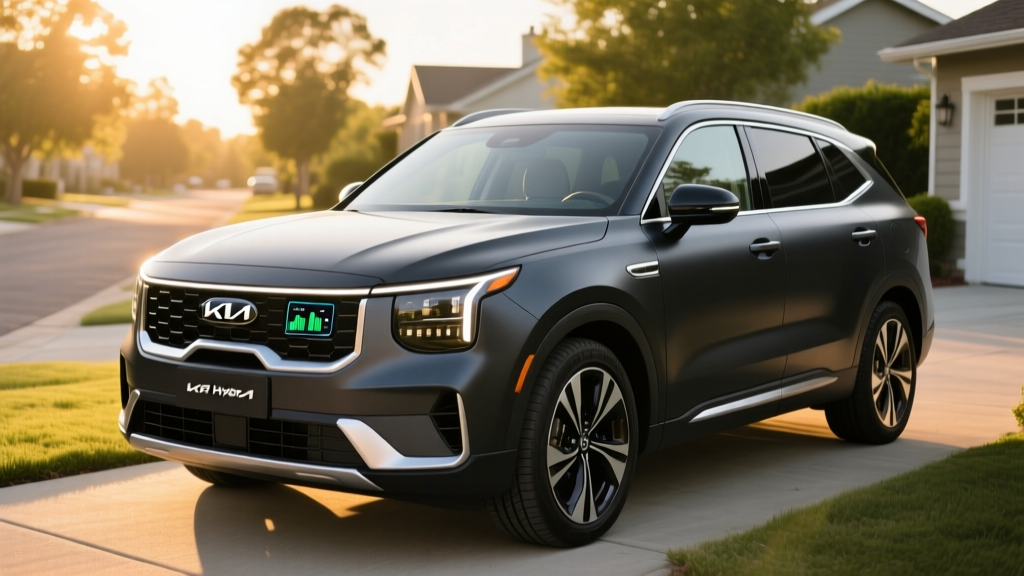
The 2026 Kia Sorento Hybrid occupies a specific niche: three-row family hauling without the range anxiety or charging dependency of a full battery-electric vehicle. Kia offers the Sorento in both conventional hybrid (HEV) and plug-in hybrid (PHEV) flavors, and understanding the difference between the two is essential before you set foot in a dealership. This guide breaks down the exact EPA figures, real-world expectations, powertrain specs, and ownership economics so you can decide which version — if either — fits your driving pattern.
HEV vs PHEV: What the 2026 Kia Sorento Actually Offers
Sorento Hybrid (HEV)
The conventional hybrid pairs a 1.6-liter turbocharged four-cylinder with an electric motor and a small battery (roughly 1.49 kWh) that recharges through regenerative braking and the engine. You never plug it in. It operates like a gas car that happens to be significantly more efficient, especially in stop-and-go city driving where the electric motor does the heavy lifting at low speeds.
Sorento Plug-In Hybrid (PHEV)
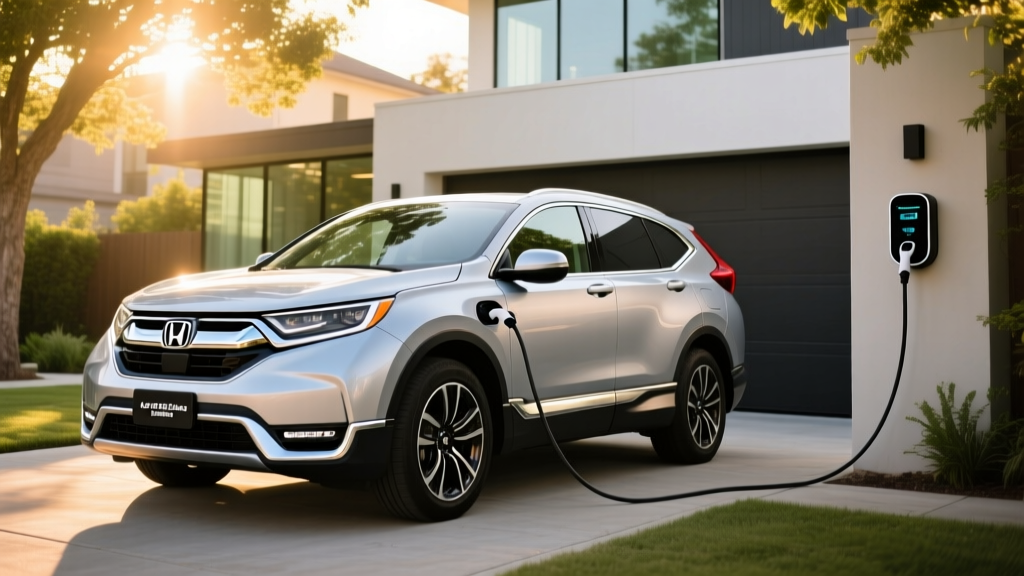
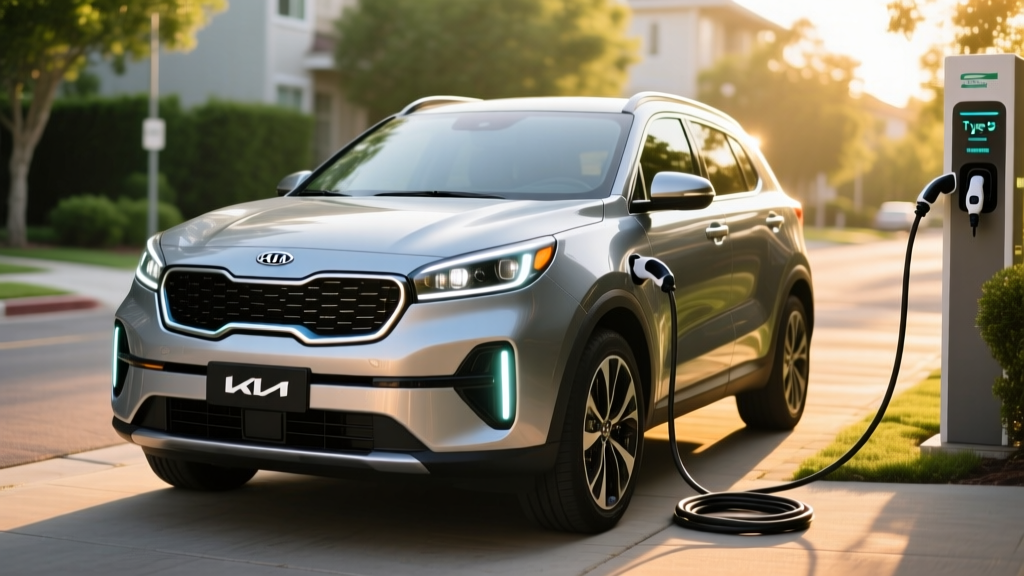
The PHEV uses the same 1.6L turbo engine but pairs it with a more powerful electric motor and a larger 13.8 kWh battery pack (usable capacity). You can and should plug it in to unlock its 32-mile EPA electric-only range. Once the battery depletes, it seamlessly reverts to conventional hybrid operation — no range anxiety, no being stranded.
The distinction matters for your wallet and your daily routine. If you have access to home or workplace Level 2 charging and your commute falls under 30 miles round-trip, the PHEV lets you drive on electricity most weekdays while retaining a gasoline engine for road trips. If you lack reliable charging access, the HEV delivers strong fuel economy with zero behavioral change.
Fuel Economy: EPA Numbers and Real-World MPG
| Model | City MPG | Highway MPG | Combined MPG | MPGe (PHEV Electric) |
|---|---|---|---|---|
| Sorento HEV (FWD) | 36 | 35 | 36 | — |
| Sorento HEV (AWD) | 34 | 34 | 34 | — |
| Sorento PHEV (AWD) | 34* | 33* | 34* | 79 MPGe |
*PHEV MPG figures apply after battery depletion (charge-sustaining mode). Source: fueleconomy.gov
Real-World MPG vs. EPA Sticker
Hybrids often exceed their EPA city estimates because regenerative braking recovers energy that a gas car wastes as heat at every stoplight. In mixed suburban driving, owners of the Sorento HEV consistently report 35–38 MPG. Highway-heavy driving at 75+ mph yields closer to 30–32 MPG, as the engine bears more load and aerodynamic drag increases.
For the PHEV, expect the full 32-mile electric range in mild weather (55–75°F) at suburban speeds. Cold weather (below 35°F) reduces electric-only range by roughly 20–25% due to cabin heating demands and battery chemistry limitations — plan on 24–26 electric miles in winter.
Powertrain Specs: Horsepower, Engine, and Drivetrain
| Specification | Sorento HEV | Sorento PHEV |
|---|---|---|
| Engine | 1.6L Turbo I-4 | 1.6L Turbo I-4 |
| Electric Motor | 47.7 kW (64 hp) | 72 kW (97 hp) |
| Combined Output | 232 hp / 262 lb-ft | 261 hp / 258 lb-ft |
| Transmission | 6-speed automatic | 6-speed automatic |
| Drivetrain | FWD or AWD | AWD (standard) |
| 0–60 mph | ~7.8 sec | ~7.2 sec |
| Towing Capacity | 2,000 lbs | 2,000 lbs |
The PHEV's stronger electric motor gives it a noticeable advantage in low-speed acceleration and passing confidence. Both powertrains use Kia's turbocharged 1.6-liter engine, which runs on regular 87-octane fuel — no premium required. The 6-speed automatic is a conventional torque-converter unit, not a CVT, which means more natural-feeling acceleration without the rubber-band droning some hybrids exhibit.
PHEV Electric Range, Battery, and Charging
The Sorento PHEV's 13.8 kWh lithium-ion battery pack (NMC chemistry) delivers an EPA-rated 32 miles of electric-only range. Total combined range — electric plus a full 12.4-gallon fuel tank — exceeds 420 miles, making it one of the most versatile electrified SUVs for drivers who split time between short commutes and longer road trips.
| Charging Method | Power | 0–100% Time | Notes |
|---|---|---|---|
| Level 1 (120V household) | ~1.4 kW | ~10 hours | Overnight top-up; not ideal for daily full charge |
| Level 2 (240V home/public) | ~3.3 kW (onboard charger limit) | ~3.5 hours | Standard J1772 connector |
| DC Fast Charge | Not supported | — | No CCS/CHAdeMO capability |
A critical detail: the Sorento PHEV's onboard charger caps at 3.3 kW, meaning even a 48-amp Level 2 home charger won't speed things up beyond that rate. This is common for PHEVs — the battery is small enough that 3.3 kW fully replenishes it overnight. DC fast charging is not available, which is typical for the PHEV segment; the battery simply isn't large enough to justify the hardware cost and weight.
Pricing, Trims, and Tax Credit Eligibility
| Trim | Powertrain | MSRP (2026) |
|---|---|---|
| S (FWD) | HEV | $39,590 |
| EX (AWD) | HEV | $43,590 |
| SX Prestige (AWD) | HEV | $47,490 |
| EX (AWD) | PHEV | $51,590 |
| SX Prestige (AWD) | PHEV | $55,090 |
Federal Tax Credit: §30D Rules for 2026
The Sorento PHEV may qualify for up to $3,750 under the IRS §30D Clean Vehicle Credit, depending on battery component and critical-mineral sourcing compliance. The full $7,500 requires meeting both sourcing thresholds, and Kia's supply chain positioning for the Sorento PHEV's battery has historically met only one of the two requirements. The conventional HEV does not qualify for the §30D credit — it is not a plug-in vehicle.
- Buyer AGI cap: $150,000 (single) / $300,000 (joint)
- MSRP cap: $80,000 for SUVs (both models qualify)
- Point-of-sale transfer available — dealer applies credit at purchase
- Vehicle must be assembled in North America (Sorento: West Point, GA)
Rules are subject to change. Verify current eligibility at irs.gov and confirm the specific VIN with your dealer before purchase.
Reliability, Battery Warranty, and Replacement Cost
Kia Hybrid Battery Warranty
10 years / 100,000 miles — whichever comes first. This covers the hybrid/PHEV battery pack and all hybrid-system components (inverter, electric motor, control electronics) against defects and capacity loss below a functional threshold. Kia's warranty is among the longest in the segment, matching Hyundai's coverage and exceeding Toyota's 10-year/150,000-mile hybrid battery warranty introduced for 2020+ models.
Kia's hybrid systems have demonstrated strong reliability since the introduction of the turbo-hybrid powertrain in the 2023 Sorento refresh. The 1.6L turbo engine and 6-speed automatic are proven components shared across the Hyundai-Kia lineup. IIHS has rated recent Sorento models as Top Safety Pick+ when equipped with specific headlights.
If you're concerned about out-of-warranty battery replacement: a Sorento HEV battery pack replacement runs approximately $2,500–$3,500 (parts and labor), while the PHEV's larger pack costs roughly $5,000–$7,000. These are ballpark figures; actual costs depend on dealer pricing and whether refurbished packs are available. Given the 10-year warranty and the fact that hybrid batteries rarely fail catastrophically — they degrade slowly — most owners will sell or trade the vehicle before facing a replacement bill.
Who Should Choose the Sorento Hybrid vs. a Full EV or Gas SUV?
Choose the Sorento HEV if:
- You lack home or workplace charging access
- You want maximum simplicity — fill up at any gas station, no plugs
- Your driving is a mix of city and highway with no single dominant pattern
- Three rows are non-negotiable and you want to stay under $48,000
Choose the Sorento PHEV if:
- You have Level 2 charging at home or work
- Your weekday commute is under 30 miles round-trip (you'll rarely burn gas on weekdays)
- You want electric driving for school runs and errands but need gas range for weekend trips
- You want to reduce fuel spend without committing to a full EV's charging logistics
Choose a Full EV (e.g., Kia EV9) if:
- You have reliable home Level 2 charging
- You want zero tailpipe emissions and the lowest per-mile fuel cost
- Your road trips are under 250 miles between stops, or you're comfortable with DC fast-charging
- You qualify for the full $7,500 federal credit, narrowing the price gap
The Sorento Hybrid makes the most sense for families who need three rows but aren't ready to manage charging infrastructure. The HEV version is essentially invisible in daily use — it drives like a normal SUV that happens to return mid-30s MPG. The PHEV rewards those with charging access by eliminating weekday gas consumption while preserving road-trip flexibility.
Pros
- 34–36 MPG combined with no plug-in requirement (HEV)
- 32-mile electric range eliminates weekday gas use (PHEV)
- Three-row seating in a midsize footprint
- 10-year/100,000-mile hybrid battery warranty
- Standard AWD on PHEV; available on HEV
- North American assembly (GA) supports tax credit eligibility
Cons
- PHEV starting price above $51,000
- 3.3 kW onboard charger limits Level 2 speed
- No DC fast charging on PHEV
- Third row is tight for adults on longer trips
- 2,000-lb towing capacity trails body-on-frame competitors
- Partial §30D credit (~$3,750) on PHEV; no credit for HEV
Frequently Asked Questions
How many MPG does the 2026 Kia Sorento Hybrid get?
The Sorento HEV returns 36 MPG combined (FWD) or 34 MPG combined (AWD) per the EPA. Real-world city driving often yields 35–38 MPG thanks to regenerative braking, while sustained highway driving at 75+ mph drops to approximately 30–32 MPG.
How far can the Sorento PHEV go on electric power alone?
The EPA rates the Sorento PHEV at 32 miles of electric-only range. In mild weather at suburban speeds, expect to achieve the full 32 miles. In cold weather (below 35°F), plan for 24–26 miles due to cabin heating load and reduced battery efficiency.
Does the Sorento Hybrid qualify for a federal tax credit?
The conventional HEV does not qualify — it's not a plug-in vehicle. The PHEV may qualify for up to $3,750 under §30D, depending on battery sourcing compliance at time of purchase. Verify the specific VIN at the IRS Clean Vehicle portal and confirm with your dealer. Income caps ($150K single / $300K joint) and the $80K SUV MSRP cap apply.
Is the Sorento Hybrid reliable, and what does a battery replacement cost?
Kia's hybrid powertrain has proven reliable since the 2023 refresh. The hybrid battery is warrantied for 10 years/100,000 miles. Out-of-warranty replacement runs $2,500–$3,500 for the HEV and $5,000–$7,000 for the PHEV, though most owners trade or sell before reaching that point.
Can I plug in the regular Sorento Hybrid?
No. The conventional HEV charges its small battery exclusively through regenerative braking and the gasoline engine. Only the PHEV variant has a charging port and the ability to drive on grid electricity.
Does the Sorento PHEV support DC fast charging?
No. The PHEV charges via Level 1 (120V) or Level 2 (240V, J1772 connector) only, with a 3.3 kW onboard charger limit. A full charge takes about 3.5 hours on Level 2. This is standard for PHEVs — the battery is small enough that DC fast charging hardware would add cost and weight without meaningful benefit.