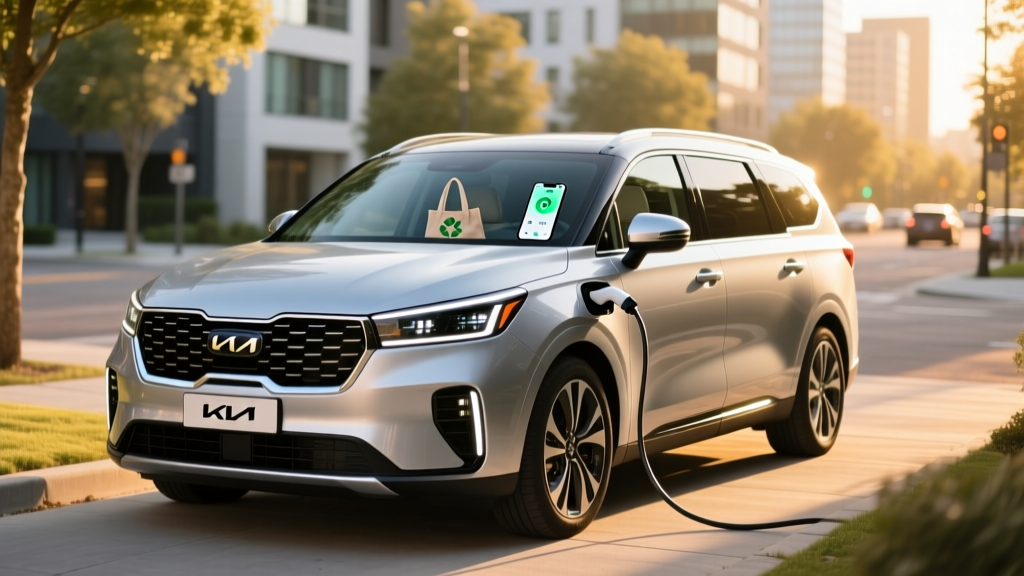
Minivans have long been the practical family hauler, but they've also been notorious fuel hogs. The 2026 Kia Carnival Hybrid changes that equation with a turbocharged hybrid powertrain that delivers V6-like power while sipping fuel like a compact sedan. If you've been searching for the 2026 Kia Carnival Hybrid MPG figures and wondering whether this electrified minivan lives up to its EPA sticker in the real world, this guide covers every number you need — from combined fuel economy to battery warranty, pricing, and how it stacks up against going full EV or sticking with gas.
2026 Kia Carnival Hybrid MPG: The Official EPA Numbers
The 2026 Kia Carnival Hybrid carries over the 1.6-liter turbocharged four-cylinder hybrid powertrain introduced with the Carnival's mid-cycle refresh. Kia pairs this engine with a 47.7 kW electric motor integrated into a 6-speed automatic transmission, producing a combined 245 horsepower and 271 lb-ft of torque. The result is a minivan that moves confidently while returning class-leading efficiency.
| Metric | Value |
|---|---|
| City MPG | 36 |
| Highway MPG | 31 |
| Combined MPG | 33 |
| Fuel Tank Capacity | 15.9 gallons |
| Total Driving Range (est.) | ~525 miles |
| Powertrain | 1.6L Turbo I4 + Electric Motor (HEV) |
| Combined Output | 245 hp / 271 lb-ft |
For context, the non-hybrid 2026 Carnival with its 3.5L V6 is rated at 19 city / 26 highway / 22 combined. The hybrid powertrain effectively boosts combined fuel economy by 50 percent — a massive gain for a vehicle that seats up to eight passengers and offers over 145 cubic feet of maximum cargo volume.
According to fueleconomy.gov, the Carnival Hybrid's 33 MPG combined places it at the top of the minivan segment, edging out the Toyota Sienna (which is hybrid-only and rated at 36 combined in FWD form but offers less cargo flexibility in some configurations) and significantly outperforming the Chrysler Pacifica Hybrid when operating in hybrid-only mode after its electric range is depleted.
Real-World MPG vs. the EPA Sticker: What Owners Actually See
EPA estimates are a starting point, not a guarantee. With the Carnival Hybrid, real-world results tend to align closely with — and sometimes exceed — the EPA city figure, thanks to how hybrid systems recapture energy during stop-and-go driving.
EPA Combined: 33 MPG
Real-World City/Suburban: 34–37 MPG (regen-heavy driving favors hybrids)
Real-World Highway (70-75 mph): 28–30 MPG (aerodynamic drag and sustained speeds reduce hybrid advantage)
Cold Weather (below 30°F): 27–30 MPG combined (engine runs more often for cabin heat)
The hybrid advantage is most pronounced in city and suburban driving. The electric motor handles low-speed acceleration — the most fuel-thirsty phase — while regenerative braking recaptures energy at every stop. On a 15-mile suburban commute with traffic lights and school zones, expect to see 35+ MPG regularly.
Highway driving tells a different story. At sustained 70-80 mph speeds, the gasoline engine does most of the work, and the minivan's boxy aerodynamics create drag that no hybrid system can fully offset. Plan for 28-30 MPG on long interstate trips. In sub-freezing temperatures, the engine runs more frequently to provide cabin heat (the Carnival Hybrid uses engine coolant for warmth, not a heat pump), which drops combined figures by roughly 3-5 MPG.
With the 15.9-gallon fuel tank, real-world total range typically falls between 440 and 520 miles depending on your driving mix — enough for most families to go 10-14 days between fill-ups.
HEV vs. PHEV: Why the Carnival Hybrid Is a Conventional Hybrid (Not Plug-In)
A common point of confusion: the 2026 Kia Carnival Hybrid is a conventional hybrid (HEV), not a plug-in hybrid (PHEV). This distinction matters for how you fuel it, what you pay, and whether you qualify for federal tax incentives.
| Feature | Conventional Hybrid (HEV) | Plug-In Hybrid (PHEV) |
|---|---|---|
| Plug-in charging? | No — refuels at gas station only | Yes — plug in for electric-only range |
| Electric-only range | None (motor assists engine) | 20–45 miles typically |
| Battery size | ~1.5–2.0 kWh | ~13–25 kWh |
| Federal tax credit | Not eligible under §30D | Up to $7,500 (varies by sourcing) |
| Driving experience | Seamless gas/electric blending | EV-like quiet on short trips, then hybrid |
| Example | 2026 Kia Carnival Hybrid | Chrysler Pacifica PHEV |
The Carnival Hybrid's relatively small battery pack (approximately 1.5 kWh) charges itself through regenerative braking and engine-driven generation. You never plug it in. You simply drive it like a normal minivan and visit the gas station less often. For families without access to home charging — apartment dwellers, street parkers, or those without a garage — this is a significant advantage over PHEVs, which lose much of their benefit if you can't plug in regularly.
If you're specifically looking for a plug-in minivan, the Chrysler Pacifica PHEV remains the only option in the segment, offering about 32 miles of electric-only range. However, the Pacifica PHEV commands a significant price premium and has less total cargo volume due to the larger battery pack intruding into the floor.
Powertrain Deep Dive: 1.6L Turbo Hybrid Specs and Performance
Kia's hybrid system in the 2026 Carnival uses a familiar and proven configuration. The 1.6-liter turbocharged gasoline direct-injection (GDI) four-cylinder produces 180 horsepower on its own, while the 47.7 kW (approximately 64 hp) electric motor fills in torque gaps and enables electric-only creeping at low speeds. Combined system output is 245 hp and 271 lb-ft of torque.
| Component | Specification |
|---|---|
| Engine | 1.6L Turbocharged GDI I4 |
| Engine Output | 180 hp / 195 lb-ft |
| Electric Motor | 47.7 kW permanent-magnet synchronous |
| Motor Output | 64 hp / 195 lb-ft |
| Combined System Output | 245 hp / 271 lb-ft |
| Transmission | 6-speed automatic (torque converter) |
| Drivetrain | Front-wheel drive (FWD only) |
| 0-60 mph (est.) | ~7.8 seconds |
| Towing Capacity | 3,500 lbs (when properly equipped) |
Unlike some competitors that use continuously variable transmissions (CVTs) — which can drone under hard acceleration — Kia's 6-speed automatic delivers familiar, stepped gear changes. This is a deliberate choice that gives the Carnival Hybrid a more traditional driving feel, even if it sacrifices a fraction of theoretical efficiency.
The 0-60 mph time of approximately 7.8 seconds is respectable for a 4,700-pound minivan. More importantly, the electric motor's instant torque means the Carnival Hybrid feels responsive from a stoplight and merges confidently onto highways. The 3,500-pound towing capacity matches the V6 model, so you're not sacrificing utility for efficiency.
One limitation: the Carnival Hybrid is front-wheel drive only. If you need all-wheel drive for snow-belt winters, you'll need to look at the Toyota Sienna (available with AWD in hybrid form) or the non-hybrid Carnival V6 with available AWD.
Pricing, Trims, and Tax Credit Eligibility for 2026
The 2026 Kia Carnival Hybrid is offered across multiple trims, with the hybrid powertrain available starting on the LXS trim and extending through the top-line SX Prestige. Pricing reflects a modest premium over the V6 model — typically $1,500 to $2,000 depending on trim — which most buyers will recoup through fuel savings within 2-4 years depending on mileage.
| Trim | Est. MSRP | Key Features |
|---|---|---|
| LXS Hybrid | ~$41,500 | 8-passenger seating, 8" touchscreen, Smart Key |
| EX Hybrid | ~$44,500 | Power sliding doors, leatherette, navigation |
| SX Hybrid | ~$48,000 | Power tailgate, Highway Driving Assist, 12.3" display |
| SX Prestige Hybrid | ~$52,500 | Nappa leather, dual sunroof, rear entertainment, VIP lounge seats |
Note: Pricing is estimated based on Kia's announcement and may vary. Confirm with your local dealer for exact figures. Destination charges (~$1,395) are additional.
The 2026 Kia Carnival Hybrid is a conventional HEV, not a plug-in hybrid or battery electric vehicle. Under current IRS §30D Clean Vehicle Credit rules, only plug-in electric vehicles and fuel cell vehicles qualify for the federal tax credit of up to $7,500. The Carnival Hybrid does not qualify.
However, some states offer rebates or tax incentives for conventional hybrids. Check your state's energy office or department of revenue for current programs. Additionally, the IRS allows a used clean vehicle credit (up to $4,000) for qualifying pre-owned plug-in vehicles — not applicable here for new HEV purchases.
Hybrid Battery Warranty, Lifespan, and Replacement Cost
Battery longevity is the single most common concern among first-time hybrid buyers. The Carnival Hybrid's lithium-ion polymer battery pack is significantly smaller than an EV's (roughly 1.5 kWh vs. 60-100+ kWh in a full EV), meaning it undergoes shallower charge-discharge cycles and experiences less thermal stress. This translates to excellent long-term durability.
Hybrid Battery Warranty: 10 years / 100,000 miles (whichever comes first)
Powertrain Warranty: 10 years / 100,000 miles
Basic Warranty: 5 years / 60,000 miles
Capacity Retention Threshold: Kia covers the hybrid battery if it falls below normal performance parameters during the warranty period.
Kia's 10-year/100,000-mile hybrid battery warranty is among the best in the industry and matches the coverage offered on the Hyundai Tucson Hybrid and Kia Sorento Hybrid, which share related powertrain architecture. In states that follow California Air Resources Board (CARB) emissions standards — including California, New York, Massachusetts, and several others — hybrid battery warranty coverage may extend to 10 years / 150,000 miles under emissions component rules.
Based on data from Kia's earlier hybrid models (Niro, Sorento Hybrid) and the broader Hyundai Motor Group hybrid fleet, battery failures within the warranty period are rare. The battery management system keeps the pack in a narrow state-of-charge window (roughly 40-80%) to minimize degradation. Most hybrid batteries outlast the vehicle itself.
If you do need a replacement outside of warranty — typically a concern for second or third owners at 150,000+ miles — expect to pay between $2,000 and $3,500 for the battery pack and installation at a Kia dealership. This is substantially less than an EV battery replacement, which can run $10,000-$20,000+, because the hybrid pack is small and relatively simple to access.
Carnival Hybrid vs. Sienna vs. Pacifica: Which Minivan Fits Your Family?
The minivan segment now offers three distinct electrification paths. Here's how the 2026 Carnival Hybrid stacks up against its key rivals:
| Spec | Kia Carnival Hybrid | Toyota Sienna Hybrid | Chrysler Pacifica PHEV |
|---|---|---|---|
| Powertrain Type | HEV (no plug) | HEV (no plug) | PHEV (plug-in) |
| EPA Combined MPG | 33 | 36 (FWD) | 30 (hybrid mode) / 82 MPGe (EV mode) |
| Electric-Only Range | None | None | ~32 miles |
| Combined HP | 245 | 245 | 260 |
| AWD Available? | No | Yes | No |
| Max Cargo (cu ft) | 145.1 | 101.0 | 140.5 |
| Starting MSRP (est.) | ~$41,500 | ~$39,500 | ~$51,500 |
| Federal Tax Credit | None | None | Up to $7,500* |
| Towing Capacity | 3,500 lbs | 3,500 lbs | 3,600 lbs |
*Pacifica PHEV tax credit eligibility depends on battery sourcing, buyer income, and MSRP caps under current IRS §30D rules. Verify before purchase.
The Toyota Sienna wins on pure fuel economy (36 combined in FWD) and offers AWD, but it sacrifices significant cargo volume — Kia's Carnival offers over 44 cubic feet more maximum cargo space thanks to its stow-and-fold seating design and lower load floor.
The Chrysler Pacifica PHEV is the only plug-in minivan and makes sense for families with short commutes (under 30 miles) and reliable home charging. You'll drive many daily trips on electricity alone, paying nothing for gas. But at over $10,000 more than the Carnival Hybrid LXS, the payback period is long, and once the 32-mile EV range is depleted, you're driving a heavier minivan with worse hybrid-mode MPG (30 combined) than either the Carnival or Sienna.
Pros — 2026 Carnival Hybrid
- 33 MPG combined — 50% improvement over V6
- Class-leading 145.1 cu ft cargo volume
- No plug-in required — works for any living situation
- 245 hp provides confident highway merging
- 10-year/100,000-mile hybrid battery warranty
- 3,500-lb towing capacity (matches V6)
- Proven 6-speed automatic (no CVT drone)
Cons — 2026 Carnival Hybrid
- FWD only — no AWD option
- No federal tax credit (HEV, not PHEV/BEV)
- Highway MPG drops to ~28-30 real-world
- ~$1,500-$2,000 premium over V6 trims
- Hybrid battery adds ~150 lbs vs. V6 model
- No electric-only driving mode
- Slightly less combined MPG than Sienna FWD
Who Should Choose the Carnival Hybrid vs. a Full EV or Gas Minivan?
The decision between a hybrid minivan, a gas-only minivan, and a full EV comes down to your driving patterns, charging access, and budget.
Decision Framework
Choose the Carnival Hybrid if: You want maximum cargo space, excellent city/suburban fuel economy, no charging hassle, and a lower starting price than PHEV competitors. Ideal for families who drive 12,000-18,000 miles/year in mixed conditions and don't have reliable home charging access.
Choose the Carnival V6 (gas) if: You drive under 8,000 miles/year (fuel savings won't offset the hybrid premium quickly), you need AWD for harsh winters, or you're on the tightest possible budget.
Choose the Toyota Sienna Hybrid if: Maximum MPG is your top priority, you want AWD availability, and you can accept ~44 fewer cubic feet of cargo space.
Choose the Chrysler Pacifica PHEV if: Your daily round-trip commute is under 30 miles, you have reliable Level 2 home charging, you qualify for the federal tax credit, and you want to minimize gasoline use on daily school runs and errands.
Consider a full EV (e.g., Kia EV9) if: You have home Level 2 charging, your daily driving is under 250 miles, you want zero tailpipe emissions, and you can accommodate a higher purchase price (offset by tax credits and fuel savings). Note: no full-electric minivan is currently on the US market as of 2026, so the 3-row Kia EV9 SUV is the closest electrified family hauler alternative.
Ownership Costs: 5-Year Fuel Savings Breakdown
The hybrid premium pays for itself through fuel savings. Here's a realistic 5-year comparison assuming 15,000 miles/year, $3.50/gallon regular unleaded, and the EPA combined MPG for each vehicle:
| Metric | Carnival Hybrid (33 MPG) | Carnival V6 (22 MPG) | Sienna Hybrid (36 MPG) |
|---|---|---|---|
| Annual Fuel Use | 455 gallons | 682 gallons | 417 gallons |
| Annual Fuel Cost | $1,592 | $2,387 | $1,459 |
| 5-Year Fuel Cost | $7,960 | $11,935 | $7,295 |
| 5-Year Savings vs. V6 | $3,975 | Baseline | $4,640 |
At 15,000 miles/year, the Carnival Hybrid saves approximately $3,975 in fuel costs over five years compared to the V6 model. Since the hybrid premium is roughly $1,500-$2,000, most buyers break even within 2-3 years and enjoy net savings thereafter. Higher-mileage drivers (20,000+ miles/year) will recoup the premium even faster.
Insurance costs for the Carnival Hybrid are typically comparable to the V6 model — insurers generally don't surcharge conventional hybrids the way they sometimes do for full EVs. Expect annual premiums in the $1,400-$2,000 range depending on your state, driving record, and coverage level.
Frequently Asked Questions
How many MPG does the 2026 Kia Carnival Hybrid get?
The EPA rates the 2026 Kia Carnival Hybrid at 36 city / 31 highway / 33 combined MPG. In real-world driving, city and suburban figures often reach 34-37 MPG, while sustained highway driving at 70+ mph typically returns 28-30 MPG.
Does the 2026 Carnival Hybrid need to be plugged in?
No. The Carnival Hybrid is a conventional hybrid (HEV). It charges its own small battery through regenerative braking and the gasoline engine. You never plug it in — you simply fill up at the gas station as you would with any vehicle, just less frequently.
Is the Kia Carnival Hybrid reliable?
Kia's 1.6L turbo hybrid powertrain has been deployed across multiple models (Sorento Hybrid, Sportage Hybrid) since 2022, and reliability data from those vehicles has been positive. The hybrid system adds relatively few wear components — there's no traditional starter motor, the regenerative braking reduces brake pad wear, and the 6-speed automatic is a proven design. Kia backs the hybrid battery with a 10-year/100,000-mile warranty.
What does it cost to replace the Carnival Hybrid battery?
Outside of warranty, a hybrid battery replacement typically costs $2,000-$3,500 at a Kia dealership. However, hybrid battery failures are rare, and most packs last well beyond 150,000 miles. The 10-year/100,000-mile warranty covers premature degradation.
Does the 2026 Kia Carnival Hybrid qualify for a federal tax credit?
No. Under current IRS §30D rules, only plug-in electric vehicles (PHEVs and BEVs) and fuel cell vehicles qualify for the federal clean vehicle tax credit. Conventional hybrids like the Carnival Hybrid are not eligible. Some states may offer hybrid-specific incentives — check your state's energy office.
How does the Carnival Hybrid compare to the Toyota Sienna?
The Sienna Hybrid achieves slightly better fuel economy (36 combined FWD vs. 33 combined) and offers available AWD. However, the Carnival Hybrid provides significantly more cargo volume (145.1 vs. 101.0 cu ft), a more premium interior on upper trims, and a 6-speed automatic instead of a CVT. Choose Sienna for maximum MPG and AWD; choose Carnival for cargo space and refinement.
Is the Carnival Hybrid available with all-wheel drive?
No. The 2026 Kia Carnival Hybrid is front-wheel drive only across all trims. If AWD is a priority, consider the Toyota Sienna Hybrid (AWD available) or the non-hybrid Carnival V6 with available AWD.