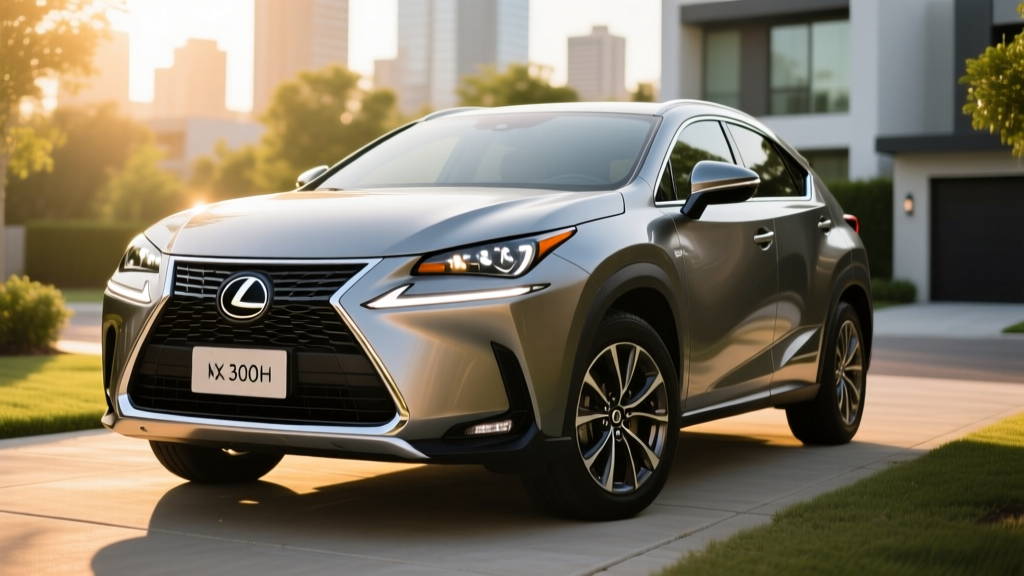
The 2015 Lexus NX 300h was the brand's first compact luxury hybrid crossover, pairing a 2.5-liter Atkinson-cycle four-cylinder with Lexus's proven hybrid synergy drive. Now well into its second decade on the road, the NX 300h remains a popular target on the used market for buyers who want luxury-crossover comfort with hybrid efficiency — without the complexity of plugging in. This guide breaks down everything a 2026 used-car shopper needs to know: real-world MPG, battery longevity, replacement costs, and whether this first-generation NX hybrid still holds up against modern alternatives.
| Spec | Value |
|---|---|
| Powertrain | 2.5L 4-cyl Atkinson + 2 electric motors (AWD) / 1 motor (FWD) |
| Combined Horsepower | 197 HP (net system) |
| Transmission | eCVT (planetary gearset) |
| Drivetrain | FWD or E-Four AWD |
| EPA MPG (AWD) | 33 city / 30 highway / 32 combined |
| EPA MPG (FWD) | 35 city / 31 highway / 33 combined |
| Hybrid Battery | 1.6 kWh NiMH (sealed, self-charging) |
| 0–60 mph | ~9.1 seconds (AWD) |
| Cargo Volume | 17.7 cu ft (rear seats up) / 54.6 cu ft (folded) |
| Original MSRP (2015) | $39,705 (FWD) – $41,105 (AWD) base |
| Typical Used Price (2026) | $14,000 – $20,000 depending on mileage/condition |
HEV vs. PHEV: What the 2015 NX 300h Actually Is
The 2015 Lexus NX 300h is a conventional hybrid electric vehicle (HEV) — not a plug-in hybrid. This distinction matters because it shapes everything about ownership.
| Feature | HEV (NX 300h) | PHEV (e.g., Toyota RAV4 Prime) |
|---|---|---|
| Plugs in? | No — charges via regen & engine | Yes — Level 1 or Level 2 AC |
| Electric-only range | ~1 mile at low speed | 35–42 miles typical |
| Battery size | 1.6 kWh NiMH | 14.9–18.1 kWh Li-ion |
| Federal tax credit | None (expired for this model year) | Up to $7,500 (§30D, if eligible) |
| Home charging needed? | No | Yes, for EV-range benefit |
The NX 300h's 1.6 kWh nickel-metal hydride (NiMH) battery is small by modern standards, but it's never intended to drive the car on electricity alone for meaningful distances. Instead, it buffers energy captured from regenerative braking and the gasoline engine, enabling electric assist during acceleration, low-speed EV-mode crawling, and engine stop-start at idle. You never plug it in — the car manages the battery entirely on its own.
Lexus did not offer a plug-in version of the first-generation NX. If you want a Lexus PHEV from a similar era, you'd need to look at the RX 450h+ (introduced later) or step outside Lexus to the mechanically related Toyota RAV4 Prime.
Fuel Economy: EPA Ratings vs. Real-World MPG
According to fueleconomy.gov, the 2015 NX 300h earns the following EPA ratings:
| Drivetrain | City | Highway | Combined |
|---|---|---|---|
| FWD | 35 MPG | 31 MPG | 33 MPG |
| AWD (E-Four) | 33 MPG | 30 MPG | 32 MPG |
Real-World MPG: What Owners Actually See
Toyota/Lexus hybrid systems consistently deliver real-world fuel economy that meets or exceeds EPA estimates in city driving, where regenerative braking and electric assist do the most work. The NX 300h is no exception:
- City driving: 33–37 MPG is common, with some owners reporting 38+ MPG in warm weather with moderate traffic. The hybrid system thrives in stop-and-go conditions.
- Highway driving: Expect 28–31 MPG at 70–75 mph. The boxy crossover shape and AWD drivetrain parasitic losses reduce efficiency at sustained speed. The gasoline engine does most of the work here.
- Cold weather penalty: NiMH batteries lose efficiency below ~40°F. Winter city MPG can drop to 28–30 MPG as the engine runs more frequently to heat the cabin and maintain battery temperature.
- Combined real-world: Most owners report 30–34 MPG over mixed driving, closely tracking the EPA combined figure.
At 32 MPG combined (AWD), the NX 300h saves roughly 80–100 gallons per year compared to a non-hybrid 2015 NX 200t (24 MPG combined), translating to approximately $250–$350 in annual fuel savings at $3.25/gallon.
Powertrain and Driving Impressions
The NX 300h pairs a 2.5-liter Atkinson-cycle four-cylinder engine (154 HP on its own) with two electric motor-generators in AWD models (one front, one rear) for a combined system output of 197 HP. The front motor handles primary drive and regeneration; the rear motor provides on-demand AWD traction by powering the rear axle when slippage is detected — there's no mechanical driveshaft connecting the axles.
The eCVT (electronically controlled continuously variable transmission) is a planetary gearset, not a belt-driven CVT. This means there are no rubber bands or slipping pulleys — it's a robust, gear-based power-split device that Toyota has refined over decades. Acceleration to 60 mph takes approximately 9.1 seconds in AWD trim, which is leisurely by modern luxury-crossover standards but adequate for merging and passing.
Driving character is smooth and quiet, with the electric motor filling in torque at low RPM before the four-cylinder wakes up. The transition between electric and gasoline power is nearly imperceptible — a hallmark of Lexus hybrid tuning. Road noise is well-suppressed, and the ride quality favors comfort over sportiness, consistent with the NX's luxury positioning.
Hybrid Battery Longevity, Warranty, and Replacement Cost
Battery lifespan is the single biggest concern for used-hybrid buyers, and the 2015 NX 300h benefits from one of the most proven hybrid battery systems in the industry.
Original Battery Warranty
10 years / 150,000 miles (in CARB states) or 8 years / 100,000 miles (federal) on the hybrid battery and related components. For a 2015 model, original warranty coverage has expired in most cases by 2026 unless the vehicle has exceptionally low mileage and is registered in a CARB state.
How Long Do NX 300h Batteries Actually Last?
The 1.6 kWh NiMH pack in the NX 300h shares its core architecture with the Toyota Camry Hybrid, RAV4 Hybrid, and Highlander Hybrid — vehicles with extensive long-term reliability data. Key points:
- Typical lifespan: 150,000–200,000+ miles before significant capacity loss. Many Toyota/Lexus NiMH packs exceed 200,000 miles with gradual degradation rather than sudden failure.
- Degradation behavior: NiMH batteries degrade slowly and predictably. Unlike lithium-ion packs, they rarely experience catastrophic cell failure — instead, capacity diminishes gradually, reducing electric-assist contribution and slightly lowering MPG over time.
- Common failure age: 10–15 years is when some owners begin seeing hybrid system warnings, though many packs last longer. A 2015 model in 2026 is 11 years old, putting it in the window where battery health should be verified.
Battery Replacement Cost
- New OEM battery (Lexus dealer): $3,000–$4,500 including labor
- Remanufactured battery: $1,800–$2,800 from hybrid specialists like Green Bean Battery or Dorman
- Individual cell/module replacement: $500–$1,200 if only one or two modules have failed — a viable option since the NiMH pack consists of discrete modules that can be tested and replaced individually
Before purchasing a used 2015 NX 300h, request a hybrid battery health check from a Lexus dealer or hybrid specialist. A scan tool can read individual module voltages and internal resistance — a healthy pack shows tightly clustered module voltages (within 0.2V of each other). Wide variance signals aging cells.
Reliability and Common Issues
The 2015 NX 300h scores well in long-term reliability, benefiting from the mature Toyota Hybrid Synergy Drive platform. However, a few model-year-specific items deserve attention:
- Hybrid system: Very reliable. The eCVT planetary gearset has no wear items like clutch packs or belts. Inverter and motor-generators rarely fail before 200,000 miles.
- Brake actuator recall: Some 2015 NX models were subject to a recall for the brake booster assembly. Verify recall status via NHTSA's VIN lookup before purchasing.
- 12V auxiliary battery: Like all hybrids, the NX 300h has a conventional 12V battery that can die if the car sits unused. This is separate from the hybrid traction battery and is an inexpensive replacement (~$200).
- Infotainment: The 2015 NX uses Lexus's Remote Touch Interface (RTI) joystick controller, which draws near-universal criticism for being fiddly and distracting. This is a known ergonomic pain point, not a reliability issue.
- Water pump: The electric water pump on the 2.5L can fail around 100,000–130,000 miles. Replacement runs $400–$700.
Overall, the NX 300h is one of the lower-risk used luxury crossovers from this era. Lexus's hybrid system has fewer moving parts than a conventional automatic transmission, and the Atkinson-cycle engine is lightly stressed, contributing to long service life.
Pricing, Tax Credits, and Ownership Economics
As of 2026, a used 2015 Lexus NX 300h typically lists between $14,000 and $20,000 depending on mileage (70,000–130,000 miles is common), condition, and drivetrain. AWD models and lower-mileage examples command the premium end.
Tax Credit Eligibility
The 2015 NX 300h does not qualify for any federal tax credit at this point. The original hybrid vehicle tax credit under IRC §30D was structured differently in 2015 and had phase-out provisions tied to manufacturer sales volume. For used vehicles purchased in 2026, the Used Clean Vehicle Credit (§25E) offers up to $4,000 — but only for plug-in electric vehicles and fuel-cell vehicles, not conventional hybrids. The NX 300h, as an HEV, is ineligible.
Some states offer modest incentives for used hybrid purchases, but these vary widely and change frequently. Check your state's energy or environmental agency for current programs.
Total Cost of Ownership Snapshot
| Category | Estimated Cost |
|---|---|
| Purchase price (avg) | $17,000 |
| Fuel (32 MPG, $3.25/gal, 60k mi) | $6,094 |
| Insurance (avg) | $7,500–$9,000 |
| Maintenance (hybrid-specific + standard) | $2,500–$3,500 |
| Estimated repairs (post-warranty) | $1,500–$3,000 |
| Depreciation (5-yr) | $4,000–$6,000 |
| 5-Year Total (approx.) | $38,600 – $44,600 |
Maintenance costs are moderate for a luxury badge. The hybrid system eliminates the conventional starter motor, alternator, and traditional automatic transmission — all common failure points in gas-only vehicles. Brake pad life is extended significantly by regenerative braking, often lasting 80,000–100,000+ miles.
2015 NX 300h vs. Modern Alternatives
Pros
- Proven, reliable hybrid system with 200k+ mile potential
- No plug-in requirement — ideal for apartment/condo dwellers
- 32–33 MPG combined real-world is still competitive in 2026
- Quiet, comfortable ride quality; strong build materials
- Lower purchase price than any new hybrid crossover
- AWD via rear electric motor (no mechanical complexity)
Cons
- 9.1-second 0–60 is slow; highway passing requires planning
- Dated infotainment with frustrating RTI joystick
- Hybrid battery is 11+ years old — replacement risk is real
- No federal or state EV/PHEV tax credits available
- Small cargo area (17.7 cu ft) vs. modern competitors
- No Apple CarPlay / Android Auto (2015 pre-dates integration)
If you're weighing the 2015 NX 300h against newer options, consider:
- 2022+ Lexus NX 350h (current generation): 37 MPG combined, modern infotainment, Apple CarPlay, updated safety tech — but starts at $42,000+ even used.
- Toyota RAV4 Hybrid (2019+): Mechanally simpler, more cargo room, 40 MPG combined, and significantly cheaper to maintain — but not a luxury badge.
- Full EV (e.g., used Tesla Model Y, Hyundai Ioniq 5): Zero tailpipe emissions, lower per-mile energy cost, but requires home charging access and carries range/charging-infrastructure considerations.
Who Should Buy the 2015 Lexus NX 300h?
Choose the 2015 NX 300h if:
- You want a luxury-badge crossover under $20,000 with strong fuel economy
- You can't plug in at home (apartment, street parking, no garage outlet)
- You drive mostly city/suburban miles where the hybrid system shines
- You value proven reliability over cutting-edge tech
- You want AWD without the fuel-economy penalty of a conventional AWD system
Look elsewhere if:
- You need modern infotainment (CarPlay, Android Auto, large touchscreen)
- You want electric-only driving range (consider a PHEV)
- Quick acceleration is a priority
- You want the lowest possible maintenance risk (a newer RAV4 Hybrid has more warranty runway)
- You want to maximize tax incentives (only PHEVs and BEVs qualify for federal credits)
Frequently Asked Questions
How many MPG does the 2015 Lexus NX 300h get?
The EPA rates the AWD NX 300h at 33 city / 30 highway / 32 combined MPG. The FWD version earns 35 city / 31 highway / 33 combined. Real-world owners typically report 30–34 MPG combined, with city driving sometimes exceeding the EPA estimate thanks to regenerative braking.
Does the 2015 NX 300h need to be plugged in?
No. The NX 300h is a conventional hybrid (HEV), not a plug-in hybrid (PHEV). Its 1.6 kWh NiMH battery charges entirely through regenerative braking and the gasoline engine. There is no charge port and no electric-only driving range beyond ~1 mile at very low speeds.
How long will the hybrid battery last in a 2015 NX 300h?
Toyota/Lexus NiMH hybrid batteries typically last 150,000–200,000+ miles. At 11 years old in 2026, many examples are in the window where degradation becomes noticeable but not necessarily failure-imminent. A pre-purchase hybrid battery health scan is strongly recommended.
How much does it cost to replace the NX 300h hybrid battery?
A new OEM battery from a Lexus dealer costs $3,000–$4,500 installed. Remanufactured batteries run $1,800–$2,800. Individual module replacement (if only one or two cells are weak) can cost $500–$1,200 at a hybrid specialist.
Is the 2015 NX 300h reliable?
Yes. The hybrid powertrain is one of the most proven in the industry, with a planetary eCVT that has no wear-prone clutch packs or belts. The 2.5L Atkinson-cycle engine is lightly stressed. Main concerns at this age are the hybrid battery's remaining life, the electric water pump, and verifying that any open recalls (brake actuator) have been addressed.
Does the 2015 Lexus NX 300h qualify for any tax credit in 2026?
No. The federal Used Clean Vehicle Credit (§25E) applies only to plug-in electric vehicles and fuel-cell vehicles, not conventional hybrids. The original new-vehicle hybrid credits available in 2015 have long since expired. Some states may offer small incentives for used hybrid purchases — check your state's energy office for current programs.
Hybrid vs. PHEV vs. EV — which is right for me?
Choose a conventional hybrid (HEV) like the NX 300h if you can't charge at home and want maximum simplicity. Choose a PHEV if you have home charging and want 30–40 miles of electric-only commuting with a gas engine for longer trips. Choose a full EV (BEV) if you have reliable home charging, want the lowest per-mile energy cost, and your daily driving falls within the vehicle's range.