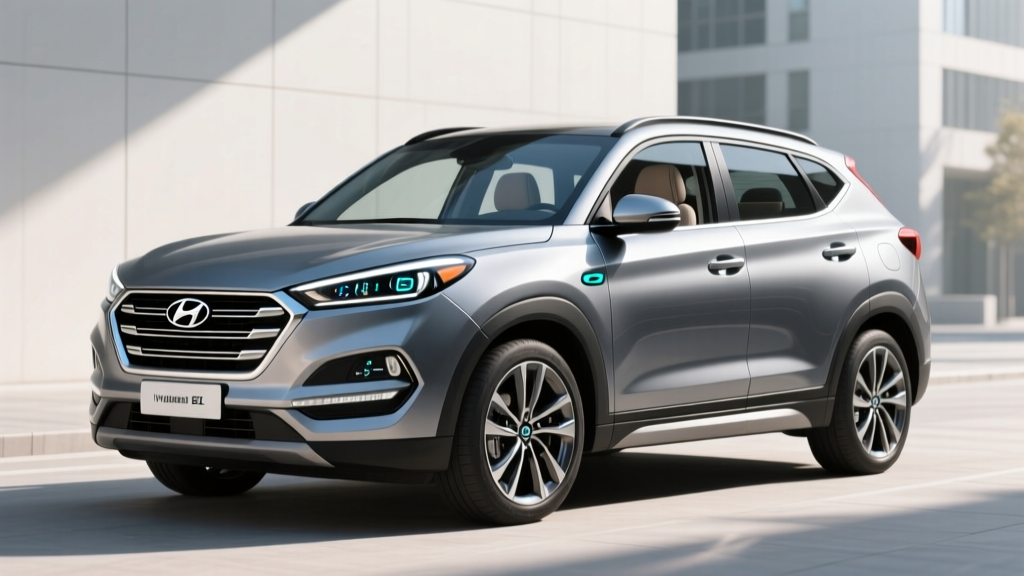
The 2026 Hyundai Tucson Hybrid SEL Convenience occupies a narrow but compelling slice of the compact SUV market: it pairs genuine hybrid fuel economy with mid-tier premium features — without requiring you to plug in or stretch into Limited-trim pricing. For buyers weighing a conventional hybrid against a plug-in hybrid (PHEV) or a full battery-electric vehicle (BEV), this trim represents a practical, no-compromise entry point into electrified driving.
This guide breaks down the exact specifications, real-world MPG behavior, battery longevity, tax-credit eligibility, and ownership economics of the Tucson Hybrid SEL Convenience so you can decide whether it's the right electrified SUV for your daily routine.
2026 Hyundai Tucson Hybrid SEL Convenience: Core Specifications
| Specification | Value |
|---|---|
| Powertrain Type | Conventional Hybrid (HEV) — no plug required |
| Engine | 1.6L turbocharged 4-cylinder + electric motor |
| Combined Horsepower | 231 HP |
| Combined Torque | 271 lb-ft |
| Transmission | 6-speed automatic |
| Drivetrain | HTRAC All-Wheel Drive (standard) |
| EPA MPG (City / Hwy / Combined) | 38 / 38 / 38 MPG |
| Fuel Tank Capacity | 14.0 gallons |
| Total Driving Range | ~532 miles (EPA est.) |
| 0–60 MPH | ~7.1 seconds |
| Cargo Volume (behind 2nd row) | 38.7 cu ft |
| Towing Capacity | 2,000 lbs |
| Base MSRP (SEL Convenience) | ~$36,850 |
| Battery Warranty | 10 years / 100,000 miles |
Hybrid (HEV) vs. Plug-In Hybrid (PHEV): What Tucson Buyers Need to Know
Hyundai sells the Tucson in three powertrain flavors for 2026: a conventional gas model, a conventional hybrid (HEV), and a plug-in hybrid (PHEV). The SEL Convenience trim is available exclusively on the HEV. Understanding the distinction is critical before you visit the dealer.
| Factor | Tucson Hybrid (HEV) | Tucson Plug-In Hybrid (PHEV) | Full EV (e.g., Ioniq 5) |
|---|---|---|---|
| Plug in to charge? | No — self-charging via regen + engine | Yes — Level 1 or Level 2 | Yes — Level 2 or DC fast |
| Electric-only range | Brief low-speed EV mode only | ~33 miles (EPA est.) | 290+ miles (EPA est.) |
| EPA Combined MPG / MPGe | 38 MPG | 80 MPGe (elec.) / 35 MPG (gas) | 114 MPGe |
| Home charging needed? | No | Recommended for daily benefit | Essential |
| Federal tax credit (§30D) | Not eligible | Up to $7,500 (if eligible) | Up to $7,500 (if eligible) |
| Starting MSRP range | ~$34,000 | ~$40,000 | ~$42,000+ |
The bottom line: If you cannot charge at home or at work, the HEV is your best electrified option. If you have Level 2 charging access and a commute under 33 miles, the PHEV lets you drive most weekdays on electricity alone — but at a higher purchase price. A full BEV makes sense only if you have reliable charging and want zero tailpipe emissions.
Fuel Economy: EPA Ratings vs. Real-World MPG
| Driving Cycle | EPA Rating |
|---|---|
| City | 38 MPG |
| Highway | 38 MPG |
| Combined | 38 MPG |
The Tucson Hybrid's 38 MPG combined is competitive within the compact hybrid SUV segment — matching or exceeding rivals like the Toyota RAV4 Hybrid (39 MPG combined) and Honda CR-V Hybrid (37 MPG combined AWD), per fueleconomy.gov.
Real-world expectations: Hyundai's hybrid system uses a turbocharged engine paired with an electric motor that provides strong low-speed torque assist. In practice, this means:
- City driving: Expect 36–40 MPG. Hybrids shine in stop-and-go traffic where regenerative braking recaptures energy and the electric motor handles low-speed propulsion. Many owners report matching or slightly exceeding the 38 MPG city sticker in moderate climates.
- Highway driving (70+ mph): Expect 34–37 MPG. At sustained high speeds, the turbo engine carries more of the load, and aerodynamic drag reduces efficiency. This is common to all hybrids.
- Cold weather (below 30°F): Expect a 5–10% reduction, dropping combined to roughly 34–36 MPG. The engine runs more frequently to provide cabin heat and maintain battery temperature.
- Towing or heavy cargo: Towing near the 2,000-lb limit will reduce MPG into the low-to-mid 20s.
According to the EPA, the Tucson Hybrid's annual fuel cost is approximately $1,650 based on 15,000 miles driven per year at current national average gas prices — a meaningful savings over the non-hybrid Tucson AWD, which achieves around 26 MPG combined.
Powertrain and Driving Performance
The 2026 Tucson Hybrid pairs a 1.6-liter turbocharged inline-4 engine with a 47.7 kW electric motor integrated into the 6-speed automatic transmission housing. Combined output is 231 horsepower and 271 lb-ft of torque, routed through Hyundai's HTRAC all-wheel-drive system.
The electric motor fills in the torque gap that small turbo engines typically exhibit at low RPMs, giving the Tucson Hybrid surprisingly brisk off-the-line acceleration. The 0–60 MPH time of approximately 7.1 seconds places it ahead of the RAV4 Hybrid (~7.4s) and in line with the CR-V Hybrid. The AWD system uses a rear-mounted electric motor for the rear axle — there is no mechanical driveshaft — which improves packaging and allows for precise torque vectoring.
On the road, the transition between electric-only and engine-assisted driving is well-calibrated. At low speeds (parking lots, neighborhood driving), the Tucson Hybrid can operate in EV mode for short distances, though this is not a substitute for a PHEV's sustained electric range. Hyundai's regenerative braking system offers adjustable levels via steering-wheel paddles, though it does not achieve true one-pedal driving as a BEV would.
SEL Convenience Trim: What You Get for the Price
The SEL Convenience sits above the base Blue and SEL trims in the Tucson Hybrid lineup. For the 2026 model year, the SEL Convenience package adds several premium features that justify the step up for most buyers:
- Panoramic sunroof with power sunshade
- Heated and ventilated front seats
- Heated steering wheel
- Leatherette (H-Tex) seating surfaces
- Power liftgate with hands-free operation
- Dual 12.3-inch displays (digital cluster + infotainment)
- Wireless Apple CarPlay and Android Auto
- Hyundai Digital Key 2 (phone-as-key)
- Highway Driving Assist (adaptive cruise + lane centering — SAE Level 2)
At a starting MSRP of approximately $36,850 (including destination), the SEL Convenience represents a $2,000–$3,000 premium over the standard SEL trim. The added comfort and technology features are commonly optioned individually at higher cost on competitors, making this one of the better value propositions in the segment.
Federal and State Tax Credits: Does the Tucson Hybrid Qualify?
The 2026 Hyundai Tucson Hybrid (HEV) does not qualify for the federal §30D Clean Vehicle tax credit. Under current IRS rules, only plug-in hybrid electric vehicles (PHEVs) and battery electric vehicles (BEVs) with sufficient battery capacity (≥7 kWh) are eligible. Conventional hybrids like the Tucson HEV use a small battery (approximately 1.5 kWh) that does not meet this threshold.
Tax Credit Note — Tucson PHEV: If you upgrade to the Tucson Plug-In Hybrid, you may qualify for up to $7,500 under IRS §30D, subject to:
- Buyer income caps ($150K single / $300K joint AGI)
- MSRP cap ($80,000 for SUVs — Tucson PHEV qualifies)
- Battery component and critical mineral sourcing requirements (phased annually)
- Point-of-sale transfer option available at participating dealers
Eligibility rules change annually. Consult a tax professional or the IRS guidance linked above for your specific situation.
State-level incentives: Some states offer rebates or HOV-lane access for conventional hybrids, though these are less common than PHEV/BEV incentives. Check your state's energy or environmental agency website for current programs. States like Colorado, for example, have offered hybrid tax credits in prior years, but availability and amounts vary by jurisdiction and model year.
Battery Warranty, Longevity, and Replacement Cost
Hybrid battery longevity remains a top concern for buyers switching from a conventional gas vehicle. Here are the facts for the 2026 Tucson Hybrid:
| Metric | Detail |
|---|---|
| Battery Chemistry | Lithium-ion polymer |
| Battery Capacity | ~1.5 kWh (HEV) / ~13.8 kWh (PHEV) |
| Hybrid Battery Warranty | 10 years / 100,000 miles |
| Warranty Capacity Threshold | Below ~70% state of health (SoH) |
| Hybrid System Warranty | 10 years / 100,000 miles (motor, inverter, controller) |
| Expected Battery Lifespan | 150,000–200,000+ miles with normal use |
| Out-of-Warranty Replacement Cost | $2,500–$4,000 (estimated, parts + labor) |
Hyundai's 10-year/100,000-mile hybrid battery warranty is among the best in the industry, matching Toyota and exceeding Honda's 8-year/100,000-mile coverage. The warranty covers battery capacity loss below a defined state-of-health threshold — typically around 70% of original capacity.
Real-world degradation context: Modern hybrid batteries are managed conservatively. The Tucson Hybrid's battery management system (BMS) maintains a narrow state-of-charge window — typically between 40% and 80% — which dramatically reduces stress on the cells compared to a BEV that regularly charges to 100%. This is why hybrid batteries routinely last 150,000+ miles without significant degradation. Toyota Prius batteries from the early 2000s have demonstrated 200,000+ mile lifespans, and Hyundai's lithium-ion polymer cells are expected to perform similarly or better.
The out-of-pocket replacement cost of $2,500–$4,000 is worth noting, though it rarely materializes within the vehicle's typical ownership cycle. Third-party refurbishment services may offer lower-cost replacements in the future as the hybrid fleet ages.
Who Should Buy the Tucson Hybrid SEL Convenience?
Choose the Tucson Hybrid (HEV) if:
- You cannot install a Level 2 charger at home and lack reliable workplace charging
- You want 35+ MPG without changing your fueling habits
- Your daily commute is longer than 33 miles (making PHEV electric range insufficient)
- You want AWD capability for snow or rain with minimal efficiency penalty
- You value a feature-rich mid-trim without Limited-tier pricing
Consider the Tucson PHEV instead if:
- You have Level 2 home charging and a commute under 33 miles
- You want to drive on electricity most weekdays and use gas only for road trips
- You qualify for the §30D federal tax credit (up to $7,500), which narrows the price gap
Consider a full BEV (e.g., Hyundai Ioniq 5) if:
- You have reliable Level 2 home charging and access to DC fast charging for road trips
- You want zero tailpipe emissions and minimal maintenance (no oil changes, no engine)
- Your household has a second vehicle for long road trips, or you're comfortable planning DC fast-charge stops
Pros and Cons at a Glance
Pros
- 38 MPG combined is excellent for an AWD compact SUV
- 231 HP provides confident highway merging and passing
- SEL Convenience trim packs premium features at a reasonable price
- 10-year/100,000-mile hybrid battery warranty provides long-term peace of mind
- No plug-in charging required — drives exactly like a gas car
- Standard HTRAC AWD with no fuel-economy penalty vs. FWD
- Hyundai's 10-year/100,000-mile powertrain warranty covers the full hybrid system
Cons
- No federal tax credit eligibility (HEV does not qualify under §30D)
- Highway MPG drops to mid-30s at sustained 75+ mph speeds
- Cargo space (38.7 cu ft) is slightly less than the non-hybrid Tucson due to battery placement
- Towing limited to 2,000 lbs (less than some competitors)
- No DC fast charging capability (irrelevant for HEV, but worth noting vs. PHEV)
- Cold-weather MPG reduction of 5–10% is noticeable in northern climates
Frequently Asked Questions
How many MPG does the 2026 Hyundai Tucson Hybrid get?
The EPA rates the 2026 Tucson Hybrid at 38 MPG city, 38 MPG highway, and 38 MPG combined. In real-world driving, expect 36–40 MPG in city conditions and 34–37 MPG on the highway at 70+ mph. Cold weather may reduce combined MPG to 34–36.
Does the Tucson Hybrid need to be plugged in?
No. The Tucson Hybrid (HEV) is a self-charging conventional hybrid. Its small battery recharges through regenerative braking and the gasoline engine. You fuel it exactly like a standard gas vehicle. Only the Tucson Plug-In Hybrid (PHEV) requires plug-in charging to access its electric-only range.
How far can the Tucson Hybrid drive on electric power alone?
The conventional Tucson Hybrid can operate in EV mode at very low speeds (typically under 25 mph) for less than a mile — useful in parking lots or residential streets. It is not designed for sustained electric-only driving. If electric-only commuting is a priority, the Tucson PHEV offers approximately 33 miles of EPA-rated electric range.
Is the Tucson Hybrid reliable?
Hyundai's hybrid powertrain has demonstrated strong reliability since the Ioniq Hybrid's introduction in 2017. The Tucson Hybrid uses a proven 1.6L turbo engine and a well-established hybrid system. Hyundai backs the hybrid battery and all hybrid-system components with a 10-year/100,000-mile warranty, which is among the longest in the industry. According to IIHS, the Tucson has earned top safety ratings, complementing its mechanical reliability profile.
What does a Tucson Hybrid battery replacement cost?
If the hybrid battery fails outside of the 10-year/100,000-mile warranty window, expect to pay approximately $2,500–$4,000 for parts and labor at a Hyundai dealership. However, hybrid batteries managed by conservative BMS strategies routinely last 150,000–200,000+ miles, making out-of-warranty replacement uncommon during typical ownership.
Does the 2026 Tucson Hybrid qualify for a federal tax credit?
No. Under IRS §30D Clean Vehicle Credit rules, only plug-in hybrids and battery electric vehicles with a battery capacity of at least 7 kWh qualify. The Tucson Hybrid's ~1.5 kWh battery does not meet this threshold. The Tucson PHEV may qualify for up to $7,500, subject to income, MSRP, and battery-sourcing requirements.
Hybrid vs. PHEV vs. EV — which Tucson should I buy?
If you lack home charging access, the HEV is the clear choice — it delivers 38 MPG with zero lifestyle changes. If you can charge at home and commute under 33 miles, the PHEV lets you drive on electricity most days while retaining gas-engine range for road trips — and it may qualify for a $7,500 federal credit. If you have reliable charging infrastructure and want the lowest operating costs and zero tailpipe emissions, consider a full BEV like the Hyundai Ioniq 5. Your charging access and daily mileage should drive the decision.