Quick Verdict: The 2014 Civic Hybrid in 2026
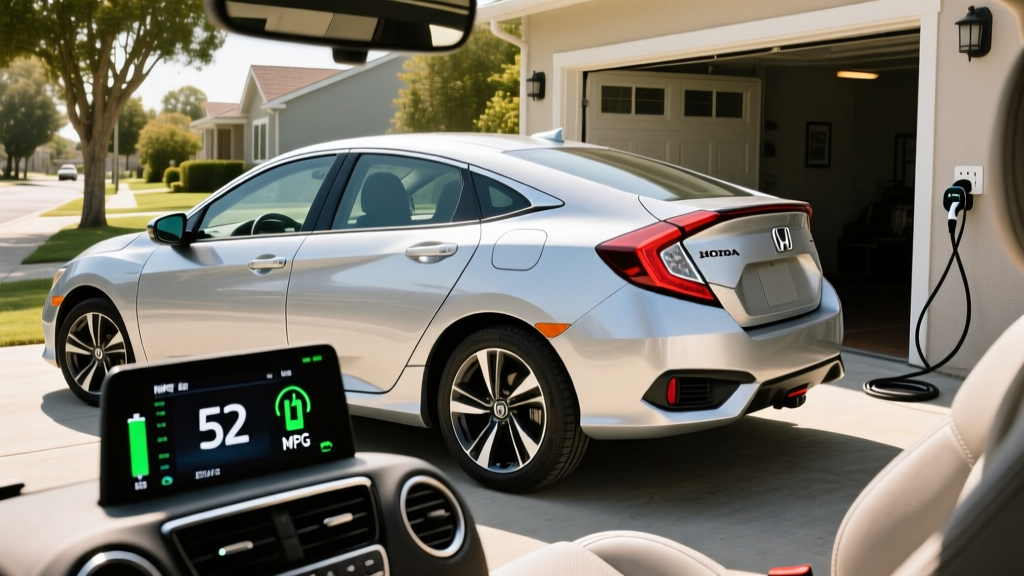
The 2014 Honda Civic Hybrid is a conventional hybrid (HEV) — not a plug-in — that pairs a 1.3-liter four-cylinder engine with Honda's Integrated Motor Assist (IMA) electric motor system to deliver an EPA-estimated 44 MPG combined. More than a decade after its release, it remains one of the most fuel-efficient compact sedans available on the used market, typically priced between $7,000 and $12,000 depending on mileage and condition.
But buying a 12-year-old hybrid in 2026 raises legitimate questions: How long does the IMA battery last? What does replacement cost? And does it still make financial sense versus a newer used EV or a modern hybrid? This guide answers those questions with real numbers.
Fuel Economy: EPA Ratings vs. Real-World MPG
| Metric | Value |
|---|---|
| City MPG | 44 MPG |
| Highway MPG | 44 MPG |
| Combined MPG | 44 MPG |
| Fuel Tank Capacity | 13.2 gallons |
| Total Range | ~580 miles |
| Annual Fuel Cost (EPA est.) | ~$1,050 (15,000 mi/yr at $3.15/gal) |
Source: EPA Fuel Economy Guide — 2014 Honda Civic Hybrid
Real-World MPG: What Owners Actually Report
The 2014 Civic Hybrid's EPA rating of 44 MPG combined is one of the more honest numbers from that era. Owner-reported data on Fuelly and Honda forums consistently shows real-world averages between 40 and 48 MPG, with city-heavy drivers often exceeding the EPA city estimate — a hallmark of hybrid powertrains, where regenerative braking recaptures energy in stop-and-go traffic.
Expect the lower end (~38–40 MPG) if:
- You drive predominantly highway at speeds above 75 mph
- You live in a cold climate where the engine runs more often for cabin heat
- The IMA battery has degraded significantly (more on this below)
Drivers with mostly city commutes in mild climates regularly report 46–50 MPG in warmer months.
Powertrain: How the IMA System Works
| Component | Specification |
|---|---|
| Gasoline Engine | 1.3L i-VTEC inline-4 |
| Engine Horsepower | 90 hp @ 5,500 rpm |
| Engine Torque | 89 lb-ft @ 1,000–3,500 rpm |
| Electric Motor (IMA) | 15 kW (20 hp) / 57 lb-ft torque |
| Combined System Output | 110 hp @ 6,000 rpm / 123 lb-ft torque |
| Transmission | Continuously Variable Transmission (CVT) |
| Drivetrain | Front-wheel drive |
| 0–60 mph | ~10.5 seconds (estimated) |
| Hybrid Battery | 0.5 kWh Nickel-Metal Hydride (NiMH) |
Honda's IMA system is fundamentally different from the full-hybrid systems used by Toyota. The electric motor sits between the engine and transmission, providing assist during acceleration and enabling regenerative braking. It cannot propel the car on electricity alone at any meaningful speed. This simpler architecture means fewer failure points but also less electric assist than Toyota's Hybrid Synergy Drive found in the contemporary Prius.
IMA Battery Lifespan, Degradation & Replacement Cost
How Long Does the IMA Battery Actually Last?
The 2014 Civic Hybrid uses a 0.5 kWh Nickel-Metal Hydride (NiMH) battery pack — small by modern standards but proven in longevity. Real-world data from owner communities and repair shops shows:
- Typical lifespan: 120,000–180,000 miles before significant degradation or failure
- Early failures: Some units required replacement at 80,000–100,000 miles, particularly in hot climates (Arizona, Texas, Southern California) where battery thermal stress accelerates cell degradation
- Long survivors: Well-maintained examples exceeding 200,000 miles on the original pack have been documented, though with noticeable fuel economy decline (2–5 MPG loss)
When the IMA battery degrades, the system doesn't suddenly fail. Instead, you'll notice reduced electric assist during acceleration, lower regenerative braking capture, and a gradual drop in fuel economy. The check engine light or an IMA warning light may illuminate if cell imbalance becomes severe.
Battery Replacement Cost Breakdown
| Option | Cost Range | Warranty |
|---|---|---|
| New OEM Honda battery (dealer) | $2,500–$3,500 (parts + labor) | 3 years / 36,000 miles |
| Remanufactured battery (Bumblebee, GreenTec) | $1,500–$2,200 (parts + labor) | 3–5 years / unlimited miles |
| Used/salvage yard battery | $500–$900 + installation | 30–90 days typical |
| Individual cell replacement (DIY/specialist) | $300–$600 | Varies |
For a used 2014 Civic Hybrid worth $7,000–$12,000, a $2,000 remanufactured battery is the most economically rational choice. It restores full hybrid functionality and typically comes with a multi-year warranty. Avoid used salvage batteries unless the donor vehicle had low mileage and verifiable maintenance history.
Driving Experience, Interior & Technology
The 2014 Civic Hybrid is based on the ninth-generation Civic platform. It's competent but unremarkable in driving dynamics — the CVT drones under hard acceleration, and the 110 combined horsepower means highway merging requires planning. Ride quality is comfortable for the class, and road noise is moderate.
Interior & Tech Highlights
- 5-inch infotainment display with Bluetooth audio and phone
- Standard rearview camera
- Eco Assist system with real-time fuel economy coaching display
- Automatic climate control
- Seating for five; 12.5 cu-ft trunk (slightly reduced vs. gas Civic due to battery placement behind rear seats)
Notable omissions by 2026 standards: no Apple CarPlay/Android Auto, no adaptive cruise control, no lane-keeping assist, and no DC fast charging capability (irrelevant for an HEV, but worth noting for comparison shoppers).
Hybrid vs. Plug-In Hybrid vs. Full EV: Which Fits You?
| Factor | HEV (e.g., 2014 Civic Hybrid) | PHEV (e.g., Prius Prime) | BEV (e.g., Chevy Bolt EV) |
|---|---|---|---|
| Plug-in charging required? | No | Yes (for EV range) | Yes (always) |
| Electric-only range | 0 miles | 25–44 miles | 200–350+ miles |
| Home charging install needed? | No | Recommended (Level 2) | Essential (Level 2) |
| Fuel cost per mile | ~$0.08 (gas) | ~$0.03 (electric) / $0.08 (gas) | ~$0.03–$0.05 (electric) |
| Federal tax credit (2026) | None | Up to $7,500 (new only, §30D) | Up to $7,500 (new, §30D) / up to $4,000 (used, §25E) |
| Used purchase price (2026) | $7,000–$12,000 | $18,000–$28,000 | $12,000–$22,000 |
| Maintenance complexity | Low (proven tech) | Moderate (dual systems) | Low (fewer moving parts) |
- Choose the 2014 Civic Hybrid (HEV) if: You want maximum fuel efficiency with zero lifestyle change — no plugs, no charging apps, no range planning. Ideal for apartment dwellers without charging access, or budget-conscious buyers who want sub-$10,000 transportation with 44 MPG.
- Choose a PHEV if: You have home charging and a short commute (under 30 miles) but want the flexibility of gas for road trips. You'll drive mostly on electricity day-to-day.
- Choose a full EV if: You have reliable home Level 2 charging, want the lowest per-mile operating cost, and your daily driving stays within ~200 miles. Used EVs like the 2017–2022 Chevy Bolt offer 238+ miles of range for $12,000–$18,000.
Tax Credit & Incentive Eligibility
The 2014 Honda Civic Hybrid does not qualify for any federal tax credit when purchased used in 2026. Here's why:
- §30D New Clean Vehicle Credit: Only applies to new vehicles. The 2014 Civic Hybrid has not been in production since 2015.
- §25E Used Clean Vehicle Credit: Up to $4,000 (30% of sale price, capped) for used EVs and PHEVs purchased from a dealer. However, conventional hybrids (HEVs) like the Civic Hybrid are not eligible — only plug-in vehicles qualify. (IRS §25E reference)
- State incentives: A handful of states offer used-vehicle rebates for hybrids, but these vary by jurisdiction and change frequently. Check your state's energy or environmental agency website for current programs.
The lack of tax incentives is offset by the Civic Hybrid's low purchase price. At $8,000–$10,000 for a well-maintained example, the total acquisition cost is competitive with newer vehicles even after credits.
Reliability, Safety & Ownership Costs
Honda's ninth-generation Civic platform is well-regarded for mechanical reliability. The IMA system is simpler than Toyota's HSD and has fewer components that can fail. Key reliability notes:
- Engine: The 1.3L i-VTEC is under-stressed and durable. 200,000+ mile examples are common with regular oil changes.
- CVT: Early ninth-gen Civics (2012–2013) had some CVT shudder complaints. By 2014, Honda had addressed most issues through software updates and fluid revisions. A CVT fluid drain-and-fill every 30,000–60,000 miles is recommended.
- IMA system: Beyond the battery pack, the IMA motor and inverter are robust. Failure is rare outside the battery itself.
- Brakes: Regenerative braking reduces pad wear. Front brake jobs at 80,000+ miles are common; rears often last 100,000+ miles.
Safety Ratings
The 2014 Civic earned a 5-star overall rating from NHTSA and was an IIHS Top Safety Pick. Standard safety equipment includes stability control, antilock brakes, and six airbags.
Estimated Annual Ownership Costs (2026)
| Category | Annual Cost (est.) |
|---|---|
| Fuel (15,000 mi @ 44 MPG, $3.15/gal) | $1,070 |
| Insurance (national avg., clean record) | $1,200–$1,600 |
| Maintenance (oil, tires, brakes) | $400–$700 |
| Registration/taxes | $100–$300 (varies by state) |
| Total annual operating cost | $2,770–$3,670 |
Pros & Cons: 2014 Civic Hybrid at a Glance
- 44 MPG combined — still competitive with 2026 hybrids
- No plug-in required — works with existing gas infrastructure
- Low purchase price ($7K–$12K used)
- Proven Honda reliability; simple IMA system
- Strong NHTSA 5-star safety rating
- Low annual fuel cost (~$1,070/yr)
- IMA battery replacement likely needed ($1,500–$3,500)
- No electric-only driving capability
- Slow acceleration (10.5 sec 0–60 mph)
- Dated infotainment — no CarPlay/Android Auto
- No federal tax credit eligibility
- Trunk space reduced vs. gas Civic (12.5 cu-ft)
- All original battery warranties expired
Frequently Asked Questions
How many MPG does the 2014 Civic Hybrid get?
The EPA rates the 2014 Civic Hybrid at 44 MPG city, 44 MPG highway, and 44 MPG combined. Real-world results typically range from 38 to 50 MPG depending on driving conditions, climate, and battery health. City drivers in mild climates often exceed the EPA estimate.
Does the 2014 Civic Hybrid need to be plugged in?
No. The 2014 Civic Hybrid is a conventional hybrid (HEV). Its small 0.5 kWh NiMH battery is charged exclusively by the gasoline engine and regenerative braking. There is no plug, no charging port, and no electric-only driving mode.
How far can it go on electric only?
Zero miles. Unlike a PHEV (plug-in hybrid), the Civic Hybrid's IMA system cannot propel the vehicle on electricity alone. The electric motor only assists the gasoline engine during acceleration and captures energy during braking.
Is the 2014 Civic Hybrid reliable?
Yes, with one major caveat. The mechanical powertrain (engine, CVT, IMA motor) is durable and well-proven. The primary reliability concern is the IMA battery pack, which typically lasts 120,000–180,000 miles. If the battery has been replaced or the vehicle has under 100,000 miles, reliability should be strong. Budget $1,500–$2,500 for a remanufactured battery if one hasn't been done recently.
What does an IMA battery replacement cost?
A remanufactured IMA battery installed by a specialist runs $1,500–$2,200 with a 3–5 year warranty. A new OEM battery from a Honda dealer costs $2,500–$3,500. Used/salvage batteries are available for $500–$900 but carry minimal warranty and uncertain remaining life.
Does the 2014 Civic Hybrid qualify for any tax credit?
No. The federal §30D new-vehicle credit and §25E used-vehicle credit both require plug-in capability (PHEV or BEV). Conventional hybrids (HEVs) are not eligible for any current federal tax credit. Some states may offer separate incentives — check your state energy office for details.
Should I buy a 2014 Civic Hybrid or a used EV?
If you lack home charging access, the Civic Hybrid is the better choice — it requires no infrastructure investment. If you have Level 2 home charging and drive under 200 miles daily, a used EV like a Chevy Bolt (238 miles range, ~$14,000–$18,000) offers lower per-mile fuel costs (~$0.04/mile vs. ~$0.07/mile) and may qualify for the $4,000 used-EV tax credit (§25E), narrowing the price gap significantly.
How does the 2014 Civic Hybrid compare to a 2014 Prius?
The 2014 Toyota Prius is rated at 50 MPG combined (vs. 44 MPG for the Civic Hybrid) and uses Toyota's more capable full-hybrid system with brief electric-only capability at low speeds. However, the Prius typically commands $2,000–$4,000 more on the used market. The Civic Hybrid offers a more conventional driving feel and sedan styling, while the Prius delivers superior fuel economy and a hatchback cargo area. Both have proven long-term reliability with similar battery replacement costs.