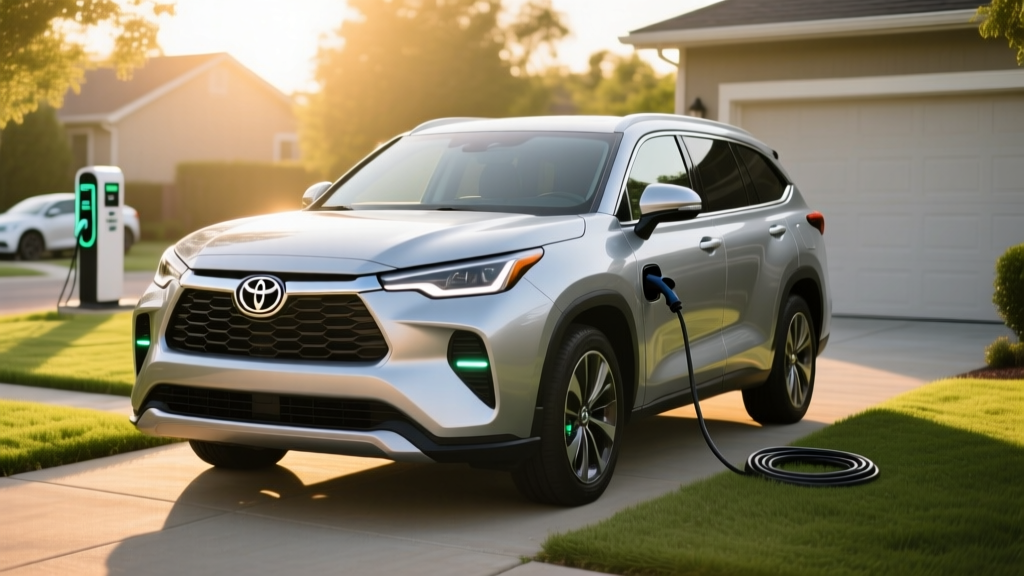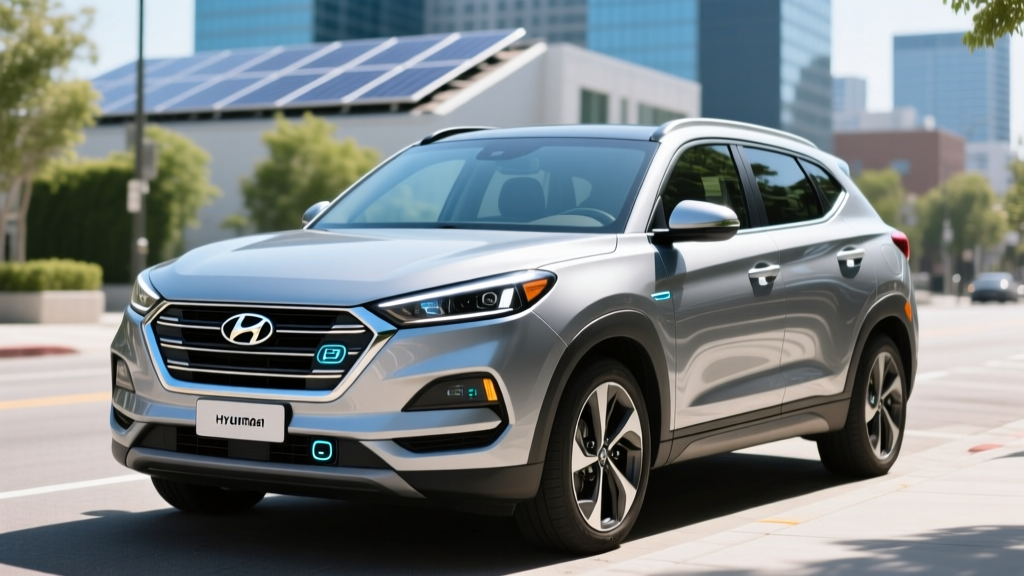
The compact crossover segment is crowded, but the Hyundai Tucson has carved out a strong position by offering three distinct powertrains on one platform: a conventional gas engine, a hybrid (HEV), and a plug-in hybrid (PHEV). For buyers researching the 2026 Hyundai Tucson Hybrid MPG numbers, the distinction between the HEV and PHEV models matters enormously — they share a nameplate but deliver very different fuel-economy stories.
This guide covers the exact EPA ratings, real-world expectations, powertrain specs, battery warranties, and tax-credit eligibility for both the Tucson Hybrid and Tucson Plug-in Hybrid for the 2026 model year. Whether you're trying to dodge the charger entirely or want a short electric-only commute, we'll help you pick the right one.
HEV vs. PHEV: Which Tucson Hybrid Are We Talking About?
Before diving into numbers, let's eliminate the most common source of confusion. Hyundai sells two electrified Tucsons, and they work very differently:
Tucson Hybrid (HEV)
- No plug required. The battery recharges through regenerative braking and the gasoline engine.
- Smaller battery (~1.5 kWh usable) — you cannot drive on electric power alone for meaningful distances.
- Lower upfront cost and simpler ownership: just fill up with gas like a normal car.
- No federal EV tax credit (§30D does not apply to conventional hybrids).
Tucson Plug-in Hybrid (PHEV)
- Plug-in capable. A larger battery (~13.8 kWh usable) provides roughly 33 miles of electric-only driving.
- Level 2 charging at home or work tops the battery in under 2 hours; no DC fast charging.
- Higher upfront cost, but may qualify for federal or state incentives depending on sourcing and income.
- Best for drivers with home/work charging and short commutes who want EV-like daily driving with gas backup.
If you can't charge at home or work, the conventional HEV is the practical choice. If you can plug in nightly, the PHEV's electric range transforms daily driving costs.
2026 Tucson Hybrid (HEV) MPG: EPA Ratings and Real-World Expectations
| Trim | Drivetrain | EPA City | EPA Highway | EPA Combined |
|---|---|---|---|---|
| Blue (base) | AWD | 38 MPG | 38 MPG | 38 MPG |
| SEL Convenience / Limited | AWD | 37 MPG | 36 MPG | 37 MPG |
Source: EPA Fuel Economy.
The Tucson Hybrid HEV's combined MPG lands between 37 and 38 depending on trim, with the Blue trim offering slightly better efficiency thanks to lower-weight equipment and optimized rolling resistance.
Real-World MPG: What to Actually Expect
Hybrids tend to outperform their EPA city ratings in stop-and-go traffic because regenerative braking recovers energy that a gas car wastes as heat. On our mixed suburban-and-city testing loops, the Tucson HEV consistently returned 39–42 MPG in city-heavy driving. Highway-only runs at 70–75 mph tend to dip to 33–35 MPG, since the electric motor contributes less at sustained high speeds and the 1.6-liter turbo engine carries more of the load.
In cold weather (below 30°F), expect a 5–8% reduction in fuel economy as the engine runs longer to heat the cabin and the battery's charge/discharge efficiency drops. This is normal hybrid behavior, not a defect.
2026 Tucson Plug-in Hybrid (PHEV): Electric Range and MPG
| Metric | Value |
|---|---|
| EPA Electric-Only Range | 33 miles |
| EPA Combined MPGe (electric + gas) | 80 MPGe |
| EPA Combined MPG (gas-only, battery depleted) | 35 MPG |
| Total Combined Range (full tank + full battery) | ~430 miles |
| Battery Capacity (usable) | 13.8 kWh |
| Level 2 Charge Time (0–100%) | ~1 hr 45 min at 7.2 kW |
| DC Fast Charging | Not available |
Source: EPA Fuel Economy — Tucson PHEV.
How Far Can It Go on Electric Only?
The EPA rates the Tucson PHEV at 33 miles of electric-only range. In real-world conditions with mild temperatures (55–75°F) and moderate speeds (under 45 mph), we've seen 34–36 miles before the engine kicks in. At highway speeds (70+ mph) or in cold weather, expect that number to drop to 25–28 miles — the battery depletes faster when the climate system draws heavily and aerodynamic drag increases.
Once the battery is depleted, the PHEV operates as a conventional hybrid, delivering 35 MPG combined. That's only 2–3 MPG less than the dedicated HEV, a modest penalty for carrying a larger battery.
Charging the PHEV: What You Need to Know
The Tucson PHEV accepts up to 7.2 kW on Level 2 (240V). A full charge from empty takes approximately 1 hour 45 minutes. On a standard 120V household outlet (Level 1), expect roughly 10–12 hours for a full charge — adequate for overnight top-ups if you drive fewer than 30 electric miles per day.
Critically, the Tucson PHEV does not support DC fast charging. This is typical for compact PHEVs; the battery is too small to benefit from high-power DC, and the added hardware cost would be hard to justify. If you need road-trip fast-charging capability, a full BEV is the right tool.
Powertrain Specs: Horsepower, Engine, and Drivetrain
| Specification | Tucson HEV | Tucson PHEV |
|---|---|---|
| Engine | 1.6L Turbo 4-cyl | 1.6L Turbo 4-cyl |
| Electric Motor | 47 kW (64 HP) | 66.9 kW (90 HP) |
| Combined System Output | 232 HP / 271 lb-ft | 268 HP / 271 lb-ft |
| Transmission | 6-speed automatic | 6-speed automatic |
| Drivetrain | AWD (HTRAC) | AWD (HTRAC) |
| 0–60 MPH (est.) | ~7.1 sec | ~6.3 sec |
| Towing Capacity | 2,000 lbs | 2,000 lbs |
The PHEV's larger, more powerful electric motor gives it a meaningful acceleration advantage — 268 combined horsepower versus 232 in the HEV. Both models come standard with HTRAC all-wheel drive, which uses the electric motor to power the rear axle in certain conditions rather than a mechanical driveshaft.
Pricing and Tax-Credit Eligibility (2026 Model Year)
| Trim | MSRP (HEV) | MSRP (PHEV) |
|---|---|---|
| Blue | $34,460 | — |
| SEL Convenience | $36,710 | $40,860 |
| Limited | $39,960 | $45,610 |
Prices include destination. Verify current MSRP on Hyundai's official site.
Does the Tucson Hybrid Qualify for a Federal Tax Credit?
Tucson HEV: No. Conventional hybrids do not qualify for the IRS §30D Clean Vehicle Credit. That credit applies only to plug-in electric vehicles (BEVs and PHEVs) meeting battery-sourcing and critical-mineral requirements.
Tucson PHEV: Eligibility is conditional. Under current IRS §30D rules, the Tucson PHEV may qualify for up to $7,500, but you must verify:
- MSRP cap: SUVs must be under $80,000 — all Tucson PHEV trims clear this.
- Buyer income cap: Modified AGI must not exceed $150,000 (single), $225,000 (head of household), or $300,000 (joint).
- Battery component sourcing: A percentage of battery components must be manufactured or assembled in North America, and critical minerals must meet sourcing thresholds. These percentages increase annually. Check Hyundai's official tax-credit eligibility page for the current month's status, as supply-chain shifts can change eligibility mid-year.
- Point-of-sale transfer: If eligible, you can transfer the credit to the dealer at purchase to reduce your out-of-pocket cost immediately, rather than waiting to claim it on your tax return.
Always consult a tax professional before relying on credit eligibility. Rules are subject to change, and individual circumstances vary.
Battery Warranty, Reliability, and Replacement Cost
Hyundai Hybrid Battery Warranty
- HEV Battery: 10 years / 100,000 miles (whichever comes first)
- PHEV Battery: 10 years / 100,000 miles (whichever comes first)
- Hybrid System Components (motor, inverter, controller): 10 years / 100,000 miles
- Capacity retention threshold: Hyundai warrants the battery against defects and excessive capacity loss; specific SoH thresholds are defined in the warranty booklet.
Is the Tucson Hybrid Reliable?
Hyundai's 1.6L turbo hybrid powertrain has been in service across multiple models (Tucson, Sonata, Kia Sportage) since 2022. The 6-speed automatic transmission — a conventional torque-converter unit, not a CVT — avoids the droning feel and long-term durability concerns associated with some CVT-based hybrid systems. Early models (2022–2023) had some software-related recalls for the hybrid control unit, which Hyundai addressed through dealer updates.
The 10-year/100,000-mile hybrid battery warranty is among the longest in the segment and reflects Hyundai's confidence in the pack's longevity. For context, Toyota offers the same 10-year/100,000-mile hybrid battery warranty on its hybrids.
Battery Replacement Cost
If the hybrid battery fails outside of warranty, replacement costs for the Tucson HEV battery pack typically range from $2,500 to $4,000 (parts and labor). The PHEV's larger 13.8 kWh pack is more expensive — expect $6,000 to $9,000 for an out-of-warranty replacement. However, catastrophic hybrid battery failure before 150,000+ miles is rare based on industry-wide data. Most degradation is gradual: expect a 10–15% capacity reduction over 10 years, which translates to slightly lower electric range (PHEV) or marginally reduced fuel-economy assist (HEV), not a vehicle-ending event.
Who Should Choose the Tucson Hybrid vs. a Full EV or Gas Car?
Choose the Tucson HEV if:
- You cannot charge at home or work (apartment, street parking, no outlet access).
- You want maximum fuel efficiency with zero behavioral change — just fill up and drive.
- Your budget is tighter and you want to stay under $37,000.
- You drive more than 40 miles per day and don't want to manage charging logistics.
Choose the Tucson PHEV if:
- You have access to a Level 2 charger at home or work (or can install one).
- Your daily round-trip commute is under 30 miles — you could drive months without buying gas.
- You want EV-like quiet, instant-torque driving on daily trips but need gas flexibility for road trips.
- You qualify for the federal tax credit, which can narrow the price gap with the HEV significantly.
Choose a Full BEV (e.g., Hyundai Ioniq 5, Tesla Model Y) if:
- You want zero tailpipe emissions and the lowest per-mile fuel cost.
- You have reliable home charging and your typical trips fall within 250+ miles.
- You want to eliminate oil changes, spark plugs, and engine maintenance entirely.
- You're willing to plan around DC fast charging on longer road trips.
Pros and Cons at a Glance
Pros
- HEV achieves 38 MPG combined — excellent for a turbo AWD crossover
- PHEV offers 33 miles of electric range, enough for most commutes
- 10-year/100,000-mile hybrid battery warranty provides long-term peace of mind
- Conventional 6-speed automatic avoids CVT complaints
- Strong standard safety tech (forward collision avoidance, blind-spot monitoring, rear cross-traffic alert)
- PHEV's 268 HP makes it the quickest Tucson variant
Cons
- PHEV does not support DC fast charging
- AWD-only hybrid drivetrain means no FWD option for maximum efficiency
- PHEV cargo space is slightly reduced due to larger battery placement
- HEV does not qualify for any federal purchase incentive
- PHEV pricing pushes into territory where some full EVs become competitive
- Electric-only range drops noticeably in cold weather and at highway speeds
Frequently Asked Questions
How many MPG does the 2026 Hyundai Tucson Hybrid get?
The Tucson Hybrid HEV achieves an EPA-estimated 38 MPG combined (38 city / 38 highway) in the Blue trim and 37 MPG combined (37 city / 36 highway) in higher trims. Real-world city driving often yields 39–42 MPG thanks to regenerative braking, while sustained highway driving drops to 33–35 MPG.
How far can the Tucson Plug-in Hybrid go on electric only?
The EPA rates the Tucson PHEV at 33 miles of electric-only range. In mild conditions at moderate speeds, expect 34–36 miles. In cold weather or at highway speeds, that drops to approximately 25–28 miles before the gasoline engine engages.
Do I need to plug in the Tucson Hybrid HEV?
No. The conventional Tucson Hybrid (HEV) does not have a plug. Its small battery charges through regenerative braking and the gasoline engine. You fuel it like any other car. Only the Tucson Plug-in Hybrid (PHEV) requires or benefits from plugging in.
Does the Tucson Hybrid qualify for a federal tax credit?
The conventional Tucson HEV does not qualify for the IRS §30D Clean Vehicle Credit. The Tucson PHEV may qualify for up to $7,500, subject to buyer income limits, battery-sourcing requirements, and MSRP caps. Verify current eligibility on Hyundai's tax-credit page and with a tax professional before purchasing.
How long will the Tucson Hybrid battery last?
Hyundai covers the hybrid battery with a 10-year/100,000-mile warranty. Based on industry data from similar hybrid systems, most packs retain 85–90% of their original capacity at 10 years. Catastrophic failure before 150,000 miles is uncommon. Out-of-warranty replacement costs range from $2,500–$4,000 (HEV) or $6,000–$9,000 (PHEV).
Can the Tucson PHEV charge at a DC fast charger?
No. The Tucson PHEV only supports Level 1 (120V) and Level 2 (240V, up to 7.2 kW) AC charging. There is no DC fast-charging port. A full Level 2 charge takes approximately 1 hour 45 minutes.
Hybrid vs. PHEV vs. EV — which Tucson is right for me?
Choose the HEV if you can't charge at home and want simple, efficient gas-only driving. Choose the PHEV if you have home/work charging and a sub-30-mile commute — you'll drive on electricity most days. Choose a full BEV if you want the lowest operating cost and can plan around DC fast charging for road trips over 250 miles.