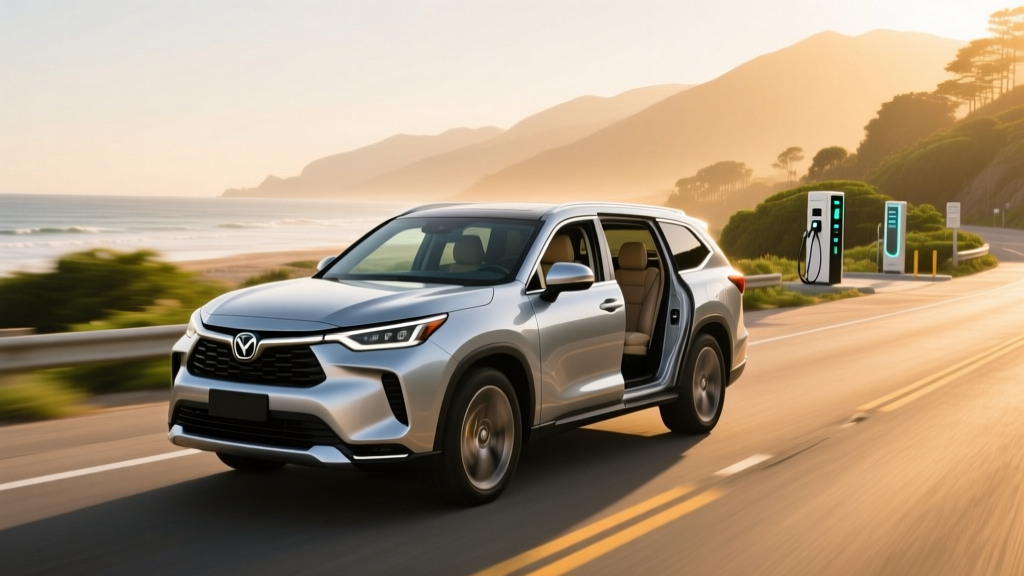
The Toyota Highlander Hybrid has spent years proving that a three-row family SUV doesn't need to guzzle gas. For 2026, the Highlander Hybrid returns with its proven 2.5-liter four-cylinder hybrid powertrain, standard all-wheel drive, and an EPA-estimated 35 MPG combined — a figure that, in real-world city driving, owners frequently exceed. But with plug-in hybrids and full EVs proliferating, is a conventional hybrid still the smartest choice for a family hauler?
This guide covers everything you need to decide: exact MPG breakdowns, powertrain specs, pricing across trims, battery reliability data, and how the 2026 Hybrid Highlander stacks up against PHEVs and battery-electric SUVs in the same segment.
HEV vs PHEV: What the 2026 Highlander Hybrid Actually Is
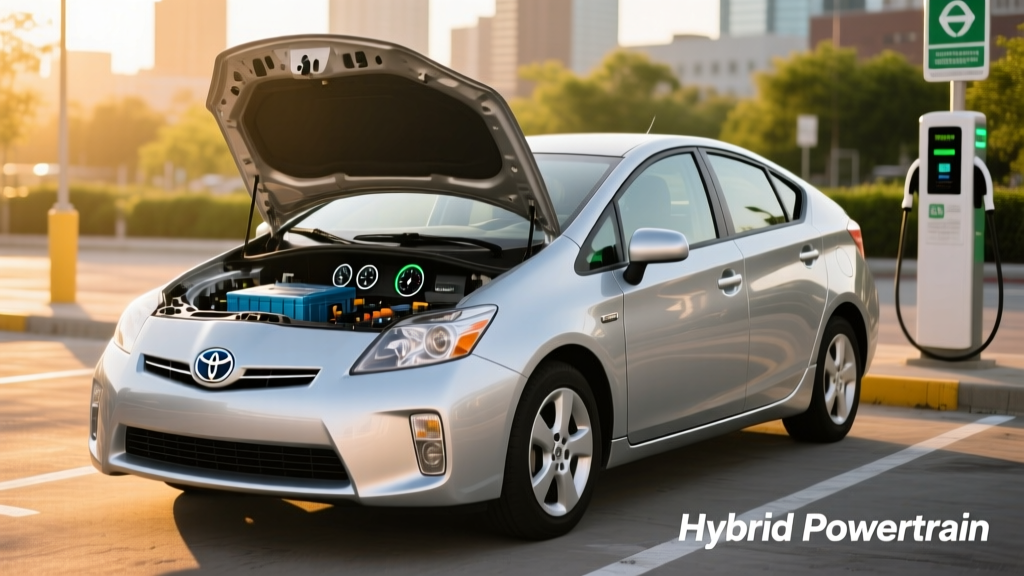
Before diving into specs, it's essential to distinguish the two hybrid flavors — because Toyota sells the Highlander Hybrid as a conventional HEV (hybrid electric vehicle), not a plug-in.
Conventional Hybrid (HEV)
- How it works: A small battery (1.6 kWh in the Highlander Hybrid) is charged entirely by the gas engine and regenerative braking. You never plug it in.
- Electric-only range: Under 1 mile at very low speeds — the motor assists the engine but doesn't drive the vehicle independently for meaningful distances.
- Refueling: Gas station only, like any conventional car.
- Best for: Drivers who want better fuel economy without changing any habits.
Plug-In Hybrid (PHEV)
- How it works: A larger battery (typically 15–25 kWh) can be charged from a wall outlet or public charger, enabling 25–45 miles of electric-only driving before the gas engine kicks in.
- Electric-only range: Enough for most daily commutes without using gas.
- Refueling: Plug in for electric miles; use gas for longer trips.
- Best for: Drivers with home charging who want EV-like daily commuting with gas-engine road-trip backup.
The 2026 Highlander Hybrid is an HEV. Toyota does not currently offer a Highlander PHEV in the U.S. market. If you need plug-in capability in a three-row Toyota, the closest alternative is the Toyota Grand Highlander Hybrid (also an HEV) or looking at competitors like the Kia Sorento PHEV. This distinction matters for tax-credit eligibility and daily driving expectations.
Fuel Economy: EPA Ratings vs Real-World MPG
The 2026 Highlander Hybrid's fuel economy is its headline selling point. Here's the official EPA breakdown, sourced from fueleconomy.gov:
| Driving Cycle | EPA Estimate | Real-World Expectation |
|---|---|---|
| City | 36 MPG | 34–38 MPG (hybrids often beat EPA in stop-and-go) |
| Highway | 35 MPG | 30–33 MPG (aerodynamic drag hurts at 70+ mph) |
| Combined | 35 MPG | 32–36 MPG depending on driving mix |
Why real-world city MPG can exceed the EPA sticker: Conventional hybrids like the Highlander recapture energy through regenerative braking every time you slow down, and the electric motor handles low-speed acceleration where gas engines are least efficient. In dense urban driving with frequent stops, the hybrid system is working at its best.
Where you'll lose MPG: Sustained highway speeds above 70 mph, cold-weather operation (the engine runs more to heat the cabin and warm up the catalytic converter), and heavy cargo or towing loads. Expect a 3–5 MPG drop in winter conditions with temperatures below freezing. The Highlander Hybrid's combined range on a single 17.9-gallon tank is roughly 625 miles under normal conditions.
Powertrain Specs: What Moves the 2026 Highlander Hybrid
| Specification | 2026 Highlander Hybrid |
|---|---|
| Engine | 2.5L 4-cylinder DOHC (A25A-FXS) |
| Combined Horsepower | 243 hp (net system) |
| Electric Motors | Front motor + rear motor (eAWD) |
| Drivetrain | Electronic On-Demand AWD (standard) |
| Transmission | eCVT (electronically controlled) |
| Hybrid Battery | 1.6 kWh nickel-metal hydride (NiMH) |
| 0–60 mph | ~7.8 seconds |
| Towing Capacity | 3,500 lbs |
| Fuel Tank | 17.9 gallons |
| Seating | 7 or 8 passengers (trim dependent) |
The 243-hp combined output comes from the gas engine contributing roughly 186 hp while the front and rear electric motors fill in torque gaps and provide all-wheel-drive traction. The rear axle has no mechanical connection to the engine — the rear motor activates when the system detects slip or during hard acceleration.
The eCVT isn't a traditional belt-and-pulley CVT. It uses a planetary gearset to seamlessly blend engine and motor power, which means no rubber-band sensation and generally better durability than conventional CVTs. Acceleration is adequate for merging and passing, though this is a comfort-oriented cruiser, not a performance SUV.
Pricing by Trim and Tax-Credit Eligibility
The 2026 Highlander Hybrid is available across four main trims. Pricing below reflects base MSRP including destination charge:
| Trim | MSRP (est.) | Key Features |
|---|---|---|
| LE | $42,120 | Toyota Safety Sense 3.0, 8" touchscreen, tri-zone climate |
| XLE | $45,570 | SofTex seats, sunroof, 7-passenger captain's chairs available |
| Limited | $49,950 | 12.3" touchscreen, leather, panoramic roof, JBL audio |
| Platinum | $53,400 | Head-up display, panoramic view monitor, heated/ventilated 2nd row |
Does the 2026 Highlander Hybrid Qualify for a Federal Tax Credit?
No. The federal §30D Clean Vehicle Credit applies only to plug-in electric vehicles (BEVs and PHEVs) with battery capacities of at least 7 kWh and specific critical-mineral and battery-component sourcing requirements per IRS guidelines. The Highlander Hybrid's 1.6 kWh NiMH battery and lack of plug-in capability make it ineligible for the federal EV credit.
However, some states offer hybrid-specific incentives or HOV lane access for efficient vehicles. Check your state's energy office or department of transportation for current programs. These vary widely by jurisdiction and change frequently.
Battery Reliability, Warranty, and Replacement Cost
Toyota Hybrid Battery Warranty
- Coverage: 10 years / 150,000 miles (whichever comes first)
- What's covered: Hybrid battery pack and all hybrid-system components (inverter, control module, electric motors)
- Capacity threshold: Toyota warrants the battery against defects and abnormal degradation — there is no published minimum capacity-retention percentage as there is for PHEVs/BEVs, since the 1.6 kWh pack isn't providing meaningful electric-only range
- Transferable: Yes, to subsequent owners
How long do Toyota hybrid batteries actually last? Toyota's hybrid system is among the most proven in the industry. The Prius, which uses a similar NiMH architecture, has demonstrated battery longevity exceeding 200,000 miles in widespread fleet and owner data. The Highlander Hybrid's battery is small and operates within a narrow state-of-charge window (roughly 40–80%), which dramatically reduces stress on the cells compared to a full EV battery that cycles from 10–90%.
Replacement cost if out of warranty: A new OEM hybrid battery pack for the Highlander Hybrid typically runs $3,000–$4,500 including labor. Independent hybrid specialists often offer refurbished packs for $1,500–$2,500. This is a fraction of EV traction-battery replacement costs (which can exceed $15,000) because the hybrid pack is small and relatively simple.
Toyota's hybrid system reliability is well-documented. The Highlander Hybrid consistently earns strong marks in IIHS crash testing and benefits from Toyota Safety Sense 3.0 as standard equipment — including pre-collision braking, lane-tracing assist, adaptive cruise control, and automatic high beams. Note that these are SAE Level 2 driver-assist features, meaning the driver must remain fully engaged at all times.
2026 Highlander Hybrid vs PHEV vs Full EV: Which Fits You?
Choosing between a conventional hybrid, a plug-in hybrid, and a full battery-electric SUV depends on your driving patterns, charging access, and budget. Here's a practical decision framework:
Choose the Highlander Hybrid (HEV) if:
- You don't have access to home or workplace charging
- You want a three-row SUV with zero behavior change — just fill up at gas stations
- You frequently take road trips over 300+ miles and don't want to plan charging stops
- Your budget is under $55K and you want the lowest upfront cost among electrified three-row SUVs
- You tow up to 3,500 lbs regularly (towing crushes EV range)
Choose a PHEV (e.g., Kia Sorento PHEV) if:
- You have Level 2 home charging and a commute under 30 miles round-trip
- You want electric-only daily driving but gas-engine flexibility for road trips
- You qualify for the §30D federal credit (up to $7,500 on eligible PHEVs) — check IRS eligibility rules for income caps, MSRP limits, and battery-sourcing requirements
- You're willing to pay a $5,000–$8,000 premium over a comparable HEV
Choose a Full EV (e.g., Kia EV9, Tesla Model X) if:
- You have reliable home Level 2 charging and your daily driving is under 250 miles
- You want the lowest per-mile fuel cost (electricity at $0.14/kWh ≈ $0.04–$0.05/mile vs gas at $3.50/gal ≈ $0.13/mile for a 27 MPG gas SUV)
- You want maximum federal and state incentives (up to $7,500 federal + state rebates)
- You're comfortable planning DC fast-charging stops on road trips (adding 20–30 minutes every 200–250 miles)
The Highlander Hybrid's advantage is simplicity. There's no charging infrastructure to install, no range planning, no cold-weather range loss to manage (beyond the minor MPG reduction all vehicles experience). You get roughly 40% better fuel economy than the gas-only Highlander (24 MPG combined) with no compromise on cargo space, towing, or passenger room.
Pros and Cons at a Glance
Pros
- 35 MPG combined EPA — best in the three-row SUV segment
- Standard AWD with no fuel-economy penalty vs FWD
- Proven Toyota hybrid reliability with 10-year/150K-mile battery warranty
- No charging infrastructure needed — zero lifestyle adjustment
- 625+ mile total range per tank
- Strong resale value (Toyota hybrids historically depreciate slower than gas counterparts)
- Toyota Safety Sense 3.0 standard on every trim
Cons
- No plug-in or electric-only driving capability
- Not eligible for the §30D federal EV tax credit
- 243 hp is adequate but not quick for a 4,500-lb SUV (7.8s 0–60)
- Highway MPG drops noticeably above 70 mph
- No third-row PHEV option from Toyota in the U.S.
- Platinum trim pushes past $53K — approaching luxury SUV pricing
- Infotainment system trails competitors in responsiveness
Frequently Asked Questions
How many MPG does the 2026 Hybrid Highlander get?
The EPA rates the 2026 Highlander Hybrid at 36 MPG city, 35 MPG highway, and 35 MPG combined. In real-world driving, city MPG often exceeds the EPA estimate thanks to regenerative braking, while sustained highway driving above 70 mph typically yields 30–33 MPG. Cold weather reduces combined economy by roughly 3–5 MPG.
Can the 2026 Highlander Hybrid drive on electric power only?
Not in any practical sense. The 1.6 kWh hybrid battery and electric motors assist the gas engine during acceleration and can propel the vehicle at very low speeds (under 1 mph in parking situations), but the Highlander Hybrid is not designed for electric-only commuting. If you need meaningful electric-only range, you need a PHEV or BEV.
Does the 2026 Highlander Hybrid qualify for any tax credit?
No federal tax credit applies. The IRS §30D Clean Vehicle Credit requires plug-in capability and a minimum 7 kWh battery — the Highlander Hybrid has neither. Some states may offer incentives for high-efficiency hybrids or HOV lane access, but these vary by jurisdiction. Always verify with your state's energy office and consult a tax professional for eligibility.
Is the Highlander Hybrid battery expensive to replace?
Out-of-warranty replacement runs $3,000–$4,500 for an OEM pack, or $1,500–$2,500 for a refurbished unit. However, Toyota's hybrid batteries are engineered for longevity — the system keeps the battery in a narrow charge window (40–80% SoC), minimizing degradation. Most Toyota hybrid batteries outlast 200,000 miles, and the 10-year/150,000-mile warranty provides extensive coverage.
Is the 2026 Highlander Hybrid better than the gas Highlander?
For most buyers, yes. The hybrid delivers 35 MPG combined versus the gas model's 24 MPG combined — a 46% improvement — while adding standard AWD and maintaining the same cargo, towing, and passenger capacity. The hybrid carries a roughly $2,000–$3,000 price premium over an equivalent gas trim, which pays for itself in fuel savings within 3–4 years at average mileage.
How does the Highlander Hybrid compare to the Grand Highlander Hybrid?
The Grand Highlander Hybrid offers more third-row legroom and cargo space behind the third row, with a slightly larger footprint and a 34 MPG combined EPA rating (1 MPG less). If third-row usability is a priority, the Grand Highlander is worth the ~$2,000 additional cost. If you primarily use two rows and need occasional third-row seating, the standard Highlander Hybrid is more maneuverable and marginally more efficient.
The 2026 Hybrid Highlander isn't flashy — it doesn't offer 300 miles of electric range or autonomous driving features. What it does offer is a pragmatic, proven, and highly efficient way to move a family of seven without plugging in, planning charging stops, or paying a luxury-SUV premium. For buyers who want electrified efficiency without the infrastructure demands of a PHEV or BEV, it remains one of the most rational choices on the market.