The Honda CR-V Hybrid has consistently been one of the best-selling electrified compact SUVs in America, and for the 2026 model year, Honda continues to refine the formula. With a two-motor hybrid system delivering 204 combined horsepower and an EPA-estimated 40 MPG combined, the 2026 Honda Hybrid CR-V targets buyers who want meaningful fuel savings without plugging in or changing their driving habits. But how does it stack up in real-world driving, and is a conventional hybrid still the right move in 2026?
This guide breaks down everything you need to know: exact EPA fuel economy by trim, the powertrain engineering under the hood, real-world MPG expectations, battery longevity and warranty coverage, pricing, and whether this hybrid fits your needs better than a PHEV or full EV.
2026 Honda Hybrid CR-V Powertrain and Performance
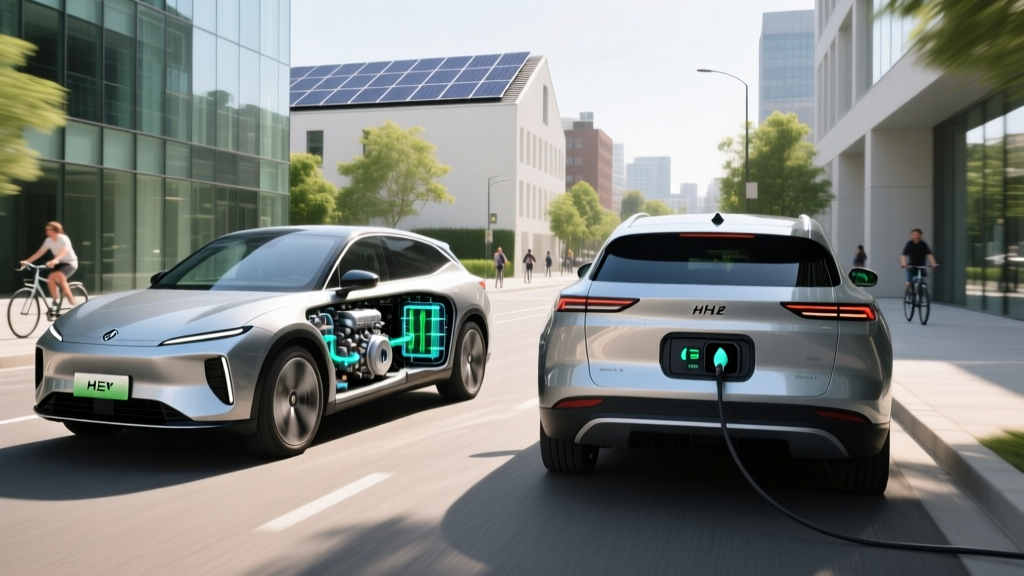
The 2026 CR-V Hybrid uses Honda's fourth-generation two-motor hybrid system, pairing a 2.0-liter Atkinson-cycle inline-four engine with two electric motors. This is a series-parallel hybrid architecture, meaning the vehicle can operate in EV mode (motor only), hybrid mode (engine generates electricity for the motor), or engine-direct drive mode (engine mechanically connected to the wheels at highway cruising speeds for efficiency).
| Specification | Value |
|---|---|
| Engine | 2.0L Atkinson-cycle I-4 |
| Combined System Horsepower | 204 hp |
| Combined System Torque | 247 lb-ft (motor torque) |
| Electric Motors | Two-motor system (propulsion + generator) |
| Drivetrain (Sport Touring Hybrid) | Real-Time AWD™ |
| 0–60 mph (estimated) | ~7.6 seconds |
| Transmission | e-CVT (no traditional gears) |
| Towing Capacity | 1,000 lbs |
The propulsion motor delivers the majority of thrust in normal driving, giving the CR-V Hybrid a smooth, EV-like feel around town. The gasoline engine primarily acts as a generator, only engaging directly with the wheels during steady-state highway cruising where it's most efficient. This approach is fundamentally different from Toyota's planetary-gear hybrid split and results in strong low-end responsiveness.
EPA Fuel Economy: City, Highway, and Combined MPG
Fuel economy varies by trim and drivetrain. Front-wheel-drive (FWD) Hybrid trims extract the most efficiency, while the available Real-Time AWD on higher trims carries a small MPG penalty.
| Drivetrain | City MPG | Highway MPG | Combined MPG |
|---|---|---|---|
| FWD (Sport Hybrid) | 43 | 36 | 40 |
| AWD (Sport Touring Hybrid) | 40 | 34 | 37 |
Source: fueleconomy.gov — EPA estimates. Your mileage will vary based on driving conditions, climate, and habits.
The city-highway split tells an important story. Like most hybrids, the CR-V Hybrid excels in stop-and-go traffic where regenerative braking recaptures energy and the electric motor handles low-speed propulsion. The 43 MPG city figure for FWD models is where this powertrain shines — expect to beat the EPA city estimate in moderate-temperature urban driving. Highway MPG is lower because the gasoline engine must do more work at sustained speeds, and aerodynamic drag increases with velocity.
Real-World MPG vs. EPA Estimates
- Mild-weather city driving (50–80°F): 41–45 MPG — often exceeds EPA city estimate thanks to generous regenerative braking and electric-only low-speed operation
- Highway cruising (70–75 mph): 32–35 MPG — slightly below EPA highway estimate at higher speeds; terrain and wind matter
- Cold weather (below 32°F): 33–37 MPG combined — engine runs more frequently for cabin heat and to reach operating temperature; battery efficiency drops in cold
- Mixed real-world combined average: 36–40 MPG across seasons for most owners
Owner-reported data on forums and fuel-tracking apps consistently shows the CR-V Hybrid averaging 37–39 MPG combined year-round for AWD models, with FWD owners frequently reporting 40–42 MPG in temperate climates. The hybrid system's efficiency is remarkably consistent — you won't see the dramatic range swings that EV owners experience in extreme cold, though winter fuel economy does drop 5–10% as the engine runs more often.
Hybrid (HEV) vs. Plug-In Hybrid (PHEV) vs. Full EV: Which Fits You?
The 2026 Honda CR-V is offered only as a conventional hybrid (HEV) in the United States. Honda does not currently sell a CR-V Plug-In Hybrid in the U.S. market, though a PHEV variant exists in China and Europe. Understanding the distinction is critical before you shop:
| Feature | HEV (CR-V Hybrid) | PHEV (e.g., Toyota RAV4 Prime) | BEV (e.g., Tesla Model Y) |
|---|---|---|---|
| Plug in to charge? | No — self-charging via engine + regen | Yes — has a larger battery + charge port | Yes — battery only, no gas engine |
| Electric-only range | Less than 1 mile at low speed | 25–42 miles typical | 250–330+ miles (EPA) |
| Uses gasoline? | Yes — always | Yes — after battery depletes | No |
| Fuel cost per mile | ~$0.09–$0.11 | ~$0.04 electric / $0.09–$0.11 gas | ~$0.03–$0.05 (home charging) |
| Federal tax credit (§30D) | Not eligible | Up to $7,500 (if eligible) | Up to $7,500 (if eligible) |
| Home charging needed? | No | Recommended (Level 2) | Essential (Level 2) |
- You can't install a home charger (apartment, street parking, landlord restrictions)
- You want zero behavior change — just drive it like a normal car and fill up less often
- Your commute is longer than 40 miles and you don't want to manage electric range
- You want the lowest upfront cost in an electrified compact SUV
- You can charge at home and your daily commute is under 35 miles
- You want some electric-only driving for local errands but gas flexibility for road trips
- You want potential federal tax credit eligibility
- You have reliable home Level 2 charging access
- You want the lowest per-mile fuel cost and minimal maintenance
- Your daily driving is under 250 miles and you're comfortable with road-trip charging planning
2026 Honda CR-V Hybrid Pricing by Trim
The CR-V Hybrid is available across multiple trims for 2026, with the Sport and Sport Touring serving as the core hybrid offerings. Pricing has crept up modestly year-over-year, reflecting added standard equipment and Honda Sensing® safety suite updates.
| Trim | Drivetrain | MSRP (est.) |
|---|---|---|
| Sport Hybrid | FWD | $35,950 |
| Sport Hybrid | AWD | $37,450 |
| Sport-L Hybrid | AWD | $39,950 |
| Sport Touring Hybrid | AWD | $42,350 |
Prices are manufacturer-estimated MSRP before destination charges. Actual dealer pricing may vary. Confirm with your local Honda dealer.
Does the 2026 CR-V Hybrid Qualify for a Federal Tax Credit?
No. The 2026 Honda CR-V Hybrid is a conventional hybrid (HEV), not a plug-in vehicle. Under current IRS §30D rules, only plug-in electric vehicles (PHEVs and BEVs) with sufficient battery capacity qualify for the federal clean vehicle credit. The CR-V Hybrid's small battery pack (approximately 1.1 kWh) is far below the 7 kWh minimum threshold required for any credit.
Federal §30D Tax Credit — Requirements (2026 rules):
- Vehicle must be a plug-in EV (PHEV or BEV) with ≥7 kWh battery — CR-V Hybrid does not qualify
- MSRP cap: $80,000 for SUVs, $55,000 for sedans
- Buyer income cap: $300,000 joint / $225,000 head of household / $150,000 individual (modified AGI)
- Battery components and critical minerals must meet domestic sourcing thresholds (phased in annually)
- Credit can be transferred to the dealer at point of sale for an immediate price reduction
Source: IRS.gov — Credits for New Clean Vehicles. Consult a tax professional for personal eligibility.
Some states offer their own incentives for hybrid vehicles, though these are increasingly rare as state programs shift focus to plug-in vehicles. Check your state's energy office or department of environmental quality for current programs.
Battery Warranty, Longevity, and Replacement Cost
Battery anxiety is the number-one concern for hybrid shoppers, and Honda addresses it with robust warranty coverage.
- Hybrid Battery Warranty: 8 years / 100,000 miles (10 years / 150,000 miles in CARB states including CA, NY, MA, and others)
- Powertrain Warranty: 5 years / 60,000 miles
- Hybrid System Components: Covered under the hybrid battery warranty, including the IPU (Intelligent Power Unit), electric motors, and inverter
- Warranty Capacity Threshold: Honda covers the battery if it fails to hold sufficient charge to operate the hybrid system — typically triggered by a fault code rather than a specific percentage degradation
How Long Will the CR-V Hybrid Battery Last?
Honda's hybrid batteries in the CR-V use lithium-ion cells (not the older nickel-metal hydride chemistry). Real-world data from the third-generation CR-V Hybrid (2020–2024) shows these batteries holding up well over time. Most owner reports indicate minimal fuel economy degradation over 100,000+ miles. Unlike full EV batteries that must store large amounts of energy, the CR-V Hybrid's ~1.1 kWh pack operates in a narrow state-of-charge window (roughly 40–60% SoC), which dramatically reduces cell stress and extends lifespan.
The battery management system (BMS) is conservative by design — it never allows full charge or full depletion, which is the primary reason hybrid batteries routinely outlast their warranty periods. Many fourth-generation Honda hybrids (Accord, Civic) are logging 150,000+ miles on original batteries without replacement.
Battery Replacement Cost
If your hybrid battery does fail outside of warranty, replacement costs for the CR-V Hybrid typically range from $2,000 to $4,000 for the battery module assembly, plus labor. This is significantly less than a full EV battery replacement ($10,000–$20,000+) because the hybrid pack is small. Some independent hybrid specialists offer refurbished battery packs for $1,500–$2,500 installed. Individual cell module replacement is also possible at some shops for under $1,000 if only one module has degraded.
Reliability and Safety Ratings
The Honda CR-V Hybrid benefits from one of the most proven hybrid powertrains on the market. Honda's two-motor system has been in production since 2014 (Accord Hybrid) and has accumulated billions of real-world miles across multiple model lines. The CR-V Hybrid carries strong reliability predictions from major automotive analysts.
For safety, the previous-generation CR-V earned top marks, and Honda expects the 2026 model to continue this trend:
- NHTSA: Refer to NHTSA.gov for the latest crash-test ratings once published for the 2026 model year
- IIHS: Check IIHS.org for updated Top Safety Pick designations
- Honda Sensing® Suite (standard): Includes Collision Mitigation Braking System™ (CMBS™), Road Departure Mitigation (RDM), Adaptive Cruise Control (ACC) with Low-Speed Follow, and Lane Keeping Assist System (LKAS)
Note that Honda Sensing is an SAE Level 2 driver-assistance system. It provides steering and acceleration/braking support but requires the driver to remain fully engaged and attentive at all times. It is not autonomous or "self-driving."
Who Should Buy the 2026 Honda Hybrid CR-V?
- 40 MPG combined (FWD) — among the best in the compact SUV class
- No plugging in or behavior change required
- Smooth, EV-like low-speed driving feel
- Strong cargo space (~36 cu ft behind rear seats) — no major battery intrusion
- Standard Honda Sensing safety suite across all trims
- Proven hybrid reliability with long battery warranty
- Competitive pricing starting around $36K
- No federal tax credit eligibility (HEV, not PHEV)
- AWD fuel economy drops to 37 MPG combined
- Modest towing capacity (1,000 lbs)
- Engine drone under hard acceleration (e-CVT characteristic)
- Not the quickest in the segment (~7.6s 0–60)
- No PHEV option for electric-only commuting in the U.S.
The 2026 Honda Hybrid CR-V is ideal for suburban families and commuters who want to cut fuel costs by 30–40% compared to a gasoline-only compact SUV, without the upfront cost premium of a PHEV or the charging logistics of a full EV. If you live in an apartment, park on the street, or simply don't want to think about charging, this is one of the most practical electrified vehicles you can buy.
Frequently Asked Questions
How many MPG does the 2026 Honda CR-V Hybrid get?
The FWD Sport Hybrid achieves an EPA-estimated 43 city / 36 highway / 40 combined MPG. The AWD Sport Touring Hybrid is rated at 40 city / 34 highway / 37 combined. Real-world owners typically report 36–42 MPG combined depending on climate and driving mix.
Does the 2026 CR-V Hybrid need to be plugged in?
No. The CR-V Hybrid is a conventional hybrid (HEV). It charges its own small battery through regenerative braking and the gasoline engine. You simply fill it with gasoline like any other car — there is no plug and no electric-only range to manage.
Is there a plug-in hybrid (PHEV) version of the CR-V?
Not in the United States for 2026. Honda sells a CR-V e:PHEV in China and Europe with approximately 45 miles of electric-only range, but it has not been introduced to the U.S. market. If you want a PHEV compact SUV, consider the Toyota RAV4 Prime (42 miles EV range) or Hyundai Tucson PHEV (33 miles EV range).
How long will the CR-V Hybrid battery last, and what does replacement cost?
Honda warranties the hybrid battery for 8 years/100,000 miles (10 years/150,000 miles in CARB states). Real-world data suggests these batteries routinely last 150,000+ miles. Out-of-warranty replacement costs approximately $2,000–$4,000 for the battery pack, significantly less than a full EV battery.
Does the CR-V Hybrid qualify for any tax credits?
The CR-V Hybrid does not qualify for the federal §30D clean vehicle tax credit because it is not a plug-in vehicle. Some states may offer minor incentives for hybrids, but these are increasingly uncommon. Check your state's energy office for current programs.
How does the CR-V Hybrid compare to the Toyota RAV4 Hybrid?
The RAV4 Hybrid is rated at 41 MPG combined (AWD standard) vs. the CR-V Hybrid's 37–40 MPG. The RAV4 offers standard AWD and a PHEV option (RAV4 Prime), while the CR-V Hybrid offers slightly more cargo space and a more refined interior. Both are excellent choices — the decision often comes down to styling preference, dealer availability, and whether you want the PHEV option the Toyota offers.
Is the CR-V Hybrid good in cold weather?
Yes. Unlike EVs, which can lose 20–30% of range in freezing temperatures, the CR-V Hybrid's fuel economy drops only about 5–10% in winter. The gasoline engine provides cabin heat efficiently, and the small hybrid battery is less affected by cold than a large EV pack. You'll see roughly 33–37 MPG combined in winter vs. 37–42 in mild weather.