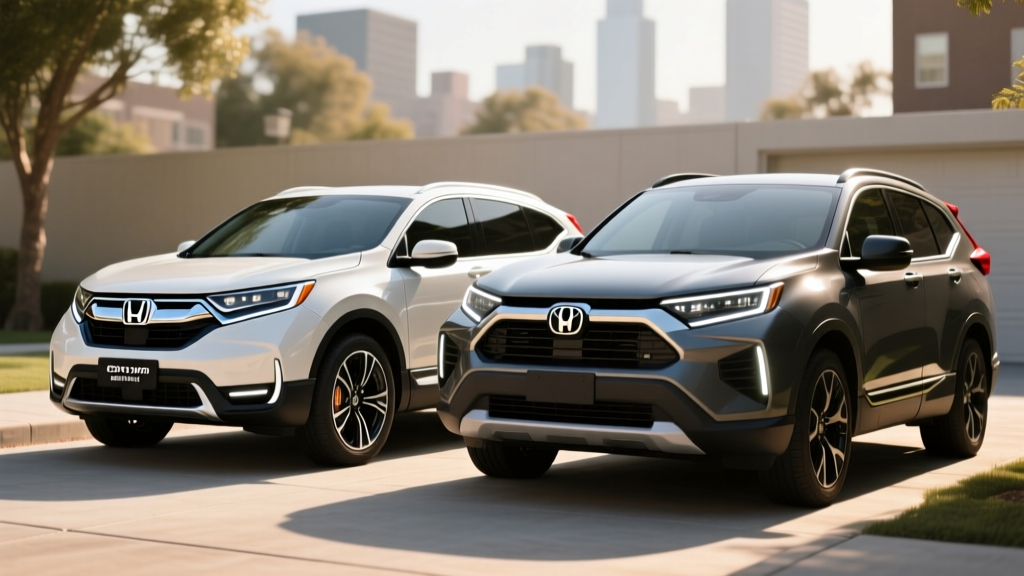
The Honda CR-V Hybrid has become one of the best-selling electrified compact SUVs in America, and for 2026, Honda carries forward the formula that made the sixth-generation CR-V a segment benchmark: a refined two-motor hybrid system, a spacious cabin, and real-world efficiency that often beats its EPA sticker in city driving. If you've been searching for details on the 2026 Honda CR-V Hybrid interior alongside its powertrain specs and ownership costs, this guide covers every number that matters.
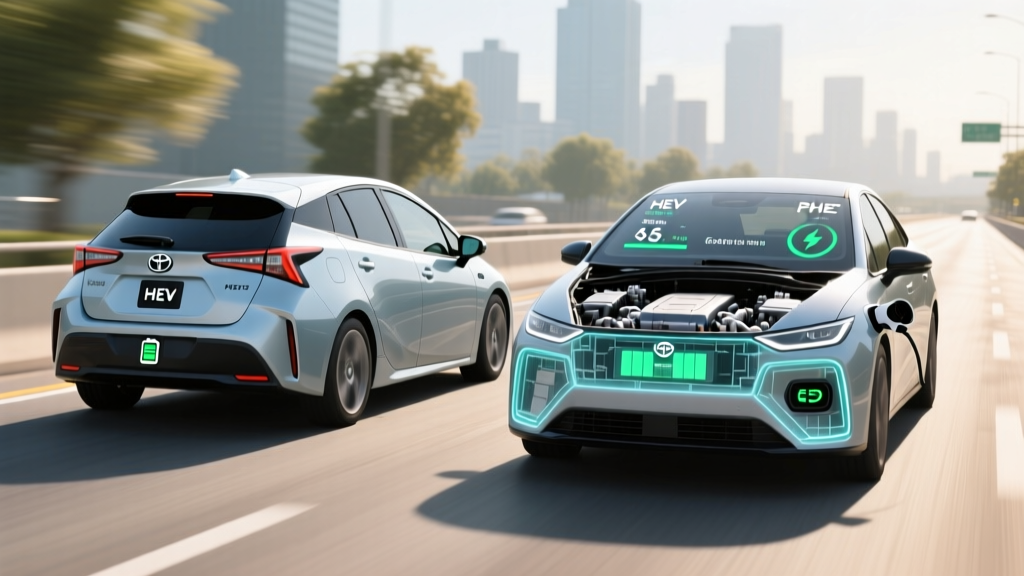
Unlike a plug-in hybrid (PHEV) or a full battery-electric vehicle (BEV), the CR-V Hybrid is a conventional self-charging hybrid (HEV). It never needs to be plugged in. The gasoline engine and regenerative braking replenish a small traction battery, while the electric motors handle low-speed propulsion and assist during acceleration. The result is a vehicle that drives like a normal SUV but sips fuel like a compact sedan.
2026 Honda CR-V Hybrid Interior: Dimensions, Cargo, and Cabin Quality
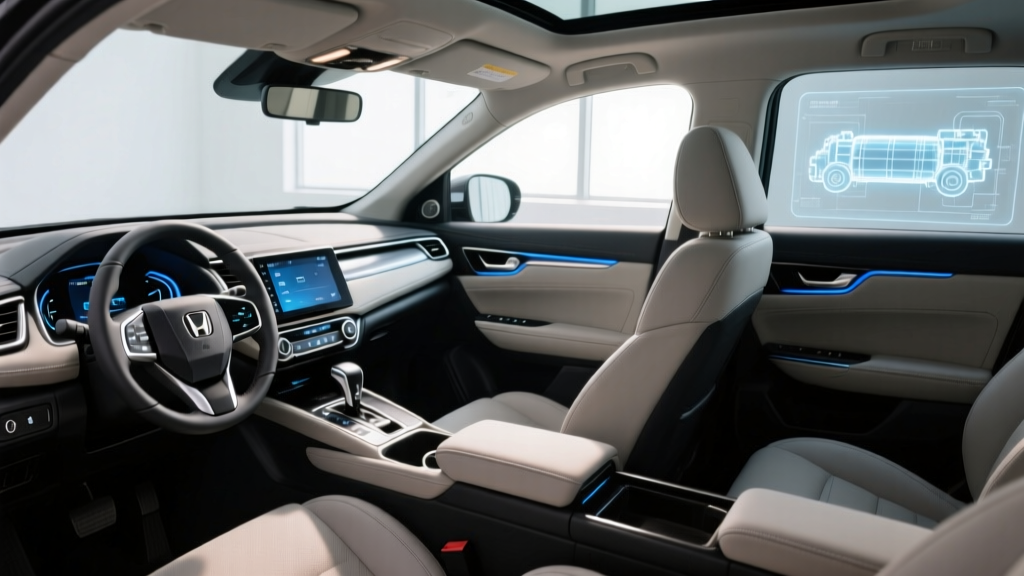
The 2026 CR-V Hybrid shares its cabin architecture with the gas-only CR-V, meaning interior space is generous by compact-SUV standards. Honda's packaging advantage — mounting the hybrid battery under the cargo floor without compromising volume — carries over from the 2023 redesign.
| Measurement | Specification |
|---|---|
| Front headroom | 40.0 in |
| Rear headroom | 38.2 in |
| Front legroom | 41.3 in |
| Rear legroom | 41.0 in |
| Cargo volume (behind 2nd row) | 36.3 cu ft |
| Cargo volume (seats folded) | 76.5 cu ft |
| Seating capacity | 5 passengers |
Higher trims (Sport Touring Hybrid, Sport-L Hybrid) add leather-trimmed seats, a 9-inch touchscreen with wireless Apple CarPlay and Android Auto, a 12-speaker Bose audio system, and a wireless phone charger. Lower Sport Hybrid trims use a 7-inch touchscreen with wired smartphone integration. All trims include Honda Sensing — the brand's Level 2 driver-assistance suite with adaptive cruise control, lane-keeping assist, and automatic emergency braking.
Build quality is a CR-V Hybrid strong point. Soft-touch materials cover the dashboard and door uppers, and the center console offers a deep storage bin. Rear-seat comfort is excellent: the 41.0 inches of legroom rivals midsize SUVs, and the rear seatbacks recline slightly for long trips. One practical note: the hybrid battery placement raises the cargo floor roughly one inch compared to the gas model, but cargo volume remains identical at 36.3 cubic feet.
Powertrain Specs: Two-Motor Hybrid System
The 2026 CR-V Hybrid uses Honda's fourth-generation two-motor hybrid system, pairing a 2.0-liter Atkinson-cycle four-cylinder engine with two electric motors and an electronically controlled continuously variable transmission (e-CVT).
| Specification | Value |
|---|---|
| Engine | 2.0L Atkinson-cycle I-4 |
| Engine horsepower | 148 hp |
| Combined system horsepower | 204 hp |
| Combined system torque | 247 lb-ft |
| Transmission | e-CVT (direct-drive) |
| Drivetrain (standard) | FWD |
| Drivetrain (available) | Real-Time AWD |
| 0-60 mph (est.) | ~7.8 seconds |
| Towing capacity | 1,000 lbs |
| Traction battery | ~1.1 kWh lithium-ion (sealed) |
This is a series-parallel hybrid system. At low speeds, the gasoline engine acts primarily as a generator, powering the drive motor electrically (series mode). At highway cruising speeds, a lockup clutch connects the engine directly to the wheels (parallel mode) for optimal efficiency. The transition is nearly imperceptible — a hallmark of Honda's hybrid engineering.
The AWD variant uses a rear-mounted electric motor that engages the rear axle when traction is needed, rather than a mechanical driveshaft. This reduces parasitic loss and preserves fuel economy, though the AWD penalty is only 1-2 MPG combined versus FWD.
Fuel Economy: EPA Ratings and Real-World MPG
Fuel efficiency is the primary reason buyers choose the CR-V Hybrid over the turbocharged gas model. Here are the official EPA figures:
| Drivetrain | City MPG | Highway MPG | Combined MPG |
|---|---|---|---|
| FWD (Sport Hybrid, Sport-L Hybrid) | 43 | 36 | 40 |
| AWD (Sport Touring Hybrid, all AWD trims) | 40 | 34 | 37 |
Real-world MPG vs. EPA: Hybrids routinely exceed their EPA city ratings in stop-and-go driving because regenerative braking recovers energy that a gas car wastes as heat. In urban commuting, CR-V Hybrid owners frequently report 42-45 MPG with FWD. Highway driving is the opposite story: sustained 75+ mph speeds reduce the electric motor's advantage, and real-world highway figures typically land between 32-35 MPG for FWD and 30-33 MPG for AWD. In cold weather (below 30°F), expect a 5-10% reduction across the board as the engine runs more frequently to heat the cabin and bring the catalytic converter to operating temperature.
For context, the gas-only 2026 CR-V AWD rates at 28 MPG combined. The hybrid's 37 MPG combined (AWD) represents a 32% improvement — roughly $350-$500 in annual fuel savings at 15,000 miles per year and $3.40/gallon regular unleaded, according to fueleconomy.gov estimates.
HEV vs. PHEV vs. BEV: Which Powertrain Fits You?
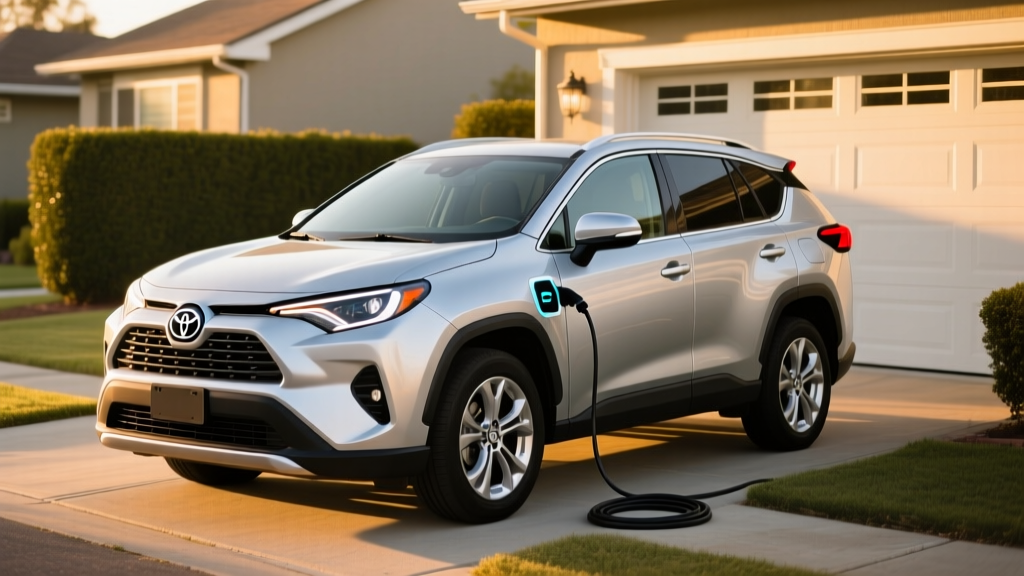
The CR-V Hybrid is a conventional hybrid (HEV). Honda does not currently offer a plug-in hybrid (PHEV) version of the CR-V in the United States — if you want electric-only driving from Honda, you would need to look at the discontinued Clarity PHEV (used market) or wait for future product announcements. Here's how the three electrified powertrain types compare for a compact-SUV buyer:
| Factor | HEV (CR-V Hybrid) | PHEV (e.g., Toyota RAV4 Prime) | BEV (e.g., Hyundai Ioniq 5) |
|---|---|---|---|
| Plug-in charging required? | No | Yes (optional but recommended) | Yes (required) |
| Electric-only range | 0 miles (EV assist only) | 25-42 miles typical | 250-320+ miles typical |
| Total range | ~500+ miles | ~450-550 miles | 250-320 miles |
| Home charging setup needed? | No | Recommended (Level 2) | Essential (Level 2) |
| Federal tax credit (§30D) | Not eligible | Up to $7,500 (if eligible) | Up to $7,500 (if eligible) |
| Best for | No charging access; simple ownership | Home charging + short commutes | Home charging + no gas dependency |
Choose the CR-V Hybrid (HEV) if: You lack access to home or workplace charging, you want a straightforward ownership experience with no plug-in routine, and you value the range security of a gasoline tank for long road trips. The CR-V Hybrid is also the right call if your budget doesn't stretch to the $4,000-$7,000 price premium that PHEVs and BEVs typically carry before incentives.
Consider a PHEV or BEV instead if: You can install a Level 2 home charger, your daily commute is under 35 miles (making a PHEV nearly gas-free on weekdays), or you want to eliminate tailpipe emissions from daily driving. A PHEV like the Toyota RAV4 Prime (42 miles electric-only) or a BEV like the Hyundai Ioniq 5 can deliver dramatically lower operating costs — but only if you charge regularly.
Pricing, Trims, and Tax Credit Eligibility
The 2026 Honda CR-V Hybrid is available across four trims, all using the same 204-hp powertrain. Pricing starts in the mid-$30,000s before destination.
| Trim | Drivetrain | MSRP (est.) |
|---|---|---|
| Sport Hybrid | FWD | $36,350 |
| Sport Hybrid | AWD | $37,850 |
| Sport-L Hybrid | AWD | $39,850 |
| Sport Touring Hybrid | AWD | $43,350 |
Federal tax credit (§30D): The CR-V Hybrid does not qualify for the federal plug-in EV tax credit. IRS §30D applies only to plug-in electric vehicles (PHEVs and BEVs) with a battery capacity of at least 7 kWh. The CR-V Hybrid's traction battery is approximately 1.1 kWh — far below the threshold. This is standard for all conventional hybrids (HEVs), including the Toyota RAV4 Hybrid and Hyundai Tucson Hybrid.
Some states and municipalities offer separate incentives for hybrid vehicles, though these are less common than EV incentives. Check your state energy office or the Alternative Fuels Data Center for current local programs. Honda occasionally offers manufacturer rebates on hybrid trims — check Honda's current incentives page before purchasing.
Battery Warranty, Reliability, and Replacement Cost
Hybrid battery longevity is consistently a top concern for first-time hybrid buyers. Here's what the data shows:
2026 Honda CR-V Hybrid Battery & Powertrain Warranty
- Hybrid battery (IMA system): 8 years / 100,000 miles (10 years / 150,000 miles in CARB states including CA, NY, MA, CT, ME, MD, NJ, OR, RI, VT, WA)
- Powertrain warranty: 5 years / 60,000 miles
- Limited vehicle warranty: 3 years / 36,000 miles
Honda's hybrid battery replacement cost, should it be needed out of warranty, typically ranges from $2,000 to $3,500 including labor at a dealership. However, failure rates on Honda's lithium-ion hybrid batteries are very low. Real-world data from fleet operators and owner surveys suggest that Honda hybrid batteries routinely last 150,000-200,000+ miles before significant capacity degradation. Unlike a BEV battery, the CR-V Hybrid's small traction battery cycles shallowly (it never fully charges or fully discharges), which dramatically extends its cycle life.
The 2.0L Atkinson-cycle engine is also among Honda's most reliable powerplants — it's a naturally aspirated design with fewer stress points than a turbocharged engine. Consumer Reports has consistently rated recent CR-V Hybrid model years as above-average for predicted reliability, and IIHS named the CR-V a Top Safety Pick+ in its most recent evaluation cycle.
Driving Impressions and Ownership Practicalities
The 2026 CR-V Hybrid drives with the composure of a well-tuned compact crossover. The e-CVT eliminates gear-shift shock, and the electric motor's instant torque (247 lb-ft available from low RPM) makes the CR-V Hybrid feel quicker than its 7.8-second 0-60 time suggests in around-town driving. Highway passing power is adequate, though the engine does drone under hard acceleration as the e-CVT holds revs — a characteristic of all CVT-based hybrid systems.
Ride quality is tuned toward comfort. The suspension absorbs bumps effectively, and cabin noise is well-controlled at cruising speeds, with a noticeable improvement in sound insulation over the previous-generation CR-V Hybrid.
Practical ownership notes:
- Fuel grade: Regular unleaded (87 octane) — no premium fuel required.
- Oil change interval: Maintenance Minder system, typically every 7,500-10,000 miles with synthetic oil.
- Insurance: Hybrid trims carry roughly the same insurance premiums as equivalent gas trims — no EV insurance surcharge.
- Maintenance savings: Regenerative braking reduces brake pad wear, often extending pad life to 60,000-80,000+ miles. No timing belt (chain-driven), no turbo to service.
Pros and Cons
Pros
- 40 MPG combined (FWD) with real-world city figures often exceeding EPA
- Spacious interior with 41.0 in rear legroom and 36.3 cu ft cargo
- No plug-in charging required — zero lifestyle adjustment
- AWD available with only a 3 MPG combined penalty
- Comprehensive Honda Sensing safety suite standard on all trims
- Proven hybrid reliability with 8yr/100k-mile battery warranty (10yr in CARB states)
Cons
- Not eligible for the $7,500 federal §30D tax credit (HEV, not PHEV)
- Highway MPG drops to 34-36 (FWD) — less advantage over gas models at sustained speed
- Engine drone under hard acceleration (e-CVT characteristic)
- Towing limited to 1,000 lbs (vs. 1,500 lbs for gas CR-V AWD)
- No PHEV option in the CR-V lineup for electric-only commuting
- 7-inch base touchscreen on Sport Hybrid feels dated vs. competitors
Frequently Asked Questions
How many MPG does the 2026 Honda CR-V Hybrid get?
The FWD CR-V Hybrid is EPA-rated at 43 city / 36 highway / 40 combined MPG. The AWD version rates at 40 city / 34 highway / 37 combined. In real-world city driving, many owners report 42-45 MPG with FWD thanks to aggressive regenerative braking. Highway fuel economy at 75+ mph typically falls to 32-35 MPG (FWD) or 30-33 MPG (AWD).
Does the 2026 CR-V Hybrid need to be plugged in?
No. The CR-V Hybrid is a conventional hybrid (HEV), not a plug-in hybrid (PHEV). The traction battery recharges through the gasoline engine and regenerative braking during normal driving. You simply refuel with gasoline as you would any other car.
Does the 2026 Honda CR-V Hybrid qualify for any tax credit?
The CR-V Hybrid does not qualify for the federal §30D plug-in EV tax credit, which requires a battery of at least 7 kWh and plug-in capability. As a conventional hybrid with a ~1.1 kWh battery, it is ineligible. Some state or local programs may offer minor hybrid incentives — check the Alternative Fuels Data Center for current programs in your area.
How long will the CR-V Hybrid battery last and what does replacement cost?
Honda covers the hybrid battery for 8 years/100,000 miles (10 years/150,000 miles in CARB states). Real-world data indicates these batteries commonly last 150,000-200,000+ miles. Out-of-warranty replacement costs approximately $2,000-$3,500 at a dealership. The battery uses shallow charge cycles (never fully charging or fully depleting), which significantly extends lithium-ion cell longevity.
Should I buy the CR-V Hybrid, a PHEV, or a full EV?
Choose the CR-V Hybrid if you cannot charge at home or work, want no change to your fueling routine, and prioritize a lower purchase price. Choose a PHEV (like the Toyota RAV4 Prime) if you can install a Level 2 charger and your daily commute is under 40 miles — you'll drive mostly electric on weekdays and use gas only for road trips. Choose a BEV (like the Hyundai Ioniq 5 or Tesla Model Y) if you want zero tailpipe emissions, have reliable home charging, and your typical trips fall within 250 miles. Each powertrain has a clear ideal use case — there is no universally "best" choice.
How does the CR-V Hybrid compare to the Toyota RAV4 Hybrid?
The 2026 RAV4 Hybrid rates at 41 MPG combined (AWD standard) vs. the CR-V Hybrid AWD's 37 MPG combined. The RAV4 Hybrid has a slight efficiency advantage and a longer track record in the hybrid segment. The CR-V Hybrid counters with a more refined interior, more rear-seat legroom (41.0 in vs. 37.8 in), and a smoother e-CVT calibration. Both are strong choices; test-driving both back-to-back is the best way to decide.
Is the 2026 CR-V Hybrid available with AWD?
Yes. Honda offers Real-Time AWD on all CR-V Hybrid trims. The system uses a rear-mounted electric motor to send power to the rear wheels when slip is detected or during hard acceleration. The AWD system adds approximately $1,500 to the MSRP and reduces combined fuel economy by 3 MPG (from 40 to 37 combined).