Quick Verdict: The Rugged Hybrid That Doesn't Need a Plug
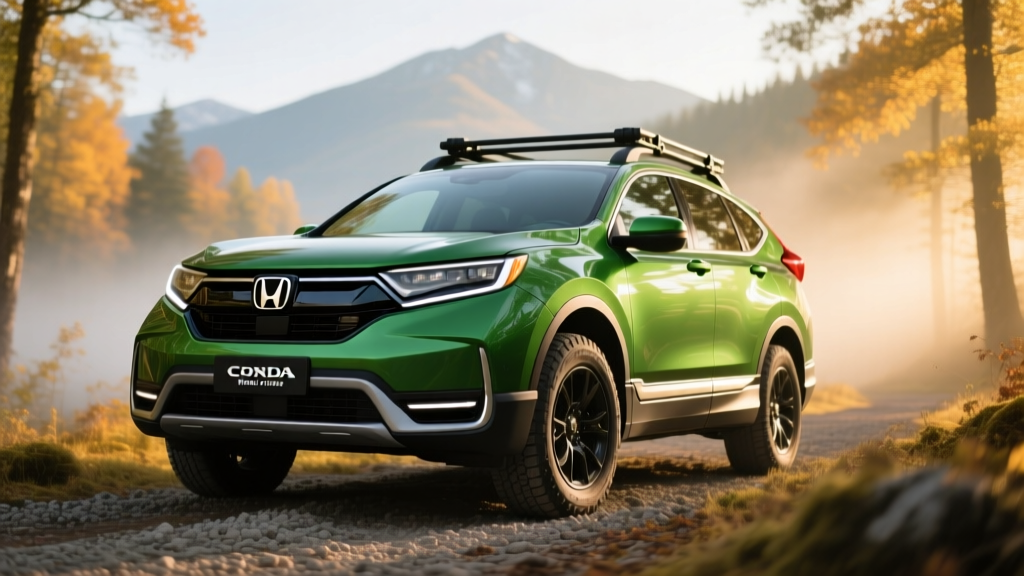
The 2026 Honda CR-V TrailSport Hybrid in Canyon River Blue (the green-blue hue buyers search for) occupies a precise niche: a midsize crossover with genuine all-wheel drive, a two-motor hybrid powertrain delivering 204 combined horsepower, and EPA-estimated 40 MPG combined — all without ever plugging in. For buyers who want off-road styling cues and strong fuel economy but lack home charging access, this is one of the most practical choices in the segment.
This guide breaks down exactly what the TrailSport Hybrid delivers, how its conventional hybrid (HEV) system differs from a plug-in hybrid (PHEV), and whether it makes more financial sense than a full battery-electric vehicle (BEV) or a gas-only rival.
HEV vs PHEV: What the CR-V TrailSport Actually Is
Conventional Hybrid (HEV) — This is the CR-V TrailSport Hybrid. It uses a small battery (roughly 1.1 kWh) that recharges through regenerative braking and the gasoline engine. You never plug it in. It cannot drive on electric power alone for meaningful distances. The benefit: simplicity, lower cost, and no charging infrastructure requirement.
Plug-in Hybrid (PHEV) — The CR-V does NOT offer a PHEV variant in the US. A PHEV (like the Toyota RAV4 Prime) has a larger battery (~18 kWh), an electric-only range of 30-42 miles, and requires plugging in to realize its efficiency advantage. If Honda offered a CR-V PHEV, it would qualify for partial federal tax credits — but as of 2026, it does not exist in the US lineup.
This distinction matters because many shoppers confuse the two. The CR-V TrailSport Hybrid is strictly a self-charging HEV. You fuel it at a gas station like any other car, and the hybrid system seamlessly manages the blend of electric motor assist and engine power to maximize efficiency.
Fuel Economy: EPA Ratings and Real-World MPG
| Metric | EPA Estimate | Real-World Expectation |
|---|---|---|
| City MPG | 43 MPG | 42–46 MPG |
| Highway MPG | 36 MPG | 33–36 MPG |
| Combined MPG | 40 MPG | 37–41 MPG |
| Fuel Tank | 14.0 gal | ~500–560 mi total range |
Why hybrids often beat EPA in the city: Unlike gas-only cars, the CR-V Hybrid's electric motors handle low-speed driving and stop-and-go traffic with minimal engine use. Regenerative braking recaptures energy at every stoplight. In our experience and consistent with fueleconomy.gov data, Honda's two-motor hybrid system excels in urban environments where a conventional powertrain is least efficient.
Highway reality check: At sustained 70-80 MPH speeds, the gasoline engine does most of the work. Expect 33-36 MPG on long highway trips, especially with the TrailSport's all-terrain tires (which add rolling resistance versus the Sport Hybrid's street tires). Cold weather drops efficiency an additional 5-10% due to increased engine warm-up time and cabin heating demands.
Powertrain and Performance Specs
| Specification | 2026 CR-V TrailSport Hybrid |
|---|---|
| Engine | 2.0L Atkinson-cycle 4-cylinder |
| Engine HP | 145 HP @ 6,100 RPM |
| Electric Motors | Two-motor hybrid system (generator + drive motor) |
| Drive Motor Output | 181 HP / 247 lb-ft torque |
| Combined System HP | 204 HP |
| Drivetrain | Real Time AWD™ (standard on TrailSport) |
| Transmission | e-CVT (no traditional gears) |
| 0–60 MPH | ~7.6 seconds |
| Hybrid Battery | ~1.1 kWh lithium-ion (self-charging, not plug-in) |
| Towing Capacity | 1,000 lbs |
| Cargo Volume | 36.3 cu ft (rear up) / 76.5 cu ft (rear folded) |
| Ground Clearance | 8.2 inches |
Honda's two-motor hybrid system is fundamentally different from Toyota's planetary-gear hybrid. At low speeds, the CR-V drives primarily on its electric motor, with the gas engine acting as a generator. At highway speeds, a lock-up clutch connects the engine directly to the wheels for efficiency. The result is smooth, linear acceleration that feels more like an EV than a traditional hybrid — especially in city driving where the 247 lb-ft of electric torque provides immediate response.
The TrailSport trim adds all-terrain tires, revised suspension tuning, and Hill Descent Control. It is not a hardcore off-roader (ground clearance is 8.2 inches versus a Subaru Forester's 9.2), but it handles dirt roads, snow, and mild trails with confidence.
Pricing, Trims, and Tax Credit Eligibility
The 2026 Honda CR-V TrailSport Hybrid carries an MSRP of approximately $38,350 (including destination). The Canyon River Blue exterior — the "green" shade many buyers search for — is available on the TrailSport trim at no additional charge.
| Item | Cost |
|---|---|
| Base MSRP (TrailSport Hybrid AWD) | $38,350 |
| Canyon River Blue Pearl Paint | Included |
| HPD Package (roof rails, fender flares) | ~$1,200 |
| Typical Out-the-Door (before incentives) | ~$39,500–$41,500 |
⚠ Federal Tax Credit: Not Eligible. The CR-V TrailSport Hybrid is a conventional HEV, not a plug-in vehicle. Under IRS §30D rules, only battery-electric vehicles (BEVs) and plug-in hybrids (PHEVs) with sufficient battery capacity qualify for the federal clean vehicle credit. Conventional hybrids do not qualify for any federal purchase incentive.
Some states offer separate hybrid incentives (e.g., HOV lane access, state rebates). Check your state's alternative fuel vehicle laws for local benefits, but do not expect a federal credit.
Battery Warranty, Reliability, and Replacement Cost
Honda Hybrid Battery Warranty
- Coverage: 8 years / 100,000 miles (10 years / 150,000 miles in CARB states including CA, NY, MA, and 12 others)
- What's covered: Hybrid battery pack, electric drive motors, power control unit, and related hybrid-system components
- Capacity threshold: Honda warrants against defects and abnormal degradation; unlike BEVs, there is no published minimum capacity-retention percentage because the small HEV battery is rarely the limiting factor in vehicle operation
Reliability track record: Honda's two-motor hybrid system has been in production since the 2014 Accord Hybrid and has proven robust. The CR-V Hybrid specifically has been sold in the US since the 2020 model year with no widespread battery failure reports. The lithium-ion hybrid battery is small (~1.1 kWh), experiences shallow charge/discharge cycles (it never fully depletes or fully charges), and is actively cooled — all factors that promote longevity.
Battery replacement cost: If the hybrid battery fails outside warranty, replacement runs approximately $2,000–$4,000 including labor at a Honda dealer. However, real-world data from high-mileage Honda and Toyota hybrids shows these batteries routinely lasting 150,000–200,000+ miles before significant degradation. For most owners, the hybrid battery will outlast the vehicle's economic life.
The conventional powertrain components (the 2.0L Atkinson-cycle engine, e-CVT) also benefit from reduced wear: the electric motor handles initial acceleration (reducing engine load), and regenerative braking extends brake pad life significantly — many hybrid owners report 80,000+ miles on original brake pads.
TrailSport Hybrid vs Sport Hybrid vs Gas CR-V: Which Trim?
| Feature | Sport Hybrid (FWD) | TrailSport Hybrid (AWD) | EX-L (Gas AWD) |
|---|---|---|---|
| Combined MPG | 43 MPG | 40 MPG | 28 MPG |
| Drivetrain | FWD | AWD | AWD |
| System HP | 204 HP | 204 HP | 190 HP |
| Ground Clearance | 8.2 in | 8.2 in | 8.2 in |
| All-Terrain Tires | No | Yes | No |
| MSRP (approx.) | $35,850 | $38,350 | $37,450 |
The TrailSport Hybrid sacrifices 3 MPG combined versus the FWD Sport Hybrid due to AWD weight and all-terrain tire rolling resistance. For buyers who need AWD and want the rugged aesthetic, the 3 MPG trade-off is modest — you still save roughly $800–$1,000 per year in fuel versus the gas-only CR-V AWD (assuming 15,000 miles/year and $3.50/gallon).
Who Should Buy the CR-V TrailSport Hybrid — and Who Shouldn't
✓ Choose This Hybrid If:
- You lack home or workplace charging access (apartment, street parking)
- You want 40 MPG without changing any fueling habits
- You need AWD for snow, rain, or light off-road use
- You want lower total cost of ownership versus gas without EV upfront premium
- You drive a mix of city and highway miles (hybrids shine in mixed use)
✗ Look Elsewhere If:
- You want to drive on electricity alone (consider a PHEV like the RAV4 Prime or a BEV)
- You want a federal tax credit (only PHEVs and BEVs qualify under §30D)
- You tow more than 1,000 lbs (the hybrid's towing capacity is limited)
- You want hardcore off-road capability (consider a body-on-frame SUV or a Bronco Sport Badlands)
- You prioritize 0-60 performance above all (7.6 seconds is adequate, not quick)
Hybrid vs PHEV vs EV: Which Fits Your Life?
HEV (CR-V TrailSport Hybrid): Best for drivers without reliable charging access who want maximum simplicity. No behavior change needed — just fill up with gas and go. Lowest upfront cost of the three options.
PHEV (e.g., RAV4 Prime, Tucson PHEV): Best for drivers with home Level 2 charging who commute under 35 miles round-trip. You drive on electricity daily and use gas only for road trips. Higher upfront cost but dramatically lower fuel spend. May qualify for partial federal tax credit.
BEV (e.g., Tesla Model Y, Hyundai Ioniq 5): Best for drivers with home charging who want zero tailpipe emissions, the lowest per-mile fuel cost (~$0.04/mi on home electricity vs $0.15/mi on gas for the hybrid), and access to the full $7,500 federal credit (if eligible). Requires planning for road-trip charging.
5-Year Fuel Cost Savings: Hybrid vs Gas CR-V
Assuming 15,000 miles/year, $3.50/gallon regular unleaded, and EPA combined ratings:
| Metric | CR-V TrailSport Hybrid (40 MPG) | CR-V EX-L Gas AWD (28 MPG) |
|---|---|---|
| Annual fuel consumption | 375 gallons | 536 gallons |
| Annual fuel cost | $1,313 | $1,876 |
| 5-year fuel cost | $6,563 | $9,380 |
| 5-year savings (hybrid) | ~$2,817 | |
The $900 MSRP premium of the TrailSport Hybrid over the gas EX-L AWD is recovered through fuel savings in roughly 5 years — and the hybrid also benefits from reduced brake wear and potentially higher resale value. According to EPA fueleconomy.gov comparisons, the hybrid's annual fuel cost advantage widens further if gas prices rise above $3.50/gallon.
Frequently Asked Questions
How many MPG does the 2026 Honda CR-V TrailSport Hybrid get?
The EPA rates the 2026 CR-V TrailSport Hybrid AWD at 43 city / 36 highway / 40 combined MPG. In real-world driving, expect 42–46 MPG in city conditions (where the hybrid system excels) and 33–36 MPG on sustained highway trips. Cold weather and aggressive driving can reduce these figures by 5–10%.
Does the CR-V TrailSport Hybrid need to be plugged in?
No. The CR-V TrailSport Hybrid is a conventional hybrid (HEV), not a plug-in hybrid (PHEV). Its small lithium-ion battery recharges automatically through regenerative braking and the gasoline engine. You fuel it exclusively at gas stations — no charging cable, no home charger, no public charging network required.
Does the 2026 CR-V Hybrid qualify for any tax credit?
No federal tax credit is available. Under current IRS §30D rules, only plug-in electric vehicles (BEVs and PHEVs) qualify for the federal clean vehicle credit. Conventional hybrids like the CR-V Hybrid are excluded. Some states may offer minor incentives (HOV lane stickers, registration fee reductions), but these vary by jurisdiction — check your state's DMV or energy office for details.
Is the Honda CR-V Hybrid reliable, and what does battery replacement cost?
Honda's hybrid system has a strong reliability record since its 2014 debut. The CR-V Hybrid's lithium-ion battery is warrantied for 8 years/100,000 miles (10 years/150,000 miles in CARB states). Real-world data indicates these batteries typically last 150,000–200,000+ miles. Out-of-warranty replacement costs approximately $2,000–$4,000 at a Honda dealer. The hybrid system actually reduces wear on the engine and brakes, potentially lowering long-term maintenance costs versus the gas-only model.
What color is the "green" 2026 CR-V TrailSport?
The green-hued color available on the 2026 CR-V TrailSport is called Canyon River Blue Pearl — a blue-green shade that reads as a muted teal or sage green in natural light. It is included at no extra cost on the TrailSport trim. Honda does not offer a traditional forest green on this model.
How does the TrailSport Hybrid compare to the Toyota RAV4 Hybrid Woodland Edition?
The RAV4 Hybrid Woodland Edition (AWD, ~$36,000 MSRP) is the closest competitor, rated at 39 MPG combined versus the TrailSport Hybrid's 40 MPG. The Toyota offers slightly more cargo space (37.5 vs 36.3 cu ft) and a longer production track record, but the Honda's two-motor hybrid system delivers smoother acceleration feel and a more refined interior. Both are strong choices — the decision often comes down to styling preference and dealer pricing in your area.
Sources: EPA Fuel Economy (fueleconomy.gov), Honda Automobiles official specifications, IRS Clean Vehicle Credits (irs.gov). Pricing and specifications reflect 2026 model year data available at time of publication. Always verify current pricing with your local Honda dealer and confirm tax credit eligibility with a qualified tax professional.