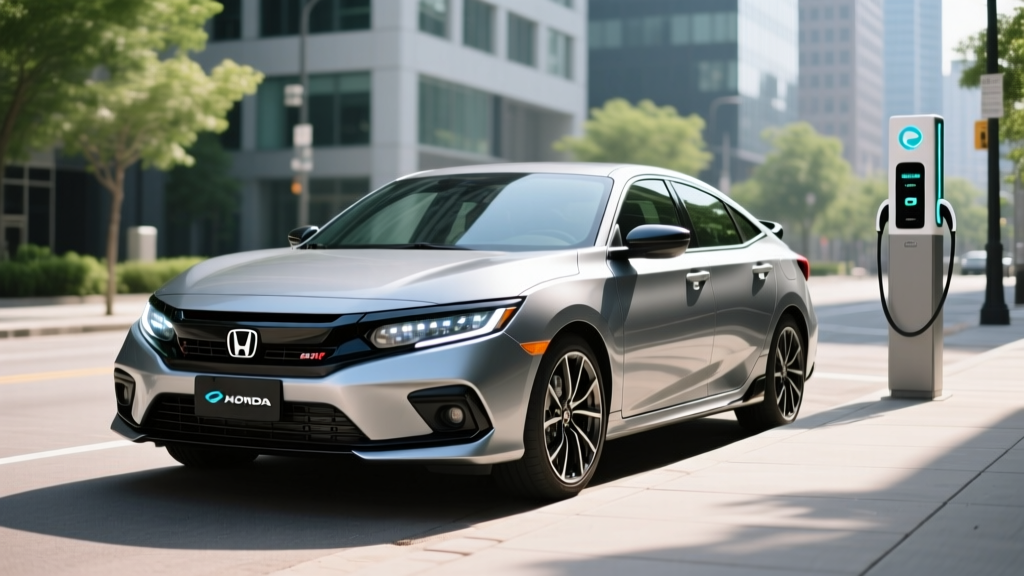
Quick Verdict: The 2026 Honda Civic Sport Hybrid Sedan in Context
The 2026 Honda Civic Sport Hybrid Sedan occupies a specific niche: a conventional hybrid electric vehicle (HEV) that requires no plug, no charging routine, and no lifestyle adjustment from a gasoline-only Civic. It pairs a 2.0-liter Atkinson-cycle four-cylinder with a two-motor hybrid system to produce 200 combined horsepower and an EPA-estimated 49 MPG combined. For drivers who want meaningful fuel savings without range anxiety or charging infrastructure dependence, the Sport Hybrid trim is the sweet spot in Honda's compact sedan lineup.
This guide covers everything a buyer needs to evaluate: exact EPA fuel economy, how the hybrid powertrain works, real-world MPG expectations, battery longevity, warranty coverage, pricing, and how this HEV stacks up against plug-in hybrids and full battery-electric vehicles (BEVs).
HEV vs PHEV: What the Civic Sport Hybrid Actually Is
Before examining specs, it's critical to distinguish what this car is and is not. The 2026 Civic Sport Hybrid is a conventional hybrid (HEV), not a plug-in hybrid (PHEV). This distinction affects everything from daily use to tax credit eligibility.
Conventional Hybrid (HEV) — Civic Sport Hybrid
- No plug; charges itself via regenerative braking and the gasoline engine
- Small battery (~1.1 kWh usable) — assists the engine but cannot drive on electric-only power at meaningful speeds or distances
- Fuel economy advantage: consistent across all driving conditions
- Zero change to fueling habits — you still fill up at gas stations
Plug-In Hybrid (PHEV)
- Requires plugging in to access electric-only range (typically 20–50 miles)
- Larger battery (12–20+ kWh) — can drive highway speeds on electricity alone when charged
- Fuel economy depends heavily on charging frequency; uncharged PHEVs may get worse MPG than HEVs
- May qualify for federal §30D tax credits (up to $7,500) depending on battery sourcing and buyer income
The Civic Sport Hybrid falls firmly in the HEV column. You will never need to plug it in. Honda does not currently offer a PHEV version of the Civic in the U.S. market for the 2026 model year.
Fuel Economy: EPA Ratings and Real-World MPG
The headline number for the 2026 Civic Sport Hybrid Sedan is strong, but the city/highway split tells the more useful story for daily driving.
| Metric | EPA Estimate |
|---|---|
| City MPG | 50 MPG |
| Highway MPG | 47 MPG |
| Combined MPG | 49 MPG |
| Fuel Tank Capacity | 10.6 gallons |
| Total Estimated Range | ~519 miles |
Source: fueleconomy.gov
Real-World MPG: What to Actually Expect
Hybrid vehicles often exceed their EPA city estimates in stop-and-go driving because regenerative braking recovers energy that a gas car wastes as heat. In real-world ownership, expect:
- City / suburban driving: 48–54 MPG. Short trips with frequent stops maximize regen benefit. Warm weather helps.
- Highway cruising (70–80 mph): 42–47 MPG. Aerodynamic drag dominates at speed, and the hybrid system provides less advantage. Sustained 80+ mph will push this toward 38–40 MPG.
- Cold weather (below 32°F): 40–45 MPG combined. The engine runs more often to provide cabin heat and maintain battery temperature, reducing electric-motor assist time.
- Mixed driving (realistic average): 46–50 MPG for most owners over a full tank.
Compared to the non-hybrid 2026 Civic (EPA 33 MPG combined with the 2.0L engine), the Sport Hybrid delivers roughly 48% better fuel economy — a savings of approximately $400–$600 per year in fuel costs for a driver covering 15,000 miles annually at $3.50/gallon.
Powertrain: 200 Horsepower from Honda's Two-Motor Hybrid System
The Civic Sport Hybrid uses Honda's fourth-generation two-motor hybrid system, which operates differently from a traditional parallel hybrid like the older Toyota Hybrid Synergy Drive.
| Specification | Detail |
|---|---|
| Engine | 2.0L DOHC Atkinson-cycle inline-4 |
| Engine Power | 143 hp @ 6,000 rpm |
| Engine Torque | 134 lb-ft @ 4,500 rpm |
| Drive Motor Power | 184 hp (135 kW) |
| Drive Motor Torque | 232 lb-ft (315 Nm) |
| Combined System Output | 200 hp (149 kW) |
| Transmission | Electronic Continuously Variable (e-CVT) |
| Drivetrain | Front-wheel drive |
| Hybrid Battery | Lithium-ion, ~1.1 kWh usable |
| 0–60 mph | ~7.1 seconds |
How it works: In most driving conditions (city, suburban, moderate highway), the gasoline engine acts as a generator, producing electricity that powers the drive motor. The wheels are driven electrically, giving the Civic Hybrid the smooth, instant-torque feel of an EV at low and medium speeds. At sustained highway speeds (roughly 55+ mph), a lockup clutch connects the engine directly to the wheels for mechanical efficiency. This series-parallel architecture is why Honda's hybrid system delivers strong low-end responsiveness without the rubber-band feel of older e-CVTs.
Pricing, Trims, and Tax Credit Eligibility
The 2026 Civic Sport Hybrid Sedan positions itself as a premium compact hybrid, priced above the base Civic LX but below the Civic Touring Hybrid.
| Trim | MSRP (incl. destination) |
|---|---|
| Civic Sport Hybrid Sedan | $30,550 |
| Civic Sport Touring Hybrid Sedan | $33,550 |
Pricing per Honda's official specifications. Dealer pricing may vary.
Federal Tax Credit: Not Eligible
Under current IRS §30D rules, the federal Clean Vehicle Credit applies only to plug-in electric vehicles — battery-electric vehicles (BEVs) and plug-in hybrids (PHEVs) with a minimum battery capacity of 7 kWh. Because the Civic Sport Hybrid is a conventional HEV with a ~1.1 kWh battery and no plug, it does not qualify for the federal §30D tax credit.
Some states offer rebates or incentives for conventional hybrids, but these vary widely by jurisdiction and are typically modest ($250–$500). Check your state's energy or environmental agency for current programs. Do not count on a significant incentive to offset the hybrid premium.
Battery Longevity, Warranty, and Replacement Cost
Hybrid battery anxiety is the most common concern among first-time hybrid buyers. Here's what the data shows.
Honda Hybrid Battery Warranty
- Hybrid Battery: 8 years / 100,000 miles (10 years / 150,000 miles in CARB states including CA, NY, MA, WA, OR, and others)
- Powertrain Warranty: 5 years / 60,000 miles
- Hybrid System Components: 8 years / 100,000 miles
Warranty covers battery capacity loss below functional thresholds, not normal minor degradation.
How Long Do Honda Hybrid Batteries Last?
Honda's lithium-ion hybrid batteries are engineered for the vehicle's full lifespan. Real-world data from Honda hybrid owners (Insight, Accord Hybrid, CR-V Hybrid) shows:
- Typical lifespan: 150,000–250,000+ miles before any significant capacity loss
- Degradation pattern: Gradual, not sudden. You may lose 5–10% of hybrid system efficiency over 10 years, translating to 1–3 MPG reduction — barely noticeable in daily driving.
- Failure rate: Well under 2% within the warranty period based on owner survey data and repair databases.
Battery Replacement Cost
If the hybrid battery does fail outside warranty:
- OEM replacement: $2,000–$3,500 (parts + labor at a Honda dealer)
- Refurbished / aftermarket: $1,000–$2,000
- Individual cell replacement: Some independent hybrid specialists can replace failed cells for $500–$1,200
For context, this is far less than a BEV traction battery replacement ($10,000–$20,000+) because the Civic Hybrid's battery is small (~1.1 kWh vs. 60–100 kWh in a BEV). Most Civic Hybrid owners will never need a battery replacement.
Real-World Ownership: Who Should Choose This Hybrid?
The Civic Sport Hybrid is not the right choice for everyone. Here's a practical decision framework.
Choose the Civic Sport Hybrid If:
- You drive 12,000–20,000+ miles per year and want maximum fuel savings without behavioral change
- You live in an apartment or lack access to home charging (no plug needed)
- You want a compact sedan with strong resale value and Honda reliability
- You do significant city/suburban driving where hybrid efficiency shines
- You want lower total cost of ownership than a BEV without higher fuel costs of a gas car
Consider a BEV or PHEV Instead If:
- You have reliable home Level 2 charging and want zero tailpipe emissions
- You want to eliminate gas station visits entirely (BEV) or mostly (PHEV)
- You qualify for the $7,500 federal tax credit on a qualifying BEV/PHEV, which can offset a higher purchase price
- Your daily commute is under 40 miles and you want electric-only driving (PHEV)
- You want access to HOV lane stickers (available in some states for PHEVs and BEVs, not HEVs)
5-Year Cost of Ownership Snapshot
Assuming 15,000 miles/year, $3.50/gallon gasoline, and $0.14/kWh electricity:
| Vehicle | 5-Yr Fuel Cost | 5-Yr Maintenance | Estimated Total |
|---|---|---|---|
| 2026 Civic Sport Hybrid (49 MPG) | $5,357 | ~$2,800 | ~$8,157 |
| 2026 Civic 2.0L Gas (33 MPG) | $7,955 | ~$2,800 | ~$10,755 |
| Comparable BEV (3.5 mi/kWh) | $2,100 | ~$1,800 | ~$3,900 |
The hybrid saves roughly $2,600 in fuel over five years compared to the gas Civic. A BEV saves even more, but requires charging access and a higher upfront price (before tax credits).
Frequently Asked Questions
How many MPG does the 2026 Honda Civic Sport Hybrid get?
The EPA rates the 2026 Civic Sport Hybrid Sedan at 50 MPG city, 47 MPG highway, and 49 MPG combined. Real-world mixed driving typically yields 46–50 MPG, with city driving sometimes exceeding 50 MPG and sustained highway driving at 80+ mph dropping to 38–42 MPG.
Does the Civic Sport Hybrid need to be plugged in?
No. The Civic Sport Hybrid is a conventional hybrid (HEV). It charges its small lithium-ion battery through regenerative braking and the gasoline engine. You fuel it at a gas station exactly like a non-hybrid car.
How far can it go on electric-only power?
Because this is an HEV, not a PHEV, the Civic Sport Hybrid cannot drive on electric-only power at meaningful speeds or distances. The electric motor assists the gasoline engine and can propel the car at very low speeds (parking lots, brief coasting) for fractions of a mile, but it is not designed for electric-only commuting. If electric-only range is a priority, look at a PHEV like the Toyota Prius Prime (44 miles electric-only) or a full BEV.
Is the 2026 Civic Sport Hybrid reliable?
Honda's hybrid powertrain has a strong reliability record across the Accord Hybrid, CR-V Hybrid, and previous Insight models. The two-motor system has fewer moving parts than a conventional automatic transmission (no torque converter, no multi-gear shifting). Honda's hybrid battery carries an 8-year/100,000-mile warranty (10 years/150,000 miles in CARB states). Based on long-term owner data, hybrid battery failure within the first 150,000 miles is rare.
What does hybrid battery replacement cost?
An OEM Honda hybrid battery replacement runs $2,000–$3,500 at a dealer. Refurbished options cost $1,000–$2,000. However, most Civic Hybrid batteries last 150,000–250,000+ miles, meaning many owners will never face this expense.
Does the Civic Sport Hybrid qualify for any tax credit?
No. The federal §30D Clean Vehicle Credit applies only to plug-in vehicles (BEVs and qualifying PHEVs) with at least 7 kWh of battery capacity. The Civic Sport Hybrid's ~1.1 kWh battery and lack of a plug make it ineligible. Some states offer minor hybrid incentives, but these vary by jurisdiction and are typically $250–$500.
Hybrid vs PHEV vs EV — which should I choose?
Choose the HEV (Civic Sport Hybrid) if you lack home charging, want zero lifestyle change, and drive high annual miles. Choose a PHEV if you can charge at home, have a short commute (under 40 miles), and want electric-only daily driving with gas backup for road trips. Choose a BEV if you have reliable home charging, want the lowest operating cost and zero tailpipe emissions, and are comfortable planning around charging infrastructure for longer trips.