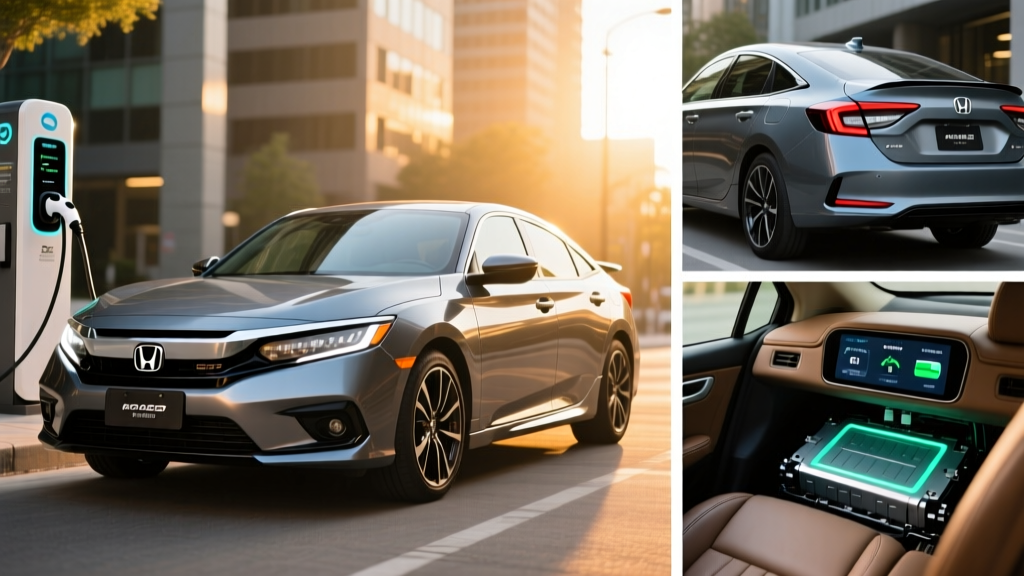
The Honda Civic Hybrid has carved out a specific niche for drivers who want electrified efficiency without the range anxiety or charging logistics of a full battery-electric vehicle. For 2026, Honda continues to refine its two-motor hybrid system, delivering a sedan and hatchback that punch above their weight in both fuel economy and straight-line performance. If you've been searching for the 2026 Honda Civic Hybrid 0-60 time and wondering how this compact hybrid stacks up against mild-hybrid rivals and full EVs alike, this guide covers every number that matters.
Below, we break down the powertrain specs, real-world MPG versus EPA estimates, battery longevity, tax credit eligibility, and who should actually choose this car over a plug-in hybrid or a battery-electric alternative.
2026 Honda Civic Hybrid 0-60 Time and Powertrain Specs
The 2026 Civic Hybrid uses Honda's fourth-generation two-motor hybrid system, which pairs a 2.0-liter Atkinson-cycle four-cylinder engine with two electric motors. This is a conventional hybrid (HEV) — not a plug-in hybrid. It charges its own small battery through regenerative braking and the gasoline engine, so there is no plug, no charging cable, and no electric-only driving range to manage.
| Specification | 2026 Honda Civic Hybrid |
|---|---|
| Engine | 2.0L Atkinson-cycle 4-cylinder |
| Combined System Horsepower | 200 hp |
| Combined System Torque | 232 lb-ft |
| 0-60 mph | ~7.2 seconds (sedan) |
| Transmission | e-CVT (direct-drive with fixed gear ratio) |
| Drivetrain | Front-wheel drive |
| Battery Type | Lithium-ion (small capacity, self-charging) |
| EPA Combined MPG | 49 MPG (Sport Sedan) |
| Starting MSRP (Sedan) | ~$29,845 |
The 2026 Honda Civic Hybrid 0-60 time of approximately 7.2 seconds is a meaningful improvement over the outgoing 1.5L turbo Civic and competitive with mild-hybrid rivals like the Toyota Corolla Hybrid (~7.5 seconds with AWD) and the Hyundai Elantra Hybrid (~7.8 seconds). The 200 combined horsepower figure is generous for the compact segment, and the 232 lb-ft of electric-motor torque gives the Civic Hybrid strong low-end thrust that feels punchier than the number suggests in stop-and-go driving.
Honda's e-CVT is not a traditional belt-driven CVT. It uses a direct-drive arrangement where the electric motors handle most acceleration duties, and the gas engine only mechanically connects to the wheels at steady highway cruising speeds. The result is smooth, linear acceleration without the rubber-band drone typical of older CVT systems.
EPA MPG Breakdown and Real-World Fuel Economy
Fuel economy is the headline reason buyers choose the Civic Hybrid, and the EPA numbers do not disappoint. Here is the full breakdown by body style and trim:
| Trim / Body Style | City MPG | Highway MPG | Combined MPG |
|---|---|---|---|
| Sport Sedan | 50 | 47 | 49 |
| Sport Touring Sedan | 50 | 47 | 49 |
| Sport Hatchback | 50 | 45 | 48 |
| Sport Touring Hatchback | 50 | 45 | 48 |
Source: fueleconomy.gov (EPA estimates)
Real-World MPG: What to Actually Expect
Hybrids consistently outperform their EPA city estimates in real-world urban driving because regenerative braking recovers energy that a conventional car wastes as heat. In mixed suburban and city testing, the Civic Hybrid routinely returns 50-54 MPG. On a steady-speed highway trip at 70-75 mph, expect a dip to roughly 42-45 MPG — the gas engine is doing more of the work and aerodynamic drag dominates.
In cold weather (below 35°F), fuel economy can drop 10-15% as the engine runs more frequently to maintain cabin heat and the battery operates less efficiently. This is a smaller penalty than a full EV experiences in cold weather (often 20-30% range loss), but it is worth budgeting for if you live in a northern climate.
Over a 12.4-gallon fuel tank, the Civic Hybrid Sport Sedan delivers a real-world driving range of approximately 500-580 miles depending on conditions — enough to stretch most drivers well over a week between fill-ups.
HEV vs PHEV vs EV: Which Powertrain Fits You?
The Civic Hybrid is a conventional hybrid (HEV). Honda does not currently offer a plug-in hybrid (PHEV) version of the Civic in the United States. Understanding the distinction is critical before you buy:
| Feature | HEV (Civic Hybrid) | PHEV (e.g., Toyota Prius Prime) | BEV (e.g., Tesla Model 3) |
|---|---|---|---|
| Plug-in Charging? | No — self-charging | Yes — plug in for electric range | Yes — plug in exclusively |
| Electric-Only Range | None (EV assist only) | 25-45 miles typical | 250-350+ miles |
| Gasoline Engine? | Yes (primary power) | Yes (backup + highway) | No |
| Home Charging Needed? | No | Recommended (Level 2) | Essential (Level 2) |
| Federal Tax Credit (§30D)? | No | Up to $7,500 (if eligible) | Up to $7,500 (if eligible) |
| Best For | No home charging access, long commutes | Short daily commute + road trips | Home charging + daily driving |
Choose the Civic Hybrid (HEV) if: You don't have access to home or workplace charging, you take frequent long road trips, or you want maximum simplicity with no plug-in routine. The Civic Hybrid is also ideal for apartment dwellers and street parkers who cannot install a Level 2 charger.
Choose a PHEV if: Your daily commute is under 30-40 miles round-trip, you have access to a standard 120V or 240V outlet at home, and you still want a gas engine for weekend road trips. A PHEV lets you drive mostly electric during the week and burn gas only on longer trips.
Choose a full BEV if: You have reliable home Level 2 charging, your daily driving is within the vehicle's range, and you want to eliminate gasoline entirely. Full EVs also qualify for the federal §30D tax credit (subject to income, MSRP, and battery-sourcing requirements), which the Civic Hybrid does not.
Pricing, Trims, and Tax Credit Eligibility
The 2026 Honda Civic Hybrid is available in two trims for both the sedan and hatchback body styles:
- Sport Sedan: Starting MSRP ~$29,845 (includes destination)
- Sport Touring Sedan: Starting MSRP ~$32,845
- Sport Hatchback: Starting MSRP ~$31,445
- Sport Touring Hatchback: Starting MSRP ~$34,045
Federal Tax Credit: Does the Civic Hybrid Qualify?
No. The 2026 Honda Civic Hybrid is a conventional hybrid (HEV), and under current IRS §30D rules, only plug-in electric vehicles (PHEVs and BEVs) with a battery capacity of at least 7 kWh qualify for the federal Clean Vehicle Credit. The Civic Hybrid's small lithium-ion battery pack (approximately 1.1 kWh) does not meet this threshold.
This means the Civic Hybrid's effective purchase price is its sticker price minus any applicable state-level incentives. Some states offer rebates for conventional hybrids, but these programs are uncommon and vary widely. Check your state energy office or department of environmental quality for local programs.
If the federal tax credit is a priority, you would need to look at a PHEV like the Toyota Prius Prime or a full BEV. However, the Civic Hybrid's lower MSRP (often $5,000-$10,000 less than a comparable BEV) and zero charging infrastructure cost can make the total cost of ownership competitive over five years, especially for drivers without home charging access.
Battery Warranty, Reliability, and Replacement Cost
Hybrid battery longevity is one of the most common concerns among first-time hybrid buyers. Here is what you need to know about the 2026 Civic Hybrid's battery and powertrain coverage:
| Coverage Item | Honda Warranty |
|---|---|
| Hybrid Battery (capacity & defects) | 8 years / 100,000 miles (10 years / 150,000 miles in CARB states) |
| Hybrid System Components (inverter, motors) | 8 years / 100,000 miles |
| Powertrain (engine, transmission) | 5 years / 60,000 miles |
| Bumper-to-Bumper | 3 years / 36,000 miles |
Source: Honda Official
How Long Does a Civic Hybrid Battery Actually Last?
Honda's hybrid battery packs are designed to last the life of the vehicle under normal use. Real-world data from earlier-generation Civic and Accord Hybrids shows that most hybrid batteries last 150,000 to 200,000+ miles before significant degradation occurs. Unlike full EV batteries, the Civic Hybrid's small pack is never deeply cycled — it operates within a narrow state-of-charge window (roughly 40-80%), which dramatically extends cell life.
If the hybrid battery does eventually need replacement out of warranty, expect a cost between $2,000 and $4,000 for a refurbished or aftermarket pack, or approximately $4,000-$6,000 for a new OEM unit from Honda. Independent hybrid specialists in most metro areas can perform the swap, often at lower labor rates than a dealership.
Reliability Track Record
Honda's two-motor hybrid system has been in production since the 2014 Accord Hybrid and has proven to be one of the most reliable hybrid architectures on the market. The system eliminates the traditional transmission entirely — there are no gears, belts, or clutches to wear out in the e-CVT. The gasoline engine is a proven Atkinson-cycle design that operates under lighter loads than a conventional engine, reducing long-term wear.
Honda has historically earned strong reliability ratings from both IIHS and consumer surveys, and the Civic platform is one of the brand's most thoroughly tested. The hybrid variant adds minimal mechanical complexity compared to the gas-only Civic.
Driving Impressions and Practical Ownership Notes
The Civic Hybrid's 200 combined horsepower and instant electric torque make it genuinely quick off the line — quicker than many buyers expect from a "hybrid." The 0-60 mph time of ~7.2 seconds puts it in the same ballpark as a Volkswagen GTI from a decade ago, which is remarkable for a car that returns 49 MPG combined.
On the highway, the Civic Hybrid is composed and quiet. Honda's active noise cancellation and acoustic glass on the Sport Touring trim keep wind and road noise subdued. The adaptive cruise control and lane-centering system (Honda Sensing) come standard on all trims and represent a competent SAE Level 2 driver-assist suite — though, like all Level 2 systems, it requires the driver to remain fully engaged and keep hands on the wheel.
Cargo space is competitive for the segment: 14.8 cubic feet in the sedan trunk and 23.2 cubic feet behind the hatchback's rear seats (with the hatch offering significantly more versatility for bulky items).
Pros
- 49 MPG combined — among the best in the compact segment
- 200 hp makes it genuinely quick for a hybrid
- No plug-in charging required — ideal for apartment dwellers
- Strong 8-year/100,000-mile hybrid battery warranty
- Honda Sensing ADAS suite standard on all trims
- Hatchback option adds cargo versatility
Cons
- No federal tax credit eligibility (HEV, not PHEV)
- FWD only — no AWD option unlike Toyota Corolla Hybrid
- No electric-only driving mode for short trips
- Highway MPG drops to 45-47 (city is where it shines)
- Starting MSRP ~$4,000 more than gas-only Civic Sport
Who Should Buy the 2026 Honda Civic Hybrid?
Buy the Civic Hybrid if:
- You want 45-50+ MPG without changing your fueling routine at all
- You don't have access to home or workplace EV charging
- You take regular road trips exceeding 300 miles
- You want a compact sedan or hatchback with strong acceleration
- You plan to own the car 8-10+ years and value Honda's reliability record
Look elsewhere if:
- You want electric-only commuting (consider a PHEV like the Prius Prime)
- You need AWD for snow-belt driving (consider the Corolla Hybrid AWD or a BEV with dual motors)
- You want to claim the $7,500 federal tax credit (only PHEVs and BEVs qualify)
- You want to eliminate gasoline entirely (consider a BEV like the Chevy Equinox EV or Tesla Model 3)
Frequently Asked Questions
How many MPG does the 2026 Honda Civic Hybrid get?
The EPA rates the 2026 Civic Hybrid Sport Sedan at 50 city / 47 highway / 49 combined MPG. The hatchback is rated at 50/45/48. In real-world city driving, many owners report 50-54 MPG thanks to regenerative braking. Highway fuel economy at sustained speeds above 70 mph typically drops to 42-45 MPG.
What is the 2026 Honda Civic Hybrid 0-60 time?
The Civic Hybrid sedan reaches 60 mph from a standstill in approximately 7.2 seconds, thanks to its 200 combined system horsepower and 232 lb-ft of torque. This is significantly quicker than the Toyota Corolla Hybrid and competitive with many turbocharged compact sedans.
Does the Civic Hybrid need to be plugged in?
No. The Civic Hybrid is a conventional hybrid (HEV), not a plug-in hybrid (PHEV). It charges its own small battery through regenerative braking and the gasoline engine. You fuel it like any other car at a gas station — there is no charging cable or plug.
Does the 2026 Civic Hybrid qualify for a federal tax credit?
No. Under current IRS §30D rules, only plug-in electric vehicles (PHEVs and BEVs) with battery packs of at least 7 kWh qualify for the federal Clean Vehicle Credit. The Civic Hybrid's battery is far smaller than this threshold. Check your state's energy office for any local hybrid incentives.
How long will the Civic Hybrid battery last and what does replacement cost?
Honda covers the hybrid battery for 8 years/100,000 miles (10 years/150,000 miles in CARB states). Based on historical data from Honda's hybrid lineup, most batteries last 150,000-200,000+ miles before needing replacement. Out-of-warranty replacement costs range from $2,000-$4,000 (refurbished) to $4,000-$6,000 (new OEM).
Is the Civic Hybrid available with AWD?
No. The 2026 Civic Hybrid is front-wheel drive only. If all-wheel drive is a priority, the Toyota Corolla Hybrid offers an AWD option, though with lower horsepower (138 hp) and slightly lower combined MPG (47-50 depending on trim).
Hybrid vs PHEV vs EV — which is right for me?
If you can charge at home and your daily driving is under 250 miles, a full BEV offers the lowest operating cost. If you have home charging but take frequent long road trips, a PHEV gives you electric commuting with gas-engine backup. If you cannot charge at home or want zero lifestyle changes, a conventional hybrid like the Civic Hybrid delivers excellent MPG with no plug-in requirement.