Quick Verdict: The Three-Row Hybrid That Doesn't Compromise
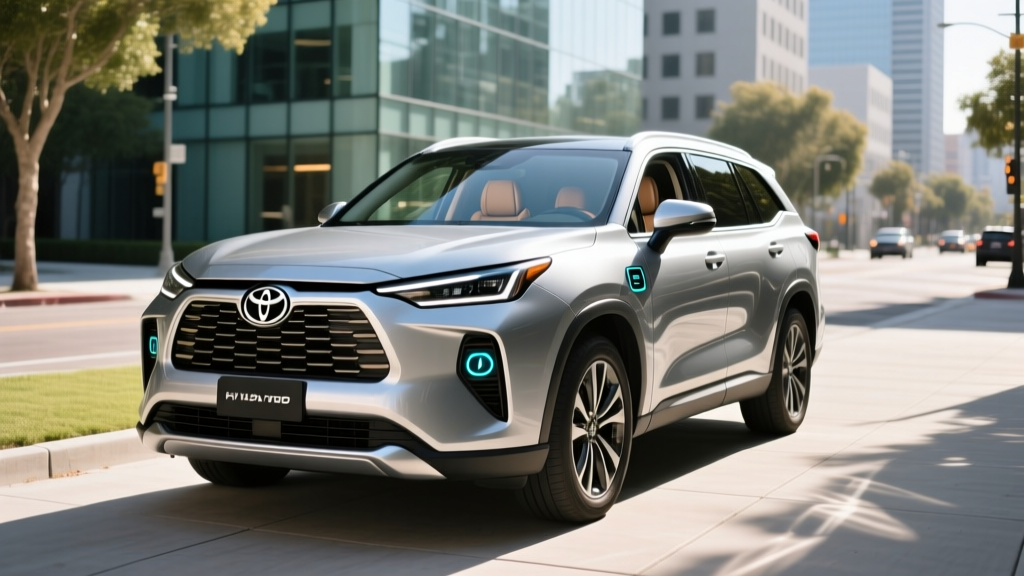
The 2026 Toyota Grand Highlander Limited Hybrid MAX occupies a narrow but compelling lane: a three-row SUV with genuine adult-sized third-row seating, standard all-wheel drive, and a turbocharged hybrid powertrain that delivers 362 horsepower while returning an EPA-estimated 27 MPG combined. It's not a plug-in hybrid — there's no electric-only range to manage, no charging cable to deal with, and no range anxiety. You fuel it like any conventional vehicle, and the hybrid system handles the efficiency work transparently.
For the Limited Hybrid MAX trim specifically, you're looking at a starting MSRP of approximately $54,490 (including destination), which positions it against the Kia Telluride Hybrid, Mazda CX-90 PHEV, and the Hyundai Palisade — though none of those match its combination of interior volume and hybrid fuel economy in a non-plug-in package.
| Specification | Value |
|---|---|
| Powertrain | 2.4L turbocharged 4-cyl + hybrid system (HEV) |
| Combined Horsepower | 362 hp / 400 lb-ft torque |
| EPA Fuel Economy (City/Hwy/Combined) | 26 / 27 / 27 MPG |
| Drivetrain | AWD (standard on Hybrid MAX) |
| Seating Capacity | 7 or 8 passengers |
| Cargo Volume (behind 3rd/2nd/1st row) | 20.6 / 57.9 / 97.5 cu ft |
| Towing Capacity | 5,000 lbs (max, properly equipped) |
| Hybrid Battery Warranty | 10 years / 150,000 miles |
| Base MSRP (Limited Hybrid MAX) | ~$54,490 |
| Federal EV Tax Credit (§30D) | Not eligible (HEV, not PHEV/BEV) |
Hybrid MAX vs. Standard Hybrid: What You're Actually Buying
Toyota offers the Grand Highlander with two distinct hybrid powertrains, and the distinction matters for your wallet and your driving experience.
Standard Hybrid (non-MAX): A 2.5L naturally aspirated 4-cylinder paired with Toyota's hybrid system producing 245 hp combined. EPA-rated at 35 MPG combined (FWD) or 34 MPG combined (AWD). This is the efficiency-first option — adequate power for daily driving, exceptional fuel economy for a three-row SUV.
Hybrid MAX (this review): A 2.4L turbocharged 4-cylinder with a more powerful hybrid system producing 362 hp and 400 lb-ft of torque. EPA-rated at 27 MPG combined with standard AWD. The MAX sacrifices roughly 8 MPG combined in exchange for 117 additional horsepower, a 6-speed automatic transmission (instead of eCVT), and a more responsive, traditional driving feel.
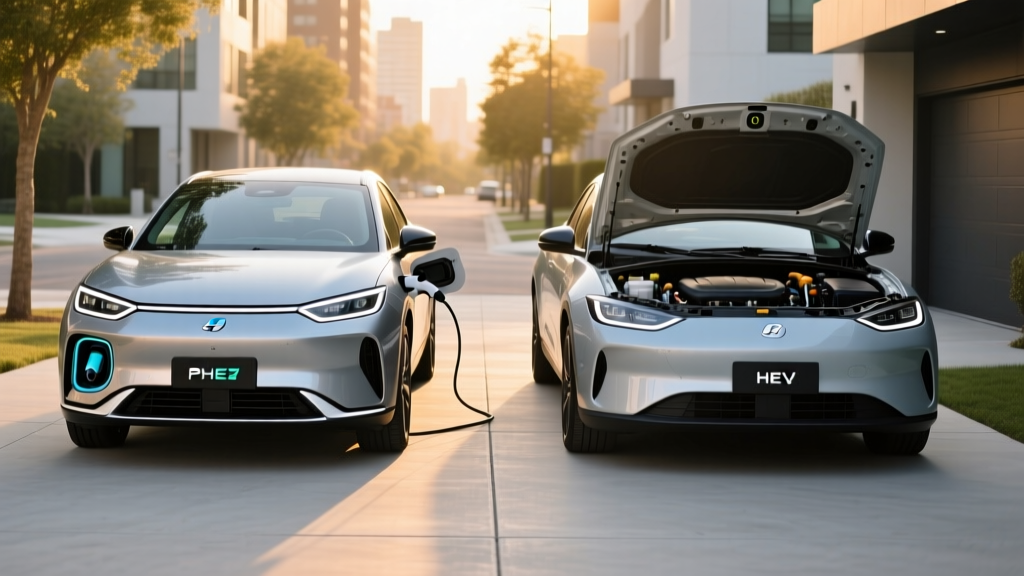
Neither version is a plug-in hybrid (PHEV). Both are conventional hybrids (HEVs) that recharge their small battery packs through regenerative braking and the gasoline engine. You never plug them in. If you want electric-only driving in a Toyota three-row SUV, the closest option remains the RAV4 Prime (compact) or waiting for Toyota's next-generation PHEV offerings.
Fuel Economy: EPA Estimates vs. Real-World MPG
| Driving Condition | EPA Estimate | Real-World Expectation |
|---|---|---|
| City | 26 MPG | 26–29 MPG (hybrids often exceed EPA in stop-and-go) |
| Highway | 27 MPG | 25–27 MPG (turbo engine works harder at sustained speed) |
| Combined | 27 MPG | 26–28 MPG (mixed driving) |
The Hybrid MAX's EPA numbers are unusual: the city and highway estimates are nearly identical, which is atypical for hybrids. Most hybrid systems deliver significantly better city MPG because regenerative braking recovers energy during deceleration and the electric motor handles low-speed driving efficiently. The Hybrid MAX's turbocharged engine and performance tuning compress this gap — you get strong acceleration, but the city-efficiency advantage is narrower than in the standard hybrid.
In real-world driving, owners who do heavy city and suburban driving (school runs, errands, traffic) often report exceeding the EPA city estimate by 1–3 MPG. The hybrid system recaptures braking energy that a conventional gas SUV would waste as heat. Highway-heavy commuters, particularly at 75–80 mph, should expect to see 25–26 MPG, as aerodynamic drag and the turbo engine's fuel consumption rise at sustained high speeds.
Cold-weather note: Expect a 5–10% fuel economy reduction in freezing temperatures. The engine runs more frequently to provide cabin heat (no heat pump in the Hybrid MAX, unlike some Toyota EVs), and the battery's charge/discharge efficiency drops in cold. A 27 MPG combined rating may dip to 24–25 MPG in sustained sub-30°F conditions.
Powertrain Deep Dive: 362 HP With a Hybrid's Efficiency
The Hybrid MAX powertrain pairs a 2.4-liter turbocharged inline-four with a high-output electric motor integrated into the transmission housing. Combined output is 362 horsepower and 400 lb-ft of torque, routed through a 6-speed automatic transmission to all four wheels via Toyota's electronic AWD system.
This is not the eCVT (electronically controlled continuously variable transmission) found in the standard Grand Highlander Hybrid. The 6-speed automatic delivers more conventional shift feel and better throttle response, which matters if you've driven older hybrids and found their rubber-band acceleration off-putting.
The hybrid battery pack in the Hybrid MAX is a nickel-metal hydride (NiMH) unit — smaller than what you'd find in a PHEV or BEV, because its job is to assist the gas engine and capture regenerative energy, not to power the vehicle independently. Toyota has decades of NiMH hybrid battery durability data, and these packs consistently outlast their warranty periods.
0–60 mph: Approximately 6.3 seconds (manufacturer estimate), making the Hybrid MAX the quickest Grand Highlander variant and competitive with the V6-equipped competition in this segment.
HEV vs. PHEV vs. EV: Which Three-Row SUV Fits You?
The Grand Highlander Hybrid MAX is a conventional hybrid (HEV). If you're cross-shopping three-row family haulers, here's how the electrification spectrum breaks down:
| Type | Example | Combined MPG / MPGe | Electric-Only Range | Plug In? | Federal Credit |
|---|---|---|---|---|---|
| HEV (conventional hybrid) | Grand Highlander Hybrid MAX | 27 MPG | None | No | No |
| HEV (efficiency hybrid) | Grand Highlander Hybrid | 34–35 MPG | None | No | No |
| PHEV (plug-in hybrid) | Mazda CX-90 PHEV | 25 MPG + 56 MPGe | ~26 mi electric | Yes (Level 1/2) | Up to $7,500 (§30D) |
| BEV (battery electric) | Kia EV9 | 88 MPGe (combined) | ~279 mi (EPA) | Yes (Level 1/2/DC) | Up to $7,500 (§30D) |
Choose the HEV (Grand Highlander Hybrid MAX) if: You don't have access to home charging, you want maximum simplicity with no behavioral changes from a gas vehicle, you need three rows and strong towing capacity, and you're willing to trade some fuel economy for performance.
Choose a PHEV (like the CX-90 PHEV) if: You can install a Level 2 home charger, your daily commute is under 25 miles (covering most trips on electricity), you want to reduce fuel consumption dramatically for local driving while retaining gas-engine range for road trips, and you want to capture the federal tax credit.
Choose a BEV (like the EV9) if: You have reliable home charging, your daily driving is predictable, you want the lowest per-mile fuel cost and minimal maintenance, you want the full federal tax credit, and you're comfortable planning around DC fast charging for road trips over 250 miles.
Pricing, Trims, and Tax Credit Reality
The 2026 Grand Highlander Limited Hybrid MAX starts at approximately $54,490 (including destination charge). The Limited trim includes features like a 12.3-inch touchscreen, heated and ventilated front seats, a panoramic roof, and Toyota Safety Sense 3.0 as standard.
Federal tax credit: The Grand Highlander Hybrid MAX does not qualify for the IRS §30D Clean Vehicle Credit. That credit applies only to battery electric vehicles (BEVs) and plug-in hybrids (PHEVs) meeting specific battery sourcing, MSRP, and buyer income requirements. Conventional hybrids (HEVs) are excluded by statute. If tax-credit eligibility is a priority, you'll need to look at PHEV or BEV alternatives.
State incentives: Some states offer rebates or HOV-lane access for hybrid vehicles, though these are increasingly focused on PHEVs and BEVs. Check your state's energy or environmental agency for current programs — these vary by jurisdiction and change frequently.
Hybrid Battery Warranty & Replacement Cost
Toyota covers the Grand Highlander Hybrid MAX battery with a 10-year / 150,000-mile warranty (whichever comes first), consistent across all 50 states following California Air Resources Board (CARB) alignment. This covers battery capacity loss below a defined threshold and defects.
Replacement cost if out of warranty: Based on current Toyota hybrid battery pricing and independent hybrid shop data, a Hybrid MAX battery replacement would likely cost between $3,000 and $5,000 (parts and labor). However, Toyota's NiMH hybrid batteries have demonstrated exceptional longevity — data from fueleconomy.gov and long-term owner surveys show most Toyota hybrid batteries outlast 150,000+ miles without significant degradation. The Prius, Camry Hybrid, and Highlander Hybrid have established track records spanning 15+ years with original batteries in many cases.
Reliability, Ownership Costs, and Long-Term Value
The Grand Highlander shares its TNGA-K platform with the Highlander and Sienna, both of which have strong reliability records in Consumer Reports and J.D. Power assessments. The Hybrid MAX powertrain is newer than the standard 2.5L hybrid system, so long-term data is thinner, but Toyota's hybrid components (inverter, electric motor, battery management) are proven across millions of vehicles.
Maintenance advantages over gas-only SUVs: The hybrid system reduces wear on the brake pads (regenerative braking handles much of the deceleration), and the engine experiences less stress during low-speed driving because the electric motor shares the load. Expect brake pad life of 60,000–80,000+ miles in mixed driving, compared to 30,000–50,000 miles in a conventional gas SUV.
Fuel cost comparison: At 27 MPG combined and $3.50/gallon regular unleaded (the Hybrid MAX takes regular, not premium), you'll spend approximately $1,944 annually on fuel for 15,000 miles of driving. A comparable gas-only three-row SUV averaging 21 MPG combined would cost $2,500 annually — a savings of roughly $556 per year with the Hybrid MAX. Over a 7-year ownership period, that's approximately $3,892 in fuel savings, partially offsetting the higher purchase price.
Pros
- Genuine three-row seating with adult-usable third row
- 362 hp with 27 MPG combined — performance and efficiency coexist
- No plug-in required; zero behavioral change from gas SUV
- 10-year/150,000-mile hybrid battery warranty
- 5,000-lb towing capacity (hybrid towing is rare in this segment)
- Toyota Safety Sense 3.0 standard
Cons
- No federal tax credit eligibility (HEV exclusion)
- 27 MPG combined trails the standard hybrid by 8 MPG
- ~$54,490 starting price is steep for the segment
- Highway fuel economy doesn't significantly benefit from hybrid system
- No PHEV or EV variant currently available
- Turbo engine requires more maintenance attention long-term than naturally aspirated
Who Should Buy the Grand Highlander Limited Hybrid MAX?
This SUV serves a specific buyer: someone who needs three usable rows of seating, values acceleration and towing capability, doesn't have access to home EV charging (or doesn't want to deal with it), and wants to reduce fuel consumption without changing their fueling habits.
If you can charge at home and your daily commute is under 30 miles, a PHEV like the Mazda CX-90 PHEV or a BEV like the Kia EV9 will deliver dramatically lower operating costs and may qualify for the federal tax credit. But if home charging isn't feasible — apartment living, street parking, no garage — the Hybrid MAX eliminates that barrier entirely while still delivering meaningful fuel savings over a gas-only alternative.
The Limited trim specifically targets buyers who want premium features without stepping into luxury-badge pricing. At ~$54,490, it undercuts comparably equipped luxury three-row SUVs by $15,000–$25,000 while offering competitive interior quality and technology.
Frequently Asked Questions
How many MPG does the 2026 Grand Highlander Hybrid MAX get?
The EPA rates it at 26 MPG city, 27 MPG highway, and 27 MPG combined. In real-world driving, city-heavy commuters often see 27–29 MPG thanks to regenerative braking, while highway-dominant driving at 75+ mph may yield 25–26 MPG. Cold weather (below freezing) typically reduces fuel economy by 5–10%.
Does the Grand Highlander Hybrid MAX need to be plugged in?
No. It is a conventional hybrid (HEV), not a plug-in hybrid (PHEV). The battery recharges through regenerative braking and the gasoline engine. You fuel it exactly like a gas-only vehicle.
Does the 2026 Grand Highlander Hybrid MAX qualify for a federal tax credit?
No. The IRS §30D Clean Vehicle Credit applies only to plug-in hybrids (PHEVs) and battery electric vehicles (BEVs). Conventional hybrids are not eligible. Some states may offer separate incentives for hybrids — check your state's energy agency.
How long will the hybrid battery last, and what does replacement cost?
Toyota warranties the hybrid battery for 10 years or 150,000 miles. Based on Toyota's long-term hybrid data across the Prius, Camry Hybrid, and Highlander Hybrid, most batteries outlast their warranty period without requiring replacement. If replacement is needed out of warranty, expect $3,000–$5,000 depending on the service provider.
Is the Hybrid MAX more efficient than the standard Grand Highlander Hybrid?
No — the standard Grand Highlander Hybrid (non-MAX) achieves 34–35 MPG combined, roughly 8 MPG better than the Hybrid MAX. The MAX trades fuel economy for 117 additional horsepower (362 hp vs. 245 hp), a 6-speed automatic transmission, and more responsive acceleration.
Hybrid vs. PHEV vs. EV — which three-row SUV should I choose?
Choose a conventional hybrid (HEV) like the Grand Highlander Hybrid MAX if you lack home charging access and want zero lifestyle changes. Choose a PHEV if you can charge at home and want electric-only commuting under 26 miles with gas-engine backup for road trips. Choose a BEV if you have home charging, want the lowest operating cost, and are comfortable planning DC fast-charge stops on long trips. Each has trade-offs in upfront cost, fuel cost, and convenience.
What is the towing capacity of the Grand Highlander Hybrid MAX?
The Hybrid MAX is rated for up to 5,000 pounds when properly equipped (with the factory towing package). This is competitive with gas-only three-row SUVs and notably higher than most PHEV and BEV three-row alternatives, which often sacrifice towing capacity due to battery weight and thermal management constraints.