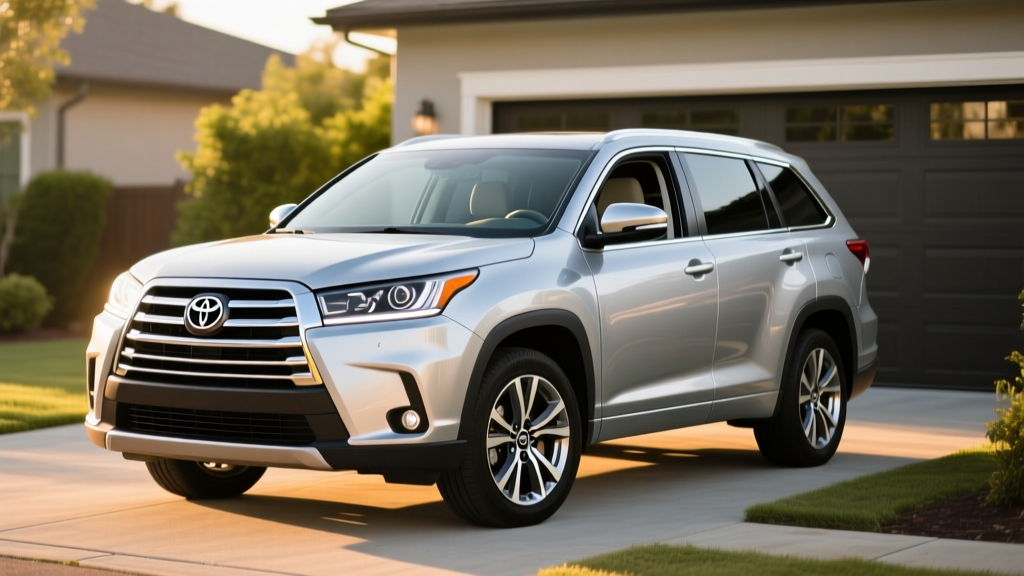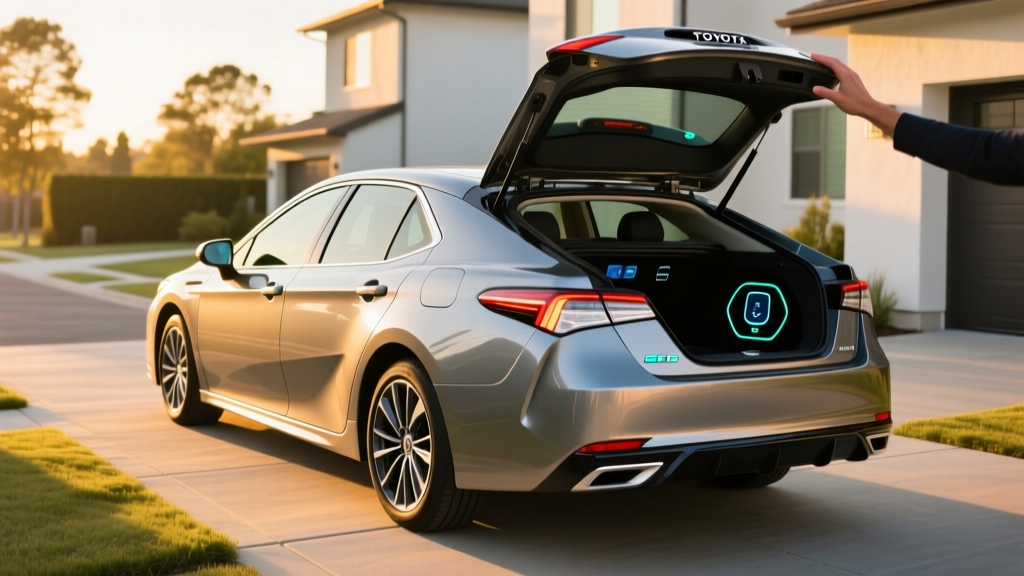
The 2026 Toyota Camry XSE Hybrid sits at a crossroads that confuses many buyers: it's a sporty, feature-loaded sedan that sips fuel like an economy car, yet it requires zero change to your daily routine. No plugs, no charging apps, no range calculations. For the ninth-generation Camry lineup, Toyota has made every trim a hybrid — and the XSE sits at the top as the performance-oriented option with a tuned suspension, 19-inch alloy wheels, and a dual-motor all-wheel-drive powertrain producing 232 horsepower.
This guide breaks down exactly what the 2026 Camry XSE Hybrid delivers in fuel economy, powertrain specs, real-world efficiency, ownership costs, and how it compares to plug-in hybrids and full battery-electric vehicles for buyers weighing their options.
2026 Camry XSE Hybrid Fuel Economy: EPA and Real-World MPG
The EPA rates the 2026 Camry XSE Hybrid with electronic on-demand AWD at 44 MPG city / 43 MPG highway / 44 MPG combined. Front-wheel-drive models achieve a marginally higher 48/46/47 MPG combined, but the XSE trim is predominantly sold with AWD in the U.S. market. These figures come from the EPA's fueleconomy.gov database and represent the official sticker values.
| Drivetrain | City MPG | Highway MPG | Combined MPG |
|---|---|---|---|
| FWD (LE/SE trims) | 48 | 46 | 47 |
| AWD (XSE trim) | 44 | 43 | 44 |
Real-World MPG: What Owners Actually See
Toyota's fifth-generation hybrid system excels in stop-and-go traffic where regenerative braking recaptures energy constantly. In real-world mixed driving, many Camry Hybrid owners report matching or slightly exceeding EPA city figures — 45 to 48 MPG is achievable in urban commuting. Highway driving at sustained 70-80 MPH typically yields 39 to 42 MPG due to aerodynamic drag, which affects all hybrids at speed.
Cold weather reduces fuel economy by roughly 5-10% as the engine runs more frequently to maintain cabin heat and battery temperature. Expect 40-42 MPG combined in winter months for the AWD XSE, still outperforming most non-hybrid midsize sedans by a wide margin.
Powertrain and Performance Specs
The 2026 Camry XSE Hybrid pairs a 2.5-liter four-cylinder Dynamic Force engine with Toyota's fifth-generation hybrid transaxle. The AWD configuration adds a rear-mounted electric motor for electronic on-demand all-wheel drive — there is no mechanical driveshaft connecting the axles.
| Specification | Detail |
|---|---|
| Engine | 2.5L 4-cylinder Dynamic Force (184 hp, 163 lb-ft) |
| Front Electric Motor | Integrated in hybrid transaxle |
| Rear Electric Motor (AWD) | 40 hp rear-axle motor |
| Combined Net Horsepower | 232 hp (AWD) / 225 hp (FWD) |
| Transmission | eCVT (electronically controlled continuously variable) |
| 0-60 MPH (est.) | ~7.1 seconds (AWD) |
| Hybrid Battery | ~1.6 kWh lithium-ion (self-charging, no plug-in) |
| Drivetrain | Electronic On-Demand AWD |
The XSE trim distinguishes itself from the SE with a sport-tuned suspension, larger 19-inch black alloy wheels, paddle shifters, and a more aggressive front fascia. The eCVT provides seamless acceleration without the rubber-band effect of older CVT designs, and the rear motor engages in milliseconds when the system detects front-wheel slip.
Hybrid vs Plug-In Hybrid vs Full EV: Which Fits You?
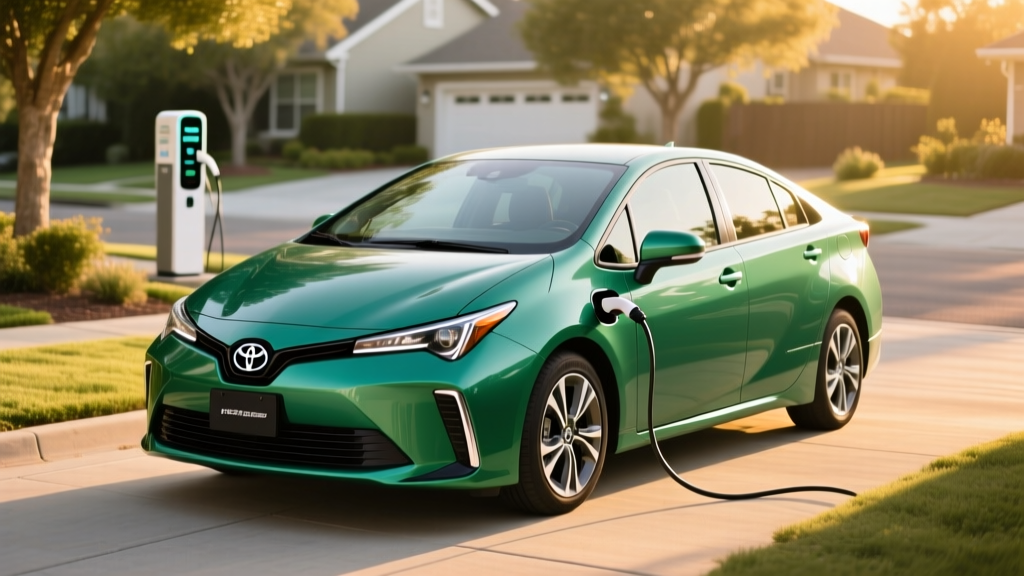
The 2026 Camry is offered exclusively as a conventional hybrid (HEV). It does not have a plug-in hybrid (PHEV) variant — Toyota discontinued the Camry-based PHEV concept in favor of the RAV4 Prime and Prius Prime for buyers who want plug-in capability. Understanding the difference matters for your purchase decision.
| Feature | HEV (Camry Hybrid) | PHEV (e.g., Prius Prime) | BEV (e.g., Tesla Model 3) |
|---|---|---|---|
| Plug-in Required? | No — self-charging via regen + engine | Yes — for electric-only miles | Yes — sole energy source |
| Electric-Only Range | ~1 mile at low speed | 35-44 miles (model dependent) | 250-360+ miles |
| Total Range | ~580 miles | ~400-500 miles combined | 250-360+ miles |
| Home Charging Needed? | No | Recommended (Level 2, 120V possible) | Essential (Level 2 strongly recommended) |
| Federal Tax Credit (§30D) | Not eligible | Up to $7,500 (if eligible) | Up to $7,500 (if eligible) |
| Best For | No home charging access; simplicity | Short commutes + road trip flexibility | Home charging available; lowest running cost |
Pricing, Trims, and Tax Credit Eligibility
The 2026 Camry XSE Hybrid starts at an MSRP of approximately $35,490 (including destination charge) for the AWD configuration. Key standard features include a 12.3-inch touchscreen with wireless Apple CarPlay and Android Auto, a 10-speaker JBL audio system option, heated front seats, wireless phone charging, and Toyota Safety Sense 3.0 with adaptive cruise control, lane-keeping assist, and automatic emergency braking.
| Trim | MSRP (AWD) | Key Additions |
|---|---|---|
| LE AWD | ~$30,490 | Base hybrid, 8-inch screen, 16-inch wheels |
| SE AWD | ~$32,490 | Sport-tuned suspension, 18-inch wheels |
| XSE AWD | ~$35,490 | 19-inch wheels, paddle shifters, premium interior |
| XLE AWD | ~$36,490 | Luxury-focused, ventilated seats option |
Federal Tax Credit Status
The 2026 Camry Hybrid does not qualify for the federal §30D Clean Vehicle Credit. Under current IRS rules, the §30D credit of up to $7,500 is reserved for plug-in electric vehicles (BEVs and PHEVs) that meet battery capacity, critical mineral sourcing, and MSRP/buyer income thresholds. Conventional hybrids like the Camry HEV are excluded regardless of their efficiency.
Some states offer rebates or HOV lane access for hybrids — check your state's energy office or Alternative Fuels Data Center for local incentives, which vary by jurisdiction and change frequently.
Battery Warranty, Reliability, and Replacement Costs
Toyota provides a 10-year / 150,000-mile hybrid battery warranty on the 2026 Camry Hybrid, covering defects and capacity loss below a specified threshold. This warranty is transferable to subsequent owners, which supports strong resale values. The powertrain is covered for 5 years / 60,000 miles, and the basic vehicle warranty runs 3 years / 36,000 miles.
Long-Term Reliability Data
Toyota's hybrid system has over two decades of field-proven reliability dating back to the 1997 Prius. The hybrid battery in a Camry Hybrid routinely lasts 150,000-200,000+ miles before any service is needed. When replacement is eventually required, a new OEM hybrid battery for the Camry typically costs between $2,000 and $3,500 including installation at a dealership. Independent hybrid specialists often offer refurbished packs for $1,200-$2,000.
The eCVT transaxle is fundamentally simpler than a conventional automatic transmission — it uses a planetary gearset with no clutches, bands, or torque converter to wear out. Many Camry Hybrids reach 200,000+ miles with only routine fluid changes.
Who Should Buy the 2026 Camry XSE Hybrid?
Choose the Camry XSE Hybrid If:
- You lack access to home or workplace EV charging
- You want 44+ MPG with zero behavioral changes
- You take frequent road trips and want 580+ mile range
- You value Toyota's long-term reliability track record
- You want AWD without a fuel-economy penalty
- You prefer a sporty sedan over a crossover
Consider a PHEV or Full EV Instead If:
- You have reliable Level 2 home charging and a short commute
- You want the $7,500 federal tax credit (requires a plug-in vehicle)
- You want electric-only driving for daily commuting
- You want to minimize or eliminate gasoline purchases
- You're drawn to the lowest possible per-mile fuel cost
- You want access to HOV lane incentives for plug-in vehicles
Ownership Cost Snapshot: Camry XSE Hybrid vs Gas Sedan
At 44 MPG combined and a national average gas price of roughly $3.30/gallon (as of early 2026), the Camry XSE Hybrid costs approximately $0.075 per mile in fuel. A comparable non-hybrid midsize sedan averaging 28 MPG combined costs about $0.118 per mile. Over 15,000 annual miles, that's a fuel savings of roughly $645 per year, or $3,225 over five years — partially offsetting the hybrid's modest price premium over discontinued gas-only trims.
Insurance costs for the Camry Hybrid are competitive with the broader midsize sedan segment. Maintenance is minimal: no timing belt (chain-driven), long-life coolant, and regenerative braking that extends pad life to 80,000+ miles in typical driving.
Frequently Asked Questions
How many MPG does the 2026 Camry XSE Hybrid get?
The EPA rates the AWD XSE at 44 city / 43 highway / 44 combined MPG. Real-world city driving often yields 45-48 MPG thanks to aggressive regenerative braking. Highway cruising at 75+ MPH typically drops to 39-42 MPG.
Does the Camry Hybrid need to be plugged in?
No. The 2026 Camry Hybrid is a conventional (self-charging) hybrid. It recharges its small battery through regenerative braking and the gasoline engine. There is no plug, no charging cable, and no electric-only range to manage.
How far can the Camry Hybrid drive on electric power alone?
Less than one mile at very low speeds (under 25 MPH in ideal conditions). The hybrid system uses the electric motor to assist the engine and enable brief engine-off coasting, but it is not designed for meaningful electric-only driving. For that, consider a PHEV like the Prius Prime (44 miles electric-only).
Is the Camry Hybrid battery expensive to replace?
A new OEM hybrid battery costs $2,000-$3,500 installed. However, Toyota's hybrid batteries routinely last 150,000-200,000+ miles, and the battery is warranted for 10 years / 150,000 miles. Most original owners will never need a replacement.
Does the 2026 Camry Hybrid qualify for any tax credit?
It does not qualify for the federal §30D Clean Vehicle Credit, which is limited to plug-in vehicles (BEVs and PHEVs). Some states may offer hybrid-specific incentives — consult your state energy office or the Alternative Fuels Data Center for current local programs.
How does the XSE differ from the SE trim?
The XSE adds 19-inch black alloy wheels (vs. 18-inch on SE), a sport-tuned suspension with firmer damping, paddle shifters, a leather-trimmed steering wheel, and premium interior materials. Both share the same 232 hp AWD hybrid powertrain.
Is the Camry Hybrid AWD system good in snow?
The electronic on-demand AWD engages the rear motor in milliseconds when front-wheel slip is detected. It's effective for light snow, wet roads, and low-traction starts. It is not a substitute for dedicated winter tires in severe conditions, but it provides a meaningful traction advantage over FWD sedans.