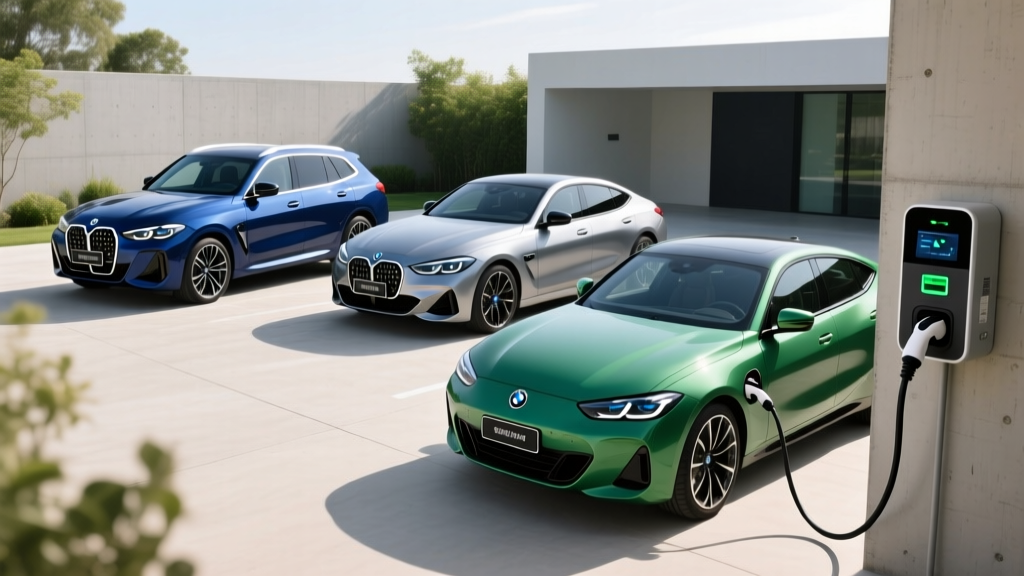
BMW has gone all-in on plug-in hybrids (PHEVs) rather than conventional self-charging hybrids (HEVs). For 2026, every BMW hybrid offer is a plug-in, meaning you get a meaningful electric-only range for daily commuting and a gas engine for longer road trips. If you're searching through BMW hybrid offers to find the right fit, this guide breaks down every current PHEV model with exact EPA figures, battery specs, pricing, and tax credit eligibility.
BMW's Hybrid Strategy: PHEVs Only — Here's What That Means
Unlike Toyota or Honda, BMW does not sell conventional hybrids (HEVs) in the US market. Every BMW hybrid is a plug-in hybrid electric vehicle (PHEV). The distinction matters for your daily routine and your wallet.
HEV vs PHEV: The Core Difference
| Feature | Conventional Hybrid (HEV) | Plug-in Hybrid (PHEV) |
|---|---|---|
| Plug in to charge? | No — charges via regen and engine | Yes — plug in for full electric range |
| Electric-only range | 1–2 miles at low speed | 20–40+ miles at highway speed |
| Battery size | 1–2 kWh | 12–25 kWh usable |
| Federal tax credit | No | Up to $7,500 (varies by model/year) |
| Best for | No home charging access | Home/office charging available |
If you cannot charge at home or work, a BMW PHEV will still function as a conventional hybrid — the gas engine and regenerative braking keep the battery partially charged. But you'll forfeit the electric-only commuting advantage and likely won't justify the premium over a non-hybrid BMW.
2026 BMW PHEV Lineup: Every Hybrid Offer at a Glance
BMW fields six PHEV models for the 2026 model year across sedans and SUVs. Here's how they stack up on the numbers that matter most.
| Model | Body Style | Battery (kWh usable) | EV Range (mi) | Combined HP | 0–60 mph | Base MSRP |
|---|---|---|---|---|---|---|
| 330e xDrive | Sedan | 19.5 | 23 | 288 | 5.6s | $47,900 |
| 550e xDrive | Sedan | 18.7 | 34 | 483 | 4.4s | $64,900 |
| 750e xDrive | Sedan | 18.7 | 34 | 483 | 4.3s | $107,000 |
| X3 xDrive30e | SUV | 19.5 | 35 | 288 | 6.0s | $52,900 |
| X5 xDrive50e | SUV | 25.7 | 38 | 483 | 4.6s | $75,900 |
| XM | SUV | 25.7 | 31 | 644 (base) / 738 (Label Red) | 4.1s / 3.7s | $160,000 |
Sources: fueleconomy.gov, BMW USA official specifications. EV range is EPA-estimated; real-world results vary with temperature, terrain, and driving style.
Fuel Economy Breakdown: EPA MPG and MPGe by Model
Because PHEVs operate in both electric and hybrid modes, the EPA reports two numbers: MPGe (miles-per-gallon-equivalent when running on electricity + gas combined) and MPG (gas-only operation after the battery depletes).
| Model | MPGe (combined) | MPG gas-only (combined) | City MPG (gas) | Highway MPG (gas) |
|---|---|---|---|---|
| 330e xDrive | 75 MPGe | 28 MPG | 26 | 32 |
| 550e xDrive | 64 MPGe | 27 MPG | 25 | 30 |
| 750e xDrive | 57 MPGe | 25 MPG | 23 | 28 |
| X3 xDrive30e | 68 MPGe | 28 MPG | 26 | 31 |
| X5 xDrive50e | 56 MPGe | 22 MPG | 20 | 25 |
| XM | 46 MPGe | 17 MPG | 15 | 20 |
Real-World MPG: What to Actually Expect
PHEVs reward short commutes disproportionately. If your daily round trip is under 30 miles and you charge every night, you may burn gasoline only on weekend road trips — effectively achieving 100+ MPGe in practice. On the flip side, if you never plug in, you're carrying a heavy battery for no benefit, and gas-only MPG will trail the EPA estimate by 1–3 MPG on highway-heavy drives.
BMW's hybrid system uses a ZF 8-speed automatic with the electric motor sandwiched between the engine and transmission. This means seamless power blending but also means the engine may activate in very cold weather (below 30°F) to heat the cabin, reducing electric-only range by 30–40% in winter.
Electric-Only Range and Charging: What Each BMW PHEV Delivers
For 2026, BMW's fifth-generation eDrive technology powers all PHEVs. The electric motor is integrated into the transmission housing, delivering instant torque without a separate axle motor (except the XM, which uses a more powerful setup).
Charging Speeds and Times
| Model | Battery (kWh usable) | Level 1 (120V) Time | Level 2 (240V, 7.4 kW) Time | DC Fast Charge? |
|---|---|---|---|---|
| 330e xDrive | 19.5 | ~12 hours | ~3 hours | No |
| 550e xDrive | 18.7 | ~11 hours | ~2.75 hours | No |
| 750e xDrive | 18.7 | ~11 hours | ~2.75 hours | No |
| X3 xDrive30e | 19.5 | ~12 hours | ~3 hours | No |
| X5 xDrive50e | 25.7 | ~16 hours | ~3.75 hours | No |
| XM | 25.7 | ~16 hours | ~3.75 hours | No |
Critical note on DC fast charging: None of BMW's 2026 PHEVs support DC fast charging. This is standard across most PHEVs from European automakers. You'll charge exclusively via Level 1 (standard outlet) or Level 2 (240V home or public AC charger). For daily commuting, a Level 2 home charger is the practical minimum — it tops up any BMW PHEV overnight in under four hours.
Real-World Electric Range vs EPA
EPA sticker: 23–38 miles depending on model.
Real-world expectation: In mild weather (60–75°F) at city speeds, expect EPA range or slightly better. At sustained highway speeds (70+ mph), subtract 15–20%. In freezing temperatures with cabin heat, subtract 30–40%. A 330e rated at 23 miles may deliver just 14–16 miles of electric range in a 20°F January commute.
Pricing, Tax Credits, and Total Cost of Ownership
BMW PHEVs carry a premium over their gas-only siblings, but the gap has narrowed. The 330e xDrive, for instance, starts just $3,500 above a comparable 330i xDrive while offering electric commuting capability and additional horsepower.
Federal Tax Credit Eligibility (§30D)
Under current IRS §30D rules, PHEVs can qualify for up to $7,500 in federal tax credits, but eligibility is far from guaranteed. Here's the checklist:
- Battery sourcing: Critical minerals and battery components must meet phased-in domestic/free-trade-agreement sourcing thresholds (increasing annually through 2030). BMW sources cells from CATL and Samsung SDI — compliance varies by model year and production batch.
- MSRP cap: Sedans must be under $55,000; SUVs/vans/pickups under $80,000. This eliminates the 750e, XM, and most 550e trims from credit eligibility.
- Buyer income cap: AGI must not exceed $150,000 (single), $225,000 (head of household), or $300,000 (joint).
- Point-of-sale transfer: You can transfer the credit to the dealer for an immediate price reduction if eligible.
- Final assembly: Must occur in North America. BMW's Spartanburg, SC plant builds the X3, X5, and XM — but the 3 Series, 5 Series, and 7 Series sedans are assembled in Germany, disqualifying them from the §30D credit.
Bottom line: The X3 xDrive30e and X5 xDrive50e (base trims under $80K MSRP) are the most likely BMW PHEVs to qualify, assuming battery-sourcing requirements are met and your income falls within limits. The sedans — 330e, 550e, 750e — are assembled overseas and do not qualify for §30D. Always verify with a tax professional and check the latest fueleconomy.gov tax credit listings before purchasing.
| Cost Factor | X3 xDrive30e (PHEV) | X3 xDrive30i (Gas) | iX xDrive50 (BEV) |
|---|---|---|---|
| Base MSRP | $52,900 | $48,900 | $87,250 |
| Est. tax credit | $3,750–$7,500* | $0 | $7,500* |
| Fuel/energy (5 yr) | ~$4,800 | ~$8,200 | ~$3,600 |
| Maintenance (5 yr) | ~$3,200 | ~$3,800 | ~$2,100 |
| Insurance (5 yr) | ~$9,500 | ~$8,400 | ~$10,800 |
| Est. 5-yr total | ~$66,650–$70,400 | ~$69,300 | ~$96,250 |
*Credit eligibility varies. Fuel costs assume 15,000 mi/yr, $3.40/gal gas, $0.14/kWh electricity, and 50% electric driving for PHEV.
Reliability, Battery Warranty, and Replacement Costs
BMW PHEV Battery Warranty
Every 2026 BMW PHEV carries a high-voltage battery warranty of 8 years or 80,000 miles (whichever comes first), covering defects and capacity loss below 70% of original capacity. This is the industry-standard PHEV warranty and is federally mandated for emissions-related components.
The powertrain (engine + electric motor + transmission) is covered for 4 years or 50,000 miles under BMW's standard new-vehicle limited warranty.
Long-Term Reliability Considerations
BMW's PHEV powertrains have proven robust since the third-generation system (2019+). The B48 2.0L turbo (330e, X3) and B58 3.0L inline-six (550e, 750e, X5, XM) are among BMW's most reliable modern engines. The electric motor, being simpler than a mechanical transmission component, rarely fails.
The real risk is battery degradation. BMW's PHEV batteries use NMC (nickel-manganese-cobalt) chemistry, which offers high energy density but is more susceptible to heat-related degradation than LFP. To mitigate this, BMW employs active liquid thermal management. Real-world data from European fleet operators shows BMW PHEV batteries retaining 88–93% capacity after 5 years and 60,000 miles of daily cycling.
Battery Replacement Cost
If your battery falls below the 70% threshold within warranty, BMW replaces it at no cost. Out of warranty, a full PHEV battery replacement runs $8,000–$14,000 depending on the model (the X5/XM's larger 25.7 kWh pack is at the high end). Individual module replacement may be possible for $2,000–$4,000 if only one cell group has degraded.
Powertrain Deep Dive: How BMW's PHEV System Works
All 2026 BMW PHEVs use a parallel hybrid architecture: the electric motor sits between the engine and the ZF 8-speed automatic transmission, allowing the vehicle to drive on electric power alone, engine power alone, or both simultaneously.
Driving modes:
- Hybrid (default): The car intelligently blends electric and gas power based on route, speed, and battery level. If you enter a navigation destination, it optimizes battery usage across the trip.
- Electric: Forces electric-only driving up to ~80 mph. The engine kicks in only under hard acceleration or when the battery depletes.
- Battery Control: The engine maintains or charges the battery to a target level — useful for saving electric range for a city center or low-emission zone later in your trip.
- Sport: Combines full engine and motor output for maximum combined horsepower.
Regenerative braking in BMW PHEVs is moderate — you can adjust it via steering-wheel paddles or select "adaptive" mode, which uses radar and navigation data to vary regen based on traffic ahead. However, BMW PHEVs do not offer true one-pedal driving the way a BEV does; you'll still use the friction brake for final stops.
Who Should Buy a BMW PHEV — And Who Shouldn't
Choose a BMW PHEV If:
- Your daily commute is 20–35 miles round trip and you can charge at home overnight
- You take road trips regularly and don't want to plan around charging stations
- You want BMW driving dynamics and interior quality without committing to a full EV
- You live in an area with harsh winters where EV range loss is a concern
- You want a luxury SUV (X3, X5) that qualifies for at least partial federal tax credits
Choose a Full EV (BMW iX, i4, i7) Instead If:
- Your commute is under 20 miles and you rarely drive over 250 miles without stopping
- You want the lowest possible running costs (electricity is cheaper than gas per mile)
- You want zero tailpipe emissions and fewer maintenance items (no oil changes, no spark plugs)
- You have reliable home and workplace charging
Stick With a Gas-Only BMW If:
- You cannot charge at home or work — a PHEV's premium won't pay for itself
- Your budget is tight and you prioritize the lowest purchase price
- You drive predominantly long highway routes where PHEV electric range adds little value
BMW PHEV Advantages
- 23–38 miles of electric commuting eliminates most daily gas use
- No range anxiety — gas engine provides 350+ total miles
- Combined HP exceeds gas-only siblings (e.g., X5 50e: 483 HP vs 375 HP for xDrive40i)
- Preconditioning via app warms/cools cabin on grid power
- SUV models (X3, X5) built in South Carolina may qualify for federal credits
BMW PHEV Limitations
- No DC fast charging — Level 2 only, limiting public charging utility
- Sedans (330e, 550e, 750e) assembled in Germany — no §30D tax credit
- Electric range drops 30–40% in freezing weather
- Heavier than gas equivalents — slightly worse gas-only MPG on long highway trips
- Cargo space slightly reduced vs gas models due to battery placement
Frequently Asked Questions About BMW Hybrid Offers
How many MPG does a BMW hybrid get?
It depends on how often you charge. In gas-only mode after the battery depletes, BMW PHEVs achieve 17–28 MPG combined depending on model (X5 50e: ~22 MPG; 330e: ~28 MPG). But if you charge daily and drive under 30 miles, your effective fuel consumption can drop to the equivalent of 50–75+ MPGe.
How far can a BMW PHEV go on electric only?
The EPA rates BMW's 2026 PHEVs between 23 miles (330e) and 38 miles (X5 xDrive50e). Real-world results range from about 14 miles in freezing highway conditions to 40+ miles in mild city driving. For most commuters with home charging, the electric range covers a full daily round trip.
Does any BMW hybrid qualify for a tax credit?
Possibly, but with strict limitations. Under IRS §30D rules, the X3 xDrive30e and X5 xDrive50e (base trims under $80,000 MSRP) are the strongest candidates because they're assembled in South Carolina. BMW's PHEV sedans are built in Germany and do not meet the North American final assembly requirement. Battery-sourcing rules further restrict eligibility. Always confirm with your dealer and tax professional before relying on credit eligibility.
Are BMW hybrids reliable? What about battery replacement cost?
BMW's current-generation PHEV powertrains (2019+) have strong reliability records, particularly the B48 and B58 engines. The high-voltage battery is warranted for 8 years/80,000 miles against defects and capacity loss below 70%. Out-of-warranty replacement costs range from $8,000 to $14,000 depending on the model. Real-world fleet data suggests 88–93% capacity retention after 5 years of daily use.
Do I need to plug in a BMW PHEV?
You don't have to — the car will operate as a conventional hybrid using the gas engine and regenerative braking. But you'll miss the core benefit: electric-only commuting. Without regular plug-in charging, you're carrying 300–500 lbs of extra battery weight for no efficiency gain. A BMW PHEV only makes financial sense if you can charge at home or work.
Can a BMW PHEV DC fast charge?
No. None of BMW's 2026 PHEVs support DC fast charging. Maximum charge rate is 7.4 kW on Level 2 (240V AC), which fills any BMW PHEV battery in roughly 2.75–3.75 hours. This is typical for European PHEVs and sufficient for overnight home charging but impractical for quick mid-trip top-ups.
BMW PHEV vs full EV: which should I choose?
If your daily driving stays under 35 miles and you take road trips more than once a month, a PHEV gives you electric commuting without charging-infrastructure dependence. If you rarely exceed 200 miles in a day and have reliable home charging, a full EV like the BMW i4 or iX will deliver lower running costs, less maintenance, and a smoother driving experience. The PHEV is the bridge; the EV is the destination — choose based on your actual driving patterns, not aspirational ones.