If you're researching the Toyota Corolla Hybrid, you likely have one question above all others: how many miles per gallon does it actually deliver in everyday driving? The EPA sticker tells part of the story, but real-world conditions — stop-and-go commutes, highway road trips, and winter cold — paint a more complete picture. This guide breaks down the 2026 Corolla Hybrid's fuel economy with exact numbers, explains how it differs from plug-in alternatives, and helps you decide whether a conventional hybrid (HEV) is the right move versus a PHEV or full battery-electric vehicle.
Corolla Hybrid MPG: EPA Ratings and Real-World Results
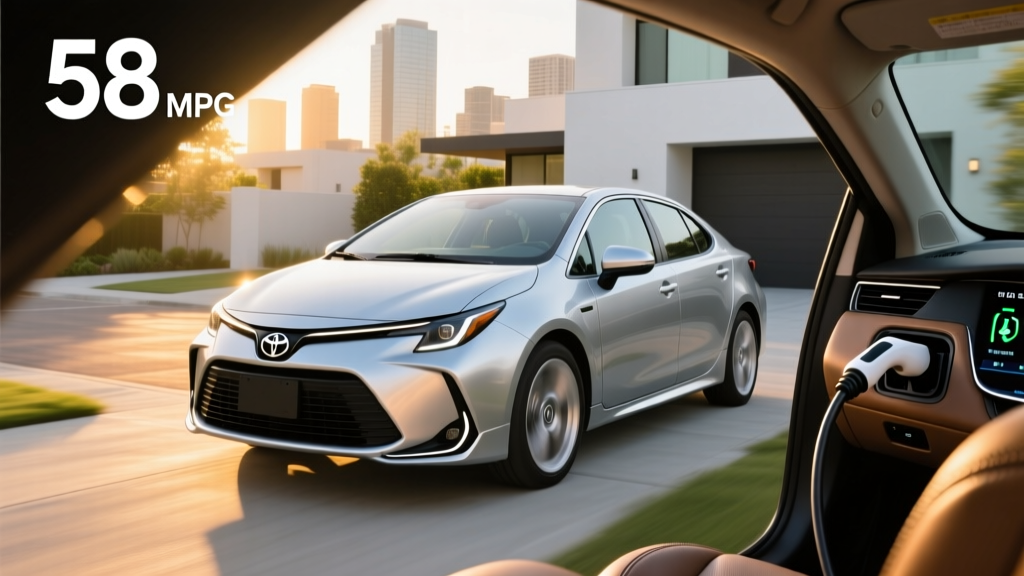
The 2026 Toyota Corolla Hybrid comes in two drivetrain configurations, and the MPG difference between them matters depending on your climate and driving habits. Here's the official EPA breakdown:
| Drivetrain | City MPG | Highway MPG | Combined MPG | Est. Total Range |
|---|---|---|---|---|
| FWD (LE Hybrid) | 53 | 46 | 50 | ~565 miles |
| AWD (SE/XSE Hybrid) | 47 | 41 | 44 | ~495 miles |
The FWD Corolla Hybrid's 50 MPG combined is among the highest of any non-plug-in compact sedan sold in the U.S. The AWD variant sacrifices roughly 6 MPG combined in exchange for a rear-mounted electric motor that provides all-wheel traction — a worthwhile trade if you deal with snow or rain regularly.
HEV vs. PHEV: Understanding What the Corolla Hybrid Is (and Isn't)
The Toyota Corolla Hybrid is a conventional hybrid electric vehicle (HEV). This distinction matters because it's frequently confused with plug-in hybrids. Here's the fundamental difference:
Corolla Hybrid (HEV)
- No plug required — the battery charges via regenerative braking and the gasoline engine
- Small battery: ~1.0 kWh lithium-ion (not designed for electric-only driving)
- Electric-only range: Less than 1 mile at very low speeds
- Refueling: Gas station only, exactly like a conventional car
- Advantage: Zero lifestyle change; dramatically better MPG
Plug-In Hybrid (PHEV) — e.g., Toyota Prius Prime
- Plugs in to charge — Level 1 (120V) or Level 2 (240V) charging
- Larger battery: ~13.6 kWh (Prius Prime)
- Electric-only range: Up to 44 miles EPA (Prius Prime)
- Refueling: Gas station + electrical outlet/charger
- Advantage: Electric daily commuting; gas for road trips
The Corolla Hybrid does not plug in. You cannot charge it from a wall outlet or public charger. If you want electric-only commuting capability, you'd need to look at a PHEV like the Toyota Prius Prime or a full BEV. The Corolla Hybrid's ~1.0 kWh battery exists solely to assist the gasoline engine, smooth out stop-start driving, and recapture braking energy — not to replace gasoline.
Powertrain Specs: What Powers the Corolla Hybrid
| Specification | FWD Hybrid | AWD Hybrid |
|---|---|---|
| Gasoline Engine | 1.8L 4-cylinder Atkinson cycle | 1.8L 4-cylinder Atkinson cycle |
| Front Electric Motor | Permanent magnet AC synchronous | Permanent magnet AC synchronous |
| Rear Electric Motor | N/A | 40 hp (AWD traction motor) |
| Combined Net Horsepower | 138 hp | 138 hp |
| Transmission | ECVT (electronically controlled) | ECVT |
| 0–60 MPH (est.) | ~9.2 seconds | ~9.0 seconds |
| Drivetrain | Front-wheel drive | Electronic on-demand AWD |
| Fuel Tank Capacity | 11.4 gallons | 11.4 gallons |
Toyota's fifth-generation hybrid system pairs the 1.8-liter Atkinson-cycle engine with a more powerful electric motor-generator than previous generations. The combined 138 hp output is modest — this isn't a performance car — but the electric motor's instant torque makes the Corolla Hybrid feel responsive around town. The AWD system uses a separate rear motor that engages automatically when the front wheels slip, then disengages during steady cruising to avoid parasitic losses.
Pricing, Trims, and Tax Credit Eligibility
The 2026 Corolla Hybrid is positioned as one of the most affordable hybrid sedans in the U.S. market. Here's the approximate MSRP by trim:
- LE Hybrid (FWD): ~$24,500
- SE Hybrid (AWD): ~$27,000
- XSE Hybrid (AWD): ~$29,500
Destination charges add approximately $1,095. These prices make the Corolla Hybrid roughly $1,500–$2,500 more than its gasoline-only counterpart, a premium you'll typically recoup within 1–3 years through fuel savings depending on your annual mileage.
Battery Warranty, Reliability, and Replacement Costs
Hybrid battery longevity is the single most common concern among first-time hybrid buyers. Here's what you need to know about the Corolla Hybrid's battery system:
Toyota's hybrid batteries have a strong long-term reliability record. The Prius, which shares similar hybrid architecture, routinely reaches 200,000+ miles on its original battery pack. The Corolla Hybrid's lithium-ion pack is smaller and less stressed than a PHEV or BEV battery because it operates within a narrow state-of-charge window (roughly 40–80% SoC), which dramatically reduces degradation.
If the battery does need replacement outside warranty, expect a cost of approximately $2,000–$4,000 for the hybrid battery pack (parts and labor). This is far less than a full EV battery replacement ($8,000–$20,000+) because the Corolla Hybrid's pack is roughly 1.0 kWh versus 60–100 kWh in a BEV. Third-party refurbishers and used hybrid batteries from salvage yards are also available for $1,000–$2,000.
According to Consumer Reports reliability data, Toyota's hybrid powertrains consistently rank among the most dependable in the industry, with fewer reported issues than many conventional gasoline-only powertrains.
Corolla Hybrid vs. PHEV vs. Full EV: Which Should You Choose?
The Corolla Hybrid competes not just with other gas cars but with plug-in alternatives. Here's a decision framework based on your situation:
Choose the Corolla Hybrid (HEV) if:
- You don't have access to home or workplace charging (apartment, street parking, no garage outlet)
- You want maximum MPG with zero lifestyle changes — just drive and fill up at gas stations
- Your budget is under $30,000 and you need a new car with a full warranty
- You regularly drive 300+ miles in a single day where charging stops would be inconvenient
Choose a PHEV (Prius Prime, RAV4 Prime) if:
- You have home charging (even a standard 120V outlet) and a commute under 40 miles
- You want to drive mostly on electricity daily but need gas flexibility for road trips
- You may qualify for the $7,500 federal tax credit (check IRS §30D eligibility)
Choose a Full EV (Tesla Model 3, Chevy Equinox EV) if:
- You have reliable Level 2 home charging and your daily driving is under 250 miles
- You want to eliminate gasoline entirely and minimize per-mile fuel cost
- You're eligible for the full $7,500 federal credit, bringing EV pricing competitive with hybrids
- You want minimal maintenance (no oil changes, no engine, fewer moving parts)
Ownership Costs: Fuel Savings Over 5 Years
Let's put the Corolla Hybrid's 50 MPG combined into financial context. Assuming 15,000 miles driven annually and $3.40/gallon regular unleaded:
| Vehicle | Combined MPG | Annual Fuel Cost | 5-Year Fuel Cost | 5-Yr Savings vs. Gas Corolla |
|---|---|---|---|---|
| Corolla Hybrid (FWD) | 50 | $1,020 | $5,100 | $2,550 |
| Corolla Gas (LE, CVT) | 34 | $1,500 | $7,500 | — |
| Prius Prime (PHEV, blended) | 52 MPGe / 48 gas | ~$800* | ~$4,000* | ~$3,550* |
*PHEV fuel cost assumes 60% of driving is within electric-only range with regular home charging. Actual costs vary significantly based on charging habits and electricity rates.
The Corolla Hybrid saves roughly $500/year over the gas-only Corolla. At a $2,000 purchase premium, payback takes about 4 years at current fuel prices — and less if gas prices rise. The real value proposition is the 565-mile total range between fill-ups, which means fewer gas station visits and genuine road-trip flexibility.
Pros and Cons at a Glance
✓ Pros
- 50 MPG combined (FWD) — best-in-class for compact sedans
- No plug-in charging required — zero infrastructure needed
- Low starting price (~$24,500) with strong standard safety tech
- 10-year / 150,000-mile hybrid battery warranty
- AWD available for snow-belt buyers
- Proven Toyota hybrid reliability with 25+ years of refinement
- 565-mile total range eliminates refueling anxiety on road trips
✗ Cons
- Modest 138 hp — not a quick car (0–60 in ~9 seconds)
- No electric-only driving capability (this is an HEV, not a PHEV)
- No federal tax credit eligibility
- AWD models drop to 44 MPG combined
- Rear seat and trunk space slightly reduced vs. gas Corolla
- ECVT drone under hard acceleration (common to all Toyota hybrids)
- Infotainment system functional but not class-leading
Frequently Asked Questions
How many miles per gallon does the 2026 Corolla Hybrid get?
The FWD Corolla Hybrid achieves an EPA-estimated 53 city / 46 highway / 50 combined MPG. The AWD variant rates at 47 city / 41 highway / 44 combined. In real-world city driving, many owners report exceeding the EPA city figure — sometimes reaching 54–56 MPG in warm-weather stop-and-go traffic. Highway driving at sustained speeds above 70 MPH typically returns 2–5 MPG below the EPA highway estimate.
Does the Corolla Hybrid need to be plugged in?
No. The Corolla Hybrid is a conventional HEV (hybrid electric vehicle), not a plug-in hybrid. Its small ~1.0 kWh battery charges entirely through regenerative braking and the gasoline engine. You fuel it at a gas station exactly like any other car. There is no charging port, no electric-only range to manage, and no need for home charging infrastructure.
How far can the Corolla Hybrid go on electric power alone?
Effectively zero miles in any practical sense. The Corolla Hybrid's electric motor assists the gasoline engine and can propel the car at very low speeds (under ~15 MPH) for brief distances — such as creeping through a parking lot — but the engine engages almost immediately for any real driving. If electric-only commuting is your goal, you need a PHEV like the Prius Prime (44 miles EV range) or a full BEV.
Is the Corolla Hybrid reliable, and what does battery replacement cost?
Toyota's hybrid system is among the most proven in the automotive industry, with over 25 years of production history since the original Prius. The hybrid battery is warrantied for 10 years / 150,000 miles. Out-of-warranty replacement costs approximately $2,000–$4,000 (parts and labor), though many hybrid batteries last 200,000+ miles. The smaller battery size compared to PHEVs and BEVs keeps replacement costs manageable.
Does the Corolla Hybrid qualify for any tax credits?
The Corolla Hybrid does not qualify for the federal §30D Clean Vehicle Credit, which is limited to plug-in vehicles (PHEVs and BEVs) meeting battery sourcing and MSRP requirements. However, some states, municipalities, and utility companies offer separate incentives for hybrid vehicles. These programs change frequently, so check your state's energy office, your utility provider, and fueleconomy.gov for current eligibility.
Is the Corolla Hybrid better than a full EV for my situation?
It depends entirely on your charging access and driving patterns. If you can install a Level 2 home charger and your daily driving stays under 250 miles, a full EV will cost less per mile to operate and require less maintenance. But if you live in an apartment without charging, regularly take 400+ mile road trips, or simply don't want to think about charging, the Corolla Hybrid delivers excellent fuel economy with zero lifestyle adjustment. The Corolla Hybrid is also $5,000–$15,000 cheaper upfront than most EVs, even after factoring in the $7,500 EV tax credit.
Sources: EPA fuel economy data via fueleconomy.gov, Toyota Motor Corporation official specifications, IRS Clean Vehicle Credit guidelines. All MPG figures are EPA estimates; real-world results vary based on driving conditions, climate, and habits. Pricing reflects approximate MSRP and is subject to change.