Quick Verdict: The Tundra Hybrid's MPG Story
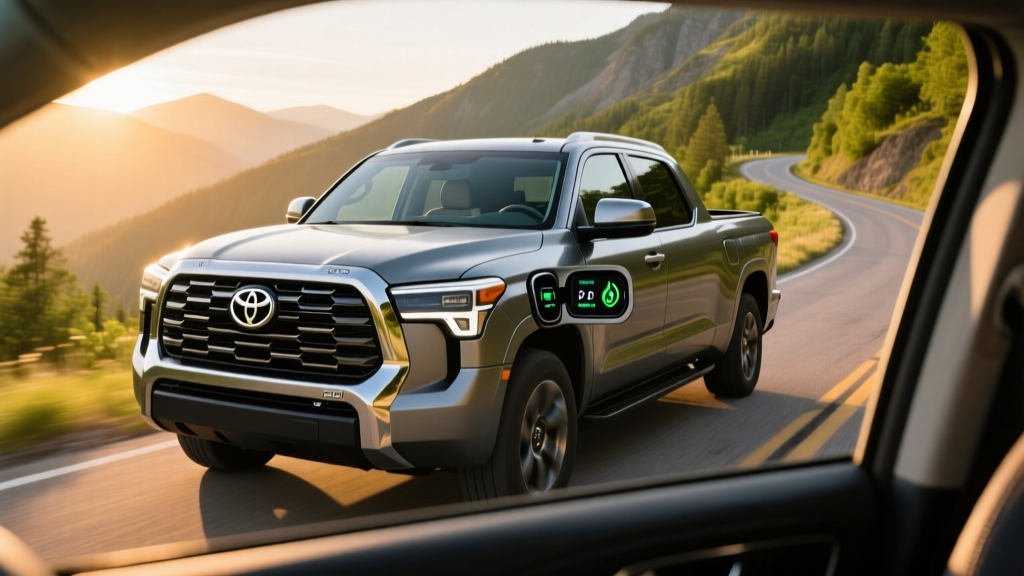
The 2025 Toyota Tundra i-FORCE MAX hybrid delivers an EPA-estimated 22 MPG combined (20 city / 24 highway) — a modest but meaningful improvement over the non-hybrid V6's 20 MPG combined. For a full-size, body-on-frame pickup producing 437 horsepower and 583 lb-ft of torque, those numbers represent genuine engineering progress. But the real story isn't just the sticker figure; it's how this conventional hybrid (HEV) powertrain behaves under real loads, in stop-and-go traffic, and on long highway hauls where towing changes everything.
This guide breaks down every fuel economy figure, explains why the Tundra Hybrid is a conventional hybrid (not a plug-in), maps out the powertrain specs, and gives you the data to decide whether this truck — or a full EV or gas-only alternative — fits your actual driving life.
EPA Fuel Economy: 2025 Toyota Tundra Hybrid MPG by Configuration
Toyota offers the i-FORCE MAX hybrid powertrain across multiple Tundra trims and cab/bed configurations. Fuel economy varies slightly depending on 4x2 vs. 4x4 and cab size. Here's the official EPA data from fueleconomy.gov:
| Configuration | City MPG | Highway MPG | Combined MPG | Annual Fuel Cost* |
|---|---|---|---|---|
| 4x2 CrewMax (5.5' bed) | 20 | 24 | 22 | $2,650 |
| 4x4 CrewMax (5.5' bed) | 19 | 24 | 21 | $2,750 |
| 4x4 CrewMax (6.5' bed) | 19 | 23 | 20 | $2,900 |
*Based on 15,000 miles/year at $3.50/gallon regular unleaded. Actual costs vary by region and driving habits.
Conventional hybrids like the Tundra i-FORCE MAX tend to exceed their EPA city estimates in real-world stop-and-go driving, where regenerative braking recaptures energy most effectively. Expect 21–23 MPG in urban commutes. Highway driving is a different story: sustained speeds above 70 MPH reduce the hybrid system's advantage, and real-world highway figures often land between 20–22 MPG. The biggest MPG killer is towing — hitch a 6,000-lb trailer and expect combined figures to drop to 12–14 MPG. Aerodynamic drag and weight dominate at that point, and no hybrid system can fully compensate.
i-FORCE MAX Powertrain: Engine, Motor, and Combined Output
The 2025 Tundra Hybrid uses Toyota's i-FORCE MAX powertrain, which pairs a twin-turbocharged 3.4-liter V6 with an electric motor-generator sandwiched between the engine and a 10-speed automatic transmission. This is a parallel hybrid architecture — both the engine and motor can drive the wheels, and the system manages the blend automatically.
| Specification | Value |
|---|---|
| Engine | 3.4L twin-turbo V6 (V35A-FTS) |
| Engine Output | 389 hp / 479 lb-ft torque |
| Electric Motor | Motor-generator integrated in bell housing |
| Combined System Output | 437 hp / 583 lb-ft torque |
| Transmission | 10-speed automatic (Direct Shift-10AT) |
| Hybrid Battery | 1.87 kWh (sealed NiMH), located under rear seats |
| Drivetrain | RWD (4x2) or part-time 4WD (4x4) |
| 0–60 MPH | ~5.7 seconds (4x4 CrewMax, manufacturer estimate) |
| Max Towing Capacity | 11,175 lbs (4x2, properly equipped) |
| Max Payload | 1,760 lbs (varies by configuration) |
The 1.87 kWh battery is intentionally small. This isn't a truck designed for electric-only driving — it's a truck designed to use the electric motor for torque fill at low RPMs, smooth stop-start behavior, and regenerative braking during deceleration. The motor provides instant torque from 0 RPM, which is why the i-FORCE MAX produces its peak 583 lb-ft far earlier in the rev range than the non-hybrid V6's 479 lb-ft. That difference is immediately noticeable when merging onto highways or pulling away from a stop with a load.
HEV vs. PHEV vs. Full EV: Which Powertrain Fits You?
One of the most common questions from truck shoppers is whether the Tundra Hybrid needs to be plugged in. It does not. Let's clarify the three electrified powertrain types before building a decision framework:
HEV (Conventional Hybrid) — Tundra i-FORCE MAX
No plug. The small battery charges through regenerative braking and engine power. You fuel it like a normal truck. The electric motor assists the engine for better efficiency and torque. Typical MPG improvement over gas-only: 2–4 MPG combined.
PHEV (Plug-In Hybrid) — Not Available on Tundra
Plugs into a wall or charger. Larger battery (typically 15–25 kWh) provides 25–50 miles of electric-only driving before the gas engine kicks in. Examples: Ford Escape PHEV, Jeep Wrangler 4xe. Toyota does not currently offer a Tundra PHEV.
BEV (Battery Electric Vehicle) — Rivian R1T, Ford F-150 Lightning, Chevy Silverado EV
No gas engine. Large battery (100+ kWh). EPA range of 250–400+ miles. Charges via Level 2 or DC fast charging. Zero tailpipe emissions. Higher upfront cost, lower per-mile energy cost.
Choose the Tundra Hybrid (HEV) if: You need full-size truck capability (towing, payload, ground clearance), drive 15,000+ miles/year in mixed conditions, want lower fuel costs than a gas-only Tundra without changing your fueling habits, and don't have reliable access to home or workplace EV charging.
Choose a PHEV if: Your daily commute is under 40 miles, you can charge at home, you want electric-only driving for weekday errands but gas flexibility for weekend road trips, and you don't need full-size truck towing capacity.
Choose a full EV (F-150 Lightning, R1T) if: You have home Level 2 charging, your daily driving is under 250 miles, you want the lowest per-mile energy cost, you value instant torque and quiet operation, and you're comfortable planning DC fast-charging stops on road trips.
Pricing, Trims, and Tax Credit Eligibility
The i-FORCE MAX hybrid powertrain is available on Tundra trims ranging from the TRD Off-Road through Platinum and 1794 Edition. Pricing for the 2025 model year:
| Trim Level | Base MSRP (approx.) | Hybrid Premium vs. Gas V6 |
|---|---|---|
| Limited (4x2 CrewMax) | $58,905 | +~$3,700 |
| TRD Off-Road (4x4) | $60,540 | +~$3,700 |
| Platinum (4x4) | $68,240 | +~$3,700 |
| 1794 Edition (4x4) | $68,780 | +~$3,700 |
| TRD Pro (4x4) | $74,930 | Standard (hybrid only) |
| Capstone (4x4) | $80,825 | Standard (hybrid only) |
Prices include destination charge. Dealer markups may apply. Verify current pricing at Toyota.com.
No. Under the current IRS §30D rules, the federal clean vehicle credit (up to $7,500) is available only for plug-in electric vehicles — battery electric vehicles (BEVs) and plug-in hybrids (PHEVs) with a minimum battery capacity of 7 kWh. The Tundra i-FORCE MAX is a conventional hybrid (HEV) with a 1.87 kWh battery and no plug-in capability, so it does not qualify for the §30D federal tax credit.
Some states offer their own incentives for conventional hybrids, but these are increasingly rare as state programs shift toward plug-in vehicles. Check your state's energy office or department of environmental quality for current programs. Always consult a tax professional for eligibility specifics — rules change frequently and have income, MSRP, and battery-sourcing requirements. See IRS.gov §30D guidelines for the latest federal rules.
Battery Warranty, Reliability, and Replacement Costs
Hybrid battery longevity is consistently the top concern for first-time hybrid buyers. Here's what Toyota provides:
Hybrid Battery Coverage: 10 years or 150,000 miles (whichever comes first), transferable to subsequent owners.
Hybrid System Components: 8 years or 100,000 miles — covers the inverter, motor-generator, and associated control electronics.
Powertrain Warranty: 5 years or 60,000 miles for the engine and transmission.
Toyota has been building hybrid powertrains since the 1997 Prius, and their NiMH hybrid batteries have demonstrated exceptional longevity. Fleet data and owner surveys consistently show Toyota hybrid batteries lasting 150,000–200,000+ miles before significant capacity loss. The 1.87 kWh pack in the Tundra is small and rarely cycles deeply — it buffers energy in and out in small increments, which is gentle on cell chemistry.
Replacement cost if out of warranty: A Tundra i-FORCE MAX hybrid battery replacement runs approximately $3,000–$4,500 for the battery pack itself, plus $500–$800 in labor. Independent hybrid shops often offer refurbished packs for $1,500–$2,500. Given the 10-year/150,000-mile warranty and Toyota's track record, most owners will sell or trade the truck before facing this cost.
On reliability specifically: the i-FORCE MAX powertrain is now in its third model year in the Tundra (introduced for 2022). Early-model-year reports of wastegate actuator issues on the twin-turbo V6 have been addressed through software updates and revised parts in 2024+ production. The hybrid system itself — motor-generator, inverter, battery — has been essentially trouble-free across Toyota's lineup. NHTSA complaint data for the Tundra hybrid shows no systemic powertrain patterns as of early 2026.
Tundra Hybrid vs. Gas Tundra vs. Electric Trucks: The Numbers
| Metric | Tundra Hybrid (HEV) | Tundra Gas V6 | Ford F-150 Lightning (BEV) | Rivian R1T Dual-Motor (BEV) |
|---|---|---|---|---|
| Combined MPG / MPGe | 22 MPG | 20 MPG | 70 MPGe | 73 MPGe |
| Combined HP | 437 hp | 389 hp | 580 hp | 665 hp |
| Combined Torque | 583 lb-ft | 479 lb-ft | 775 lb-ft | 829 lb-ft |
| 0–60 MPH | ~5.7 sec | ~6.1 sec | ~3.8 sec | ~3.5 sec |
| Max Towing | 11,175 lbs | 12,000 lbs | 10,000 lbs | 11,000 lbs |
| Max Payload | 1,760 lbs | 1,940 lbs | 2,235 lbs | 1,760 lbs |
| Base MSRP | ~$58,905 | ~$37,865 | ~$54,995 | ~$69,900 |
| Federal Tax Credit | None | None | Up to $7,500* | Up to $7,500* |
| Fueling | Gas only (no plug) | Gas only | Electric (Level 2 + DCFC) | Electric (Level 2 + DCFC) |
*Federal §30D credit eligibility depends on buyer income, MSRP caps, and battery-sourcing requirements. Verify at IRS.gov.
Pros — Tundra Hybrid
- Best-in-class torque for a hybrid V6 (583 lb-ft)
- No charging infrastructure needed — fuel like any truck
- 2 MPG combined improvement over gas V6
- 10-year/150,000-mile hybrid battery warranty
- Smooth stop-start and low-RPM torque fill
- Proven Toyota hybrid reliability track record
Cons — Tundra Hybrid
- ~$3,700 premium over gas V6 on comparable trims
- No federal tax credit to offset hybrid premium
- MPG advantage disappears when towing heavy loads
- Not a PHEV — no electric-only driving mode
- Fuel economy trails diesel alternatives in highway cruising
- Highway MPG can dip below EPA estimate at sustained 80+ MPH
Frequently Asked Questions
How many MPG does the 2025 Toyota Tundra Hybrid get?
The EPA rates the 2025 Tundra i-FORCE MAX at 20 city / 24 highway / 22 combined MPG (4x2 CrewMax). The 4x4 drops slightly to 19 city / 24 highway / 21 combined. Real-world driving typically matches or slightly exceeds city estimates (21–23 MPG) thanks to regenerative braking, while highway driving at 70+ MPH often yields 20–22 MPG. Towing significantly reduces these figures.
Does the Tundra Hybrid need to be plugged in?
No. The Tundra i-FORCE MAX is a conventional hybrid (HEV), not a plug-in hybrid (PHEV). The small 1.87 kWh battery charges itself through regenerative braking and the gas engine. You never plug it in — you just fill it with gas like a standard truck.
Is the Tundra Hybrid worth the extra cost over the gas V6?
The hybrid premium is roughly $3,700. At 2 MPG better combined and 15,000 miles/year at $3.50/gallon, you'd save approximately $250/year in fuel. That's a ~15-year payback on fuel alone. However, the hybrid also delivers 104 additional lb-ft of torque, smoother stop-start behavior, and potentially better resale value as hybrid demand grows. If torque and drivability matter to you — and they do in a heavy truck — the value proposition extends beyond pure fuel savings.
Can the Tundra Hybrid drive on electric power alone?
Only for very brief, low-speed moments — such as creeping through a parking lot or coasting to a stop. The 1.87 kWh battery doesn't have enough capacity for sustained electric-only driving. This is by design: the system prioritizes torque assist and efficiency, not electric range. If electric-only commuting is your goal, you need a PHEV or BEV.
How long will the Tundra Hybrid battery last?
Toyota warranties the hybrid battery for 10 years or 150,000 miles. Based on decades of Toyota hybrid data (Prius, Camry Hybrid, Highlander Hybrid), these NiMH packs routinely last 180,000–250,000 miles before meaningful degradation. The Tundra's pack cycles gently — it never fully charges or fully depletes — which maximizes cell life. Most original owners will never need a replacement.
Does the 2025 Tundra Hybrid qualify for any tax credits?
Not the federal §30D clean vehicle credit, which requires a plug-in vehicle with at least 7 kWh of battery capacity. The Tundra Hybrid has a 1.87 kWh battery and no plug. Some states may offer minor hybrid incentives, but these are uncommon. Check your state's energy department for specifics.
What is the Tundra Hybrid's fuel cost compared to the gas V6?
At 15,000 miles/year and $3.50/gallon, the gas V6 (20 MPG combined) costs approximately $2,625/year in fuel. The hybrid (22 MPG combined) costs approximately $2,386/year — a savings of about $239/year. Over a 5-year ownership period, that's roughly $1,200 in fuel savings. Over 10 years, approximately $2,400. These savings don't fully offset the $3,700 hybrid premium on fuel alone, but they narrow the gap when combined with the performance and drivability benefits.