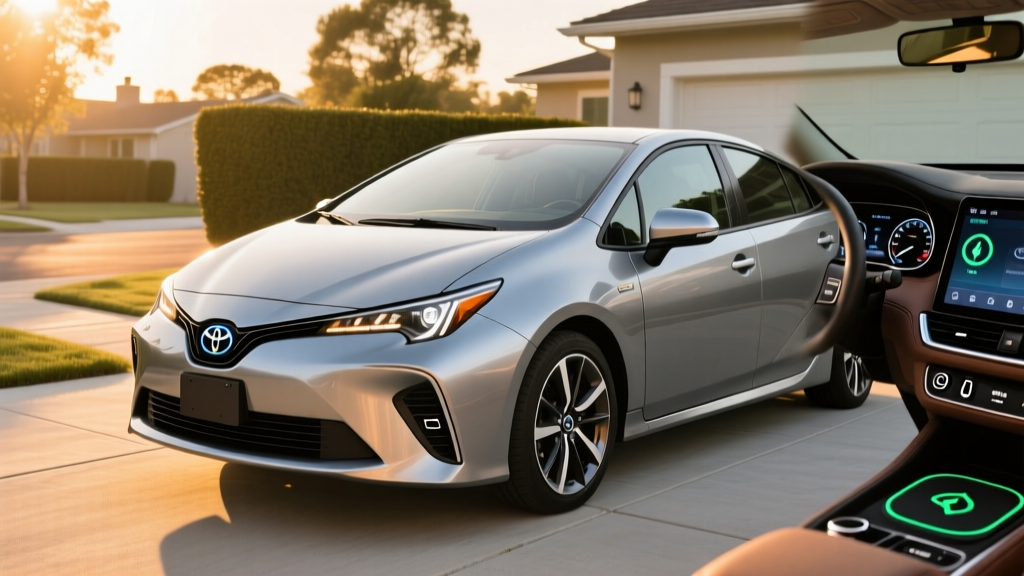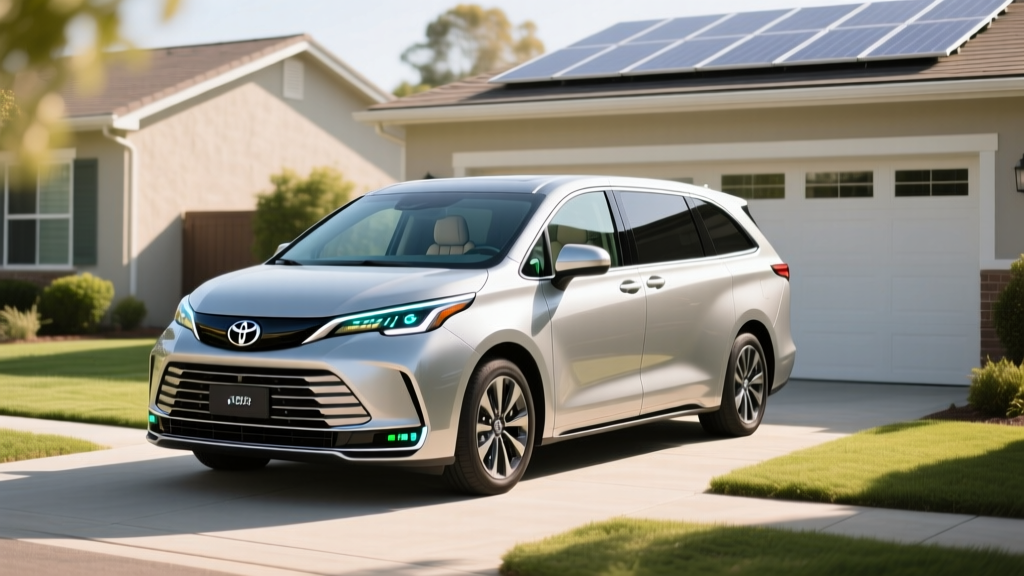
The 2025 Toyota Sienna hybrid minivan occupies a rare position in the family-vehicle market: it's one of the only minivans sold exclusively as a hybrid, with no gas-only variant available. For buyers weighing a three-row family hauler against plug-in hybrids and full EVs, the Sienna's standard hybrid-electric (HEV) powertrain offers a compelling middle ground — no plug required, 36 MPG combined, and the cargo flexibility that minivans exist to deliver.
This guide covers everything a data-driven buyer needs: exact EPA and real-world fuel economy, powertrain specs, trim pricing, battery warranty and replacement costs, tax-credit eligibility, and a clear framework for deciding whether the Sienna HEV, a plug-in hybrid, or a full battery-electric vehicle (BEV) fits your household best.
HEV vs PHEV vs EV: Where the Sienna Fits
Before examining the Sienna's specs, it's essential to distinguish the three electrified powertrain types, because the Sienna is only available as a conventional hybrid (HEV). It does not plug in.
| Feature | HEV (Sienna) | PHEV (e.g., Chrysler Pacifica Hybrid) | BEV (e.g., Kia EV9) |
|---|---|---|---|
| Plug-in charging required? | No — self-charging via engine + regen | Yes — plug in for electric-only miles | Yes — plug in for all driving |
| Electric-only range | ~1 mile at low speed | 32 mi (Pacifica Hybrid EPA) | 230-310 mi (varies by model) |
| Total range | ~530 mi (14.1-gal tank) | ~430 mi combined | 230-310 mi, then recharge |
| Fuel / energy | Gasoline only | Gasoline + electricity | Electricity only |
| Federal tax credit (§30D) | Not eligible | Eligible if sourcing/income rules met | Up to $7,500 if rules met |
| Home charging install needed? | No | Recommended (Level 2) | Required (Level 2) |
Bottom line: The Sienna HEV is the right choice if you want hybrid fuel savings with zero lifestyle change — no charging infrastructure, no range planning, no plug-in routine. If you have home charging access and a short commute, a PHEV like the Pacifica Hybrid can cover daily school runs on electricity alone. If you're ready to go fully electric and have reliable Level 2 charging, a three-row BEV like the Kia EV9 eliminates gas entirely.
Fuel Economy: EPA Ratings and Real-World MPG
The 2025 Sienna uses Toyota's fourth-generation hybrid system paired with a 2.5-liter four-cylinder engine. Front-wheel-drive (FWD) models achieve slightly better fuel economy than all-wheel-drive (AWD) variants, which add a rear electric motor.
| Drivetrain | EPA City | EPA Highway | EPA Combined | Est. Total Range |
|---|---|---|---|---|
| FWD | 36 MPG | 36 MPG | 36 MPG | ~530 miles |
| AWD (LE, XLE) | 35 MPG | 36 MPG | 35 MPG | ~515 miles |
| AWD (Limited, Platinum, Woodland) | 34 MPG | 35 MPG | 35 MPG | ~515 miles |
Source: fueleconomy.gov — U.S. EPA estimates.
Real-World MPG: What Owners Actually See
Toyota hybrids, including the Sienna, tend to perform close to or even slightly above EPA estimates in city driving, where regenerative braking recaptures energy and the electric motor handles low-speed propulsion. On the highway, however, the aerodynamic penalty of a minivan's boxy profile and the engine's continuous load reduce efficiency.
- City / suburban driving: 34-38 MPG is typical. Owners running errands and school drop-offs frequently report matching or exceeding the 36 MPG sticker.
- Highway cruising (70-75 mph): Expect 30-33 MPG. At sustained high speeds, the 2.5L engine carries most of the load.
- Cold weather (below 30°F): MPG can drop 10-15% as the engine runs more frequently to generate cabin heat and maintain battery temperature. Expect 30-33 MPG combined in winter for FWD models.
- Loaded / towing: With seven passengers and cargo, expect 28-31 MPG combined. The Sienna's 3,500-lb towing capacity (when properly equipped) further reduces efficiency under load.
Compared to the non-hybrid Honda Odyssey (22 MPG combined EPA) or the Chrysler Pacifica gas model (22 MPG combined), the Sienna saves roughly 150-180 gallons of fuel per year at 12,000 miles — approximately $450-$550 annually at $3.20/gallon.
Powertrain and Performance Specs
| Specification | 2025 Toyota Sienna (All Trims) |
|---|---|
| Engine | 2.5L 4-cylinder DOHC (A25A-FXS) |
| Engine output | 189 hp @ 6,000 rpm / 176 lb-ft torque |
| Front electric motor | 134 hp / 199 lb-ft |
| Rear electric motor (AWD only) | 54 hp / 89 lb-ft |
| Net combined system horsepower | 245 hp |
| Transmission | Electronic continuously variable (eCVT) |
| 0-60 mph (est.) | ~7.1 seconds (FWD) |
| Drivetrain | FWD or electronic AWD |
| Fuel tank | 14.1 gallons |
| Towing capacity | 3,500 lbs (properly equipped) |
| Hybrid battery | 1.9 kWh (NiMH), sealed, self-charging |
The Sienna's hybrid system uses a nickel-metal hydride (NiMH) battery pack — not the larger lithium-ion packs found in PHEVs or BEVs. At 1.9 kWh, this battery is small by design: it buffers energy from regenerative braking and assists the gas engine during acceleration, but it cannot sustain electric-only driving beyond very low-speed, short-distance maneuvers (roughly 1 mile under 25 mph).
The eCVT is not a belt-driven CVT like those in some conventional cars. Toyota's planetary-gear eCVT is mechanically simple with no belts or pulleys to wear, which contributes to the powertrain's long-term reliability. Acceleration is adequate for a loaded minivan — the 245 combined hp delivers confident highway merging, though the Sienna is not a performance vehicle.
2025 Sienna Trim Pricing and Tax Credit Eligibility
| Trim | Drivetrain | MSRP (incl. destination) |
|---|---|---|
| LE | FWD | $37,685 |
| LE | AWD | $38,485 |
| XLE | FWD | $41,215 |
| XLE | AWD | $42,015 |
| XSE | FWD | $44,165 |
| XSE | AWD | $44,965 |
| 25th Anniversary Edition | AWD | $45,545 |
| Limited | AWD | $49,075 |
| Platinum | AWD | $53,495 |
| Woodland Edition | AWD | $47,615 |
Pricing per Toyota's 2025 MSRP. Dealer pricing may vary.
Federal Tax Credit: Not Eligible
The 2025 Toyota Sienna is a conventional hybrid (HEV), not a plug-in hybrid or battery-electric vehicle. Under IRS §30D rules, the federal clean vehicle credit applies only to plug-in vehicles with a battery capacity of at least 7 kWh that meet critical-mineral and battery-component sourcing requirements. The Sienna's 1.9 kWh NiMH battery does not qualify.
There is no federal tax credit for conventional hybrids in 2025. Some states or municipalities may offer minor incentives for hybrid purchases — check your state's energy or DMV website for current programs. The fuel savings alone ($450-$550/year vs. a gas minivan) serve as the primary financial benefit.
Hybrid Battery Warranty, Lifespan, and Replacement Cost
2025 Toyota Sienna Hybrid Battery Warranty:
- Duration: 10 years / 150,000 miles (whichever comes first)
- Coverage: Defects and capacity loss below a defined performance threshold
- Transferable: Yes — warranty transfers to subsequent owners
- Emissions warranty: Hybrid system components also covered under 8-year/100,000-mile federal emissions warranty
How Long Does the Sienna Hybrid Battery Last?
Toyota's hybrid battery packs have an extensive track record. The Prius, which has used similar NiMH technology since 2001, routinely sees original batteries lasting 150,000-200,000+ miles with gradual capacity loss rather than sudden failure. The Sienna's hybrid system is less stressed than a PHEV or BEV battery because the pack is small, never deeply discharged, and never charged to full capacity — the system operates within a narrow state-of-charge window to maximize longevity.
Based on fleet and owner data across Toyota's hybrid lineup:
- Expected lifespan: 150,000-200,000+ miles before significant capacity loss
- Typical degradation pattern: Gradual — you may notice a slight MPG decrease (1-2 MPG) after 100,000+ miles as the battery holds less charge, but the vehicle remains fully drivable
- Failure mode: Individual cell degradation rather than total pack failure; some shops now offer cell-level repair
Battery Replacement Cost
If replacement is needed outside warranty:
- New OEM Toyota hybrid battery: $3,000-$4,000 (parts + labor at a dealership)
- Remanufactured/refurbished pack: $1,500-$2,500 (aftermarket options)
- Cell-level repair: $500-$1,500 (specialist hybrid shops can replace individual degraded cells)
For context, the average Sienna owner driving 12,000 miles/year would reach 150,000 miles at year 12-13 — well beyond the typical first-ownership period. The hybrid battery is not a near-term cost concern for most buyers.
Reliability, Safety, and Ownership Costs
The Sienna benefits from Toyota's strong reliability reputation and the inherent simplicity of its hybrid system. The eCVT has no belts, clutches, or torque converters to fail. Regenerative braking reduces wear on the friction brake pads — many Sienna owners report original brake pads lasting 60,000-80,000 miles.
Safety ratings: The 2025 Sienna earned the IIHS Top Safety Pick+ designation with good ratings across all crashworthiness tests. Toyota Safety Sense 2.5+ is standard on every trim, including:
- Pre-Collision System with Pedestrian Detection
- Full-Speed Range Dynamic Radar Cruise Control
- Lane Departure Alert with Steering Assist
- Lane Tracing Assist
- Automatic High Beams
- Road Sign Assist
Source: IIHS 2025 Toyota Sienna ratings.
Note: These are SAE Level 1-2 driver-assistance features. The driver must remain fully engaged and in control at all times. This is not autonomous or self-driving capability.
Estimated 5-Year Ownership Cost Comparison
| Cost Category | Sienna Hybrid (36 MPG) | Gas Minivan (22 MPG) |
|---|---|---|
| Fuel (60,000 mi @ $3.20/gal) | $5,333 | $8,727 |
| Brake pad replacements | 0-1 set | 1-2 sets |
| Oil changes (conventional interval) | ~12 changes | ~12 changes |
| Federal tax credit | $0 | $0 |
| 5-year fuel savings vs. gas | ~$3,394 saved | |
Pros, Cons, and the Decision Framework
Pros
- 36 MPG combined — best-in-class minivan efficiency
- No plug-in charging required; zero lifestyle change vs. a gas car
- 10-year/150,000-mile hybrid battery warranty
- Standard AWD availability across most trims
- 3,500-lb towing capacity
- Standard Toyota Safety Sense 2.5+ on every trim
- Strong predicted reliability; eCVT has minimal wear components
Cons
- No federal tax credit eligibility (HEV, not PHEV/BEV)
- 245 hp is adequate but not quick for a 4,600-lb vehicle
- No plug-in or electric-only option in the Sienna lineup
- Highway MPG drops to 30-33 under sustained 70+ mph driving
- Higher base MSRP than some gas-only minivan competitors
- Cabin noise from the 4-cylinder engine under hard acceleration
Decision Framework: Which Electrified Minivan Fits You?
Choose the Toyota Sienna HEV if:
- You want hybrid fuel savings without installing a home charger or changing your fueling routine
- Your driving is a mix of city and highway with no single dominant pattern
- You value AWD availability and Toyota's reliability track record
- You plan to keep the vehicle 8-12 years and want a proven, low-stress hybrid system
Choose a PHEV minivan (Chrysler Pacifica Hybrid) if:
- You have Level 2 home charging and a daily commute under 30 miles
- You want electric-only school runs and errands with gas-engine backup for road trips
- You may qualify for the §30D federal tax credit (verify battery sourcing and income limits on irs.gov)
Choose a three-row BEV (Kia EV9, Rivian R1S) if:
- You have reliable Level 2 home charging and access to DC fast chargers for road trips
- You want zero tailpipe emissions and the lowest per-mile energy cost
- You're comfortable with route planning on longer trips around charging stops
Frequently Asked Questions
How many MPG does the 2025 Toyota Sienna hybrid get?
The EPA rates the FWD Sienna at 36 MPG city / 36 highway / 36 combined. AWD models rate 35 MPG combined. In real-world driving, expect 34-38 MPG in city conditions and 30-33 MPG at highway speeds above 70 mph. Cold weather can reduce combined MPG by 10-15%.
Does the Toyota Sienna hybrid need to be plugged in?
No. The Sienna is a conventional hybrid (HEV). Its small 1.9 kWh battery charges entirely through regenerative braking and the gasoline engine. You fuel it like any other car — with gasoline only. There is no plug, no charging cable, and no electric-only driving range to manage.
Is the Sienna hybrid battery reliable, and what does replacement cost?
Toyota's NiMH hybrid batteries have a proven track record spanning two decades. The 2025 Sienna's hybrid battery is warranted for 10 years / 150,000 miles. Based on fleet data, these batteries routinely last 150,000-200,000+ miles with gradual capacity loss. Out-of-warranty replacement costs $3,000-$4,000 for a new OEM pack, or $1,500-$2,500 for a remanufactured unit.
Does the 2025 Sienna qualify for any federal tax credit?
No. The federal §30D clean vehicle credit applies only to plug-in electric vehicles (PHEVs and BEVs) with battery packs of at least 7 kWh. The Sienna's 1.9 kWh NiMH battery and conventional hybrid powertrain do not meet this requirement. Some states may offer minor hybrid incentives — check your state energy office for current programs.
Hybrid vs PHEV vs EV — which minivan should I buy?
If you lack home charging access or don't want to change your fueling habits, the Sienna HEV is the clear choice — 36 MPG with no plug-in routine. If you have a Level 2 charger at home and a short daily commute, the Pacifica PHEV lets you drive ~32 miles on electricity before the gas engine engages. If you want zero gas use and have charging infrastructure, a three-row BEV like the Kia EV9 offers 230+ miles of range but requires trip planning for long drives.
How does AWD affect the Sienna's fuel economy?
AWD costs you just 1 MPG combined (35 vs 36 for FWD). The rear motor only engages when the system detects slip, so it adds minimal parasitic loss during normal driving. For buyers in snow-belt states, the AWD penalty is negligible.
What is the Sienna's towing capacity?
3,500 pounds when properly equipped (all trims). Expect fuel economy to drop to 25-28 MPG combined while towing. This is sufficient for a small boat trailer, light camper, or utility trailer — but not for large travel trailers.