Quick Verdict: The RAV4 Hybrid XSE at a Glance
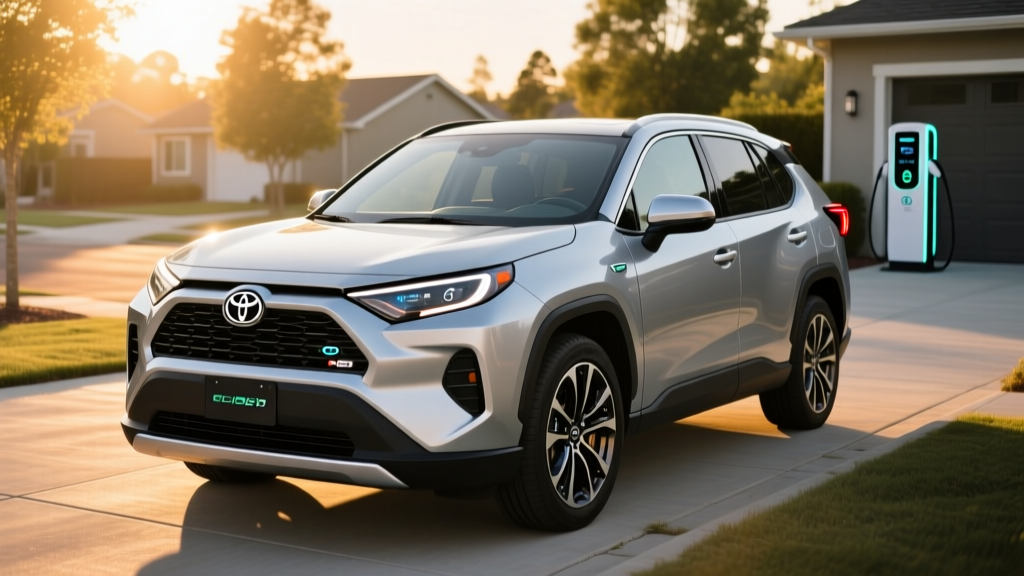
The 2025 Toyota RAV4 Hybrid XSE occupies a specific niche in the compact SUV market: it's the sport-tuned trim of Toyota's best-selling hybrid utility vehicle, pairing a 219-horsepower all-wheel-drive powertrain with an EPA-estimated 39 MPG combined. For buyers who want hybrid efficiency without plug-in complexity, the XSE adds sportier suspension tuning, a blacked-out exterior appearance, and SofTex sport seats over the more comfort-oriented XLE and SE trims.
This is a conventional hybrid electric vehicle (HEV) — meaning it charges its own battery through regenerative braking and the gasoline engine. You never plug it in. If you're looking for electric-only driving range, you'll want the RAV4 Prime (Toyota's PHEV variant), which we'll compare below.
EPA Combined: 39 MPG | City: 41 MPG | Highway: 38 MPG
Powertrain: 219 hp net | 2.5L 4-cyl + 3 electric motors | AWD-i
Battery: 1.6 kWh NiMH (self-charging, no plug)
0-60 mph: ~7.4 seconds
Base MSRP: $37,440 (before destination)
How Many MPG Does the 2025 RAV4 Hybrid XSE Actually Get?
The EPA rates the 2025 RAV4 Hybrid (all AWD trims including the XSE) at 41 MPG city / 38 MPG highway / 39 MPG combined, per fueleconomy.gov. These figures apply across the hybrid AWD lineup because all trims share the same powertrain and battery.
| Metric | City | Highway | Combined |
|---|---|---|---|
| EPA Estimate | 41 MPG | 38 MPG | 39 MPG |
| Real-World Expectation | 40–44 MPG | 34–38 MPG | 37–41 MPG |
Real-World MPG vs. EPA: What Owners Report
Toyota's hybrid system excels in stop-and-go city driving, where the electric motors handle low-speed propulsion and regenerative braking recaptures energy constantly. Many owners report exceeding the 41 MPG city EPA estimate in moderate-temperature urban driving — 43–45 MPG is achievable in 50–75°F weather with moderate acceleration.
Highway driving tells a different story. At sustained 75+ mph speeds, the gasoline engine does most of the work, and the XSE's slightly sportier tuning doesn't change the aerodynamic reality of a boxy SUV. Expect 34–37 MPG on long highway trips, particularly in colder weather or with roof cargo. In sub-30°F winter conditions, combined MPG can dip to 33–35 as the engine runs more frequently for cabin heat and the battery operates less efficiently.
With a 14.5-gallon fuel tank, real-world total range typically falls between 500 and 570 miles depending on driving mix and climate.
Powertrain Deep Dive: 219 HP and Three Electric Motors
The 2025 RAV4 Hybrid XSE uses Toyota's fourth-generation hybrid system, pairing a 2.5-liter Dynamic Force 4-cylinder engine with three motor-generators in the AWD-i configuration:
| Component | Specification |
|---|---|
| Gasoline Engine | 2.5L inline-4, 176 hp / 163 lb-ft |
| Front Electric Motor | 88 kW (118 hp) / 149 lb-ft |
| Rear Electric Motor (AWD-i) | 40 kW (54 hp) / 89 lb-ft |
| Net System Output | 219 hp |
| Transmission | eCVT (planetary gearset, no belt) |
| Drivetrain | Electronic AWD (eAWD / AWD-i) |
| 0–60 mph | ~7.4 seconds |
| Hybrid Battery | 1.6 kWh NiMH (sealed, self-charging) |
| Towing Capacity | 1,750 lbs |
The AWD-i system is worth understanding: unlike mechanical AWD with a driveshaft, the rear axle is powered entirely by its own electric motor. This means the rear wheels engage only when the system detects slip, during hard acceleration, or in specific drive modes. It's effective for rain, light snow, and gravel — but it's not a trail-rated system for serious off-road use. The XSE trim adds Sport drive mode, which sharpens throttle response and holds the engine at higher RPMs for more immediate power delivery.
HEV vs. PHEV: Should You Get the Hybrid or the RAV4 Prime?
Toyota sells two electrified RAV4 variants, and the distinction matters for your daily routine and budget:
RAV4 Hybrid (HEV)
- No plug required — charges via regen and engine
- 39 MPG combined always
- No electric-only range
- 1.6 kWh battery (NiMH)
- Starting ~$33,000 (LE) / $37,440 (XSE)
- No federal tax credit
RAV4 Prime (PHEV)
- Plug in to charge — 18.1 kWh battery (Li-ion)
- 94 MPGe combined / 38 MPG gas-only
- 42 miles electric-only range
- Level 2 charge: ~2.5 hours (6.6 kW onboard)
- No DC fast charging
- Starting ~$44,000 / may qualify for §30D credit
Choose the RAV4 Hybrid XSE if: You lack home charging access, want lower upfront cost, drive a mix of city and highway without a short commute that could be fully electric, and prefer not to think about plugging in.
Choose the RAV4 Prime if: You can install a Level 2 charger at home, your daily commute is under 40 miles round-trip (allowing near-zero gas use on weekdays), and you want the 302 hp combined output. The Prime is significantly quicker (5.7 seconds 0–60) and may qualify for a partial federal tax credit depending on current-year battery sourcing rules — check IRS §30D guidelines for the latest eligibility.
Pricing, Trims, and Tax Credit Eligibility
The 2025 RAV4 Hybrid XSE carries a base MSRP of $37,440, plus a $1,395 destination charge, bringing the out-the-door starting price to approximately $38,835 before dealer fees, taxes, or options.
| Trim | MSRP | Key Additions Over Base |
|---|---|---|
| LE | $32,895 | Toyota Safety Sense 2.5+, 8" touchscreen |
| XLE | $34,380 | Dual-zone climate, blind-spot monitor, alloy wheels |
| SE | $35,925 | Sport-tuned suspension, paddle shifters |
| XSE | $37,440 | SofTex sport seats, black roof option, 19" wheels, ambient lighting |
| XLE Premium | $37,145 | Panoramic roof, premium audio, heated seats |
| Limited | $40,560 | Leather, 12.3" digital cluster, JBL audio, 360° camera |
Does the RAV4 Hybrid Qualify for a Federal Tax Credit?
No. The conventional RAV4 Hybrid (HEV) does not qualify for the federal §30D Clean Vehicle Credit. That credit applies only to plug-in electric vehicles (BEVs and PHEVs) with sufficient battery capacity and meeting battery-sourcing and critical-minerals requirements. The RAV4 Hybrid's 1.6 kWh NiMH battery is far below the 7 kWh minimum threshold.
The RAV4 Prime (PHEV) may qualify for a partial credit (up to $7,500) depending on current battery-component and critical-mineral sourcing rules, which tighten annually. Always verify current eligibility on irs.gov before purchasing, and confirm with a tax professional. Income caps also apply: $300,000 joint / $225,000 head of household / $150,000 single filers.
Some states and utilities offer rebates for conventional hybrids — check your state energy office or local utility for current programs, as these vary significantly by jurisdiction.
Battery Longevity, Warranty, and Replacement Cost
Toyota covers the hybrid battery for 10 years / 150,000 miles (whichever comes first) on 2020+ models. This applies nationwide regardless of state emissions laws. The warranty guarantees the battery will retain sufficient capacity to operate the hybrid system normally — it covers defects and premature degradation, not normal gradual capacity loss beyond the coverage period.
The RAV4 Hybrid uses a nickel-metal hydride (NiMH) battery pack rated at 1.6 kWh. Unlike the larger lithium-ion packs in BEVs and PHEVs, this battery is small, operates within a narrow state-of-charge window (roughly 40–80% SoC), and is managed conservatively by Toyota's hybrid system. This shallow-cycling approach is why Toyota hybrid batteries routinely last 150,000–200,000+ miles without significant issues.
What Does Hybrid Battery Replacement Cost?
If the hybrid battery fails outside warranty coverage, replacement costs typically range from $2,500 to $4,500 including parts and labor at a Toyota dealer. Independent hybrid specialists often offer refurbished battery packs for $1,500–$2,500. Individual battery modules can sometimes be replaced for $200–$500 if only a few cells have degraded — a diagnostic scan can determine this.
For context, the 2025 RAV4 Hybrid is a relatively new vehicle. Toyota's hybrid battery track record, dating back to the 2001 Prius, shows failure rates well below 5% within the first 10 years of normal use. The 10-year/150,000-mile warranty should cover the vast majority of original owners for the vehicle's typical first-ownership period.
Who Should Buy the RAV4 Hybrid XSE — And Who Shouldn't
✓ The XSE Is Right For You If…
- You want 39+ MPG without ever plugging in
- You live in an apartment or lack home charging access
- You take regular road trips and don't want to plan around chargers
- You want AWD for rain/snow without a fuel-economy penalty
- You prefer Toyota's long-term reliability track record
- You want a sportier look and feel over the standard hybrid trims
✗ Look Elsewhere If…
- You want electric-only driving for your commute (get the RAV4 Prime or a BEV)
- You want the lowest possible fuel cost (a BEV at $0.04/mi beats $0.09/mi on gas)
- You need serious off-road capability (4Runner TRD or RAV4 TRD Off-Road)
- You need 3-row seating (Highlander Hybrid or Grand Highlander)
- You want a federal tax credit (only PHEVs and BEVs qualify)
Hybrid vs. PHEV vs. Full EV: Which Fits Your Life?
The decision framework comes down to three questions:
- Can you charge at home? If no, a conventional hybrid like the RAV4 Hybrid XSE is your best electrified option. PHEVs and BEVs lose their advantage without regular plug-in access.
- Is your daily commute under 40 miles round-trip? If yes and you can charge at home, a PHEV (RAV4 Prime) lets you drive on electricity most weekdays while keeping a gas engine for weekend trips — best of both worlds.
- Do you frequently drive 300+ miles in a day? If yes, a conventional hybrid eliminates range-planning stress. BEVs can do road trips, but require 20–30 minute charging stops every 200–250 miles.
Pros and Cons of the 2025 RAV4 Hybrid XSE
Pros
- 39 MPG combined is excellent for an AWD compact SUV
- No plug-in required — zero lifestyle change from a gas car
- 10-year/150,000-mile hybrid battery warranty
- Strong Toyota reliability and resale value history
- XSE styling and sport suspension add visual and driving appeal
- Standard Toyota Safety Sense 2.5+ (pre-collision, lane tracing, adaptive cruise)
- 14.5-gallon tank = 500+ mile real-world range
Cons
- No electric-only driving mode — always burns some gas
- No federal tax credit eligibility
- Highway MPG drops noticeably above 75 mph
- Engine noise under hard acceleration (eCVT drone)
- XSE ride is firmer than XLE — some buyers prefer softer
- Infotainment is functional but not class-leading
- 1,750-lb towing capacity trails some turbocharged competitors
Frequently Asked Questions
How many MPG does the 2025 Toyota RAV4 Hybrid XSE get?
The EPA rates all 2025 RAV4 Hybrid AWD trims at 41 MPG city / 38 MPG highway / 39 MPG combined. In real-world driving, expect 40–44 MPG in city conditions and 34–38 MPG on the highway, with cold weather reducing combined figures to the low-to-mid 30s.
Does the RAV4 Hybrid need to be plugged in?
No. The RAV4 Hybrid is a conventional hybrid (HEV). Its 1.6 kWh battery charges entirely through regenerative braking and the gasoline engine. You fuel it like a normal car and never need a charger.
How far can the RAV4 Prime go on electric only?
The RAV4 Prime (the PHEV variant, a separate model) offers an EPA-estimated 42 miles of electric-only range on a full charge. This is enough for most daily commutes without using gasoline. The conventional RAV4 Hybrid does not offer electric-only driving.
Is the RAV4 Hybrid reliable, and what does a battery replacement cost?
Toyota's hybrid system has a proven track record spanning over two decades, with failure rates well under 5% in the first decade. The hybrid battery is covered for 10 years/150,000 miles. Out-of-warranty replacement typically costs $2,500–$4,500 at a dealer, or $1,500–$2,500 from an independent hybrid specialist using refurbished modules.
Does the 2025 RAV4 Hybrid qualify for any tax credit?
The conventional RAV4 Hybrid (HEV) does not qualify for the federal §30D Clean Vehicle Credit, which is reserved for plug-in vehicles (PHEVs and BEVs). The RAV4 Prime PHEV may qualify depending on current-year battery sourcing rules and buyer income limits. Some state and utility rebates may apply to conventional hybrids — check local programs.
What's the difference between the XSE and SE trims?
The XSE builds on the SE's sport-tuned suspension and paddle shifters by adding SofTex-trimmed sport seats, available two-tone black roof, 19-inch black alloy wheels, ambient interior lighting, and a leather-trimmed steering wheel. The XSE also includes the 10.5-inch Toyota Audio Multimedia touchscreen as standard, while the SE uses the 8-inch unit.
How does the RAV4 Hybrid compare to the Honda CR-V Hybrid?
The 2025 Honda CR-V Hybrid AWD is rated at 40 MPG city / 34 MPG highway / 37 MPG combined — slightly less highway-efficient than the RAV4 Hybrid. The CR-V Hybrid offers more rear-seat legroom and a smoother ride, while the RAV4 Hybrid delivers better highway MPG, a larger cargo area (37.6 vs 36.3 cu ft behind the rear seats), and a longer hybrid warranty (10yr/150k vs 8yr/100k for Honda). Both are strong choices; the RAV4 edges ahead for high-mileage highway drivers.