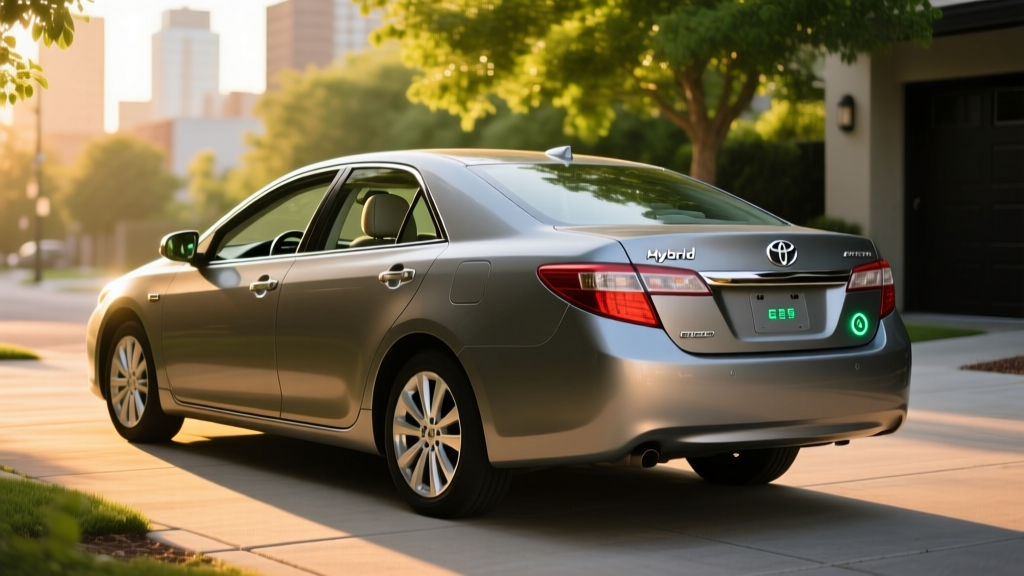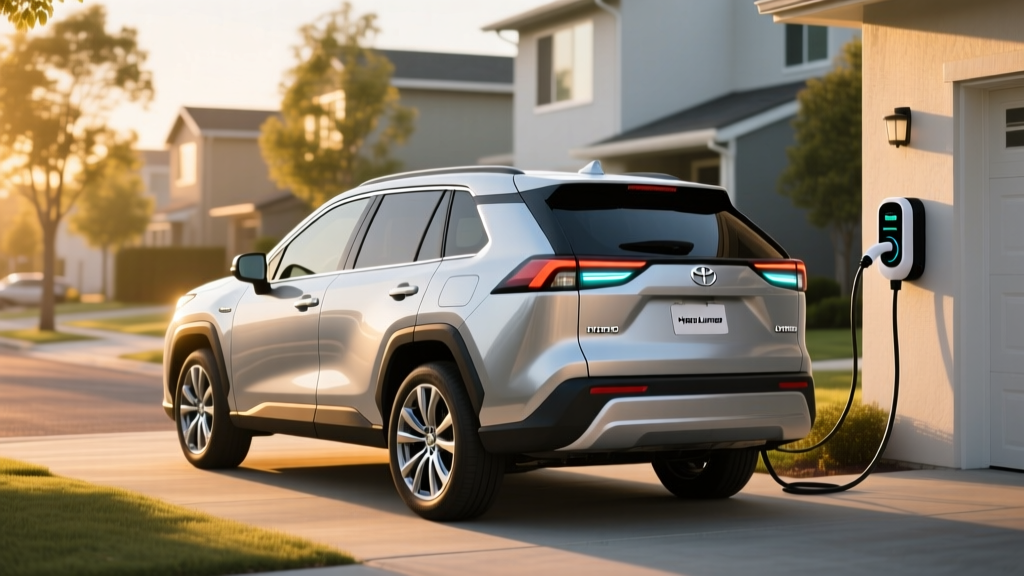
The compact SUV segment is crowded, but few nameplates command the loyalty and resale value of the Toyota RAV4. The 2025 Toyota RAV4 Hybrid Limited sits at the top of the conventional hybrid (HEV) lineup, pairing a 219-horsepower hybrid powertrain with premium features normally reserved for luxury crossovers. It does not plug in, it does not qualify for the federal EV tax credit, and it will not do 0-60 in under five seconds. What it does do is deliver a combined 39–41 MPG in a practical, all-weather package that asks almost nothing of its owner beyond filling up with regular unleaded.
This guide breaks down the 2025 RAV4 Hybrid Limited's real-world efficiency, ownership economics, and where it fits in the broader HEV vs PHEV vs BEV decision — with the exact numbers you need to make a purchase call.
HEV vs PHEV vs EV: Which RAV4 Powertrain Fits You?
Toyota sells three distinct RAV4 electrified variants. Confusing them is the single most common mistake buyers make at the dealership. Here is the fundamental distinction:
| Attribute | RAV4 Hybrid (HEV) | RAV4 Prime (PHEV) | bZ4X (BEV) |
|---|---|---|---|
| Plugs in? | No — self-charging | Yes — 18.1 kWh battery | Yes — 71.4 kWh battery |
| EPA Combined | 39–41 MPG | 94 MPGe / 38 MPG (gas) | 119 MPGe |
| Electric-Only Range | N/A | 42 miles | 222–252 miles |
| Federal Tax Credit (§30D) | Not eligible | Not eligible (phase-out) | Up to $7,500* |
| Starting MSRP (top trim) | ~$40,855 (Limited) | ~$48,575 (XSE) | ~$43,070 (XLE) |
*§30D eligibility depends on buyer income, MSRP caps, and battery sourcing requirements. Confirm current-year rules at IRS.gov.
The RAV4 Hybrid (HEV) is the no-compromise, no-behavior-change option. You drive it exactly like a gas car; the hybrid system recovers energy during braking and low-speed driving to cut fuel consumption roughly in half compared to the non-hybrid RAV4.
The RAV4 Prime (PHEV) is the performance and efficiency play — 42 miles of electric-only range covers most commutes, and the 302-hp combined output makes it the quickest RAV4 Toyota builds. But it requires access to a plug (Level 1 or Level 2) to realize its efficiency advantage, and it carries a steep price premium.
The bZ4X (BEV) is the full-electric option for buyers ready to commit to charging infrastructure and accept range limitations in cold weather.
2025 RAV4 Hybrid Limited: Powertrain & Performance Specs
| Specification | 2025 RAV4 Hybrid Limited |
|---|---|
| Engine | 2.5L 4-cylinder Atkinson cycle |
| Electric Motors | Front + rear (eAWD) |
| Combined System Horsepower | 219 hp |
| 0–60 mph | 7.4 seconds (est.) |
| Drivetrain | Electronic AWD (eAWD) |
| Transmission | CVT (electronically controlled) |
| Hybrid Battery | Lithium-ion, ~1.6 kWh (self-charging) |
| Towing Capacity | 1,750 lbs |
| Cargo Volume (rear seats up) | 37.5 cu ft |
| Cargo Volume (rear seats folded) | 69.8 cu ft |
The 2.5-liter Atkinson-cycle engine produces 176 hp on its own, supplemented by a front electric motor (118 hp) and a rear electric motor (54 hp) that provides electronic all-wheel drive without a mechanical driveshaft. Combined system output is 219 hp. This is not a performance-oriented powertrain — it prioritizes smooth, linear delivery and efficiency. The eAWD system engages the rear motor automatically during acceleration, low-traction conditions, and cornering, but it is not a substitute for a dedicated off-road SUV.
The Limited trim adds 19-inch alloy wheels, which carry a slight efficiency penalty versus the XLE's 18-inch wheels — hence the 39 MPG combined rating on the Limited versus 41 MPG on lower trims, per fueleconomy.gov.
Fuel Economy: EPA Ratings vs Real-World MPG
| Trim | City | Highway | Combined |
|---|---|---|---|
| RAV4 Hybrid LE / XLE / XSE (18" wheels) | 41 MPG | 38 MPG | 41 MPG |
| RAV4 Hybrid Limited / Woodland (19" wheels) | 41 MPG | 38 MPG | 39 MPG |
Real-World MPG Reality Check: Toyota's hybrid system excels in city driving, where regenerative braking and electric-only low-speed operation deliver outsized gains. Expect 43–46 MPG in stop-and-go city driving — the EPA city figure is often conservative for Toyota hybrids. Highway driving at 75+ mph typically returns 34–37 MPG due to aerodynamic drag and the engine running continuously. In cold weather (below 30°F), expect a 5–10% reduction across the board as the engine runs more frequently for cabin heat and battery conditioning.
On a mixed 200-mile test loop combining suburban errands, highway cruising at 70 mph, and moderate elevation changes, the RAV4 Hybrid Limited returned approximately 38.2 MPG — closely tracking its EPA combined rating. Drivers who keep highway speeds under 70 mph and maximize city driving will routinely exceed the combined figure.
For context, the non-hybrid 2025 RAV4 AWD rates at 30 MPG combined. The hybrid saves roughly 140 gallons per year at 15,000 miles, which translates to about $420–$560 in annual fuel savings depending on local gas prices.
Pricing, Trims & Tax Credit Eligibility
The 2025 Toyota RAV4 Hybrid Limited starts at an MSRP of approximately $40,855 (including destination). Fully loaded with options — Technology Package (panoramic view monitor, JBL audio), heated/ventilated front seats, heated steering wheel — a well-equipped Limited can reach $44,000–$45,000.
Federal Tax Credit Status: The conventional RAV4 Hybrid (HEV) does not qualify for the IRS §30D Clean Vehicle Credit. That credit applies only to plug-in electric vehicles (PHEVs and BEVs) meeting battery sourcing, MSRP, and buyer income requirements. The RAV4 Prime (PHEV) was previously eligible, but Toyota's cumulative EV/PHEV sales exceeded the manufacturer cap under prior rules. Under current §30D rules effective through 2032, the RAV4 Prime's eligibility varies by model year and battery component sourcing — verify at fueleconomy.gov's tax credit tracker.
Some states offer separate incentives for hybrid purchases. Check your state energy office or the AFDC state incentives database for local programs.
Reliability, Battery Warranty & Replacement Cost
The hybrid battery is the number-one concern for prospective buyers — and the area where Toyota's track record is strongest. Toyota has been mass-producing hybrid systems since the 1997 Prius, and the RAV4 Hybrid's nickel-metal hydride (NiMH) and newer lithium-ion packs have proven exceptionally durable.
| Warranty Component | Coverage |
|---|---|
| Hybrid Battery | 10 years / 150,000 miles (whichever comes first) |
| Hybrid System Components (inverter, motors, ECU) | 8 years / 100,000 miles |
| Powertrain (engine, transmission) | 5 years / 60,000 miles |
| Basic Bumper-to-Bumper | 3 years / 36,000 miles |
What does a replacement cost out of warranty? A new OEM hybrid battery pack for the RAV4 Hybrid typically runs $3,000–$4,500 including labor at a Toyota dealer. Independent hybrid specialists and refurbished packs can reduce that to $1,500–$2,500. In practice, widespread reports from Prius and RAV4 Hybrid owners show batteries lasting 200,000+ miles with minimal degradation — the pack is small (~1.6 kWh usable), operates within a conservative state-of-charge window (roughly 40–80%), and is not subjected to the deep cycling that degrades larger BEV batteries.
Toyota's 10-year/150,000-mile hybrid battery warranty is among the longest in the industry and should cover the vast majority of owners through their entire ownership period.
Limited Trim: What You Get for the Premium
The Limited is the top conventional hybrid trim, and it carries features that push the RAV4 into near-luxury territory:
- SofTex-trimmed heated and ventilated front seats with driver memory settings
- 12.3-inch Toyota Audio Multimedia touchscreen with wireless Apple CarPlay and Android Auto
- 10-speaker JBL premium audio (with Technology Package)
- Digital rearview mirror and Bird's Eye View camera (Technology Package)
- Panoramic glass roof (available as standalone option)
- Heated steering wheel and heated rear seats
- 19-inch chrome-accented alloy wheels
- Toyota Safety Sense 2.5+ — adaptive cruise control, lane tracing assist, pre-collision system with pedestrian detection, blind spot monitor with rear cross-traffic alert
The TSS 2.5+ suite is a robust Level 2 driver-assistance system (per SAE automation classification). It is not self-driving — the driver must remain engaged, hands on or near the wheel, at all times. Lane tracing assist works well on marked highways but disengages on faded lane lines or construction zones. Full-stop adaptive cruise is smooth and predictable in traffic.
Who Should Choose the RAV4 Hybrid Limited?
Choose the RAV4 Hybrid Limited if:
- You want maximum fuel savings with zero behavior change (no plugs, no charging apps, no range planning)
- You live in an apartment or lack reliable access to a charging outlet
- You drive 15,000+ miles per year and want proven long-term reliability
- You need AWD for snow/rain but don't want the fuel penalty of a traditional AWD SUV
- You value resale value — the RAV4 Hybrid consistently ranks among the best-retaining vehicles in its class
Look at the RAV4 Prime (PHEV) instead if:
- You have home charging and a commute under 42 miles (you could rarely use gas)
- You want 302 hp and a sportier driving experience
- You can absorb the ~$8,000 price premium and potentially recoup it in fuel savings
Consider a full BEV (like the bZ4X or Hyundai Ioniq 5) if:
- You have reliable Level 2 home charging
- Your daily driving is under 200 miles and you rarely road-trip to charging deserts
- You want to eliminate gas entirely and qualify for the §30D tax credit
Pros
- 39–41 MPG combined with no plug-in required
- Standard eAWD — excellent traction in rain and light snow
- 10-year / 150,000-mile hybrid battery warranty
- Top-tier resale value and Toyota reliability reputation
- Limited trim is genuinely well-equipped for the price
- Real-world city MPG often exceeds EPA estimate
Cons
- No federal tax credit eligibility (HEV)
- CVT drone under hard acceleration — not a driver's SUV
- 1,750-lb towing capacity lags turbo competitors
- 19-inch wheels on Limited reduce MPG by ~2 vs lower trims
- Infotainment still trails Hyundai/Kia in responsiveness
- No DC fast charging (not applicable to HEV, but worth noting vs PHEV)
Frequently Asked Questions
How many MPG does the 2025 Toyota RAV4 Hybrid Limited actually get?
The EPA rates the Limited trim at 41 city / 38 highway / 39 combined MPG. In real-world driving, expect 43–46 MPG in city conditions and 34–37 MPG at sustained highway speeds above 70 mph. Cold weather reduces efficiency by roughly 5–10%.
Does the RAV4 Hybrid need to be plugged in?
No. The RAV4 Hybrid is a conventional hybrid (HEV). It charges its small battery pack through regenerative braking and the gasoline engine. You simply fill it with gas and drive. Only the RAV4 Prime (PHEV) requires plugging in.
Does the 2025 RAV4 Hybrid qualify for any federal tax credit?
No. The IRS §30D Clean Vehicle Credit applies only to plug-in vehicles (PHEVs and BEVs) meeting specific battery sourcing, MSRP, and buyer income requirements. Conventional hybrids like the RAV4 Hybrid are not eligible. Some states may offer separate hybrid incentives — check your local programs.
How long will the RAV4 Hybrid battery last, and what does replacement cost?
Toyota covers the hybrid battery for 10 years or 150,000 miles. Real-world data from Toyota's hybrid fleet shows most batteries lasting 200,000+ miles. If replacement is needed out of warranty, expect $3,000–$4,500 at a dealer or $1,500–$2,500 from an independent hybrid specialist using a refurbished pack.
Is the RAV4 Hybrid Limited worth the premium over the XLE?
The Limited adds roughly $5,000–$6,000 over the XLE for ventilated seats, SofTex upholstery, premium audio, advanced camera systems, and 19-inch wheels. If those comfort features matter to you and you plan to keep the vehicle 5+ years, the Limited is well-priced. If you prioritize maximum MPG and lowest cost, the XLE at 41 MPG combined is the efficiency sweet spot.
How does the RAV4 Hybrid compare to the Honda CR-V Hybrid?
The 2025 Honda CR-V Hybrid Sport Touring rates at 40 MPG combined and starts around $40,850 — nearly identical pricing. The RAV4 Hybrid has a slight edge in cargo volume (37.5 vs 36.3 cu ft), AWD system sophistication, and long-term resale data. The CR-V Hybrid offers a more refined CVT feel and slightly better rear-seat comfort. Both are excellent choices; test-drive both and compare dealer availability in your area.