Quick Verdict: The Accord Hybrid Sport in 2026
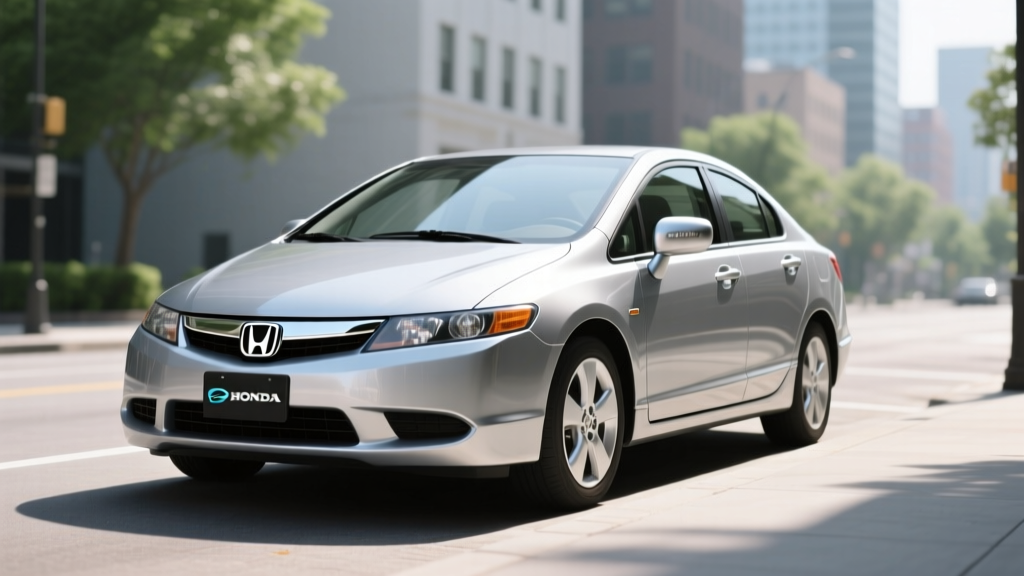
The 2026 Honda Accord Hybrid Sport occupies a precise niche: a midsize sedan that delivers near-50 MPG city efficiency without requiring you to plug in, find a charger, or change your driving habits. With a combined 204 horsepower from Honda's two-motor hybrid system and a starting MSRP around $33,650, it undercuts most plug-in competitors while offering the kind of fuel economy that makes a full EV's electricity savings marginal for many drivers.
This guide covers everything a research-heavy buyer needs — exact EPA figures, real-world MPG expectations, battery longevity data, warranty terms, and how the Accord Hybrid Sport stacks up against both PHEVs and full EVs in total cost of ownership.
Fuel Economy: EPA Ratings and Real-World MPG
| Metric | Value |
|---|---|
| City MPG | 50 MPG |
| Highway MPG | 45 MPG |
| Combined MPG | 48 MPG |
| Fuel Tank Capacity | 12.8 gallons |
| Total Range (estimated) | ~614 miles |
Source: fueleconomy.gov
Real-World MPG vs. EPA Sticker
Honda's two-motor hybrid system excels in stop-and-go urban driving, where the electric motor handles most low-speed propulsion and the 2.0L Atkinson-cycle engine acts primarily as a generator. In real-world ownership:
- City driving: Many owners report 48–53 MPG in mixed urban commutes. Hybrids often meet or slightly exceed EPA city estimates because regenerative braking recaptures energy that gas cars waste.
- Highway cruising: Expect 42–46 MPG at 70-75 mph sustained. The engine engages directly via a lock-up clutch at higher speeds, but aerodynamic drag reduces the hybrid advantage.
- Cold weather penalty: In sub-35°F conditions, expect a 5–10% MPG reduction (roughly 43–46 combined). The engine runs more frequently to provide cabin heat and maintain battery temperature.
- Mountainous terrain: Hilly routes can drop observed economy to 38–42 MPG on ascent-heavy segments, though regen recovers some energy on descents.
Powertrain Specs: How the Two-Motor System Works
| Specification | Value |
|---|---|
| Engine | 2.0L DOHC Atkinson-cycle 4-cylinder |
| Engine Horsepower | 146 hp @ 6,100 rpm |
| Engine Torque | 134 lb-ft @ 4,500 rpm |
| Electric Drive Motor | AC permanent-magnet synchronous |
| Drive Motor Output | 181 hp / 247 lb-ft |
| Combined System Output | 204 hp |
| Transmission | Electronic CVT (e-CVT, no belt) |
| Drivetrain | Front-wheel drive |
| 0–60 mph (est.) | ~7.5 seconds |
| Hybrid Battery | Lithium-ion, ~1.1 kWh (net usable) |
The Accord Hybrid uses Honda's fourth-generation two-motor hybrid architecture. Here's what makes it different from a traditional hybrid like the older Toyota HSD:
Series-dominant operation: Below roughly 45 mph, the gasoline engine does not drive the wheels at all. It spins a generator motor that produces electricity, which either powers the drive motor directly or charges the small battery. This means the electric motor — with its instant 247 lb-ft of torque — handles all acceleration from stop, giving the Accord Hybrid surprisingly responsive off-the-line feel.
Direct engine engagement: Above highway cruising speeds, a lock-up clutch connects the engine directly to the front wheels for efficient steady-state driving. This eliminates the efficiency loss of converting mechanical energy to electrical and back again.
No plug required: The ~1.1 kWh lithium-ion battery pack is charged entirely through regenerative braking (capturing kinetic energy during deceleration) and excess engine output. You cannot plug this car in, and there is no electric-only driving mode beyond very low-speed maneuvering (typically under 1 mile at speeds below 25 mph).
Pricing, Trims, and Tax Credit Eligibility
The 2026 Honda Accord Hybrid is available in three trims. The Sport sits in the middle of the lineup:
| Trim | MSRP (est.) | Key Additions Over Base |
|---|---|---|
| Hybrid Sport | ~$33,650 | Black 19" alloy wheels, sport pedals, black decklid spoiler, leather-wrapped steering wheel |
| Hybrid Sport-L | ~$36,050 | Leather-trimmed seats, heated rear seats, wireless phone charger |
| Hybrid Touring | ~$39,650 | Google built-in, Bose 12-speaker audio, heated/ventilated front seats, wireless CarPlay |
Federal Tax Credit: Does the Accord Hybrid Qualify?
No. The 2026 Honda Accord Hybrid Sport does not qualify for the IRS §30D Clean Vehicle Credit. That credit — up to $7,500 — applies only to battery electric vehicles (BEVs) and plug-in hybrids (PHEVs) that meet battery capacity, critical-mineral sourcing, and MSRP/income thresholds.
Because the Accord Hybrid is a conventional HEV with a battery far below the §30D minimum capacity requirement, it is ineligible for the federal EV tax credit. This is the trade-off: lower upfront cost and no charging dependency, but no federal purchase incentive.
State incentives: Some states offer modest rebates for high-efficiency hybrids, but these vary widely and change frequently. Check your state energy office or DMV for current programs. Do not assume eligibility based on outdated information.
Battery Longevity, Warranty, and Replacement Cost
• Hybrid battery: 10 years / 150,000 miles (in CARB states: 10 yr / 150k mi; federal states may vary, typically 8 yr / 100,000 mi — confirm with your dealer)
• Hybrid system components: 8 years / 100,000 miles
• Powertrain (engine + transmission): 5 years / 60,000 miles
• Basic bumper-to-bumper: 3 years / 36,000 miles
How Long Will the Hybrid Battery Last?
Honda's lithium-ion hybrid battery is engineered for the life of the vehicle. Unlike a full EV battery that cycles through large energy swings, the Accord Hybrid's ~1.1 kWh pack operates in a narrow state-of-charge window — typically between 20% and 80% SoC. This shallow cycling dramatically reduces degradation.
Based on long-term data from Honda's hybrid lineup (Insight, Accord Hybrid, CR-V Hybrid):
- Expected lifespan: 150,000–200,000+ miles before significant capacity loss, with many units exceeding 250,000 miles without replacement.
- Degradation pattern: Unlike EV batteries that lose 1-2% capacity per year, hybrid batteries degrade more slowly because the system never deeply discharges or fully charges them. The battery management system (BMS) maintains a large buffer.
- Failure mode: When hybrid batteries do fail, it's usually individual cell imbalance rather than total capacity loss. Some independent shops can rebalance or replace individual modules rather than the entire pack.
Battery Replacement Cost
If replacement is needed out of warranty:
- OEM dealer replacement: $2,000–$4,000 (parts + labor)
- Refurbished/remanufactured pack: $1,200–$2,200
- Independent hybrid specialist: $1,500–$2,500 installed
For context, this is roughly the cost of a major transmission repair on a conventional vehicle — and it's a repair most Accord Hybrid owners will never face.
Accord Hybrid Sport vs. PHEV vs. Full EV: Which Fits You?
| Factor | Accord Hybrid (HEV) | PHEV (e.g., Prius Prime) | Full EV (e.g., Tesla Model 3) |
|---|---|---|---|
| Plug-in Required? | No | Yes (for EV range) | Yes |
| Electric-Only Range | ~1 mi at low speed | 35–44 mi | 272–363 mi |
| Total Range | ~614 mi | ~600+ mi combined | 272–363 mi |
| Combined Efficiency | 48 MPG | 50 MPG + 114 MPGe | 132 MPGe |
| Starting MSRP | ~$33,650 | ~$33,445 | ~$38,990 |
| Federal Tax Credit | $0 | Up to $7,500* | Up to $7,500* |
| Home Charging Needed | No | Recommended (Level 2) | Essential |
| Maintenance Cost | Low (oil changes, no plug) | Low-Moderate | Very Low (no oil, fewer fluids) |
*§30D credit eligibility depends on MSRP caps, buyer income, battery sourcing, and point-of-sale transfer rules. Verify at irs.gov.
- You lack access to home or workplace charging
- You want maximum range flexibility (600+ miles, 2-minute refuel)
- Your budget is under $35K and you don't qualify for or want to navigate tax-credit paperwork
- You drive a mix of city and highway and want consistently high MPG without behavioral changes
- You can charge at home (Level 2) and your commute is under 40 miles round-trip
- You want electric-only daily driving but need gas-engine range for road trips
- You qualify for the §30D credit, effectively lowering the purchase price below the HEV
- You have reliable home charging (Level 2 installation)
- Your daily driving is under 200 miles and you can plan road-trip charging
- You want the lowest per-mile fuel cost and minimal maintenance
- You qualify for the full $7,500 credit, narrowing the price gap
Ownership Economics: 5-Year Cost Snapshot
Here's how the Accord Hybrid Sport stacks up on running costs over 5 years / 75,000 miles of mixed driving (15,000 mi/yr):
| Category | Accord Hybrid Sport | Comparable Gas Sedan (30 MPG) |
|---|---|---|
| Fuel (15K mi/yr @ $3.40/gal) | ~$7,969 | ~$12,750 |
| Fuel Savings vs Gas | ~$4,781 over 5 years | |
| Oil Changes (est. 2/yr) | ~$750 | ~$1,000 |
| Tires, Brakes, Misc. Maint. | ~$2,200 | ~$2,500 |
| Insurance (avg. est.) | ~$8,400 | ~$7,800 |
| Total Operating Cost (5 yr) | ~$19,319 | ~$24,050 |
Key takeaway: The Accord Hybrid Sport saves roughly $4,700+ in fuel over five years versus a 30 MPG gas midsize sedan. That's nearly $950/year. The hybrid commands a small premium upfront over the gas Accord (roughly $1,200–$1,500 depending on trim), which pays back in under two years of average driving.
However, compared to a full EV charging at home at $0.13/kWh, the Accord Hybrid's fuel cost is still roughly 2.5× higher per mile. The EV advantage widens further if you qualify for the §30D credit. The hybrid's edge is zero charging dependency and lower purchase price without credit qualification.
Pros and Cons
- 50 MPG city — among the best in the midsize sedan class
- No plug-in dependency — works with any gas station
- 614-mile total range eliminates range anxiety entirely
- Responsive electric-motor torque from stop (247 lb-ft)
- 10-year/150K-mile hybrid battery warranty
- Strong resale value and Honda reliability reputation
- Spacious cabin with 16.7 cu-ft trunk (no battery intrusion)
- No federal tax credit eligibility (HEV exclusion)
- No electric-only highway driving — always uses some fuel
- Engine drone under hard acceleration (e-CVT characteristic)
- AWD not available (FWD only)
- Sport trim lacks some premium features (ventilated seats, Bose audio — those require Touring)
- Higher fuel cost per mile than a home-charged EV
Frequently Asked Questions
How many MPG does the 2026 Honda Accord Hybrid Sport get?
The EPA rates the 2026 Accord Hybrid Sport at 50 MPG city, 45 MPG highway, and 48 MPG combined. Real-world results typically fall between 44–52 MPG depending on driving conditions, with city-heavy routes often achieving or exceeding the EPA city figure thanks to regenerative braking.
Does the Accord Hybrid have an electric-only driving mode?
Only in very limited circumstances. The Accord Hybrid can drive roughly 0.5–1 mile on electric power alone at speeds below 25 mph (such as creeping through a parking lot or in heavy stop-and-go traffic). This is not a usable EV mode — it's a byproduct of the hybrid system's series-hybrid operation at low speeds. You cannot select an EV-only mode as you can in a PHEV.
Is the 2026 Accord Hybrid Sport reliable?
Honda's two-motor hybrid system has been in production since 2014 (Accord Hybrid) and has accumulated strong reliability data. The system has fewer moving parts than a conventional automatic transmission — no torque converter, no multi-speed gearset, no clutch packs. The hybrid battery is warrantied for 10 years / 150,000 miles. Honda's hybrid lineup has consistently earned above-average reliability ratings from major evaluators. Check IIHS for the latest safety ratings.
How much does it cost to replace the Accord Hybrid battery?
Out of warranty, a full OEM battery replacement runs $2,000–$4,000 at a dealer. Refurbished packs and independent hybrid specialists offer replacements for $1,200–$2,500. In practice, Honda hybrid batteries routinely last 150,000–250,000+ miles, and most original owners will never face this expense.
Does the 2026 Accord Hybrid qualify for any tax credit?
No federal tax credit applies. The IRS §30D Clean Vehicle Credit requires a minimum battery capacity and plug-in capability that conventional hybrids like the Accord Hybrid do not meet. Some states may offer small incentives for high-efficiency vehicles — check your state energy office. Do not rely on outdated or third-party sites claiming hybrid tax credits without verifying against irs.gov.
Should I buy the Accord Hybrid Sport or wait for an EV?
If you have home charging access, drive under 200 miles daily, and qualify for the §30D credit, a full EV like the Tesla Model 3 or Hyundai Ioniq 6 will cost less per mile and require less maintenance long-term. If you lack charging access, frequently drive 300+ miles without stopping, or want to avoid the EV price premium and credit-qualification complexity, the Accord Hybrid Sport is a pragmatic, high-efficiency choice that requires zero lifestyle adjustment.