Quick Verdict: The Prius Prime Remains the PHEV Benchmark
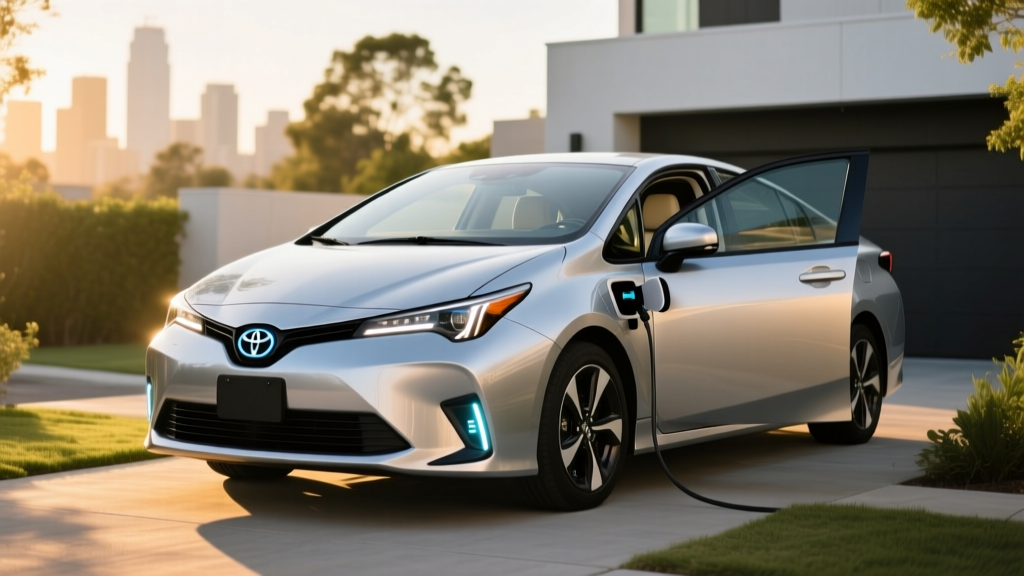
The 2025 Toyota Prius Plug-In Hybrid (badged Prius Prime in the U.S.) occupies a rare sweet spot in the electrified-vehicle market: it delivers a usable 44 miles of electric-only driving for daily commutes, then seamlessly transitions to a 52 MPG combined hybrid once the battery depletes. For buyers who want EV-like daily running costs without any range-anxiety compromise, the Prime is arguably the most rational vehicle on sale in 2025.
Toyota redesigned the Prius platform for the 2023 model year, and the 2025 Prius Prime carries forward that dramatic styling overhaul with meaningful powertrain upgrades. The combined output of 220 horsepower makes this the quickest Prius ever, while the 13.6 kWh lithium-ion battery pack enables genuine electric-only highway driving — not just low-speed neighborhood crawling.
HEV vs PHEV: Understanding the Two Prius Models
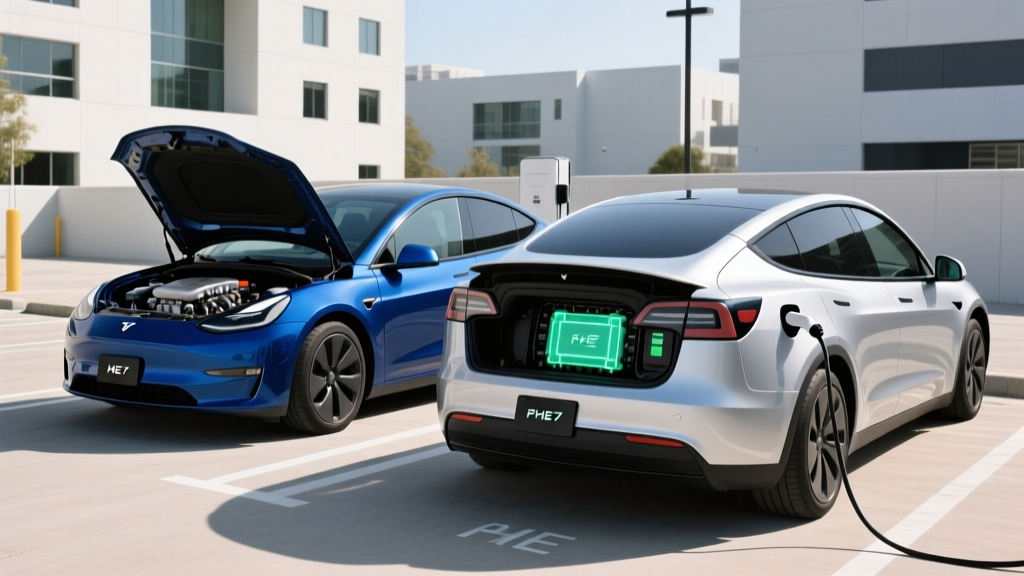
Toyota sells two distinct Prius variants, and confusing them at the dealership is a common buyer mistake. Here's the fundamental difference:
Conventional Prius (HEV)
- No plug required — the battery charges solely through regenerative braking and the gasoline engine
- ~1.3 kWh battery — too small for meaningful electric-only driving
- 57 MPG combined — slightly better fuel economy once the PHEV's electric range is exhausted
- No federal tax credit — classified as a standard hybrid
- Starts ~$28,350 MSRP
Prius Prime (PHEV)
- Plugs in to charge — Level 1 (120V) or Level 2 (240V) capable
- 13.6 kWh battery — enables 44 miles of electric-only range
- 52 MPG combined after electric range depletes (hybrid mode)
- Federal tax credit eligible — up to $3,750 under §30D (subject to sourcing/income rules)
- Starts ~$33,445 MSRP
The conventional HEV never needs to be plugged in and is ideal for apartment dwellers or anyone without reliable charging access. The PHEV rewards owners who can charge at home or work by eliminating gasoline use on shorter trips entirely.
Electric-Only Range and Total Range Breakdown
The EPA rates the 2025 Prius Prime at 44 miles of electric-only range on a full charge. This figure applies to the SE trim with its lighter 17-inch wheels; the XSE and XSE Premium trims with 19-inch wheels are rated at 40 miles due to increased rolling resistance and weight.
EPA Electric Range: 44 mi (SE) / 40 mi (XSE)
Real-World Expectation: 38–44 mi in mild weather; 30–36 mi in freezing temperatures or sustained 70+ mph highway driving.
Total Combined Range (EV + Gas): Approximately 440–480 miles on a full charge plus a full 11.4-gallon tank.
The 13.6 kWh lithium-ion pack (approximately 11.1 kWh usable, with Toyota's characteristic conservative buffer to protect long-term battery health) powers a 120 kW (161 hp) electric motor on the front axle. Unlike some competitors that limit electric-only speed, the Prime can reach highway speeds — up to approximately 84 mph — in EV mode, making it viable for freeway commutes, not just grocery runs.
Once the battery depletes to its minimum state of charge, the 2.0-liter four-cylinder engine engages and the car operates as a conventional series-parallel hybrid. You don't stop, shift, or feel a dramatic transition — Toyota's hybrid synergy drive manages it seamlessly.
Fuel Economy: EPA MPG and Real-World Efficiency
| Mode | City | Highway | Combined |
|---|---|---|---|
| Electric-Only (MPGe) | — | — | 126 MPGe |
| Hybrid (Charge-Sustaining) | 53 MPG | 51 MPG | 52 MPG |
| XSE Hybrid Mode | 50 MPG | 47 MPG | 48 MPG |
According to fueleconomy.gov, the Prius Prime SE achieves 52 MPG combined in hybrid mode — a figure that holds remarkably well in real-world conditions. Toyota's hybrid system is particularly efficient in stop-and-go traffic, where regenerative braking recovers energy that would otherwise be lost. Many owners report exceeding the EPA city estimate in urban driving; it's not unusual to see 55–58 MPG on suburban commutes with moderate acceleration.
Highway efficiency is slightly lower than city, which is typical for hybrids. At a sustained 75 mph, expect approximately 48–50 MPG in the SE trim. The heavier XSE with its wider tires drops to roughly 45–47 MPG on the highway.
For context on electricity costs: charging the 13.6 kWh battery at the U.S. average residential rate of ~$0.16/kWh costs approximately $2.18 for a full charge, yielding a per-mile electricity cost of roughly $0.05. Compare that to $0.12–$0.15 per mile in a 30 MPG gasoline car at $3.50/gallon.
Powertrain, Battery, and Charging Specifications
| Specification | Detail |
|---|---|
| Engine | 2.0L 4-cylinder Atkinson-cycle (150 hp) |
| Electric Motor | 120 kW (161 hp) front-mounted |
| Combined System Output | 220 hp |
| 0–60 mph | 6.6 seconds |
| Battery Chemistry | Lithium-ion (NMC-type) |
| Battery Capacity | 13.6 kWh total (~11.1 kWh usable) |
| Level 1 Charging (120V) | ~4 hours (0–100%) |
| Level 2 Charging (240V) | ~4 hours (0–100%) at ~3.3 kW |
| DC Fast Charging | Not available |
| Charge Port | J1772 (Level 1/2) |
| Drivetrain | Front-wheel drive (e-CVT) |
| Fuel Tank | 11.4 gallons (regular unleaded) |
The 220 combined horsepower figure represents a significant leap from the previous-generation Prime's 121 hp. The 2.0-liter Dynamic Force engine produces 150 hp on its own, while the front electric motor contributes up to 161 hp. Toyota's hybrid system doesn't simply add these peaks together — the combined maximum is 220 hp, managed through the e-CVT planetary gearset.
Charging is limited to Level 2 AC at approximately 3.3 kW. A full charge from empty takes about 4 hours on a 240V Level 2 station, or roughly the same on a standard 120V household outlet (Level 1) due to the relatively small battery. This means a dedicated Level 2 home charger is convenient but not strictly necessary — many Prime owners charge overnight on a standard outlet and wake up to a full battery every morning.
Important limitation: The Prius Prime does not support DC fast charging. This is a deliberate engineering choice — the 13.6 kWh battery is small enough that Level 2 charging is adequate for overnight replenishment, and adding DC fast-charge hardware would increase cost, weight, and complexity. If you need rapid public charging capability, a full BEV is the better choice.
Pricing, Trims, and Tax Credit Eligibility
The 2025 Prius Prime is offered in three trims. All prices include the $1,095 destination charge:
- SE: ~$33,445 — 17-inch wheels, 8-inch touchscreen, wireless Apple CarPlay/Android Auto, Toyota Safety Sense 3.0
- XSE: ~$36,695 — 19-inch wheels, heated front seats, SofTex upholstery, 12.3-inch touchscreen, wireless charging pad
- XSE Premium: ~$40,095 — panoramic fixed glass roof, premium JBL audio, head-up display, digital rearview mirror, ventilated front seats
Federal §30D Tax Credit — Current Rules
The 2025 Prius Prime may qualify for a partial federal tax credit of up to $3,750 under IRS §30D. Full $7,500 eligibility depends on critical-mineral and battery-component sourcing requirements that change annually. Key eligibility criteria:
- Vehicle MSRP cap: Must be under $55,000 (all Prime trims qualify)
- Buyer income cap: AGI ≤ $150,000 (single), $225,000 (head of household), $300,000 (joint)
- Battery sourcing: Critical minerals and component sourcing thresholds tighten yearly — verify current-year status on IRS.gov qualified vehicles list
- Point-of-sale transfer: Eligible buyers can transfer the credit to the dealer for an immediate price reduction at purchase
- VIN verification: Confirm the specific vehicle's eligibility before signing — sourcing compliance varies by build date
Note: Tax credit rules are subject to legislative change. Consult a tax professional and verify on IRS.gov before relying on credit amounts for purchase decisions.
Battery Warranty, Reliability, and Long-Term Costs
Toyota Hybrid Battery Warranty
Hybrid Battery: 10 years / 150,000 miles (whichever comes first) — covers capacity below 70% of original and defects.
Powertrain: 5 years / 60,000 miles
Basic Bumper-to-Bumper: 3 years / 36,000 miles
Hybrid System Components: 8 years / 100,000 miles (inverter, converter, control modules)
Toyota's hybrid reliability record is among the strongest in the industry. The Prius has been in continuous production since 1997 globally, and the hybrid synergy drive system has accumulated billions of real-world miles across Toyota's lineup. The 10-year/150,000-mile hybrid battery warranty, which Toyota extended from the previous 8-year/100,000-mile standard, reflects genuine confidence in long-term durability.
Real-world data from fleet operators and high-mileage owners suggests that Toyota hybrid batteries routinely exceed 150,000 miles with minimal degradation. The Prime's 13.6 kWh pack benefits from Toyota's conservative charge-discharge window management — the system never fully depletes or fully charges the cells in normal operation, which dramatically reduces calendar and cycle degradation.
Battery replacement cost: If a replacement is needed outside warranty, a new OEM Prius Prime traction battery currently costs approximately $3,500–$5,000 including labor. Third-party refurbished packs are available for $2,000–$3,000. However, given Toyota's track record and the 10-year warranty, out-of-pocket battery replacement is a low-probability event for most original owners.
Who Should Choose the Prius Prime vs a Full EV or Gas Car?
Choose the Prius Prime (PHEV) If:
- Your daily round-trip commute is under 44 miles and you can charge at home overnight
- You regularly take longer road trips and don't want to plan around charging infrastructure
- You live in an apartment or area with unreliable public charging but can install a 120V or 240V outlet
- You want to reduce gasoline consumption by 60–80% without fully committing to a BEV
- You're in a cold climate where BEV range loss in winter is a concern
Choose a Full EV (BEV) If:
- You have reliable home Level 2 charging and rarely drive more than 250 miles in a day
- You want zero tailpipe emissions and minimal maintenance (no oil changes, no gasoline engine)
- You want access to DC fast charging for road trips (Tesla Supercharger network, Electrify America)
- You qualify for the full $7,500 federal tax credit on a BEV, improving the value equation
Choose the Standard Prius (HEV) If:
- You cannot charge at home or at work — no garage, no outlet access
- You want maximum simplicity with no charging cables or plug-in routines
- Your budget is tighter and the $5,000+ premium for the Prime doesn't pencil out
- Your daily mileage is high enough that the PHEV's electric range covers only a small fraction
Pros
- 44-mile EV range covers most daily commutes entirely on electricity
- 52 MPG hybrid mode eliminates range anxiety on road trips
- 220 hp makes it genuinely quick — 0–60 in 6.6 seconds
- Charges on a standard 120V outlet overnight (no Level 2 required)
- 10-year/150,000-mile hybrid battery warranty
- Toyota Safety Sense 3.0 standard on all trims
- Total range exceeds 440 miles on a charge plus a tank
Cons
- No DC fast charging capability
- Only 3.3 kW Level 2 AC charge rate (slow relative to BEVs)
- Rear seat and cargo space slightly reduced vs standard Prius (battery placement)
- XSE trim's 19-inch wheels reduce EV range and MPG
- Federal tax credit may be only $3,750, not the full $7,500
- Infotainment interface still trails competitors in responsiveness
Frequently Asked Questions
How many MPG does the 2025 Prius Prime get?
In hybrid mode (after the battery is depleted), the SE trim achieves an EPA-rated 53 city / 51 highway / 52 combined MPG. The XSE trim rates at 50/47/48 MPG. In electric-only mode, it achieves 126 MPGe combined. Real-world city driving often exceeds EPA estimates thanks to regenerative braking efficiency.
How far can the Prius Prime go on electric only?
The EPA rates the SE trim at 44 miles of electric-only range and the XSE at 40 miles. In real-world conditions, expect 38–44 miles in moderate weather and 30–36 miles in freezing temperatures or at sustained highway speeds above 70 mph. The gasoline engine provides an additional 400+ miles of range once the battery depletes.
Does the Prius Prime qualify for a federal tax credit?
The 2025 Prius Prime may qualify for up to $3,750 under the IRS §30D clean vehicle credit, depending on battery-sourcing compliance for the specific build date. The full $7,500 requires meeting both critical-mineral and battery-component sourcing thresholds. Buyer income caps ($150K single / $300K joint) and the $55,000 MSRP cap also apply. Always verify on the IRS qualified vehicles list before purchasing.
Is the Prius Prime reliable, and what does battery replacement cost?
Toyota's hybrid systems have an exceptional reliability record spanning over 25 years of production. The Prime's battery is covered by a 10-year/150,000-mile warranty. Out-of-warranty replacement costs approximately $3,500–$5,000 for an OEM pack, but real-world data suggests Toyota hybrid batteries routinely exceed 150,000 miles without significant issues.
Can I charge the Prius Prime on a regular household outlet?
Yes. The Prime's 13.6 kWh battery charges in approximately 4 hours on a standard 120V household outlet (Level 1). Because the battery is relatively small, a dedicated Level 2 (240V) charger is convenient but not essential — most owners who plug in overnight on Level 1 wake up to a full charge every morning.
Hybrid vs PHEV vs EV — which should I choose?
A conventional hybrid (HEV) like the standard Prius is best if you can't charge at home. A PHEV like the Prius Prime is ideal if you can charge at home and your daily driving is under 44 miles but you still take road trips. A full EV (BEV) is best if you have reliable home charging, rarely exceed 250 miles in a day, and want zero tailpipe emissions with minimal maintenance. See the decision framework above for a detailed breakdown.