Quick Verdict: The Plug-In Hybrid That Still Sets the Bar
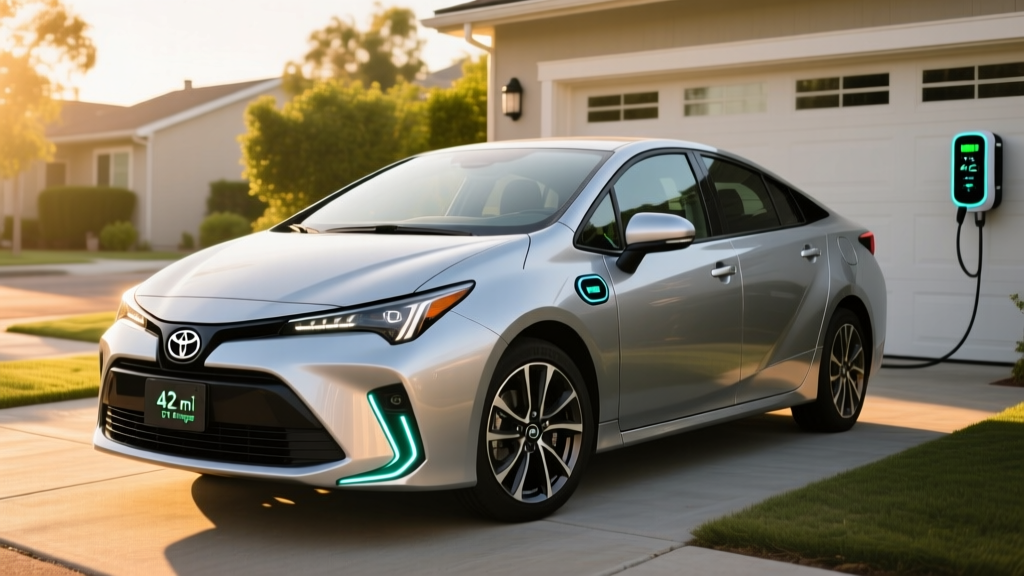
The 2025 Toyota Prius PHEV (formerly Prius Prime) remains one of the most practical plug-in hybrids on the market. With an EPA-rated 44 miles of electric-only range, 52 MPG combined once the battery depletes, and a starting MSRP of $33,450, it occupies a sweet spot for drivers who want daily EV commuting without range anxiety on longer trips. The fifth-generation Prius platform also brought a dramatic styling and performance overhaul that carries into 2025, shedding the econobox image its predecessors couldn't shake.
For 2025, Toyota offers the Prius PHEV in SE, XSE, and XSE Premium trims, all sharing a 2.0-liter four-cylinder engine paired with dual electric motors and a 13.6 kWh lithium-ion battery pack. Combined system output is 220 horsepower — enough for a 0-60 mph time of approximately 6.6 seconds, a figure that would have been unthinkable for a Prius a generation ago.
| Spec | Value |
|---|---|
| Powertrain | 2.0L 4-cyl + dual electric motors |
| Combined Horsepower | 220 hp |
| Battery Capacity (Usable) | 13.6 kWh (lithium-ion) |
| EPA Electric-Only Range | 44 miles (SE), 40 miles (XSE/XSE Premium) |
| Total Combined Range | ~490 miles (SE) |
| EPA MPG (Gas Hybrid Mode) | 52 city / 48 hwy / 52 combined (SE) |
| MPGe (Electric + Gas Combined) | 127 MPGe (SE) |
| Level 1 Charging (120V, 12A) | ~11 hours (0-100%) |
| Level 2 Charging (240V, 32A) | ~4 hours (0-100%) |
| DC Fast Charging | Not available |
| 0-60 mph | ~6.6 seconds |
| Drivetrain | FWD standard; AWD not offered on PHEV |
| Base MSRP | $33,450 (SE) — $39,670 (XSE Premium) |
| Hybrid Battery Warranty | 10 years / 150,000 miles |
HEV vs PHEV: Which Prius Is Right for You?
Toyota sells two distinct Prius variants, and confusing them is one of the most common buyer mistakes. Here is the fundamental difference:
| Feature | Prius HEV (Standard Hybrid) | Prius PHEV (Plug-In) |
|---|---|---|
| Plugs in to charge? | No — charges via engine and regen | Yes — Level 1 or Level 2 AC |
| Electric-only range | ~1 mile at low speed | 40-44 miles EPA |
| Battery size | ~1.0 kWh | 13.6 kWh |
| Combined MPG (gas mode) | 57 city / 52 hwy / 54 combined (LE FWD) | 52 city / 48 hwy / 52 combined (SE) |
| Starting MSRP | ~$28,350 | ~$33,450 |
| Federal tax credit | Not eligible | Up to $3,750 (§30D, see below) |
| Best for | No home charging access; want max MPG simplicity | Home charging available; short daily commute |
The conventional Prius HEV never needs to be plugged in. Its small battery charges through regenerative braking and the gasoline engine, delivering outstanding fuel economy with zero behavior change. The Prius PHEV, by contrast, rewards you with 40-44 miles of pure electric driving when you plug it in — covering most daily commutes without burning a drop of gas. Once the battery depletes, it operates as a conventional hybrid with 52 MPG combined.
The decision rule: If you can charge at home (even a standard 120V outlet works overnight) and your daily round-trip commute is under 40 miles, the PHEV will run almost entirely on electricity day to day. If you lack charging access or regularly drive 80+ miles daily, the standard HEV's higher gas-mode MPG and lower price may serve you better.
Fuel Economy: EPA Numbers and Real-World MPG
| Trim | EV Range | City MPG | Highway MPG | Combined MPG | MPGe |
|---|---|---|---|---|---|
| SE | 44 mi | 52 | 48 | 52 | 127 |
| XSE | 40 mi | 50 | 47 | 50 | 119 |
| XSE Premium | 40 mi | 50 | 47 | 50 | 119 |
Source: EPA Fuel Economy
The SE trim's 44-mile electric range and 52 MPG combined figure come from its lighter weight and smaller 18-inch wheels. Stepping up to the XSE or XSE Premium adds 19-inch alloy wheels, a larger infotainment screen, and additional features that add weight and reduce efficiency slightly — dropping electric range to 40 miles and combined MPG to 50.
Real-World MPG: What Owners Actually See
Hybrids — and Toyota hybrids in particular — have a well-documented tendency to meet or exceed their EPA ratings in real-world city driving. The Prius PHEV's 52 MPG city figure is achievable and even beatable in stop-and-go traffic, where regenerative braking recaptures energy that conventional cars waste as heat. On fueleconomy.gov's My MPG tracker, many Prius owners report averaging 50-55 MPG in mixed suburban and city driving once the battery is depleted.
Highway driving is a different story. At sustained 70-80 mph speeds, expect gas-mode fuel economy closer to 44-47 MPG — still excellent, but below the EPA highway sticker. Cold weather (below 40°F) will reduce both electric range (by roughly 15-25%) and gas-mode MPG (by 5-10%) as the engine runs more frequently for cabin heat and battery conditioning.
Electric-Only Range and Charging
The 2025 Prius PHEV's 13.6 kWh lithium-ion battery pack provides 44 miles of EPA-rated electric-only range in the SE trim (40 miles for XSE trims). In real-world conditions, expect 35-42 miles of usable electric range depending on temperature, terrain, and driving style. In warm weather at city speeds, some owners report squeezing out 45+ miles. In winter highway driving, that number can drop to 30-33 miles.
The electric-only top speed is approximately 84 mph, meaning the Prius PHEV can handle full freeway driving in EV mode — unlike some PHEVs that limit electric operation to low speeds.
Charging Times and Connectors
The Prius PHEV uses a standard J1772 connector for AC charging. Here is what to expect:
- Level 1 (120V household outlet, 12A): Approximately 11 hours for a full 0-100% charge. This is sufficient for overnight charging if you arrive home with partial battery remaining.
- Level 2 (240V, 32A home charger): Approximately 4 hours for a full charge. A dedicated Level 2 home station is the practical sweet spot for daily use.
- DC Fast Charging: Not available. The Prius PHEV does not support DC fast charging (CCS or otherwise). This is typical for PHEVs with smaller battery packs — the added cost and weight of DC fast hardware isn't justified for a 13.6 kWh battery.
For most PHEV owners, a standard 120V outlet is adequate: plug in when you get home, and by morning you have a full 44-mile charge. A Level 2 charger is a convenience upgrade that ensures a full charge even if you plug in late in the evening.
Powertrain and Performance
Under the hood, the 2025 Prius PHEV pairs a 2.0-liter Dynamic Force four-cylinder engine (producing 150 hp and 139 lb-ft of torque on its own) with two electric motor-generators integrated into the transaxle. Combined system output is 220 horsepower — a 72% increase over the previous-generation Prius Prime's 121 hp.
This power bump transforms the driving experience. The 0-60 mph sprint takes approximately 6.6 seconds, making the Prius PHEV quicker than many compact crossovers. Passing power on highway on-ramps is confident, and the transition between electric and gas operation is nearly imperceptible — a hallmark of Toyota's Hybrid Synergy Drive system refined over two decades.
One limitation: all-wheel drive is not available on the PHEV variant. If you need AWD, Toyota offers it on the conventional Prius HEV (with a rear-mounted electric motor) but not on the plug-in model. The added weight and packaging complexity of the larger PHEV battery currently precludes the AWD option.
Pricing, Trims, and Tax Credit Eligibility
The 2025 Prius PHEV is offered in three trims:
- SE: $33,450 MSRP — 18-inch wheels, 8-inch touchscreen, wireless Apple CarPlay/Android Auto, Toyota Safety Sense 3.0
- XSE: $36,695 MSRP — 19-inch wheels, 12.3-inch touchscreen, heated front seats, SofTex upholstery
- XSE Premium: $39,670 MSRP — adds panoramic fixed glass roof, digital key, advanced park assist, premium audio
Federal Tax Credit Under §30D
The 2025 Toyota Prius PHEV is eligible for a federal tax credit under IRS §30D, but the amount is not the full $7,500 that some buyers expect. Because of battery component and critical mineral sourcing requirements that tightened in 2024-2025, the Prius PHEV currently qualifies for up to $3,750 — reflecting the portion of sourcing requirements it meets. The exact credit amount depends on the specific battery supply chain for your vehicle's build date.
§30D Tax Credit Checklist for the Prius PHEV:
- ✓ Vehicle MSRP must be under $80,000 (all Prius PHEV trims qualify)
- ✓ Buyer adjusted gross income must be under $150K (single) / $225K (head of household) / $300K (joint)
- ⚠ Battery sourcing requirements determine $3,750 vs $7,500 — verify on IRS.gov for your purchase date
- ✓ Credit can be transferred to the dealer at point of sale for an immediate price reduction (as of 2024+)
- ⚠ You must have sufficient tax liability to claim the credit if not using point-of-sale transfer
Always consult a tax professional and verify current eligibility at irs.gov before purchasing. Credit rules are subject to legislative change.
After the $3,750 federal credit, the effective price of the SE trim drops to approximately $29,700 — competitive with many compact sedans and significantly less than any long-range BEV. Some states offer additional PHEV incentives (California's CVRP, for example, has offered rebates for PHEVs — check your state's current programs).
Battery Longevity, Warranty, and Replacement Cost
Toyota's hybrid battery warranty is among the best in the industry. The 2025 Prius PHEV's 13.6 kWh lithium-ion traction battery is covered for 10 years or 150,000 miles (whichever comes first) against defects and excessive capacity loss. In states that follow California Air Resources Board (CARB) standards — including California, New York, Oregon, and several others — the warranty extends to 10 years / 150,000 miles under PZEV provisions.
Battery Warranty and Replacement Facts:
- Warranty: 10 years / 150,000 miles (hybrid battery and hybrid system components)
- Warranty threshold: Toyota typically covers replacement if capacity drops below ~70% during the warranty period
- Real-world degradation: Toyota's lithium-ion PHEV packs have demonstrated strong longevity; most fourth-generation Prius Prime batteries show less than 10% capacity loss after 100,000 miles
- Out-of-warranty replacement cost: Approximately $3,500-$5,500 for the traction battery pack (parts + labor at a Toyota dealer), based on current-generation pricing
- 12V auxiliary battery: Separate lead-ion 12V battery; typical replacement cost $200-$400; covered under standard 3-year/36,000-mile bumper-to-bumper warranty
Toyota's hybrid reliability track record is a major selling point. The Prius lineup has consistently earned top marks from IIHS and high reliability scores from owner surveys. The hybrid powertrain has fewer wear items than a conventional gasoline drivetrain — no traditional starter motor, no alternator, no accessory belt, and regenerative braking significantly extends brake pad life (many owners report 80,000+ miles on original brake pads).
Who Should Choose the Prius PHEV — and Who Shouldn't?
Pros
- 44-mile electric range covers most daily commutes gas-free
- 52 MPG combined in hybrid mode — no range anxiety on road trips
- 220 hp and 6.6-second 0-60 — genuinely quick for the segment
- Charges on a standard 120V outlet overnight
- 10-year/150,000-mile hybrid battery warranty
- ~$29,700 effective price after federal tax credit (SE trim)
- Toyota Safety Sense 3.0 standard (adaptive cruise, lane keep, AEB)
Cons
- No DC fast charging — long road trips rely entirely on gas
- AWD not available on PHEV variant
- Rear seat and cargo space tighter than compact SUVs (20.3 cu ft behind rear seats)
- XSE trims lose 4 miles of EV range due to larger wheels
- Federal tax credit may be $3,750, not the full $7,500
- No spare tire — tire repair kit only
Decision Framework: Prius PHEV vs Alternatives
Choose the 2025 Prius PHEV if:
- You have home or workplace charging access (even a 120V outlet)
- Your daily commute is under 40 miles round-trip
- You take occasional road trips and don't want to plan around charging stations
- You want EV-like daily operating costs with the safety net of a gas engine
- Budget is around $30,000-$40,000 after incentives
Choose a full EV (BEV) instead if:
- You want zero gasoline use and zero oil changes — ever
- Your daily driving is under 250 miles and you have reliable home Level 2 charging
- You want access to the full $7,500 federal credit (on qualifying BEVs like certain Tesla, Hyundai, or GM models)
- You want DC fast charging for road trips
Choose the conventional Prius HEV instead if:
- You have no access to any charging (apartment, street parking, no outlets)
- Your daily driving regularly exceeds 60 miles
- You want the lowest possible purchase price (~$28,350 starting)
- You want the highest gas-mode MPG (57 city / 54 combined for LE FWD)
Frequently Asked Questions
How many MPG does the 2025 Toyota Prius PHEV get?
The SE trim earns an EPA-rated 52 city / 48 highway / 52 combined MPG in hybrid (gas) mode after the battery is depleted. The XSE and XSE Premium trims achieve 50 city / 47 highway / 50 combined. In real-world city driving, many owners report matching or slightly exceeding these figures thanks to aggressive regenerative braking. Highway driving at 75+ mph typically yields 44-47 MPG.
How far can the Prius PHEV go on electric only?
The EPA rates the SE trim at 44 miles of electric-only range, and the XSE/XSE Premium at 40 miles. Real-world results vary: expect 35-42 miles in moderate conditions, potentially up to 46 miles in warm weather at city speeds, and as low as 30-33 miles in cold-weather highway driving. The total combined range (electric + full gas tank) is approximately 490 miles for the SE.
Does the 2025 Prius PHEV qualify for a tax credit?
Yes, but not the full $7,500. Under current IRS §30D rules, the Prius PHEV qualifies for up to $3,750, depending on battery sourcing compliance at the time of manufacture. Eligibility also requires that your adjusted gross income falls below IRS thresholds ($150K single / $300K joint) and that the vehicle MSRP is under $80,000 (all trims qualify). The credit can be applied at the point of sale as an immediate price reduction. Verify current eligibility at irs.gov and consult a tax professional.
Is the Prius PHEV reliable, and what does battery replacement cost?
Toyota's hybrid powertrains have an exceptional reliability record spanning over two decades. The hybrid battery is warranted for 10 years / 150,000 miles. Real-world data shows most Prius PHEV batteries retain 90%+ capacity after 100,000 miles. Out-of-warranty battery replacement, should it ever be needed, costs approximately $3,500-$5,500 at a Toyota dealer. The hybrid system also eliminates several conventional wear items (starter, alternator, traditional transmission), reducing long-term maintenance costs.
Can the Prius PHEV DC fast charge?
No. The 2025 Prius PHEV does not support DC fast charging. It charges via AC only — either a 120V Level 1 household outlet (~11 hours) or a 240V Level 2 home charger (~4 hours). This is standard for plug-in hybrids with smaller battery packs. For most PHEV owners who charge overnight at home, the lack of DC fast charging is not a practical limitation.
How does the Prius PHEV compare to a full EV like the Tesla Model 3 or Hyundai Ioniq 6?
Full EVs offer longer electric range (270-360+ miles), DC fast charging, and zero tailpipe emissions, but they cost more upfront ($38,000-$45,000+), require reliable home or public charging access, and demand more planning on road trips. The Prius PHEV costs less, charges on any household outlet, and eliminates range anxiety entirely. If your daily commute is under 40 miles and you charge at home, the Prius PHEV delivers EV-like daily driving with the fallback of a gas engine for longer trips — at a lower purchase price and with simpler infrastructure requirements.