Quick Verdict: The Efficiency Benchmark Under $25K
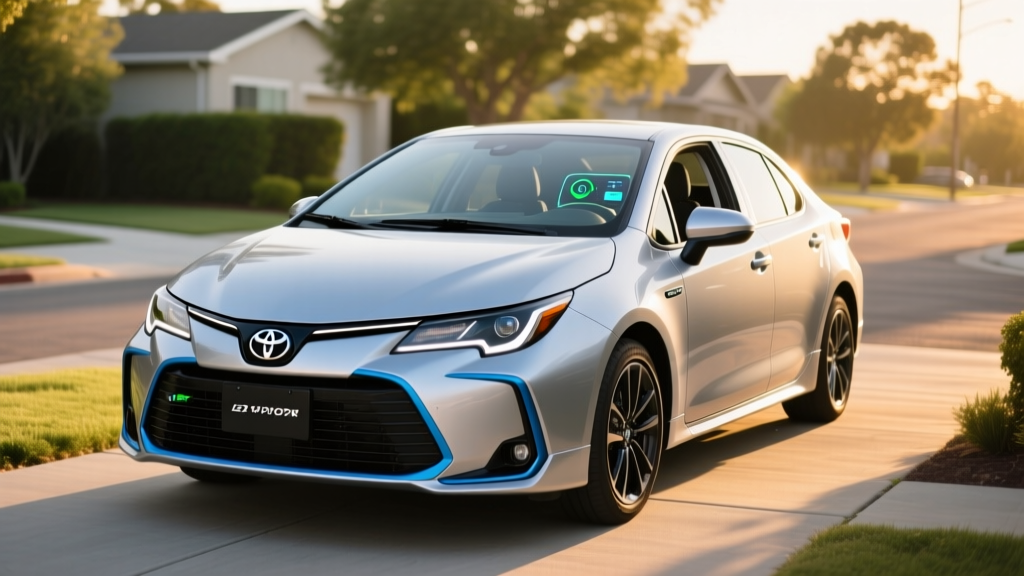
The 2025 Toyota Corolla Hybrid LE trim remains one of the most compelling arguments for hybrid ownership in the compact sedan segment. With an EPA-estimated 50 MPG combined, a starting MSRP around $23,500, and Toyota's proven hybrid synergy drive system, it delivers exceptional fuel economy without requiring a plug, a lifestyle change, or a premium price tag. For buyers who want maximum efficiency without the range considerations of a full battery electric vehicle (BEV) or the upfront cost of a plug-in hybrid (PHEV), the Corolla Hybrid LE occupies a practical sweet spot.
But the LE is the base trim in the Corolla Hybrid lineup — and that matters. It trades some features (all-wheel drive, premium audio, larger touchscreen) for the lowest entry price and the highest fuel economy rating in the range. Here's exactly what you get, what you give up, and whether it's the right electrified vehicle for your situation.
HEV vs. PHEV vs. EV: Where the Corolla Hybrid Fits
Before diving into specs, it's essential to clarify what the Corolla Hybrid LE actually is — because the terminology confusion between hybrid types costs buyers money and satisfaction.
Conventional Hybrid (HEV) — This Is the Corolla Hybrid
The 2025 Corolla Hybrid LE is a conventional hybrid electric vehicle (HEV). It has a small battery (approximately 1.3 kWh, nickel-metal hydride) that is charged entirely by the gasoline engine and regenerative braking. You never plug it in. You simply fuel it at any gas station and drive. The hybrid system automatically manages the balance between engine and electric motor to maximize efficiency.
Plug-In Hybrid (PHEV) — A Different Category
A PHEV like the Toyota Prius Prime or RAV4 Prime has a much larger battery (typically 13–18 kWh), can be plugged in to charge, and offers 25–44 miles of electric-only driving before the gas engine kicks in. PHEVs qualify for potential federal tax credits under IRS §30D if they meet battery sourcing and income requirements. The Corolla Hybrid LE does not have a plug-in variant and does not qualify for the federal EV tax credit.
Battery Electric Vehicle (BEV) — Zero Gas, Full Electric
A BEV like the Tesla Model 3 or Hyundai Ioniq 6 runs entirely on electricity, has no gasoline engine, and requires home or public charging infrastructure. BEVs offer the lowest per-mile fuel cost but demand charging access and carry higher upfront prices.
The Corolla Hybrid LE is purpose-built for drivers who want dramatically better fuel economy than a gas-only car without changing their fueling habits or installing home charging equipment.
Fuel Economy: EPA Ratings and Real-World MPG
The headline number for the 2025 Corolla Hybrid LE is its EPA-estimated fuel economy, and it's outstanding for a non-plug-in vehicle at any price point.
| Metric | EPA Estimate | Real-World Expectation |
|---|---|---|
| City MPG | 53 MPG | 50–56 MPG (hybrids often exceed EPA in stop-and-go driving) |
| Highway MPG | 46 MPG | 42–48 MPG (sustained high speeds reduce hybrid advantage) |
| Combined MPG | 50 MPG | 47–52 MPG depending on driving mix |
Real-World MPG Insight: Unlike EVs, which lose range on the highway, conventional hybrids like the Corolla Hybrid LE actually gain efficiency in city driving. The electric motor handles low-speed acceleration (the least efficient operating range for a gas engine), while regenerative braking recaptures energy at every stop. Owners who do predominantly urban and suburban driving frequently report exceeding the 50 MPG combined EPA figure, with some seeing 54–56 MPG in warm-weather city commutes. Highway-heavy drivers should expect closer to 44–47 MPG, especially at speeds above 70 mph or in cold weather when the engine runs more frequently for cabin heat.
According to fueleconomy.gov, the 2025 Corolla Hybrid LE's combined rating places it among the most efficient non-plug-in vehicles sold in the United States. For comparison, the gas-only 2025 Corolla LE achieves approximately 35 MPG combined — meaning the hybrid saves roughly 3.0 gallons per 100 miles driven.
Annual fuel cost estimate: At $3.40/gallon and 15,000 miles/year, the Corolla Hybrid LE costs approximately $1,020 annually in gasoline. The gas-only Corolla LE costs roughly $1,457 — a savings of about $437 per year with the hybrid.
Powertrain Specs: Engine, Motor, and Combined Output
| Specification | 2025 Corolla Hybrid LE |
|---|---|
| Engine | 1.8L 4-cylinder Atkinson-cycle |
| Engine Power | 96 HP @ 5,200 RPM |
| Electric Motor | Permanent-magnet synchronous (front axle) |
| Motor Power | 94 HP |
| Net Combined Horsepower | 138 HP |
| Transmission | Electronic Continuously Variable (eCVT) |
| Drivetrain | Front-Wheel Drive (FWD only on LE trim) |
| Hybrid Battery | ~1.3 kWh, Nickel-Metal Hydride (NiMH) |
| 0–60 MPH | ~9.2 seconds (est.) |
| Fuel Tank | 11.4 gallons |
| Total Driving Range | ~570 miles (EPA est.) |
The 138 HP combined output is adequate for daily commuting and highway merging but won't satisfy anyone seeking sporty acceleration. The eCVT delivers smooth, linear power delivery without the shift shock of a conventional automatic — though some drivers find the engine drone under hard acceleration (a characteristic of the Atkinson-cycle engine operating at high RPM) to be a minor annoyance. For the efficiency it delivers, the powertrain compromise is well worth it for most buyers in this segment.
Note on AWD: The LE trim is front-wheel drive only. If you need all-wheel drive, you'll need to step up to the Corolla Hybrid SE or XLE trims, which add a rear-mounted electric motor for electronic AWD but drop to 47 MPG combined due to the added weight and mechanical drag.
Pricing, Trims, and Tax Credit Eligibility
| Trim | MSRP (approx.) | Drivetrain | EPA Combined MPG |
|---|---|---|---|
| Corolla Hybrid LE | $23,500 | FWD | 50 MPG |
| Corolla Hybrid SE | $26,000 | AWD | 47 MPG |
| Corolla Hybrid XLE | $28,500 | AWD | 47 MPG |
Federal Tax Credit: Does the Corolla Hybrid Qualify?
No. The 2025 Toyota Corolla Hybrid LE is a conventional hybrid (HEV), not a plug-in vehicle. Under current IRS §30D rules, only plug-in electric vehicles (BEVs and PHEVs) with sufficient battery capacity qualify for the federal clean vehicle credit of up to $7,500. Conventional hybrids do not meet the minimum battery capacity threshold and are ineligible.
However, the Corolla Hybrid LE's low MSRP means the effective cost of ownership is highly competitive even without a tax credit. Over five years, the fuel savings versus a gas-only compact sedan typically offset much of the modest price premium of the hybrid system.
State incentives: Some states offer rebates or HOV lane access for hybrid vehicles, though these programs vary widely and change frequently. Check your state's energy office or DMV website for current offerings — but do not count on them when budgeting.
What You Get (and Give Up) in the LE Trim
As the base trim in the Corolla Hybrid lineup, the LE prioritizes value and efficiency over premium features. Here's what the LE includes and what it omits relative to higher trims:
Pros — Corolla Hybrid LE
- Best-in-class 50 MPG combined (highest in the Corolla Hybrid range)
- Lowest entry price: ~$23,500 MSRP before destination
- Toyota Safety Sense 3.0 standard (pre-collision, lane departure, dynamic radar cruise, auto high beams)
- 8-inch touchscreen with wireless Apple CarPlay and Android Auto
- No plug-in charging required — fuel anywhere
- ~570-mile total range per tank
- Proven hybrid powertrain with exceptional reliability track record
Cons — Corolla Hybrid LE
- Front-wheel drive only (no AWD option on LE)
- 138 HP — modest acceleration; not a performance-oriented sedan
- Smaller 8-inch display (SE/XLE get available 10.5-inch)
- No heated seats or premium audio on LE
- NiMH hybrid battery (not lithium-ion — slightly heavier, proven durable)
- No federal tax credit eligibility
- Cabin noise under hard acceleration (eCVT drone)
Battery Warranty, Reliability, and Replacement Cost
Hybrid battery longevity is consistently the top concern among first-time hybrid buyers. Toyota addresses this with one of the strongest hybrid battery warranties in the industry.
Toyota Hybrid Battery Warranty
- Hybrid Battery Coverage: 10 years / 150,000 miles (whichever comes first)
- Hybrid System Components: 8 years / 100,000 miles
- Limited Powertrain Warranty: 5 years / 60,000 miles
- Capacity Retention Threshold: Toyota warrants the hybrid battery against defects and abnormal loss of capacity. In practice, Toyota's NiMH hybrid batteries have demonstrated exceptional longevity, with many Prius and Camry Hybrid examples exceeding 200,000 miles on the original battery.
Replacement cost if out of warranty: A replacement hybrid battery pack for the Corolla Hybrid runs approximately $2,000–$3,500 including labor at a Toyota dealer. Third-party remanufactured batteries are available for $1,200–$2,000. Given the 10-year/150,000-mile warranty and the proven durability of Toyota's NiMH hybrid batteries (the same chemistry used in millions of Prius vehicles since 1997), out-of-pocket battery replacement during typical ownership is rare.
Reliability data: Toyota's hybrid systems have consistently earned top marks from IIHS and consumer reliability surveys. The Corolla Hybrid shares its powertrain architecture with the Prius, one of the most road-tested hybrid systems in history. The hybrid system actually reduces wear on several components — the regenerative braking system extends brake pad life significantly, and the engine experiences less thermal cycling stress because the electric motor handles the least-efficient operating range.
Who Should Choose the Corolla Hybrid LE vs. a PHEV or Full EV?
Choose the Corolla Hybrid LE If:
- You don't have access to home or workplace charging (apartment, street parking, no garage outlet)
- Your budget is under $25,000 and you want maximum fuel efficiency
- You drive 12,000–20,000 miles/year and want to minimize fuel costs without a plug
- You want a proven, low-risk powertrain with a long warranty and cheap maintenance
- You take frequent road trips where charging infrastructure is sparse or unreliable
Choose a PHEV (Like the Prius Prime) If:
- You have home charging (even a standard 120V outlet works for overnight PHEV charging)
- Your daily commute is under 40 miles round-trip (you could drive mostly on electricity)
- You want to reduce gasoline consumption by 60–80% without eliminating it entirely
- You may qualify for the federal §30D tax credit (up to $7,500 depending on battery sourcing, your income, and MSRP caps)
Choose a Full EV (Like the Chevy Equinox EV or Tesla Model 3) If:
- You have reliable Level 2 home charging and your daily driving is under 250 miles
- You want zero tailpipe emissions and the lowest per-mile fuel cost (~$0.04–$0.06/mile on electricity vs. ~$0.07–$0.09/mile in the Corolla Hybrid)
- You're willing to pay a higher upfront price ($33,000–$42,000) for lower operating costs and potential tax credits
- You want the latest in connected tech, over-the-air updates, and one-pedal driving
5-Year Ownership Cost Snapshot
| Cost Category | Corolla Hybrid LE | Corolla Gas LE (baseline) |
|---|---|---|
| MSRP (approx.) | $23,500 | $22,500 |
| Fuel (5 yr / 75,000 mi @ $3.40/gal) | $5,100 | $7,286 |
| Maintenance (5 yr est.) | $2,200 | $2,600 |
| Insurance (5 yr est.) | $7,500 | $7,200 |
| Federal Tax Credit | $0 | $0 |
| 5-Year Total (est.) | $38,300 | $39,586 |
The Corolla Hybrid LE typically breaks even against the gas-only Corolla LE within 2–3 years through fuel savings alone, after which the hybrid becomes the cheaper vehicle to own. The slightly higher insurance cost (hybrids can carry a modest premium due to specialized repair training) is more than offset by fuel and maintenance savings — particularly reduced brake wear from regenerative braking.
Frequently Asked Questions
How many MPG does the 2025 Toyota Corolla Hybrid LE get?
The EPA rates the 2025 Corolla Hybrid LE at 53 MPG city, 46 MPG highway, and 50 MPG combined. In real-world driving, many owners report 48–55 MPG depending on driving conditions. City-heavy commutes tend to yield higher numbers than highway-heavy driving.
Do I need to plug in the Corolla Hybrid LE to charge it?
No. The Corolla Hybrid LE is a conventional hybrid (HEV), not a plug-in hybrid. The battery charges automatically through the gasoline engine and regenerative braking. You fuel it exactly like a regular gas car — at any gas station.
Does the 2025 Corolla Hybrid LE qualify for a federal tax credit?
No. Under current IRS §30D rules, only plug-in electric vehicles (BEVs and qualifying PHEVs) are eligible for the federal clean vehicle credit. The Corolla Hybrid LE's battery is too small and it lacks plug-in capability, making it ineligible. Some states may offer separate hybrid incentives — check your state energy office.
How long will the hybrid battery last and what does replacement cost?
Toyota warrants the hybrid battery for 10 years or 150,000 miles. In practice, Toyota's NiMH hybrid batteries have proven extremely durable, with many lasting well beyond 200,000 miles. If replacement is ever needed out of warranty, expect $2,000–$3,500 at a dealer or $1,200–$2,000 for a third-party remanufactured unit.
Is the Corolla Hybrid LE available with all-wheel drive?
No. The LE trim is front-wheel drive only. AWD is available on the SE and XLE trims, which use an additional rear electric motor but drop to 47 MPG combined.
How does the Corolla Hybrid LE compare to the Prius?
The 2025 Prius (redesigned for 2023) offers up to 57 MPG combined in its LE FWD trim and 196 HP in AWD trims, making it both more efficient and more powerful than the Corolla Hybrid LE. However, the Prius starts approximately $4,000–$5,000 higher. The Corolla Hybrid LE is the value play — slightly less efficient and less powerful, but significantly cheaper. Both use proven Toyota hybrid architecture.
What's the real-world range on a full tank?
With an 11.4-gallon fuel tank and 50 MPG combined, the EPA-estimated total range is approximately 570 miles. In real-world mixed driving, expect 520–580 miles between fill-ups depending on conditions. Cold weather and sustained highway speeds will push you toward the lower end of that range.