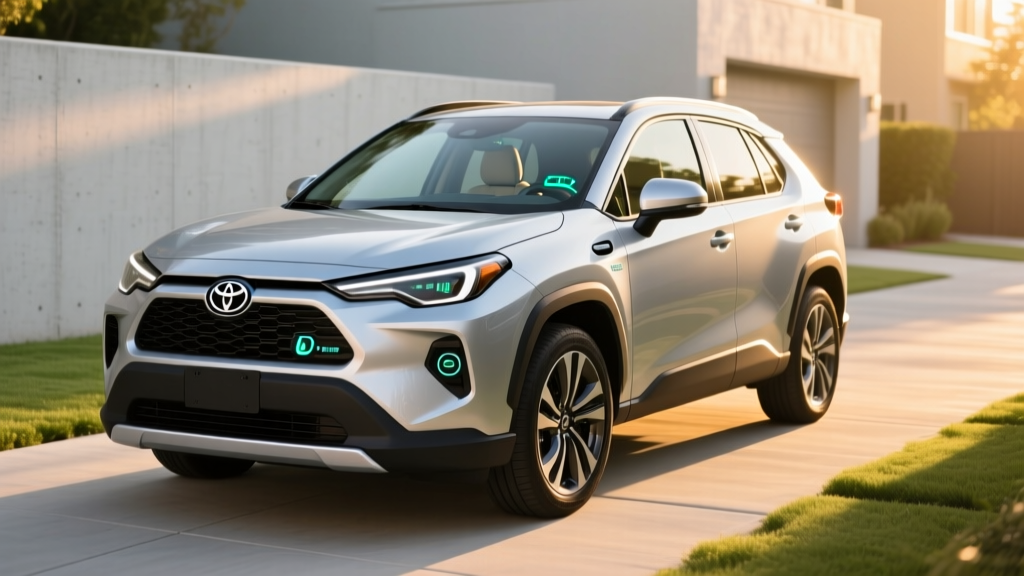
The compact crossover segment is crowded, but the 2025 Toyota Corolla Cross Hybrid occupies a specific niche: a small all-wheel-drive crossover that delivers hatchback-level fuel economy without requiring a charging cable. With an EPA-estimated 42 MPG combined and a starting price well under $30,000, it targets buyers who want electrified efficiency without the range planning or home-charger installation that a full EV demands.
This guide breaks down the Corolla Cross Hybrid's powertrain, real-world fuel economy, battery longevity, pricing, and how it stacks up against both plug-in hybrids and full battery-electric vehicles in 2025.
HEV vs PHEV: What the Corolla Cross Hybrid Actually Is
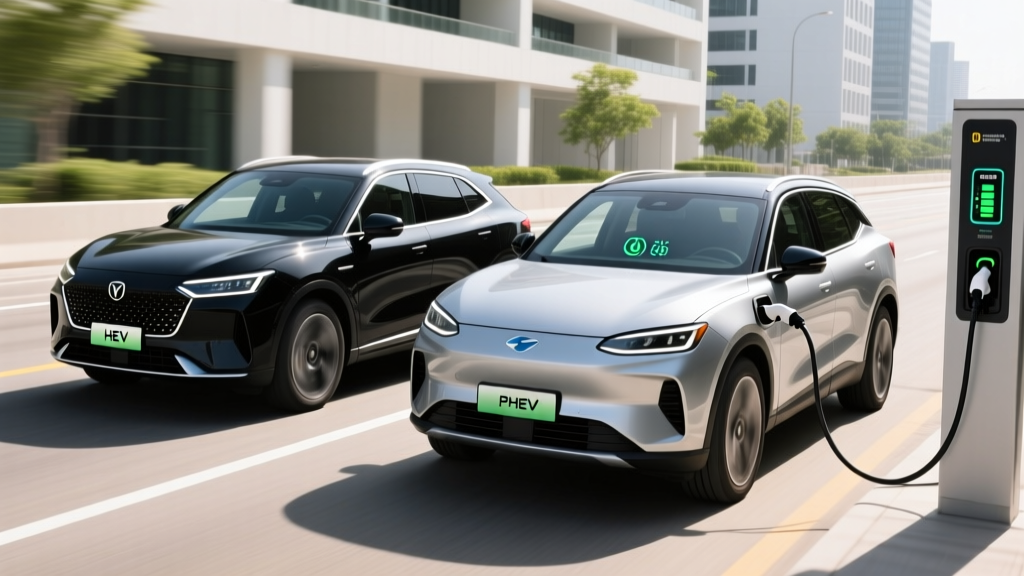
Before diving into specs, it's essential to clarify a common point of confusion. The Corolla Cross Hybrid is a conventional hybrid electric vehicle (HEV), not a plug-in hybrid (PHEV). It has no charging port, no electric-only driving mode of meaningful distance, and you never plug it in. The system captures energy through regenerative braking and the gasoline engine to charge a small battery pack, which then assists the engine during acceleration and low-speed driving.
| Feature | HEV (Corolla Cross Hybrid) | PHEV (e.g., RAV4 Prime) | BEV (e.g., bZ4X) |
|---|---|---|---|
| Plug-in charging | No | Yes | Yes |
| Electric-only range | ~1 mi at low speed | 35–42 mi typical | 220–300+ mi |
| Battery size | ~1.3 kWh (NiMH) | 14.5–18.1 kWh (Li-ion) | 60–80+ kWh (Li-ion) |
| DC fast charging | Not applicable | Rare (RAV4 Prime: no) | Standard |
| Federal tax credit (§30D) | Not eligible | Varies by sourcing | Up to $7,500 if eligible |
| Gasoline required | Yes (primary fuel) | Yes (backup) | No |
The practical implication: if you want to drive on electricity alone for your daily commute, the Corolla Cross Hybrid won't do that. It's designed to reduce gasoline consumption, not eliminate it. If electric-only commuting is your priority, a PHEV like the Toyota RAV4 Prime or a full BEV is the right path.
Powertrain Specs: 196 HP Electronic AWD
Toyota's fifth-generation hybrid system powers the Corolla Cross Hybrid, pairing a 2.0-liter four-cylinder engine with two motor-generators and an electronically controlled continuously variable transmission (eCVT). A third motor on the rear axle provides electronic all-wheel drive — there's no mechanical driveshaft connecting front and rear wheels.
| Specification | 2025 Corolla Cross Hybrid |
|---|---|
| Engine | 2.0L DOHC 4-cylinder |
| Combined system horsepower | 196 HP |
| Drivetrain | Electronic AWD (eAWD) |
| Transmission | eCVT |
| Hybrid battery | ~1.3 kWh Nickel-Metal Hydride (NiMH) |
| 0–60 mph | ~7.5 seconds (est.) |
| Towing capacity | Not rated for towing |
| Cargo volume (behind rear seats) | 25.5 cu ft |
The 196 HP combined output is a meaningful step up from the non-hybrid Corolla Cross's 169 HP, and the electric motor's instant torque makes the hybrid feel noticeably quicker in city driving. The eAWD system engages the rear motor during acceleration, slippery conditions, and cornering, providing traction benefits without the fuel-economy penalty of a traditional mechanical AWD system.
Fuel Economy: EPA Ratings and Real-World MPG
According to fueleconomy.gov, the 2025 Corolla Cross Hybrid achieves the following EPA estimates across all trims (S, SE, XSE):
| Driving Condition | EPA Estimate |
|---|---|
| City | 45 MPG |
| Highway | 38 MPG |
| Combined | 42 MPG |
Real-world expectations: Toyota's hybrid system excels in city driving, where regenerative braking and low-speed electric assist maximize efficiency. Many owners report exceeding the EPA city estimate in stop-and-go traffic — 47–50 MPG is common in warm-weather urban commuting. Highway driving tells a different story: at sustained speeds above 70 mph, the gasoline engine does most of the work, and real-world highway figures typically land between 35–38 MPG, slightly below the EPA estimate.
Cold weather impacts hybrid fuel economy, though less severely than it affects full EVs. Expect a 5–10% reduction in combined MPG during winter months, primarily because the engine runs more frequently to provide cabin heat. With a total fuel tank capacity of approximately 10.6 gallons, real-world total range typically falls between 400 and 460 miles per tank depending on conditions.
Pricing, Trims, and Tax Credit Eligibility
The 2025 Corolla Cross Hybrid is offered in three trims. Pricing below reflects base MSRP before destination charges:
- S trim: ~$28,295 MSRP
- SE trim: ~$29,235 MSRP
- XSE trim: ~$31,065 MSRP
Federal tax credit status: The Corolla Cross Hybrid does not qualify for the IRS §30D Clean Vehicle Credit. Under current IRS rules, the §30D credit of up to $7,500 applies only to plug-in electric vehicles (PHEVs and BEVs) that meet battery capacity thresholds, critical mineral sourcing requirements, MSRP caps, and buyer income limits. Conventional hybrids like this one are excluded entirely.
Some states and municipalities offer their own incentives for hybrid vehicles, though these are less common than EV incentives. Check your state's energy or environmental agency for current programs. Toyota Financial Services occasionally offers lease cash or low-APR financing on hybrid models, which can partially offset the lack of a federal credit.
Battery Warranty, Reliability, and Replacement Costs
Hybrid battery longevity remains one of the top concerns for buyers, and Toyota has the longest track record in the industry to draw from. The Corolla Cross Hybrid's nickel-metal hydride (NiMH) battery pack is covered under Toyota's hybrid battery warranty:
Hybrid Battery Warranty: 10 years or 150,000 miles (whichever comes first), applicable in all 50 states. This warranty covers battery capacity loss below a defined threshold and defects.
Hybrid System Warranty: 8 years or 100,000 miles, covering the inverter, motor-generators, and related hybrid control components.
Real-world reliability: Toyota's hybrid systems have proven exceptionally durable. Data from fleet operators and long-term owners of the Prius and RAV4 Hybrid show hybrid batteries routinely lasting 150,000–200,000+ miles before significant degradation. The Corolla Cross Hybrid uses a proven fifth-generation system with conservative charge/discharge management — Toyota never lets the battery reach a true 0% or 100% state of charge, which significantly extends cell life.
Replacement cost: If the hybrid battery does need replacement outside of warranty, expect to pay between $2,000 and $3,500 for a new OEM battery pack including labor. Refurbished or reconditioned packs are available for $1,000–$1,800. Given the 10-year/150,000-mile warranty coverage and Toyota's track record, unplanned battery replacement is rare during typical ownership periods.
The Corolla Cross Hybrid earned a TOP SAFETY PICK rating from IIHS when equipped with specific headlights, and Toyota Safety Sense 3.0 comes standard across all trims, including pre-collision braking, lane departure alert, adaptive cruise control, and lane tracing assist.
Corolla Cross Hybrid vs PHEV vs Full EV: Which Fits You?
Choose the Corolla Cross Hybrid (HEV) if:
- You don't have access to home or workplace charging
- You want maximum fuel efficiency without changing your refueling habits
- Your budget is under $32,000 and you want AWD
- You drive a mix of city and highway with no single dominant pattern
- You want proven long-term reliability with minimal maintenance
Choose a PHEV (e.g., RAV4 Prime, Tucson PHEV) if:
- You can charge at home and want 30–42 miles of electric-only commuting
- You want to drive gas-free on most daily trips but need gas-engine range for road trips
- You're willing to pay a $10,000–$15,000 premium over a conventional hybrid
Choose a full EV (e.g., Tesla Model Y, Hyundai Ioniq 5) if:
- You have reliable Level 2 home charging
- You want zero tailpipe emissions and minimal maintenance
- You qualify for the $7,500 federal tax credit, narrowing the price gap
- Your daily driving is under 250 miles and you're comfortable planning road-trip charging
The Corolla Cross Hybrid makes the most sense for apartment dwellers, street parkers, and anyone who simply wants to spend less on gas without managing charging logistics. At 42 MPG combined and roughly $28,300 to start, the per-mile fuel cost is approximately $0.10–$0.12 (at $3.50/gallon), which is competitive with many EVs charging on public DC fast-charging networks at $0.35–$0.50/kWh.
Pros and Cons
Pros
- 42 MPG combined with standard AWD — no trade-off for all-weather traction
- No plug-in charging required; works with existing gas-station infrastructure
- 196 HP is a meaningful upgrade over the non-hybrid's 169 HP
- 10-year/150,000-mile hybrid battery warranty
- Sub-$30K starting price on the S trim
- Toyota Safety Sense 3.0 standard on all trims
Cons
- No federal tax credit eligibility (§30D excludes conventional hybrids)
- Highway MPG drops to 35–38 in real-world driving above 70 mph
- Cargo volume (25.5 cu ft) is smaller than some competitors
- No plug-in option available — if you want electric-only driving, you must look elsewhere
- Not rated for towing
- Rear-seat legroom is tight for taller passengers
Frequently Asked Questions
How many MPG does the 2025 Corolla Cross Hybrid get?
The EPA rates it at 45 MPG city, 38 MPG highway, and 42 MPG combined. Real-world city driving often exceeds 45 MPG, while sustained highway driving at higher speeds typically returns 35–38 MPG.
Can I drive the Corolla Cross Hybrid on electric power only?
Only for very short distances (under about one mile) at low speeds, such as pulling out of a driveway or crawling in traffic. It is not a plug-in hybrid and has no meaningful electric-only range. The electric motor assists the gasoline engine; it does not replace it.
Does the Corolla Cross Hybrid qualify for any tax credit?
It does not qualify for the federal §30D Clean Vehicle Credit, which is reserved for plug-in vehicles (PHEVs and BEVs). Some states may offer hybrid-specific incentives — check your local energy agency. Toyota Financial Services may offer promotional financing or lease incentives.
How long will the hybrid battery last and what does replacement cost?
Toyota's hybrid battery warranty covers 10 years or 150,000 miles. Based on decades of Prius and RAV4 Hybrid data, these batteries commonly last 150,000–200,000+ miles. Out-of-warranty replacement costs $2,000–$3,500 for an OEM pack or $1,000–$1,800 for a refurbished unit.
Is the Corolla Cross Hybrid better than the gas-only Corolla Cross?
If fuel economy and acceleration matter to you, yes. The hybrid gets 42 MPG combined versus 31 MPG combined for the gas-only AWD model, and produces 196 HP versus 169 HP. The hybrid carries roughly a $2,000–$3,000 price premium, which most drivers recoup in fuel savings within 3–5 years depending on mileage and gas prices.
How does the Corolla Cross Hybrid compare to the RAV4 Hybrid?
The RAV4 Hybrid is larger (37.5 cu ft cargo vs 25.5), more powerful (219 HP), and rated for towing (up to 1,750 lbs), but starts about $4,000–$5,000 higher and gets slightly less fuel economy (39 MPG combined). If you need the extra space and towing, the RAV4 Hybrid is the better choice. If you want a smaller footprint and better MPG, the Corolla Cross Hybrid wins.