Quick Verdict: The Compact Hybrid Crossover That Just Works
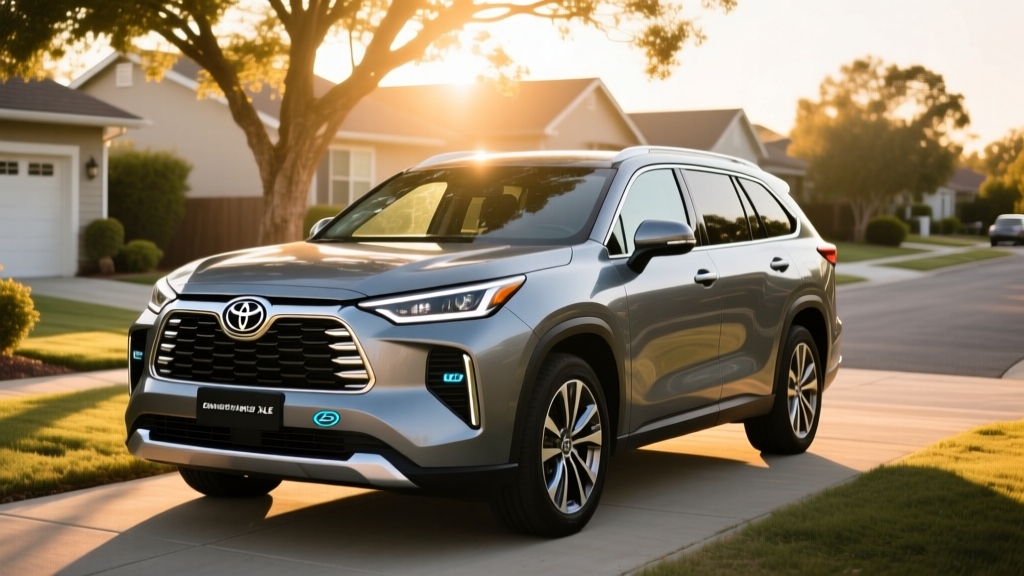
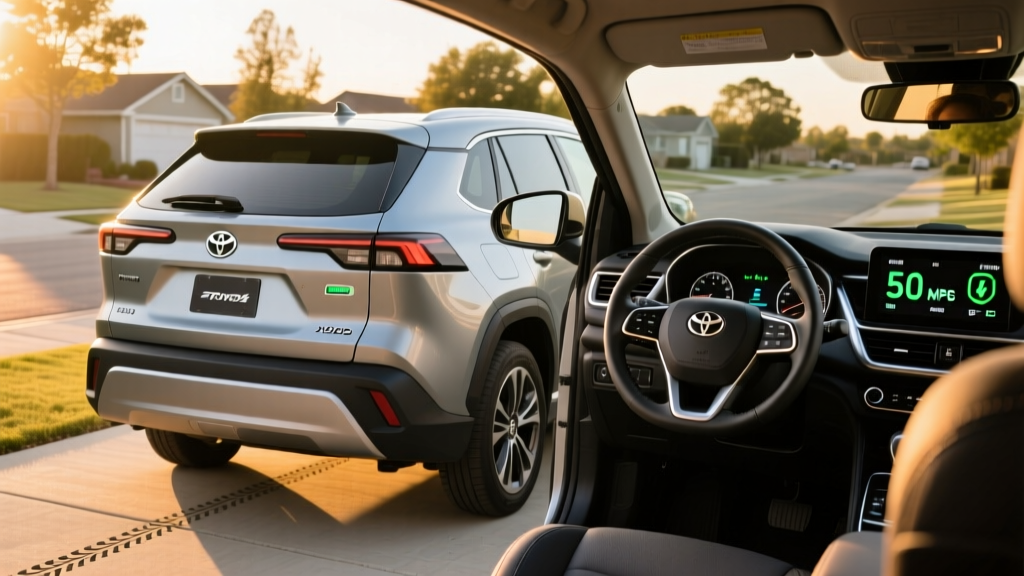
The 2025 Toyota Corolla Cross Hybrid occupies a narrow but valuable lane: a subcompact all-wheel-drive crossover that returns 42 MPG combined without ever needing a plug. With a combined 196 horsepower from Toyota's fifth-generation hybrid system, it's notably quicker than its gas-only sibling and delivers the kind of real-world fuel economy that makes EV charging logistics irrelevant for buyers who simply want to spend less at the pump.
This is a conventional hybrid (HEV), not a plug-in. You fuel it like any other car and never think about charging. For the right buyer — someone without reliable home charging access, or who takes frequent long road trips where EV infrastructure remains sparse — the Corolla Cross Hybrid makes a compelling case over both pure gas compact crossovers and battery-electric alternatives.
HEV vs PHEV vs EV: Where the Corolla Cross Hybrid Fits
Before diving into specs, it's worth clarifying what this vehicle is and isn't. The 2025 Corolla Cross Hybrid is a conventional hybrid (HEV). It pairs a gasoline engine with electric motors and a small battery that recharges through regenerative braking and the engine itself. There is no plug, no electric-only driving mode of meaningful distance, and no need to change your fueling habits.
| Feature | HEV (This Vehicle) | PHEV (e.g., RAV4 Prime) | BEV (e.g., bZ4X) |
|---|---|---|---|
| Plug-in charging? | No | Yes | Yes |
| Electric-only range | <1 mile at low speed | 25–42 miles typical | 200–300+ miles |
| Home charger needed? | No | Recommended | Essential |
| Federal tax credit (§30D) | Not eligible | Up to $7,500 (if eligible) | Up to $7,500 (if eligible) |
| Best for | No-charging-access buyers | Home chargers + short commutes | Home chargers + lower running cost |
Toyota does not offer a plug-in hybrid version of the Corolla Cross. If you want PHEV capability in Toyota's crossover lineup, you'd step up to the RAV4 Prime (42 miles electric-only, but at a significantly higher starting price). The Corolla Cross Hybrid is strictly HEV — and that's by design, keeping the price accessible and the ownership experience simple.
Fuel Economy: EPA Ratings and Real-World MPG
The EPA rates the 2025 Corolla Cross Hybrid at 46 MPG city / 38 MPG highway / 42 MPG combined across all trims (S, SE, XSE), since all come with all-wheel drive as standard. These numbers come from the EPA's fueleconomy.gov database.
| Driving Scenario | EPA Rating | Real-World Expectation |
|---|---|---|
| City | 46 MPG | 44–50 MPG (hybrids often beat EPA in stop-and-go) |
| Highway (70 mph) | 38 MPG | 35–39 MPG (aerodynamic drag limits hybrid advantage) |
| Combined | 42 MPG | 39–45 MPG depending on driving mix |
| Cold weather (below 30°F) | N/A | 36–40 MPG (engine runs more for cabin heat) |
Hybrids tend to outperform their EPA city ratings in real-world stop-and-go traffic because regenerative braking recaptures energy that a gas car wastes as heat. On the highway, the advantage narrows — at sustained 70–80 mph speeds, the gasoline engine does most of the work. In mixed suburban driving with moderate temperatures, expect to see 42–45 MPG regularly. In winter conditions, the engine runs more frequently to provide cabin heat (this vehicle uses engine waste heat rather than a dedicated heat pump), dropping real-world economy to the mid-to-high 30s.
For comparison, the gas-only 2025 Corolla Cross AWD is rated at 29 MPG combined. The hybrid's 42 MPG combined represents a 45% improvement in fuel consumption.
Powertrain: 196 HP and Standard AWD
The Corolla Cross Hybrid uses Toyota's fifth-generation hybrid architecture, combining a 2.0-liter four-cylinder Atkinson-cycle engine with two front electric motor-generators and a separate rear-mounted electric motor that provides all-wheel drive without a mechanical driveshaft.
| Specification | Detail |
|---|---|
| Engine | 2.0L 4-cylinder Atkinson-cycle (150 hp, 139 lb-ft) |
| Front motors | Two motor-generators (MG1 for starting/generation, MG2 for drive) |
| Rear motor | Electric AWD motor (provides rear torque on demand) |
| Combined system output | 196 hp |
| Transmission | Electronic continuously variable (eCVT) |
| 0–60 mph | ~7.5 seconds (est.) |
| Drivetrain | Electronic AWD (standard on all trims) |
| Hybrid battery | ~1.0 kWh lithium-ion (sealed, not plug-charged) |
| Towing capacity | Not rated for towing |
The 196 combined horsepower is a significant upgrade over the gas-only Corolla Cross's 169 hp, and it shows in daily driving. The electric motors provide instant torque from a stop, making the hybrid feel noticeably quicker in city driving and highway merging than the EPA 0–60 estimate suggests. The eCVT is smooth and avoids the rubber-band sensation of older CVT designs, though enthusiastic drivers will note it still drones under hard acceleration.
The electronic AWD system engages the rear motor automatically when the front wheels slip or under hard acceleration. It's not designed for off-road use, but it provides confident traction in rain and light snow — a key advantage over front-drive-only competitors in this segment.
Pricing, Trims, and Tax Credit Eligibility
The 2025 Corolla Cross Hybrid is offered in three trims, all with AWD standard:
| Trim | MSRP | Key Features |
|---|---|---|
| S | $29,395 | 8" touchscreen, wireless CarPlay/Android Auto, TSS 3.0 |
| SE | $30,795 | SofTex seats, heated front seats, smart key, 18" alloy wheels |
| XSE | $32,695 | Power liftgate, JBL audio (9 speakers), ambient lighting |
Destination charge adds approximately $1,195 to all trims.
Federal Tax Credit: Not Eligible
The Corolla Cross Hybrid does not qualify for the IRS §30D federal clean vehicle credit. That credit applies only to plug-in electric vehicles (BEVs and PHEVs) meeting battery capacity, critical mineral sourcing, MSRP caps, and buyer income requirements. Conventional hybrids like this one are excluded.
Some states offer their own incentives for hybrid purchases — check your state's energy or environmental agency website for current programs, as these vary widely and change frequently.
At roughly $29,400 to start, the Corolla Cross Hybrid carries about a $3,000–$4,000 premium over the gas-only Corolla Cross LE AWD. At 42 vs 29 MPG combined and current fuel prices (~$3.30/gallon national average), a driver covering 15,000 miles per year would save approximately $830 annually in fuel. That means the hybrid premium pays for itself in roughly 3.5 to 4.5 years — and you gain the AWD performance and acceleration benefits from day one.
Battery Warranty, Reliability, and Replacement Costs
Hybrid battery longevity is the single most common concern among first-time hybrid buyers. Toyota addresses this with substantial warranty coverage:
| Component | Warranty Coverage |
|---|---|
| Hybrid battery | 10 years / 150,000 miles (whichever comes first) |
| Hybrid system components | 8 years / 100,000 miles |
| Powertrain (engine, transaxle) | 5 years / 60,000 miles |
| Basic (bumper-to-bumper) | 3 years / 36,000 miles |
Toyota's hybrid battery warranty is among the best in the industry, and the track record backs it up. The Corolla Cross Hybrid's lithium-ion hybrid battery is small (~1.0 kWh) and operates within a conservative state-of-charge window managed by the vehicle's computer — it never fully charges or fully depletes, which significantly reduces degradation stress. Based on data from Toyota's broader hybrid fleet (over 20 million hybrids sold globally), hybrid battery failures within the warranty period are rare.
If a replacement is eventually needed out of warranty, a Toyota hybrid battery for this platform typically costs $2,000–$3,500 including labor at a dealership. Third-party remanufactured batteries are available for less. Given the 10-year/150,000-mile warranty, most original owners will never face this cost.
The Corolla Cross platform has earned an IIHS Top Safety Pick designation (with specific headlight trims), and Toyota Safety Sense 3.0 comes standard on every trim — including pre-collision with pedestrian detection, lane departure alert with steering assist, full-speed adaptive cruise control, and lane tracing assist.
Who Should Buy the Corolla Cross Hybrid?
Choose the Corolla Cross Hybrid if:
- You want 40+ MPG without ever plugging in
- You lack access to reliable home or workplace EV charging
- You take frequent road trips where DC fast-charging infrastructure is sparse
- You want standard AWD in a compact crossover under $33,000
- You prioritize low cost of ownership and proven reliability
- Your daily commute involves stop-and-go traffic (where hybrids shine)
Look elsewhere if:
- You want electric-only driving for short commutes (consider a PHEV like the RAV4 Prime)
- You want zero tailpipe emissions (consider a BEV like the Hyundai Kona Electric)
- You need more than 25.5 cu ft of cargo space (this is a subcompact)
- You want to qualify for the $7,500 federal EV tax credit
- You need towing capability (not rated; consider the RAV4 Hybrid)
The Corolla Cross Hybrid is the pragmatic choice for buyers who want hybrid fuel savings with zero lifestyle change. No charging apps, no route planning around chargers, no range calculations in cold weather. You fill up at any gas station, drive 450+ miles between fill-ups, and spend roughly $1,100/year on fuel instead of the $1,900+ a comparable gas-only crossover would demand.
If you have home charging access and a commute under 30 miles, a PHEV or full EV will deliver lower per-mile energy costs and potential tax credits. But for apartment dwellers, street parkers, and frequent road-trippers, the Corolla Cross Hybrid removes the charging-access barrier to electrified efficiency.
Frequently Asked Questions
How many MPG does the 2025 Toyota Corolla Cross Hybrid get?
The EPA rates it at 46 MPG city, 38 MPG highway, and 42 MPG combined. In real-world mixed driving, expect 39–45 MPG depending on conditions. City driving often exceeds the EPA rating thanks to regenerative braking.
Does the Corolla Cross Hybrid need to be plugged in?
No. It is a conventional hybrid (HEV), not a plug-in hybrid. The battery charges through regenerative braking and the gasoline engine. You fuel it exactly like a standard gas car.
Does the 2025 Corolla Cross Hybrid qualify for any tax credit?
It does not qualify for the federal §30D clean vehicle credit, which is limited to plug-in vehicles (BEVs and PHEVs). Some states may offer separate hybrid incentives — check your state's energy department for current programs.
How long will the hybrid battery last?
Toyota warranties the hybrid battery for 10 years or 150,000 miles. Based on Toyota's track record with millions of hybrids on the road, most batteries last well beyond the warranty period. Replacement cost, if needed out of warranty, is typically $2,000–$3,500.
Is the Corolla Cross Hybrid reliable?
Toyota's hybrid powertrains have an extensive reliability record spanning over two decades. The fifth-generation system in the Corolla Cross is an evolution of proven technology. The standard Toyota Safety Sense 3.0 suite and IIHS Top Safety Pick designation add to its safety credentials.
How does it compare to the gas-only Corolla Cross?
The hybrid delivers 196 hp vs 169 hp, standard AWD with a more responsive electric rear motor, and 42 MPG combined vs 29 MPG combined. The hybrid carries a roughly $3,000–$4,000 price premium that pays for itself in fuel savings within 3.5–4.5 years for most drivers.
Hybrid vs PHEV vs EV — which should I choose?
Choose the HEV (this car) if you can't charge at home. Choose a PHEV if you can charge at home and want 25–42 miles of electric-only commuting with gas backup. Choose a full EV if you can charge at home and want the lowest per-mile cost and zero tailpipe emissions. Each has trade-offs in upfront price, infrastructure needs, and tax-credit eligibility.