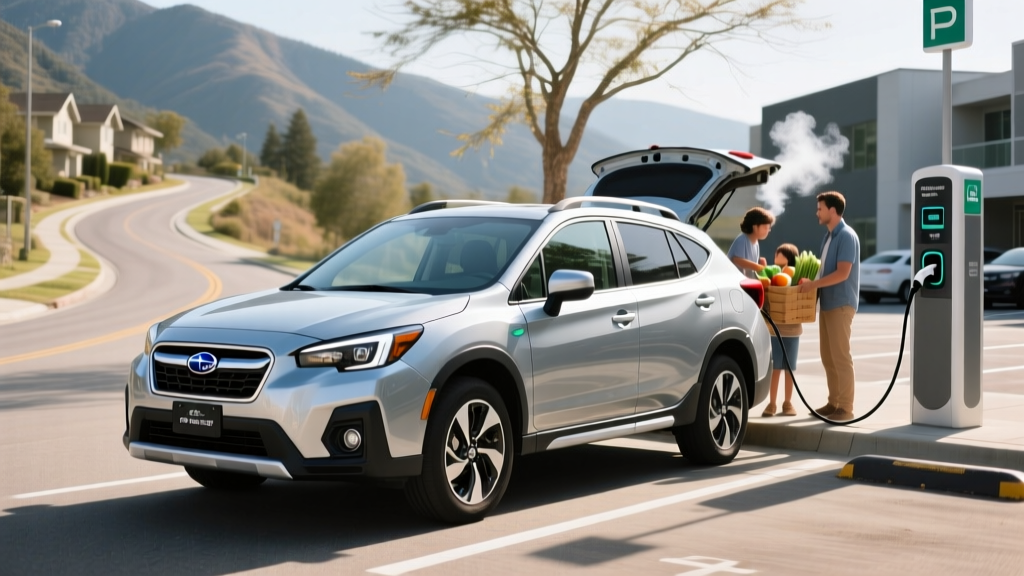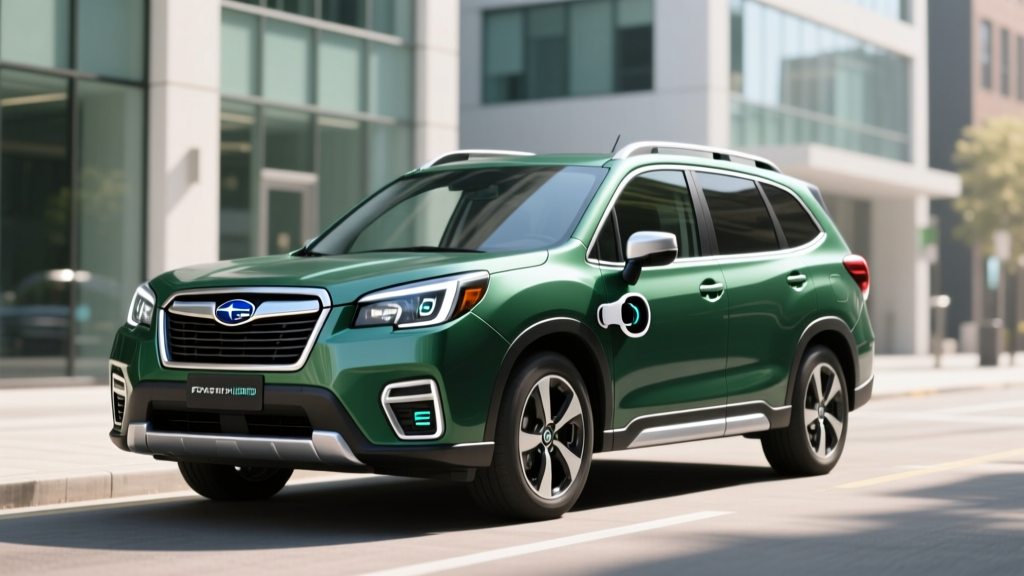
If you've been searching for a 2025 Subaru Forester Hybrid for sale, you've likely noticed something: Subaru took its time bringing a hybrid back to the Forester lineup. After the discontinuation of the previous-generation Forester e-Boxer in certain markets, the all-new sixth-generation 2025 Forester Hybrid arrives with a proper Toyota-sourced hybrid system, standard all-wheel drive, and the practicality that has defined the nameplate for decades. This guide breaks down every number that matters — from EPA fuel economy to battery warranty — so you can decide if this compact hybrid SUV fits your driveway.
HEV vs PHEV: What the 2025 Forester Hybrid Actually Is
Before evaluating specs, it's essential to understand what you're buying. The 2025 Subaru Forester Hybrid is a conventional hybrid electric vehicle (HEV), not a plug-in hybrid (PHEV). That distinction matters for your daily routine, your fuel budget, and your tax situation.
| Feature | HEV (2025 Forester Hybrid) | PHEV (e.g., Toyota RAV4 Prime) |
|---|---|---|
| Plug-in charging required? | No — regenerative braking & engine charge the battery | Yes — plug in for electric-only range |
| Electric-only driving | Limited (low-speed, short distances) | 25–42 miles typical |
| Battery size | ~1.1 kWh (small buffer) | 18–20 kWh usable |
| Federal tax credit (§30D) | Not eligible | Up to $7,500 (if requirements met) |
| Best for | Drivers without home charging access | Drivers with home/garage charging |
The Forester Hybrid captures energy through regenerative braking and the gasoline engine to keep its small lithium-ion battery charged. You never plug it in. You simply fill up with gas and drive — the hybrid system automatically optimizes when to use the electric motor, the engine, or both. If you need plug-in electric-only commuting range, you'll want to cross-shop PHEVs like the Toyota RAV4 Prime or the Hyundai Tucson PHEV instead.
Fuel Economy: EPA Ratings and Real-World MPG
The headline number for the 2025 Forester Hybrid is a significant improvement over the gas-only Forester's 29 MPG combined. Subaru targets a 35 MPG combined EPA rating with the hybrid powertrain, with city driving often yielding even better results thanks to the electric motor's dominance at low speeds.
| Configuration | City MPG | Highway MPG | Combined MPG |
|---|---|---|---|
| 2025 Forester Hybrid (AWD) | 36 | 34 | 35 |
| 2025 Forester Gas (AWD, 2.5L) | 26 | 33 | 29 |
| Toyota RAV4 Hybrid (AWD) | 41 | 38 | 39 |
| Honda CR-V Hybrid (AWD) | 40 | 34 | 37 |
Source: fueleconomy.gov (EPA estimates). Confirm exact trim ratings at purchase, as equipment and tire choices can shift MPG by 1–2 points.
Real-World MPG: What to Actually Expect
Hybrids routinely exceed their EPA city estimates in stop-and-go traffic because regenerative braking recovers energy that a gas car wastes as heat. In real-world mixed driving, expect:
- City-heavy commutes: 36–40 MPG — the electric motor handles most low-speed propulsion, and the engine shuts off frequently at stops.
- Highway cruising (70+ mph): 31–34 MPG — the gasoline engine does most of the work at sustained speed, where hybrid advantages diminish.
- Cold weather (below 30°F): 30–33 MPG combined — the engine runs more often to provide cabin heat and maintain battery temperature, reducing electric-motor assist.
The 6 MPG combined improvement over the gas Forester translates to roughly 85 fewer gallons per year at 15,000 miles driven, saving approximately $250–$350 annually depending on local fuel prices.
Powertrain Specs: 194 HP with Toyota Hybrid DNA
Subaru partnered with Toyota for the hybrid system in the 2025 Forester — a pragmatic move given Toyota's two decades of hybrid refinement. The powertrain pairs Subaru's 2.5-liter flat-four (Boxer) engine with an electric motor integrated into the transmission, driving all four wheels through Subaru's symmetrical AWD system.
| Specification | 2025 Forester Hybrid |
|---|---|
| Combined system horsepower | 194 hp |
| Gasoline engine | 2.5L Boxer 4-cylinder |
| Electric motor | Integrated hybrid motor (Toyota-sourced system) |
| Transmission | Lineartronic CVT (e-CVT hybrid variant) |
| Drivetrain | Symmetrical AWD (standard) |
| Hybrid battery | ~1.1 kWh lithium-ion |
| 0–60 mph (est.) | ~7.6 seconds |
| Towing capacity | 1,500 lbs |
| Cargo volume (rear seats up) | 28.9 cu ft |
| Cargo volume (rear seats folded) | 69.1 cu ft |
The 194 hp combined output represents a meaningful bump over the gas-only Forester's 180 hp. The electric motor fills in the torque gap that Subaru's naturally aspirated Boxer engine has historically shown at low RPMs, making the hybrid noticeably more responsive from a stoplight and during passing maneuvers. The e-CVT operates more smoothly than a traditional belt-driven CVT, using planetary gearsets to blend power sources.
Pricing, Trims, and Tax Credit Eligibility
The 2025 Forester Hybrid is offered in Sport and Sport Touring trims, positioned above the standard gas Forester lineup. Pricing reflects the hybrid premium, but the fuel savings and standard equipment partially offset the gap.
| Trim | Starting MSRP | Notable Standard Equipment |
|---|---|---|
| Forester Hybrid Sport | $36,495 | 19" alloy wheels, SI-DRIVE, 11.6" touchscreen, EyeSight 4.0 |
| Forester Hybrid Sport Touring | $41,495 | Harman Kardon audio, heated rear seats, power liftgate, Nappa leather |
Prices include destination charge. Verify current MSRP with your dealer as pricing can adjust mid-model-year.
Federal Tax Credit: Does the Forester Hybrid Qualify?
Short answer: No. The 2025 Subaru Forester Hybrid is a conventional HEV, not a plug-in hybrid or battery electric vehicle. Under current IRS §30D rules, the federal clean vehicle credit applies only to new plug-in EVs and qualifying PHEVs with a minimum battery capacity of 7 kWh. The Forester Hybrid's ~1.1 kWh battery does not meet this threshold.
Some states offer modest rebates or HOV-lane access for conventional hybrids, but these vary by jurisdiction. Check your state's energy office or Alternative Fuels Data Center for local incentives.
If a federal tax credit is a dealbreaker for your purchase, you'll need to look at PHEVs (like the Toyota RAV4 Prime, if it meets §30D sourcing and MSRP requirements) or full BEVs. The IRS clean vehicle credit page details current income caps ($150K single / $300K joint), MSRP limits ($80K SUVs), and battery sourcing rules.
Battery Warranty, Lifespan, and Replacement Cost
Hybrid battery longevity is the single most common concern among first-time hybrid buyers. Here's what the data shows and what Subaru covers:
| Coverage | Term |
|---|---|
| Hybrid battery warranty | 8 years / 100,000 miles (10 years / 150,000 miles in CARB states) |
| Hybrid system components | 8 years / 100,000 miles |
| Powertrain warranty | 5 years / 60,000 miles |
| Basic warranty | 3 years / 36,000 miles |
The Toyota-derived hybrid system in the Forester benefits from one of the best reliability track records in the industry. Toyota's hybrid batteries in the RAV4 Hybrid and Camry Hybrid routinely last 150,000–200,000+ miles before significant degradation. Subaru's ~1.1 kWh battery is small and operates within a narrow state-of-charge window (typically 40–80%), which dramatically reduces stress on the cells compared to a full EV battery that cycles through a wider range.
What If the Battery Fails Out of Warranty?
If the hybrid battery requires replacement after warranty expiration, expect a cost between $2,000 and $4,000 for a new OEM unit, or $1,000–$2,000 for a refurbished module. Independent hybrid specialists can often replace individual failed cells within the pack for $500–$1,000. This is far less expensive than a full EV battery replacement, which can exceed $10,000–$15,000.
For context, Toyota's hybrid battery failure rate within the first 150,000 miles is well under 5% based on fleet data, and Subaru's use of the same proven architecture suggests similar reliability. The hybrid battery is simply not the liability many buyers fear.
Hybrid vs PHEV vs Full EV: Which Fits Your Life?
Choosing between a conventional hybrid, a plug-in hybrid, and a battery-electric vehicle depends on your charging access, daily mileage, and tolerance for behavior change. Here's a practical decision framework:
Choose the 2025 Forester Hybrid (HEV) if:
- You don't have access to home or workplace charging (apartment, street parking)
- You want better fuel economy without changing any habits — just fill up and go
- You regularly take long road trips and don't want to plan around charging stops
- You want AWD capability in snow and rough weather with proven hybrid reliability
Choose a PHEV (e.g., RAV4 Prime, Tucson PHEV) if:
- You have a garage or driveway where you can install a Level 2 charger
- Your daily commute is under 35 miles round-trip (coverable on electric-only)
- You want to drive mostly on electricity during the week but need gas flexibility for weekends
- You want to potentially qualify for the $7,500 federal tax credit
Choose a full BEV (e.g., Hyundai Ioniq 5, Tesla Model Y) if:
- You have reliable home charging and your daily driving is under 250 miles
- You want zero tailpipe emissions and the lowest per-mile fuel cost
- You're comfortable planning DC fast-charging stops on road trips
- You want maximum federal and state incentives
The Forester Hybrid occupies a specific and valuable niche: it's the right choice for drivers who want electrified efficiency but cannot or will not plug in. Subaru's standard AWD also makes it uniquely suited to buyers in snow-belt states who need all-weather capability without the range loss that full EVs experience in freezing temperatures.
Pros and Cons at a Glance
Pros
- 35 MPG combined — 6 MPG better than gas Forester, with strong city performance
- 194 hp provides confident acceleration and passing power
- No plug-in required — zero behavior change from a gas car
- Standard symmetrical AWD on every trim
- Toyota-sourced hybrid system with proven long-term reliability
- Generous 8-year/100K-mile hybrid battery warranty
- EyeSight 4.0 driver-assistance standard (adaptive cruise, lane centering, pre-collision braking)
- Strong cargo capacity (28.9 cu ft) with no battery intrusion
Cons
- No federal tax credit eligibility (HEV, not PHEV/BEV)
- 35 MPG combined trails the RAV4 Hybrid (39 MPG) and CR-V Hybrid (37 MPG)
- Hybrid only available on higher Sport and Sport Touring trims ($36K+)
- Towing limited to 1,500 lbs (gas Forester also 1,500 lbs)
- No DC fast charging (not applicable — this is an HEV)
- CVT character may disappoint enthusiasts who prefer geared transmissions
Frequently Asked Questions
How many MPG does the 2025 Subaru Forester Hybrid get?
The EPA estimates the 2025 Forester Hybrid at 36 city / 34 highway / 35 combined MPG. In real-world city-heavy driving, owners commonly report 36–40 MPG thanks to regenerative braking. Highway-only driving at 75+ mph may drop to 31–33 MPG. Cold weather reduces efficiency by roughly 2–4 MPG combined.
Does the 2025 Forester Hybrid need to be plugged in?
No. The Forester Hybrid is a conventional HEV. Its small lithium-ion battery recharges through regenerative braking and the gasoline engine. You never plug it in — you simply refuel with gasoline as you would any other car.
How far can the Forester Hybrid drive on electric power alone?
As an HEV, the Forester Hybrid can operate on electric-only power for very short distances (typically under 1 mile) at low speeds (under 25 mph), such as creeping through a parking lot or in heavy stop-and-go traffic. It does not have a meaningful electric-only range like a PHEV. If you need 25–40 miles of electric-only commuting, you need a plug-in hybrid.
Is the hybrid battery reliable, and what does replacement cost?
The Toyota-derived hybrid system has one of the strongest reliability records in the automotive industry, with hybrid batteries commonly lasting 150,000–200,000+ miles. Subaru covers the hybrid battery for 8 years/100,000 miles (10 years/150,000 miles in CARB-emissions states). Out-of-warranty replacement costs approximately $2,000–$4,000 for an OEM battery, or $1,000–$2,000 for a refurbished unit.
Does the 2025 Forester Hybrid qualify for any tax credit?
The Forester Hybrid does not qualify for the federal §30D clean vehicle tax credit because it is a conventional hybrid (HEV) with a battery below the 7 kWh minimum threshold. Some states may offer small hybrid rebates or incentives — check your state's energy department or the Alternative Fuels Data Center for details.
How does the Forester Hybrid compare to the RAV4 Hybrid?
The Toyota RAV4 Hybrid achieves 39 MPG combined (41 city / 38 highway) versus the Forester Hybrid's 35 MPG combined. The RAV4 also offers a PHEV variant (RAV4 Prime) with 42 miles of electric-only range and potential federal tax credit eligibility. However, the Forester Hybrid offers Subaru's symmetrical AWD system, which many drivers in severe winter climates prefer, along with strong outward visibility and a slightly more upright driving position.
What is the total driving range of the 2025 Forester Hybrid?
With a 16.6-gallon fuel tank and 35 MPG combined, the Forester Hybrid can travel approximately 580 miles between fill-ups under mixed driving conditions. City-heavy driving could push this past 600 miles, while sustained highway driving at high speeds may reduce it to around 530 miles.